Jephcott / City Mobile Micro

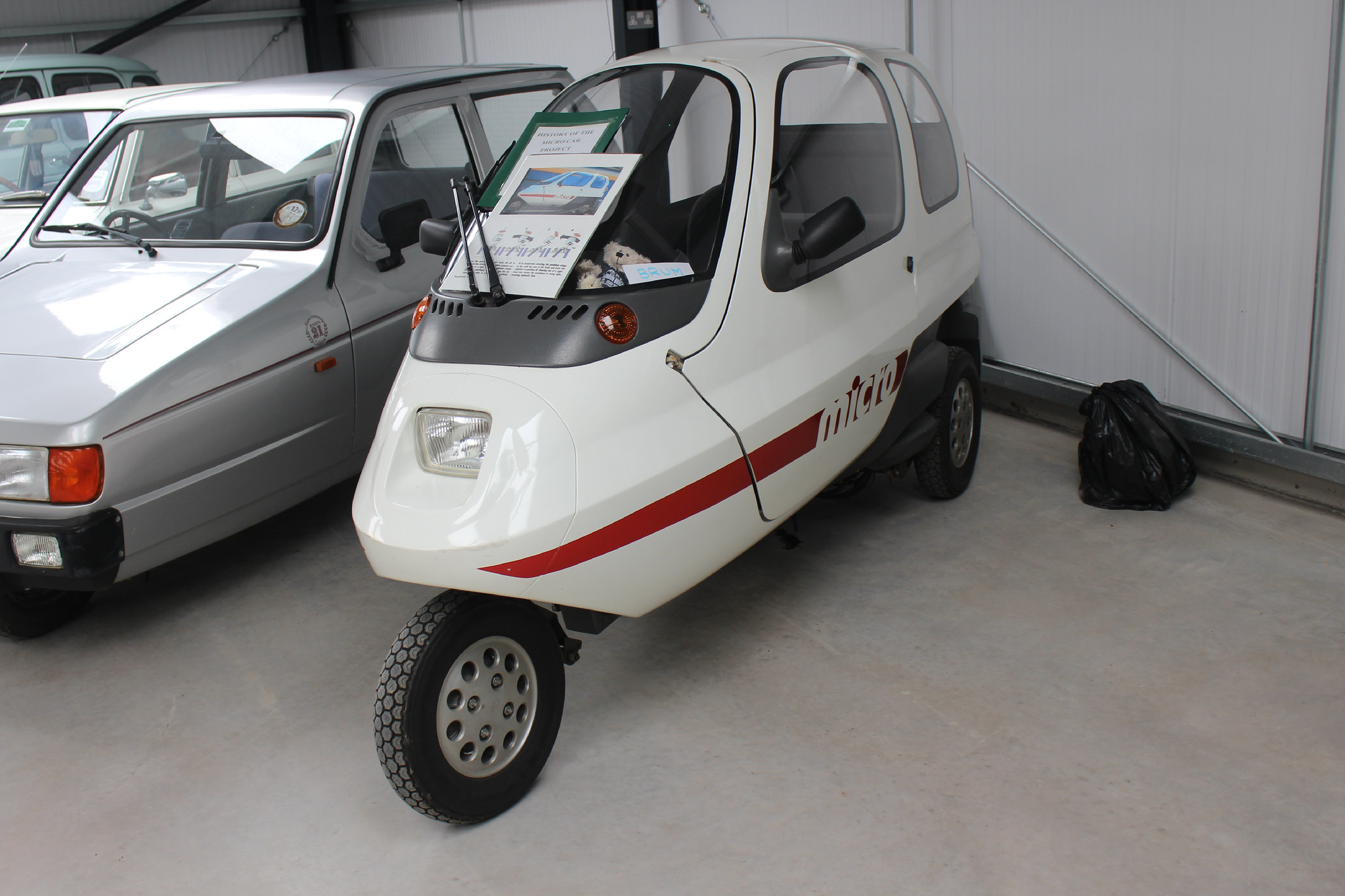
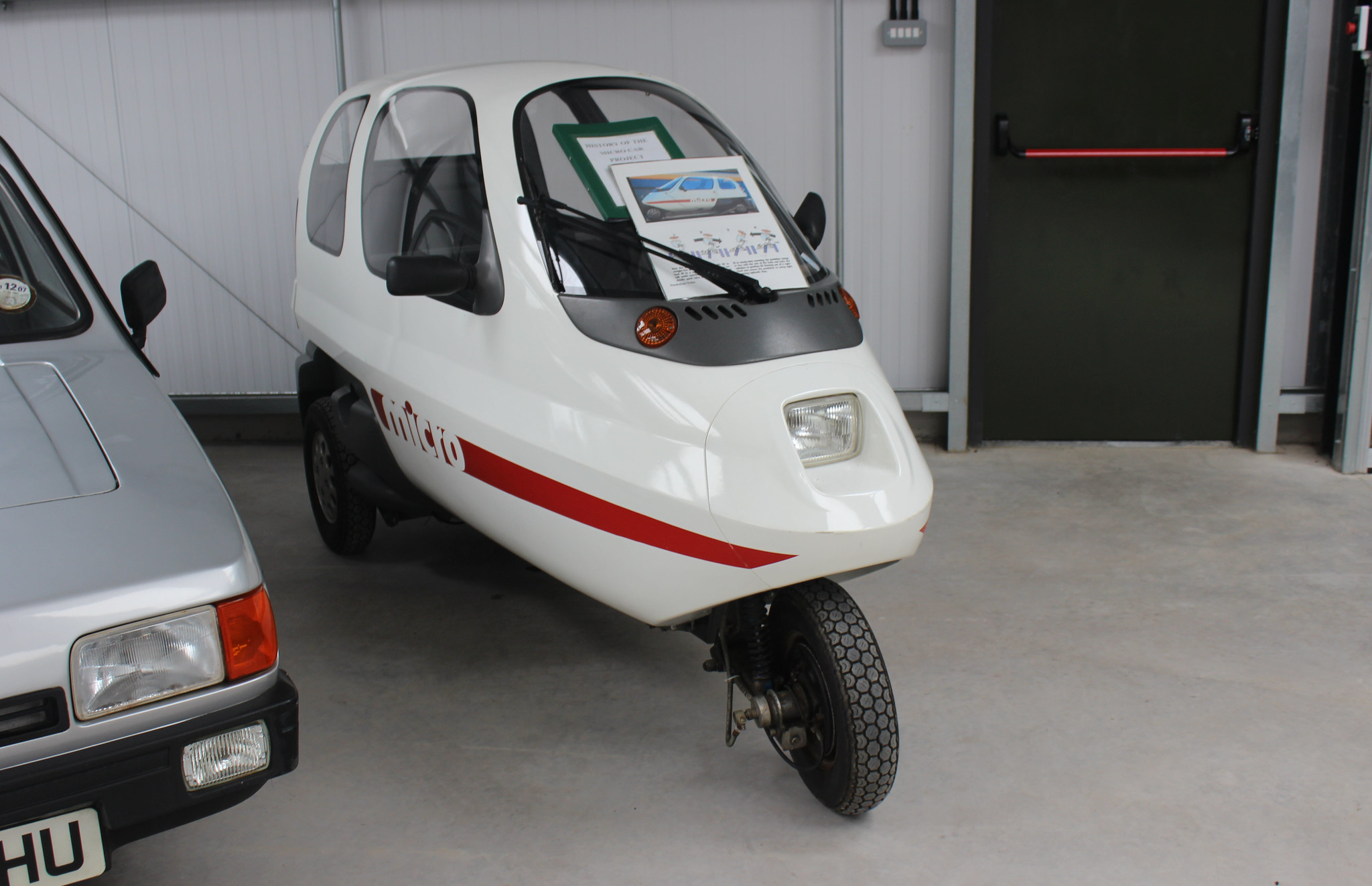
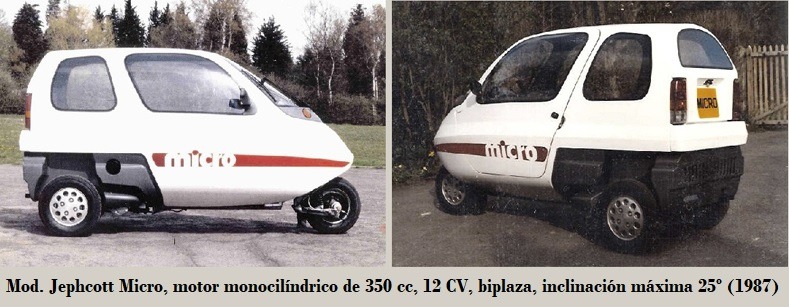
The Jephcott Micro is a single-seat, fully enclosed microcar. With this 1987 prototype it was representing an evolutionary step from Edmund F. Jephcott’s earlier Tilting Trike of 1980.
Unlike the earlier concept, this version was conceived much closer to a production-ready vehicle and replaced the original pedal-operated tilting mechanism with a hydraulic control system.
Measuring about 8 feet 5 inches in length, the Jephcott Micro is powered by a 350 cc engine producing 12 hp and allows the body to lean by up to 25 degrees.
Jephcott designed and patented the concept as a narrow enclosed motor vehicle in which the body structure for at least one occupant is mounted so it can incline relative to both the vehicle’s median plane and part of the chassis.
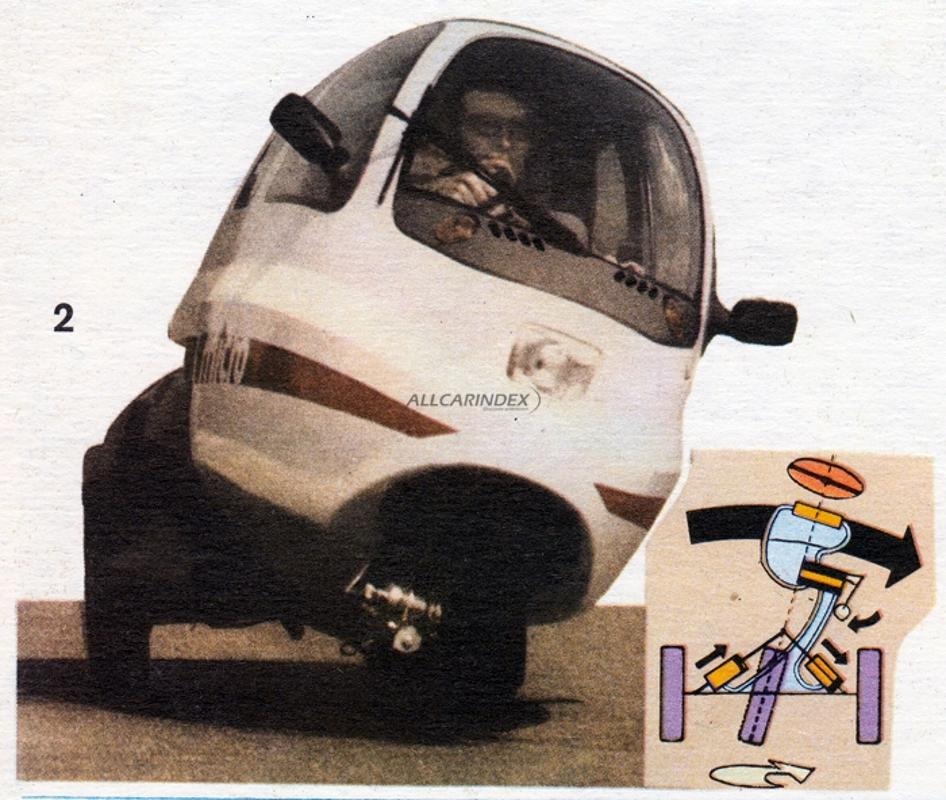
The tilting action is driver-controlled and integrated into the vehicle’s dynamics, enhancing stability while in motion.
The tilting system operates via a pendulum mechanism linked to the hydraulics. During straight-line driving, the pendulum remains vertical and the body stays upright.
When entering a right-hand turn, centrifugal force causes the pendulum to swing left, activating a hydraulic spool valve that extends the left cylinder and initiates body lean.
In steady-state cornering, the pendulum aligns with the body’s axis, locking the cylinder and holding the tilt angle. As the vehicle exits the turn, the pendulum swings back in the opposite direction, reversing the hydraulic flow and returning the body to an upright position.