Deep Sanderson DS 105 “Twinny”

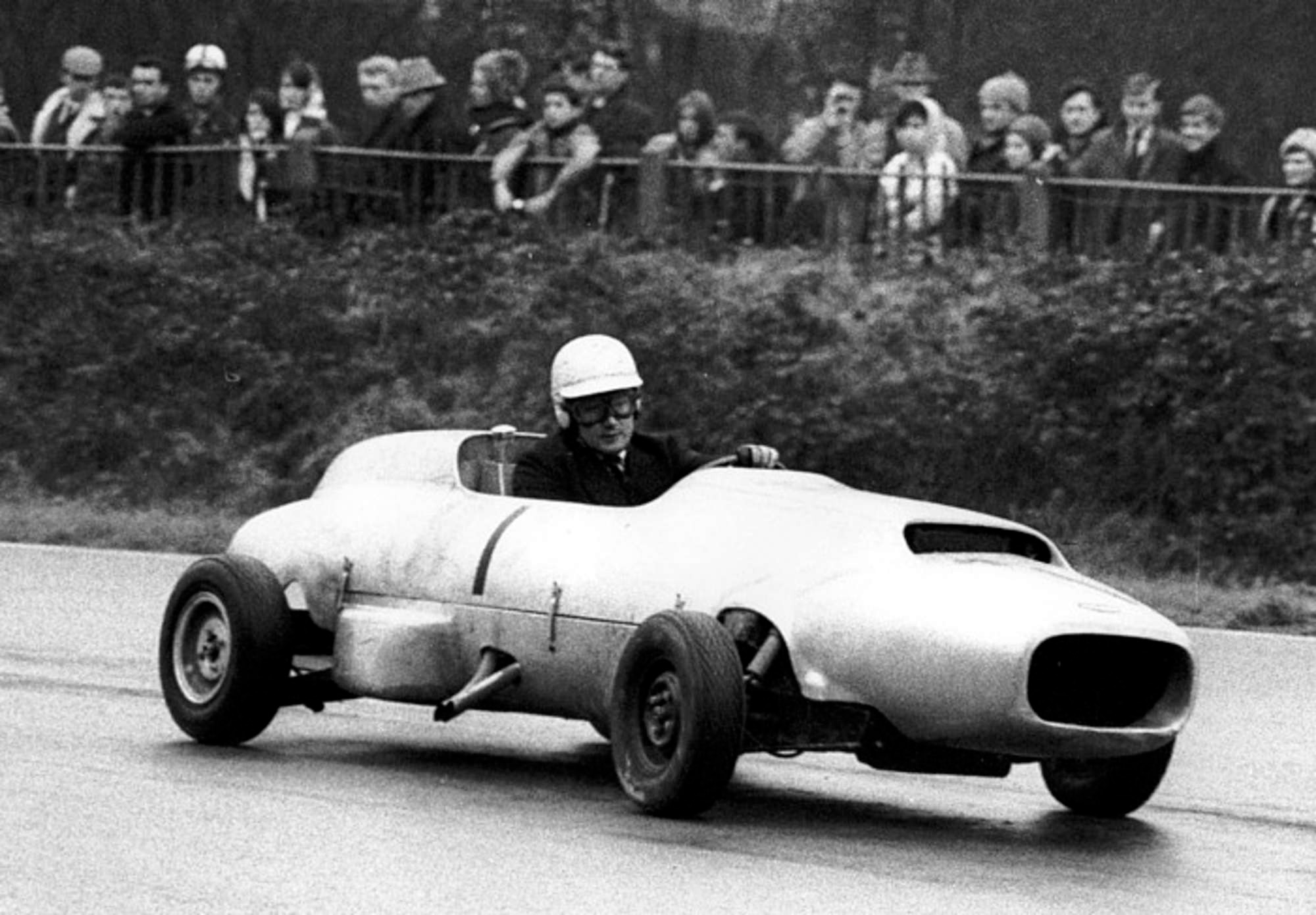
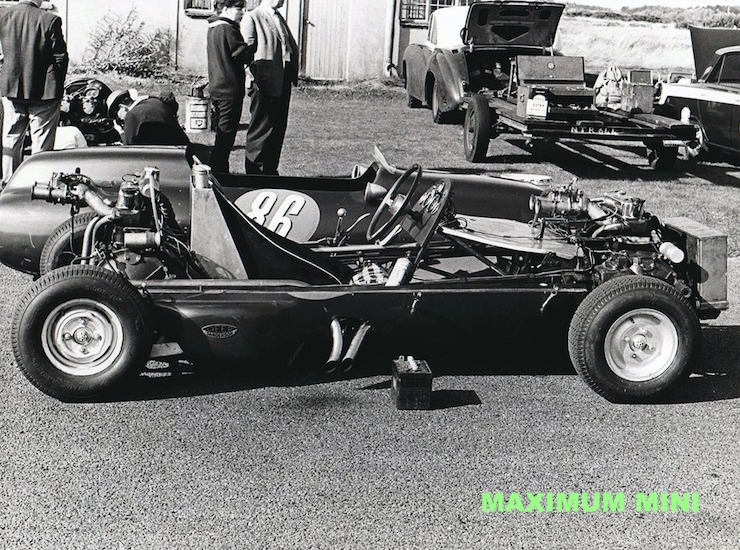
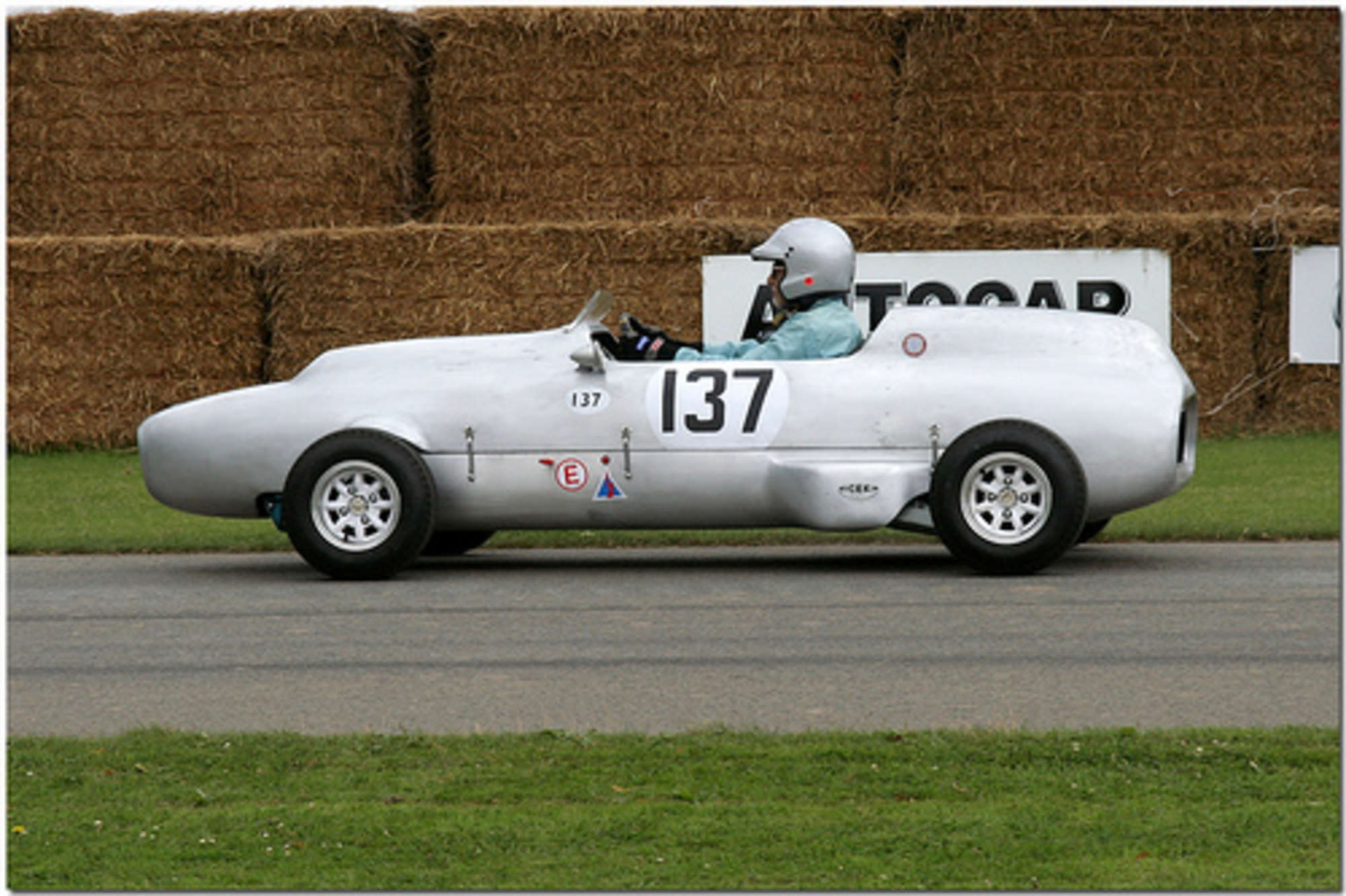
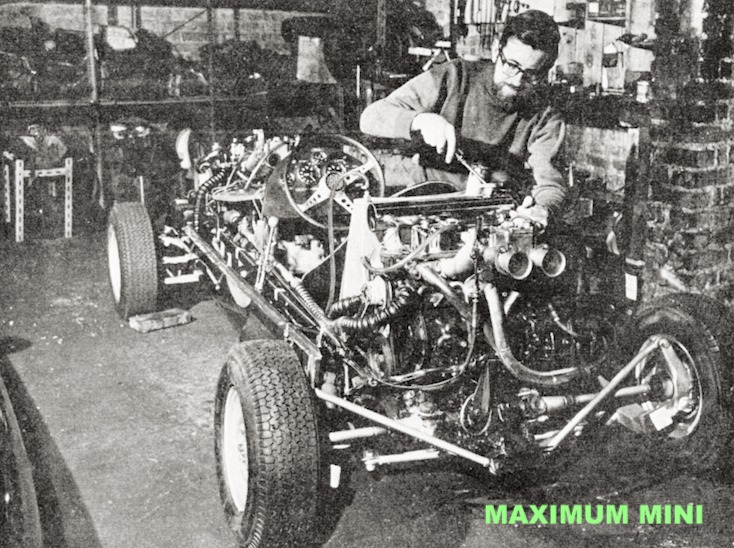
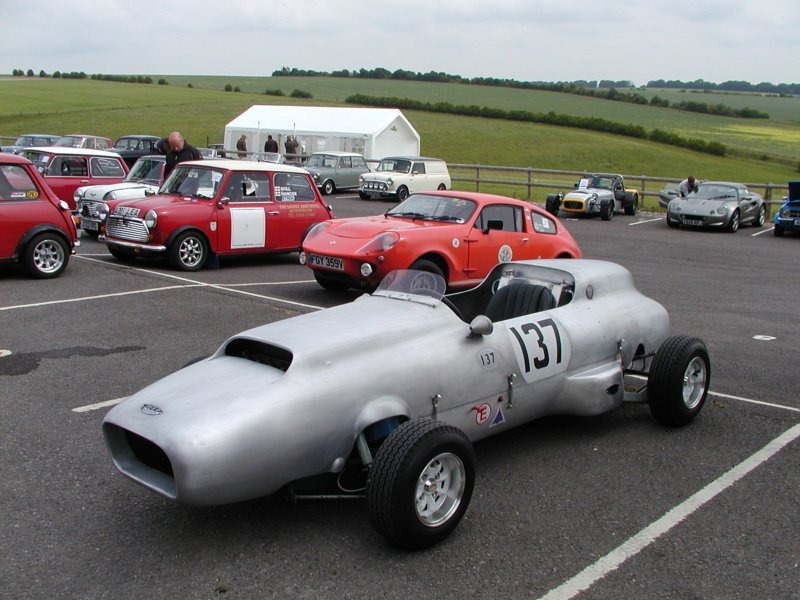
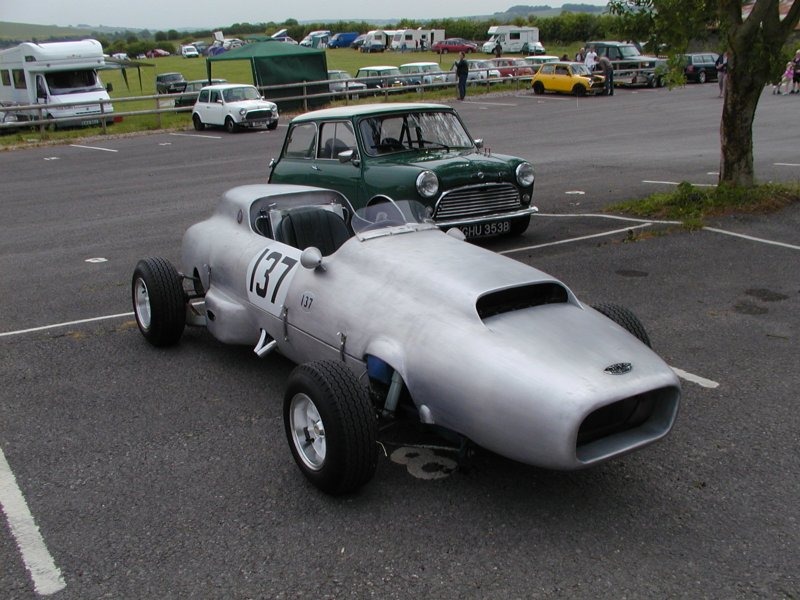
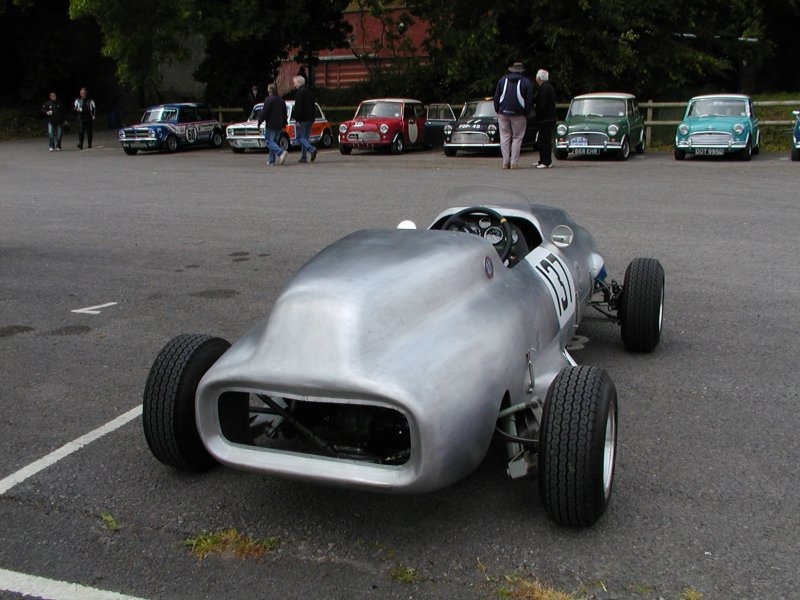
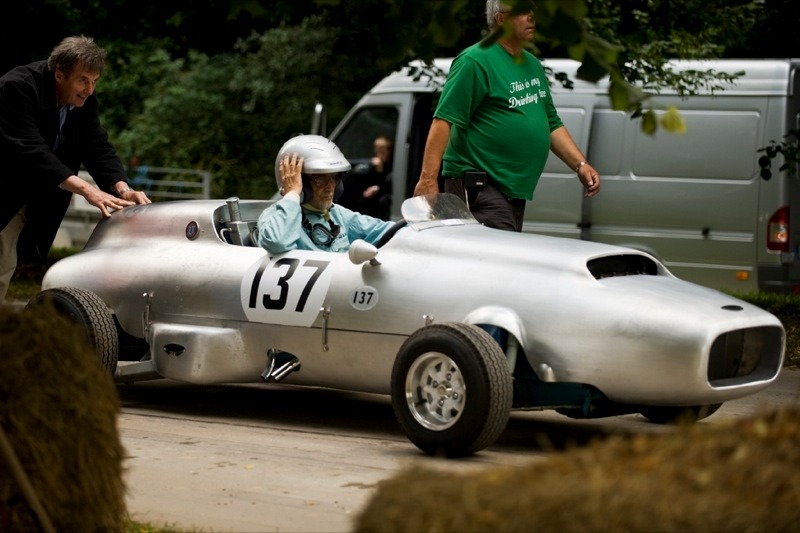
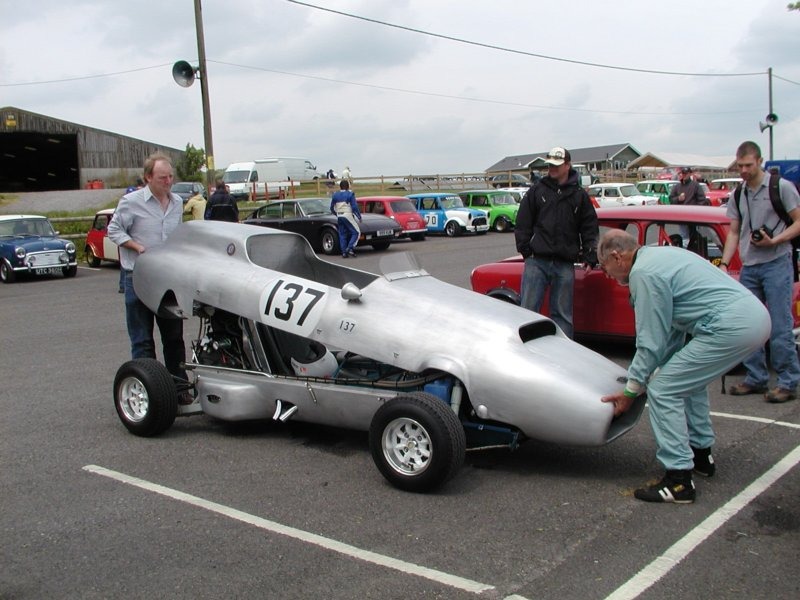
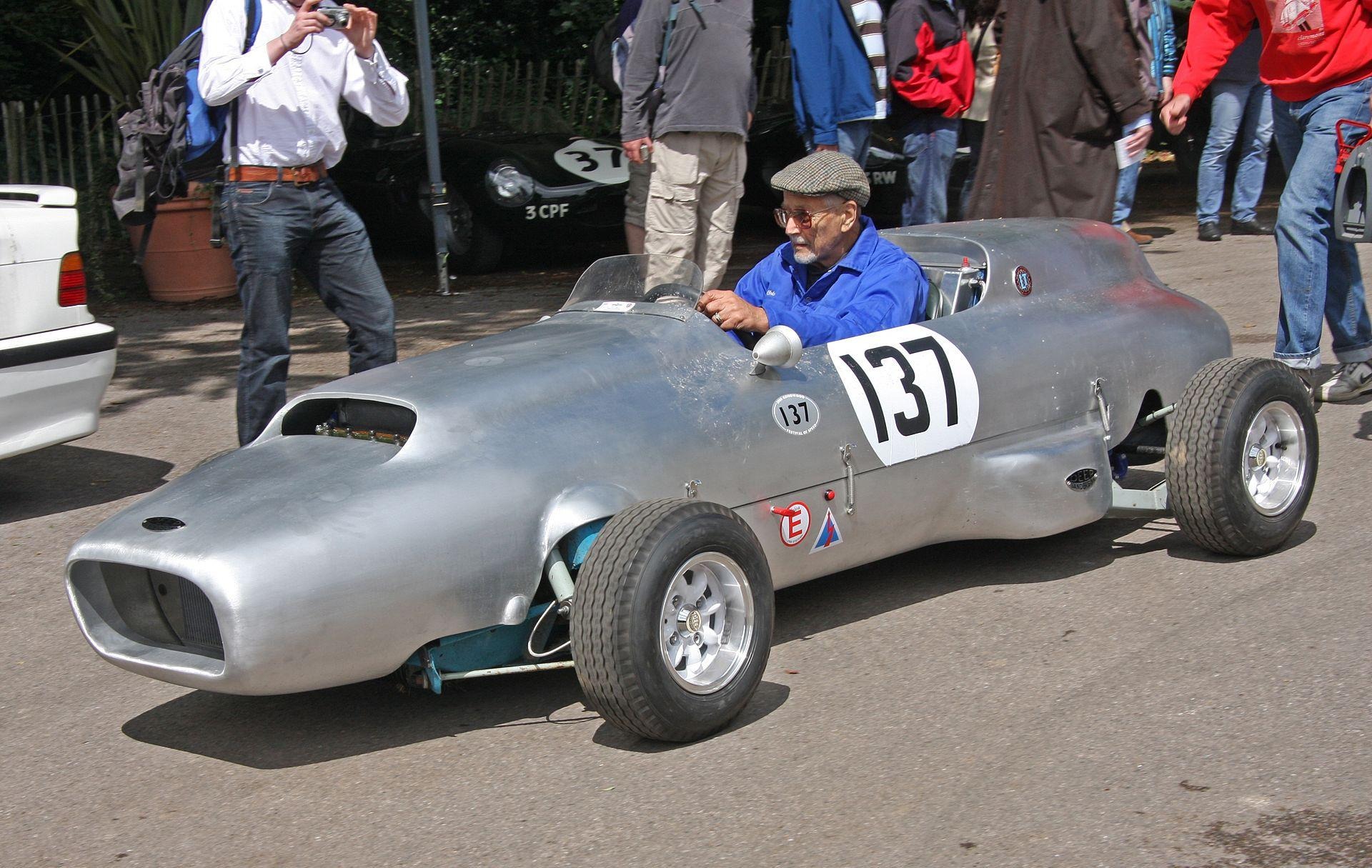
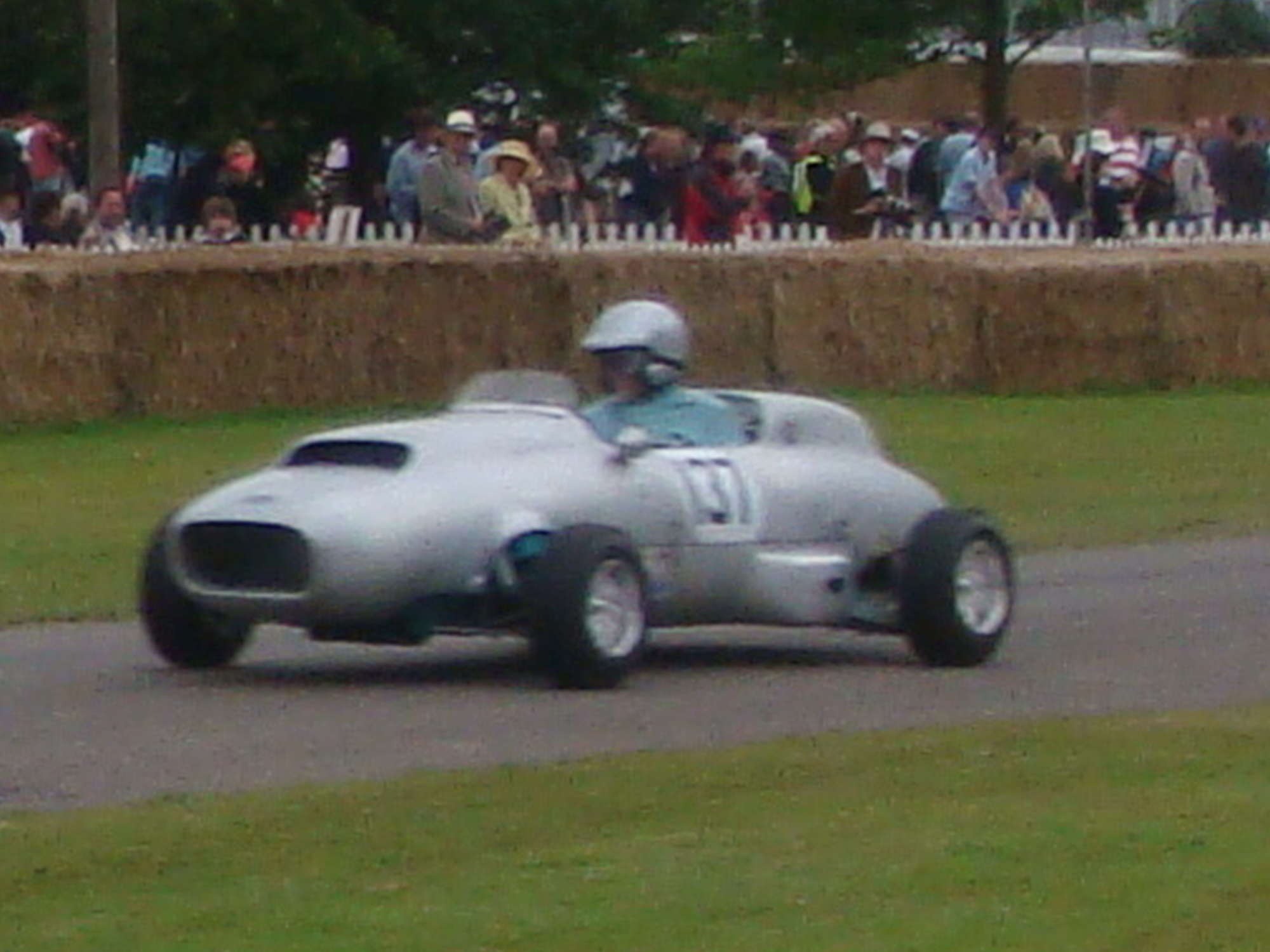
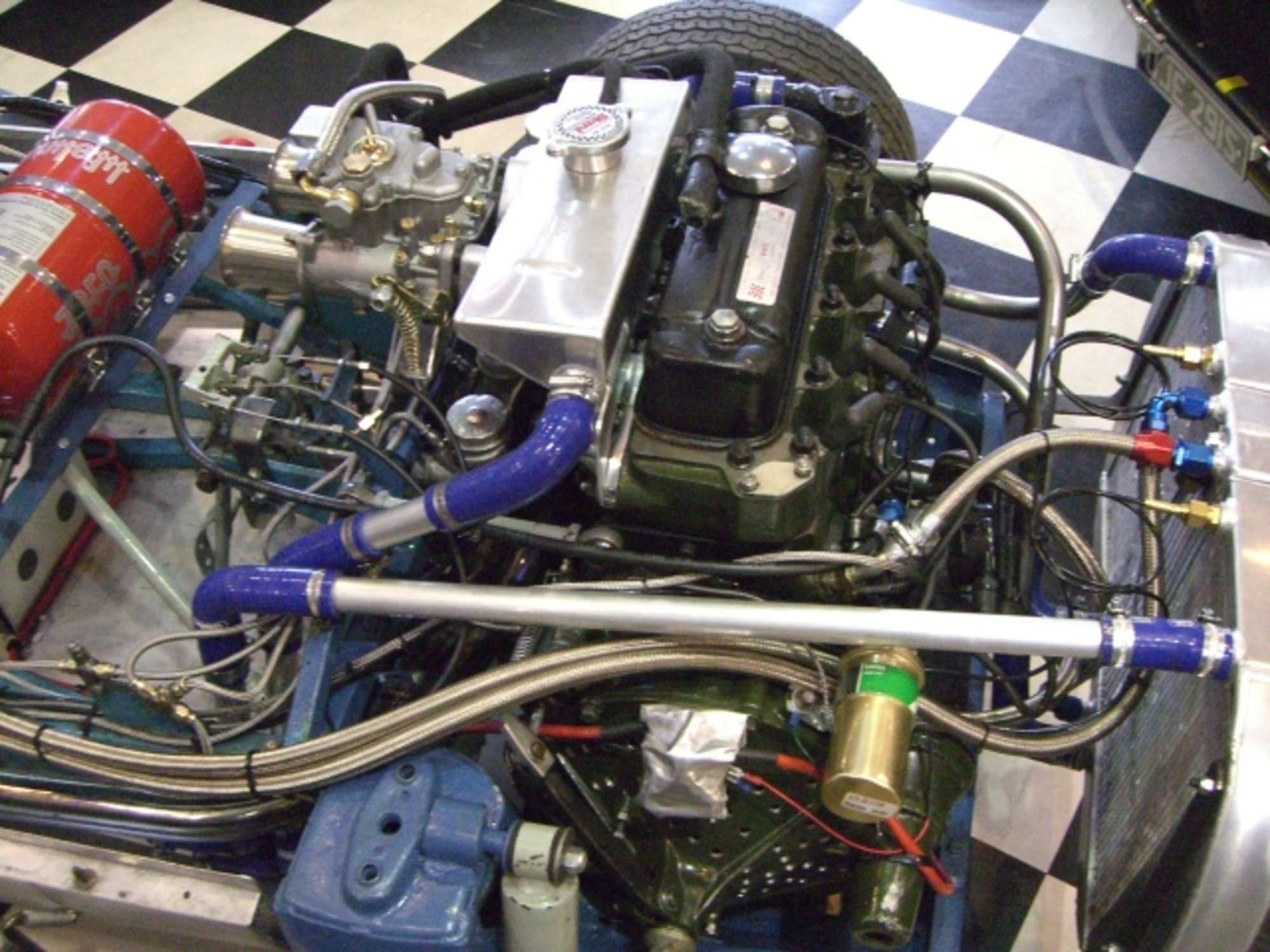
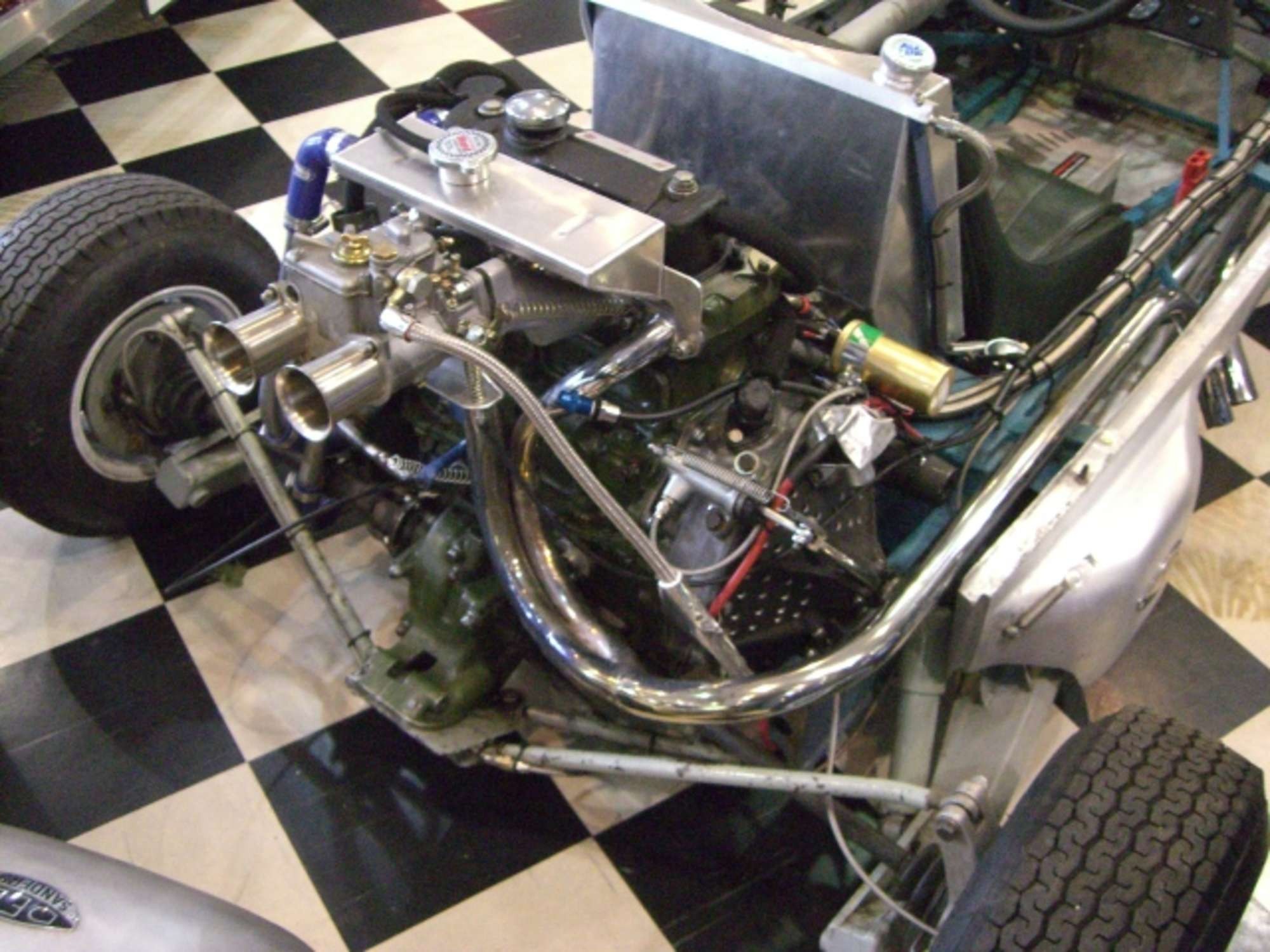
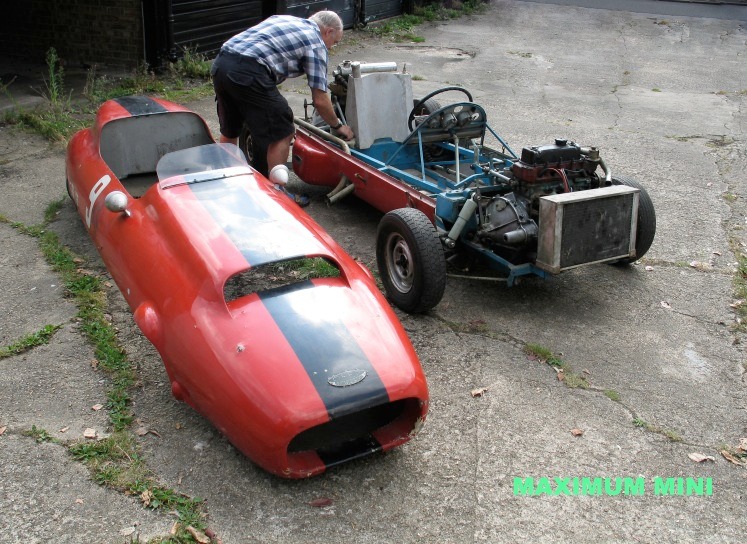
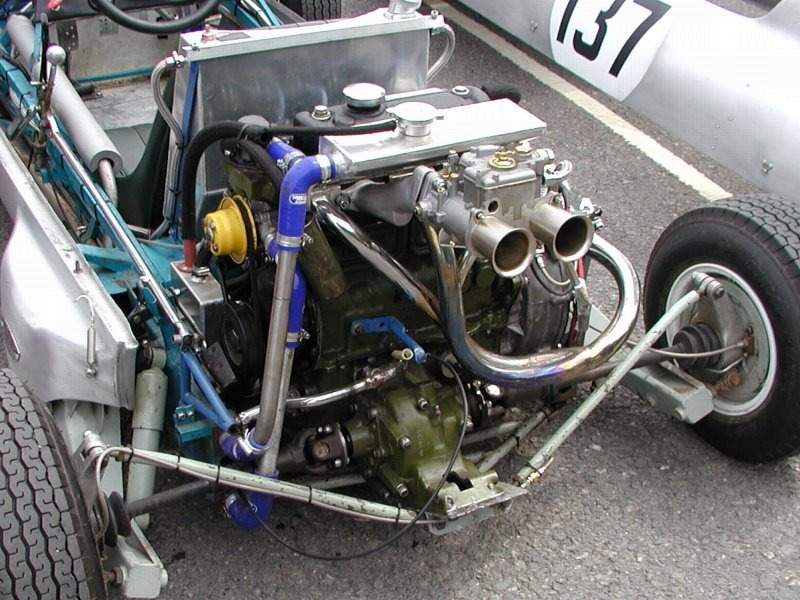
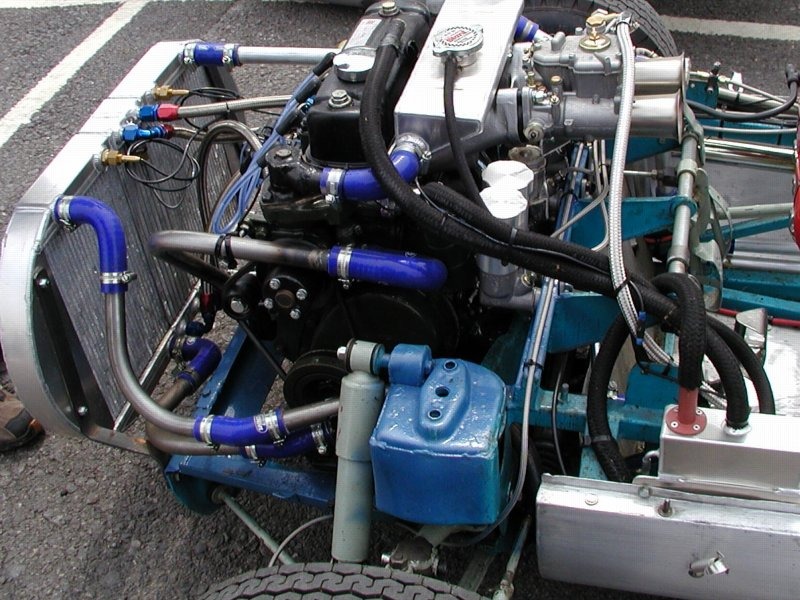
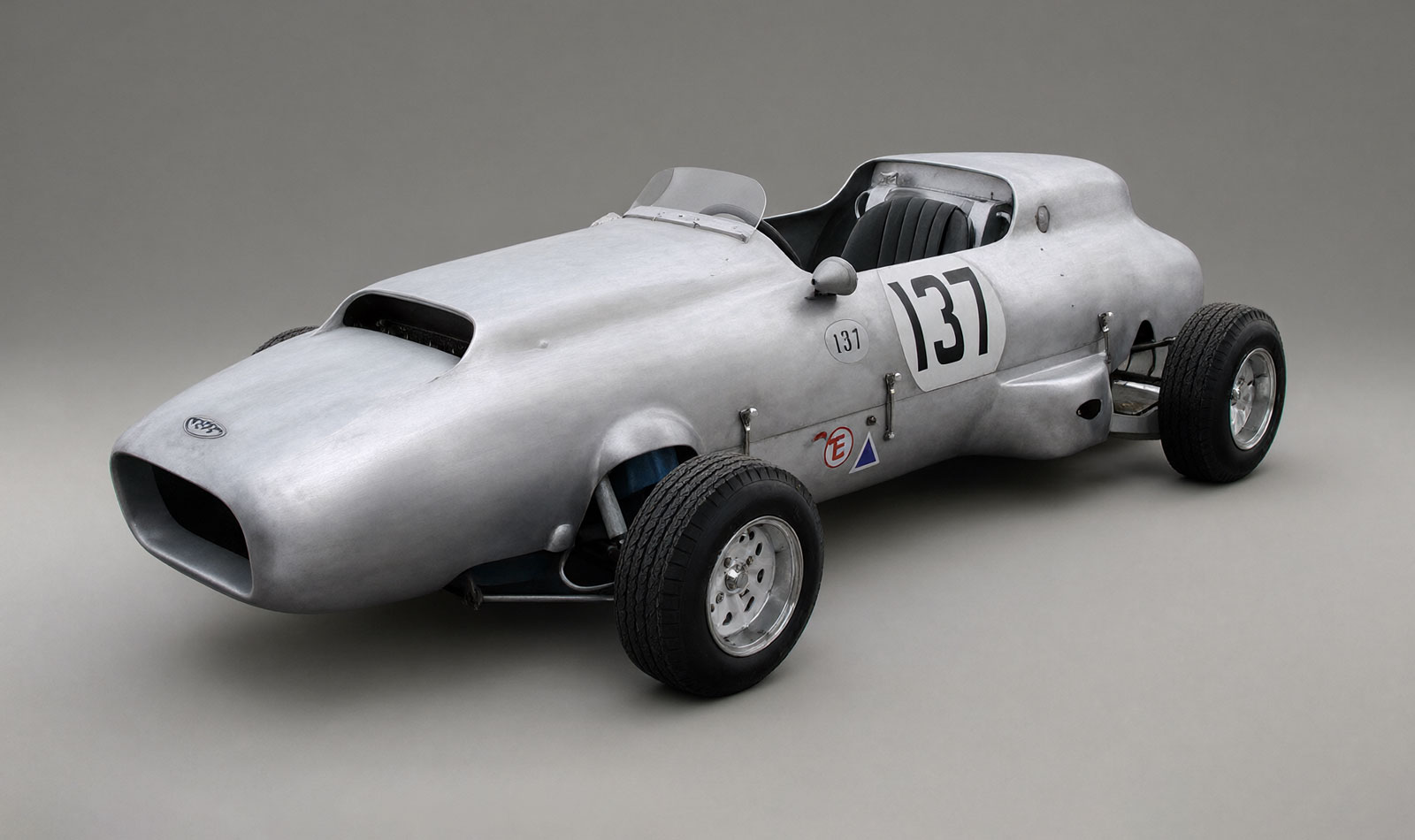
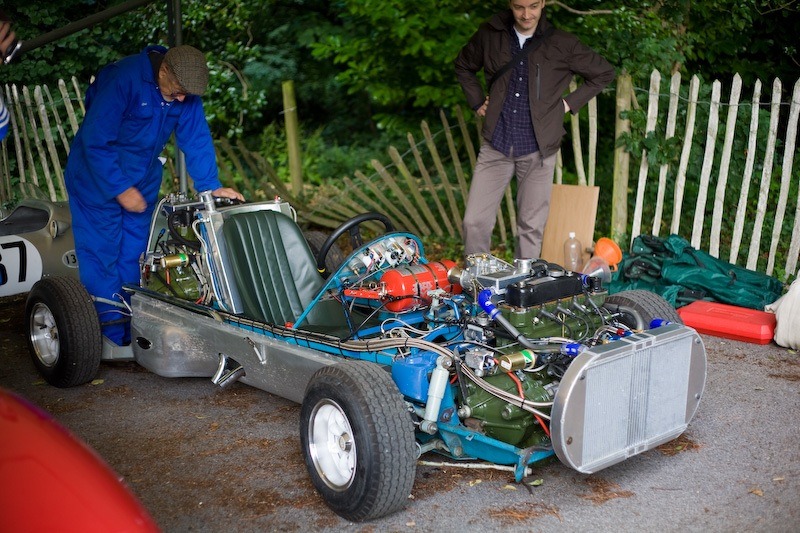
The Deep Sanderson DS 105 “Twinny” was a one-off British single-seater built by Chris Lawrence with two 1,071 cc Mini Cooper engines at each end.
Each power unit drove its own axle, giving the car four-wheel drive without a single engine supplying all four wheels. Although generally identified as the DS 105, Lawrence referred to it as the DS401 in his autobiography.
The project reached Lawrence Tune in the autumn of 1963 through Downton Engineering. Racing cyclist Reg Harris had approached Daniel Richmond at Downton about building an entertaining hill-climb car. Twin-engined Minis were attracting attention at the time, and Richmond persuaded Harris to commission a single-seater using the same principle.
However, restrictions connected with Downton’s BMC contract prevented Richmond from undertaking the complete build. When Lawrence visited Salisbury with his Deep Sanderson 301 Le Mans car, Richmond suggested transferring the chassis work to Lawrence Tune while Downton continued to supply the engines.
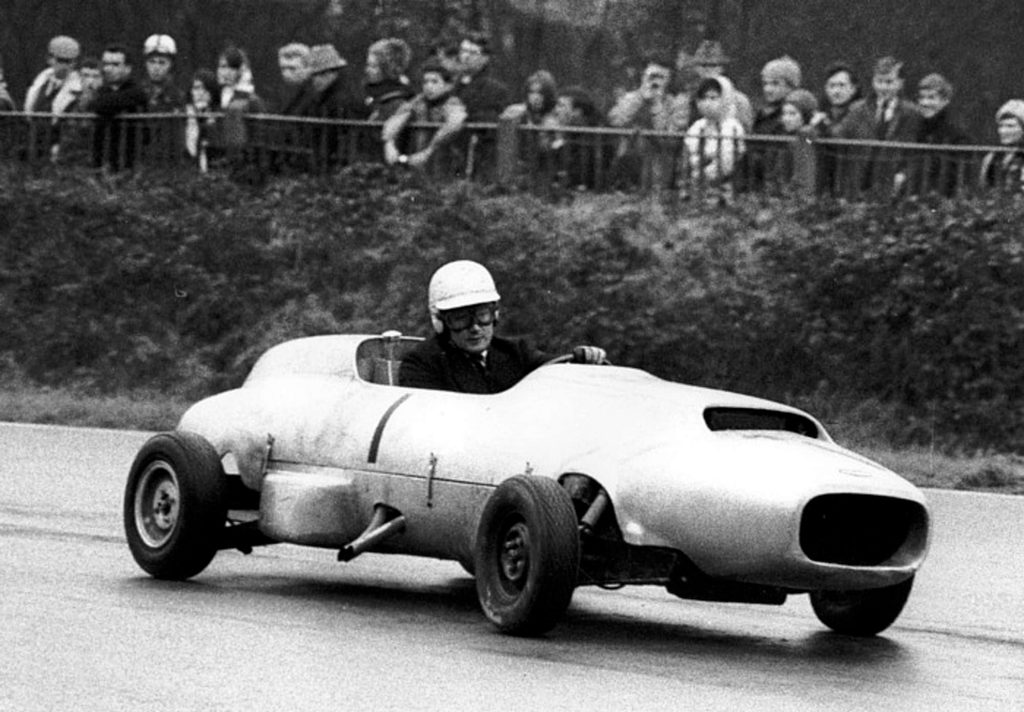
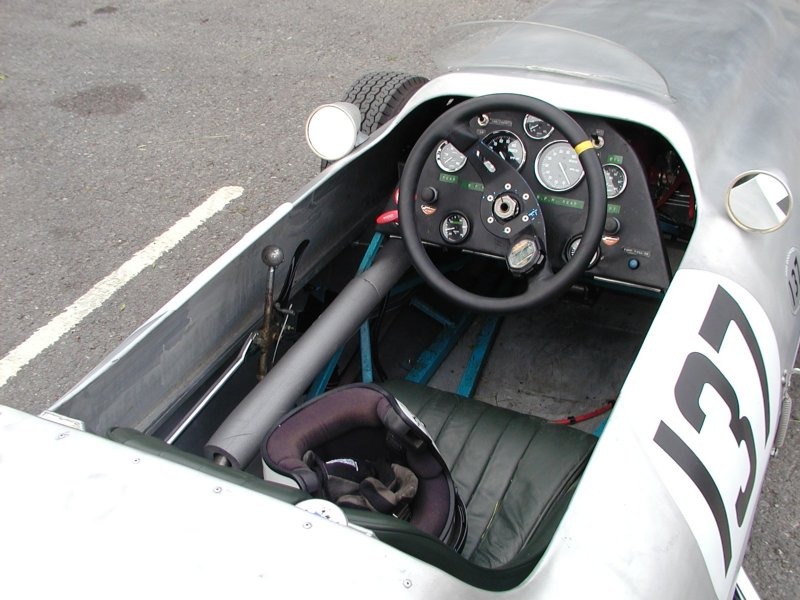
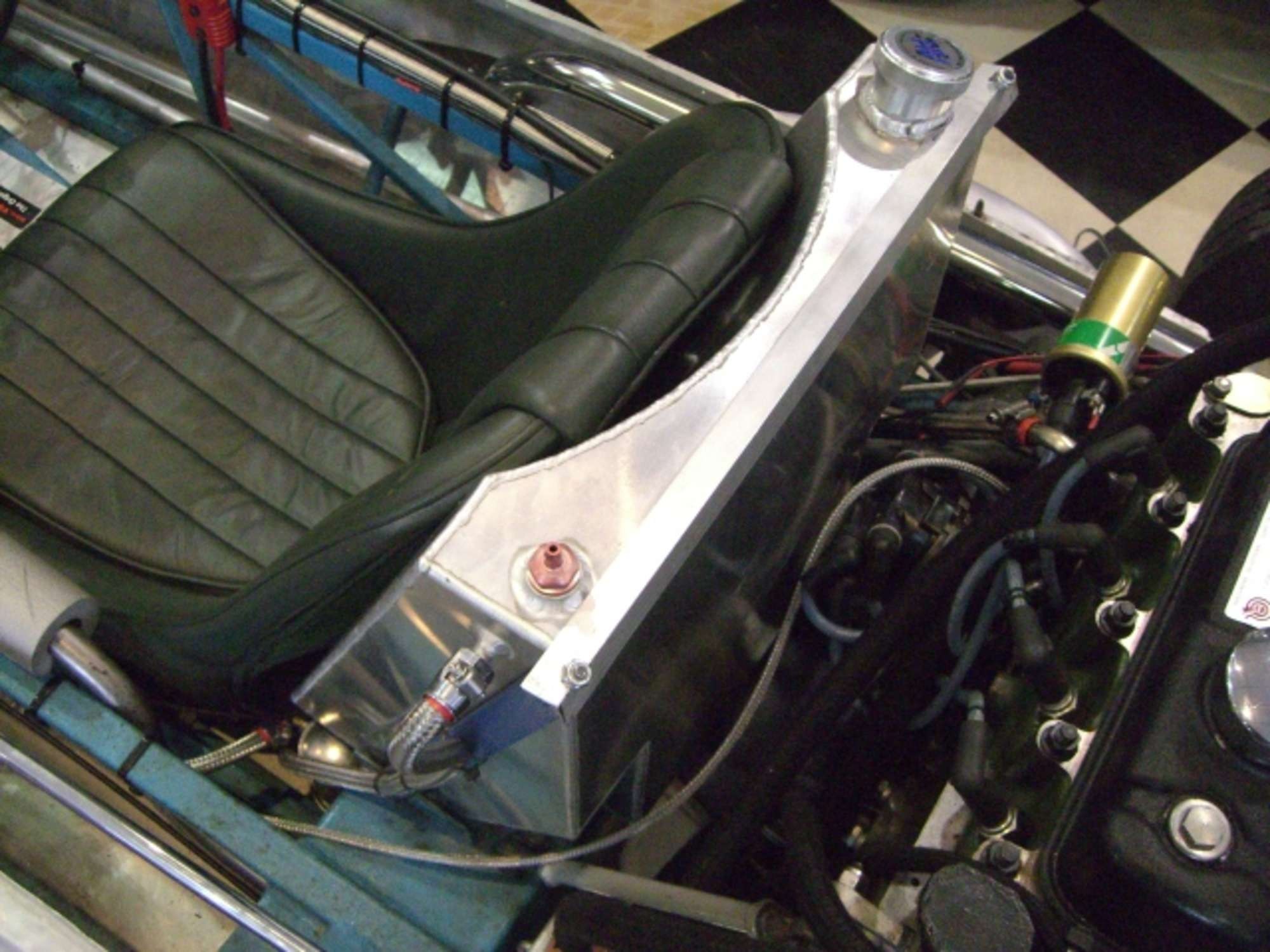
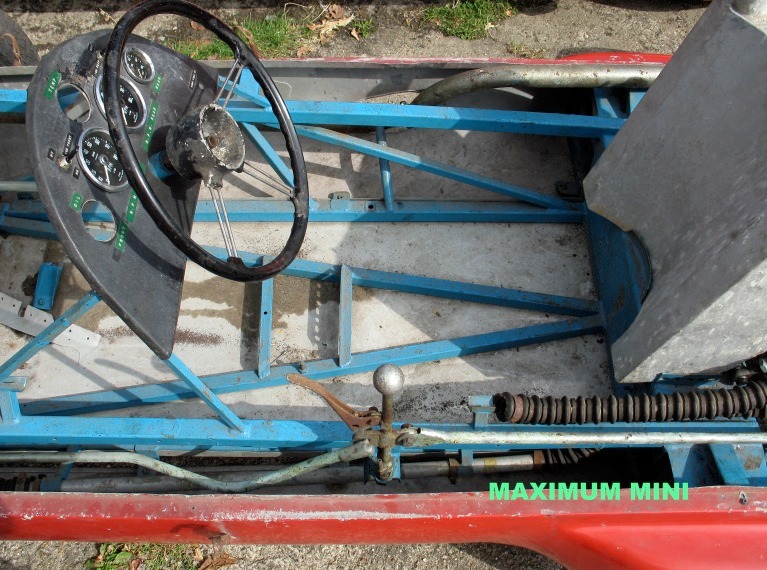
Lawrence kept the structure as straightforward as possible. A standard Mini front subframe was connected to a Deep Sanderson rear crossmember and suspension by strategically positioned lengths of 1½-inch square tubing. The driver sat between the engines, with a small fuel tank immediately behind him.
The difficult part was not the basic chassis but the controls: mechanical linkages had to operate two gearboxes, two throttles and two clutches together. The car also used twin hydraulic clutch master cylinders and two radiators joined at the front.
Before development was complete, Harris announced that he could not afford the car. This left Lawrence with an unfinished commission and a dispute over payment for the Downton engines. He initially maintained that the engine contract remained between Downton and Harris, but subsequently paid for them after using the car in competition. At the Racing Car Show at Olympia in January 1964, he settled the bill by taking cash to the Downton stand.
The Twinny made its competition debut at Brands Hatch on Boxing Day 1963. It was still unpainted and attracted press attention, but its performance was inconsistent because Lawrence had made an error in the cooling-water circuit. By the following Easter Monday Formula Libre race at Mallory Park, that problem had been corrected and another control mechanism had been added.
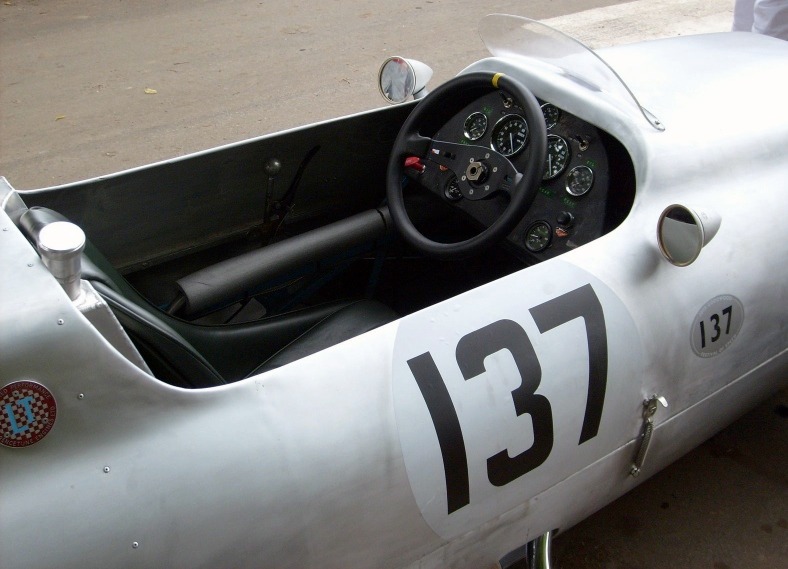
This new linkage allowed Lawrence to alter the relationship between the two throttles. Bringing the rear engine in first helped the car rotate into Mallory’s tight hairpin, while making the front engine respond first encouraged gentle understeer through the long right-hand curve at Gerrards.
Rather than merely synchronising both engines, Lawrence could deliberately introduce an imbalance to change the car’s behaviour. He remembered laughing inside his helmet as he experimented with the arrangement.
The wheels proved less successful. Lawrence fitted lightweight ten-inch Deep Sanderson alloy wheels originally designed for the 850 cc DS301 road-car kit, with brake drums cast into the wheels themselves.
They were intended primarily for sprint and hill-climb use and did not withstand the Twinny’s circuit demands. According to his account, the left-front tyre failed after precisely seven and a half laps on three successive occasions, each time at the same place on the back straight.
Further work was interrupted after Lawrence suffered a serious road accident while returning from the 1964 Le Mans race. Following treatment in Paris and a lengthy absence from his workshop, he discovered that the Twinny had disappeared without a recorded sale.
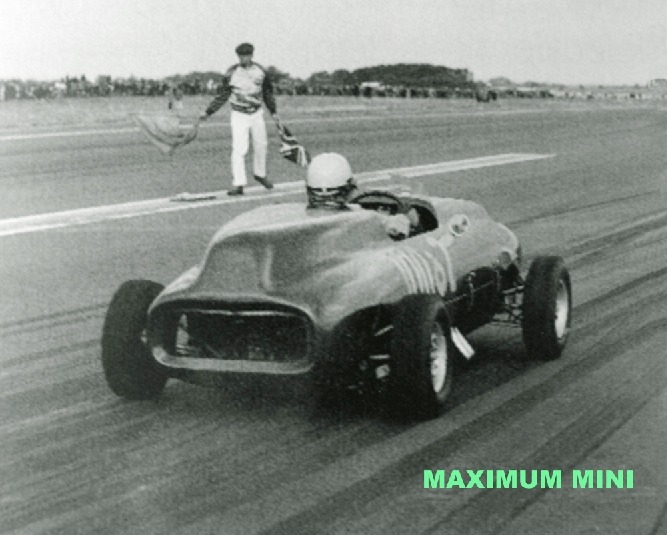
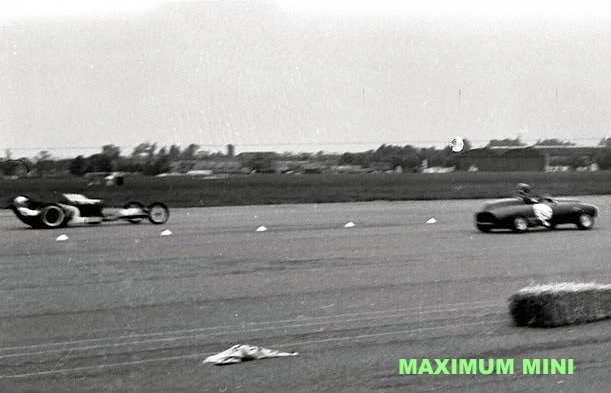
He eventually located it at John Pearce’s premises in Southall and recovered it in time for Sidney Allard’s Festival of Speed and Sport, a series of six drag-racing meetings held over three consecutive weekends.
For these appearances, the car received an American-style paint scheme with large white numbers outlined in red against a royal-blue metallic finish. Lawrence had not yet resumed driving, so Tony Kinch of Acton Garage took the wheel.
The Twinny’s relatively low weight, four-wheel-drive traction and manageable torque made it particularly effective during the early part of a standing-start run.
Although Kinch did not take an overall victory, the car became a prominent attraction in the morning eliminators, where the first competitor across the line won. It twice beat hill-climb champion Tony Marsh in the four-wheel-drive Ferguson P99 Formula One car. Lawrence recorded the Twinny’s best standing-quarter-mile time as 10.9 seconds.
Pearce subsequently bought the car, telling Lawrence that he had a buyer in Houston, Texas. Lawrence assumed it had gone to America, but the proposed export did not take place.
The car later passed to collector Duncan Rabagliati, who acquired it after mentioning in a pub that he was looking for Deep Sanderson badges for his DS301. Faced with the likely cost of restoring the single-seater, he eventually offered it for sale again.
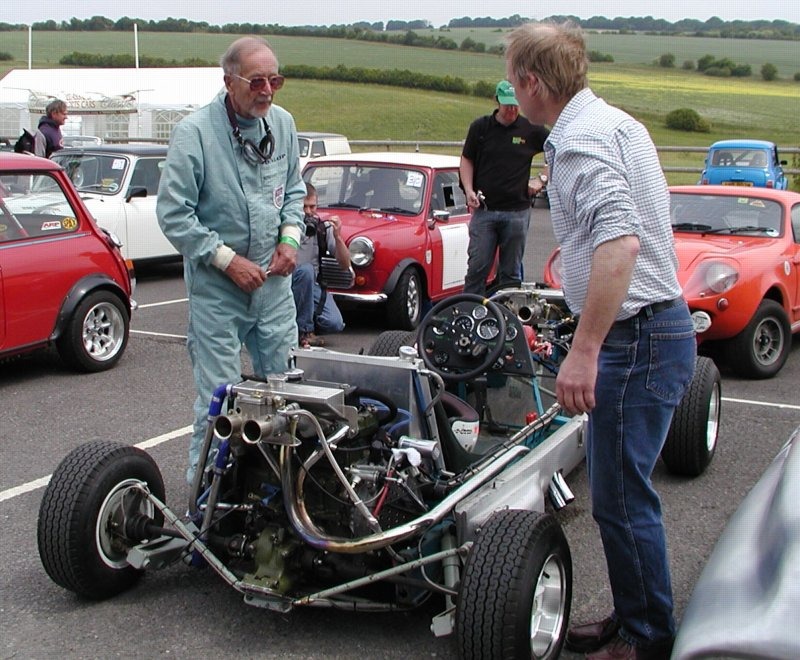
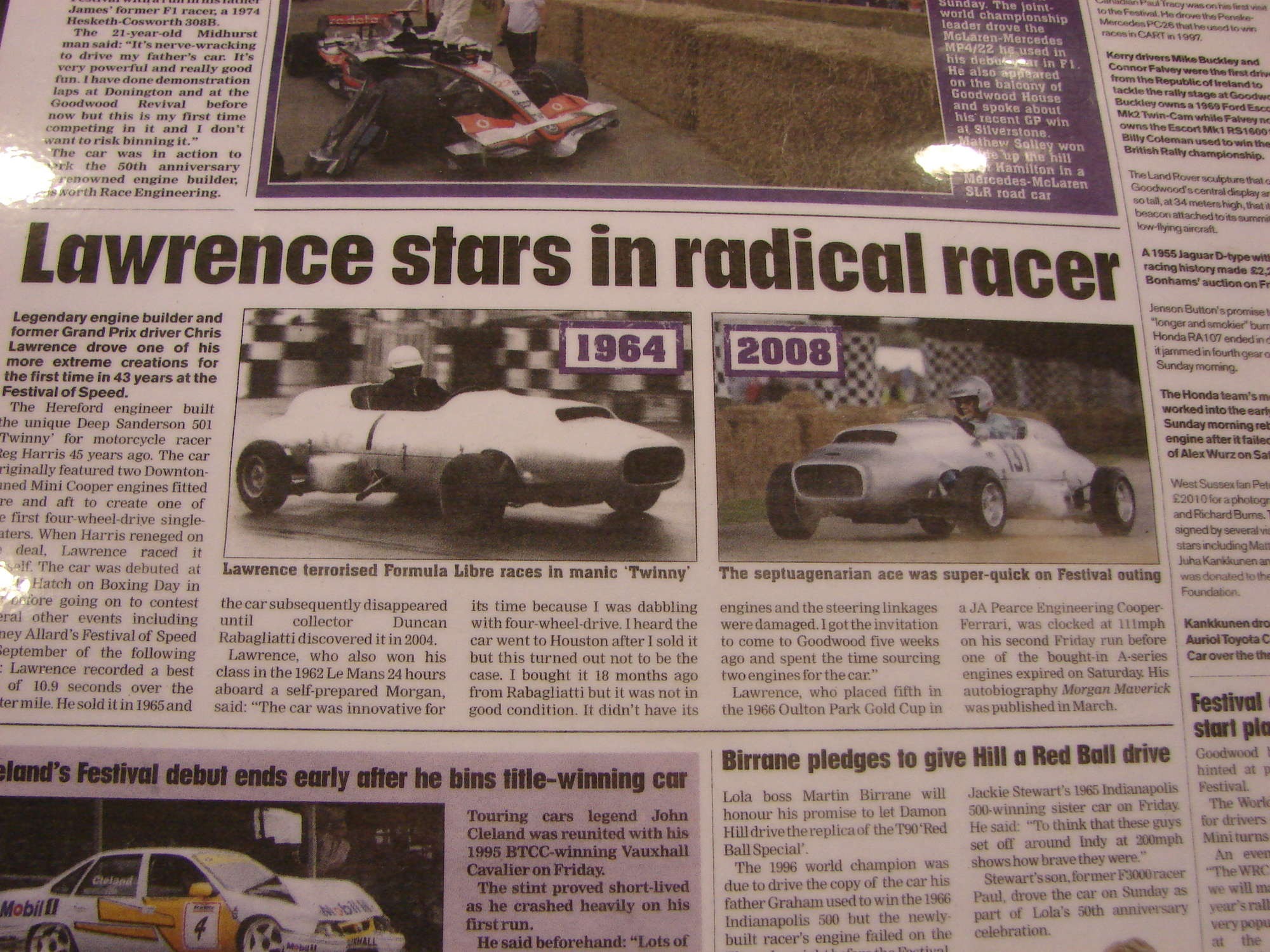
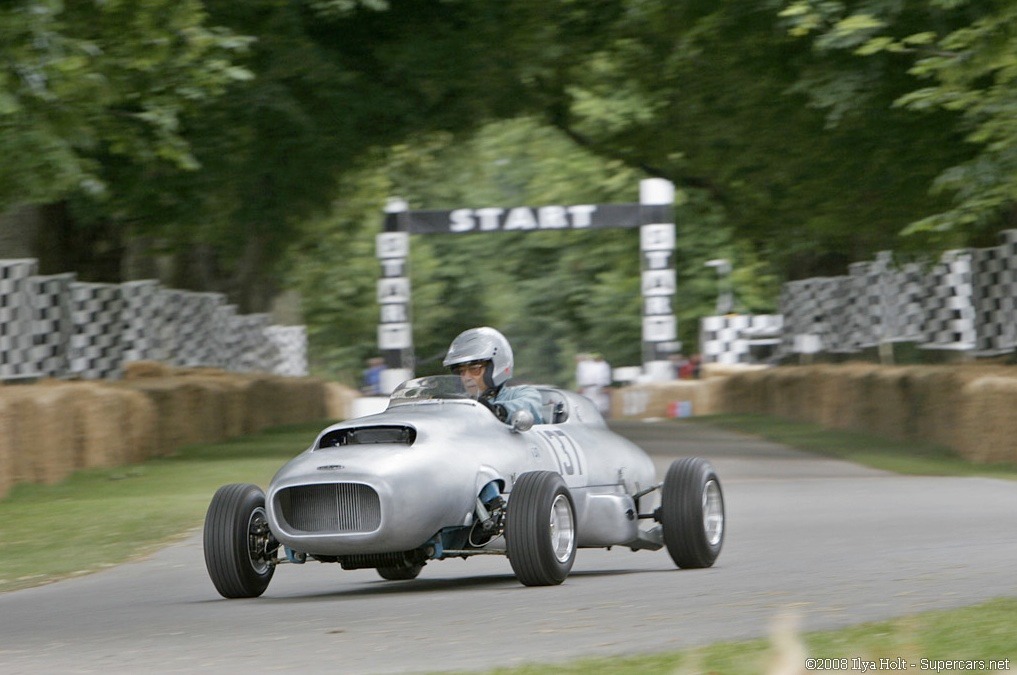
The Twinny returned to Lawrence in 2007 and underwent a painstaking restoration over approximately twelve months. He drove it at the 2008 Goodwood Festival of Speed, where it was reportedly recorded at 111 mph.
In June 2009, Lawrence also demonstrated the restored car at the Downton Engineering Works Social Club’s Mini day at Gurston Down. He continued refining it before his death in August 2011.