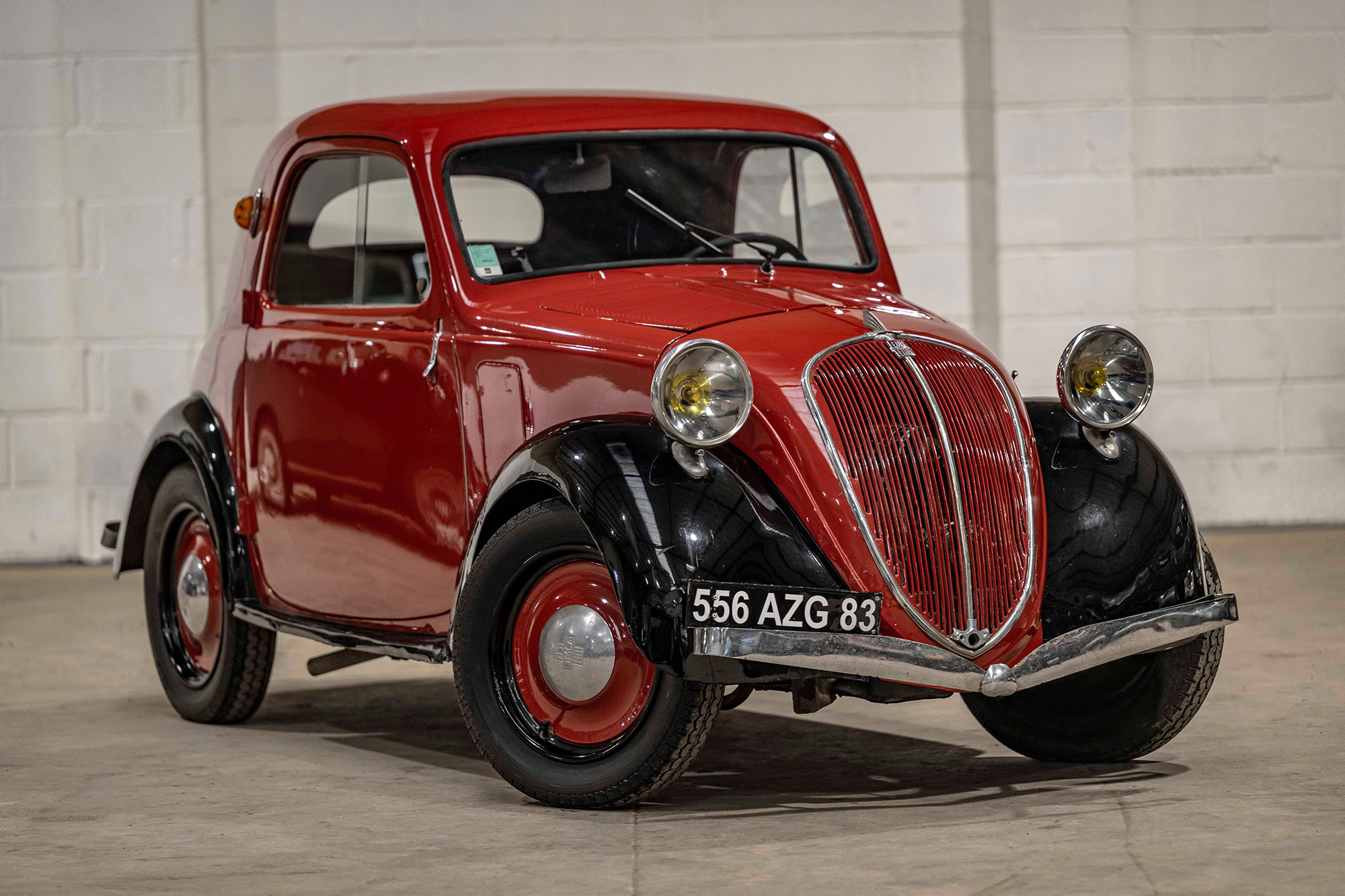
1938 Fiat Simca 5 Topolino

Dante Giacosa is arguably one of the most underappreciated automotive designers of the 20th century. While names like Porsche, Piëch, and Issigonis are celebrated worldwide, Giacosa—despite his striking name and remarkable talent—rarely gets the recognition he deserves.
Born in Rome in 1905, he attributed his engineering intuition not to mathematics or mechanics, but to his studies of Latin and ancient Greek. He believed that these languages gave him a sense of proportion and balance, which he considered essential to his work.
Unusual as it sounds, it clearly served him well: by 1927 he had joined Fiat, initially designing massive multi-cylinder aircraft engines, and within just a couple of years he had become the company’s go-to specialist for small cars.
Like several of his German contemporaries, Giacosa soon found himself involved in a project deemed vital to the future of his country. Mussolini personally ordered Fiat to create a small, affordable family car capable of carrying two adults and two children, with a target price of 5,000 lire.
Fiat’s chief designer, Oreste Lardone, quickly produced a prototype—but it famously caught fire. Lardone was dismissed, and Giacosa suddenly had the chance to take the lead. His response was a masterstroke.
His tiny, simple car—originally called the Zero—used a 500-cc water-cooled engine and measured just over three meters in length. With its sloping radiator and charming expression, it was quickly nicknamed Topolino, the Italian word for Mickey Mouse.
But were Fiat truly the pioneers of the pre-war people’s car? The answer is both yes and no. Some accounts claim that France’s Simca launched its version first, though this is complicated by the fact that Simca was effectively Fiat’s French manufacturing arm at the time.
The first Simca Cinq rolled out of the Nanterre factory in March 1936 and was nearly identical to the Topolino. Advanced features for such a small car included independent front suspension, a four-speed gearbox, hydraulic brakes on all four wheels, and a 12-volt electrical system.
This example of the Simca Cinq shows exactly why the model was such a hit in both Italy and France. While Fiat produced more than half a million Topolinos, Simca made less than 10 percent of that number, making the French variant much rarer.
This particular car dates from 1938, just as the world was sliding toward war. Its early history remains a mystery until 2021, when its current owner, Chris, found it at Château de Berne in France. It arrived in the UK later that year and was officially registered in 2025, making Chris its first UK keeper. With no odometer and almost no paperwork, its past is largely unknown, so we refer you to the extensive photos to appreciate its condition, charm, and rarity.
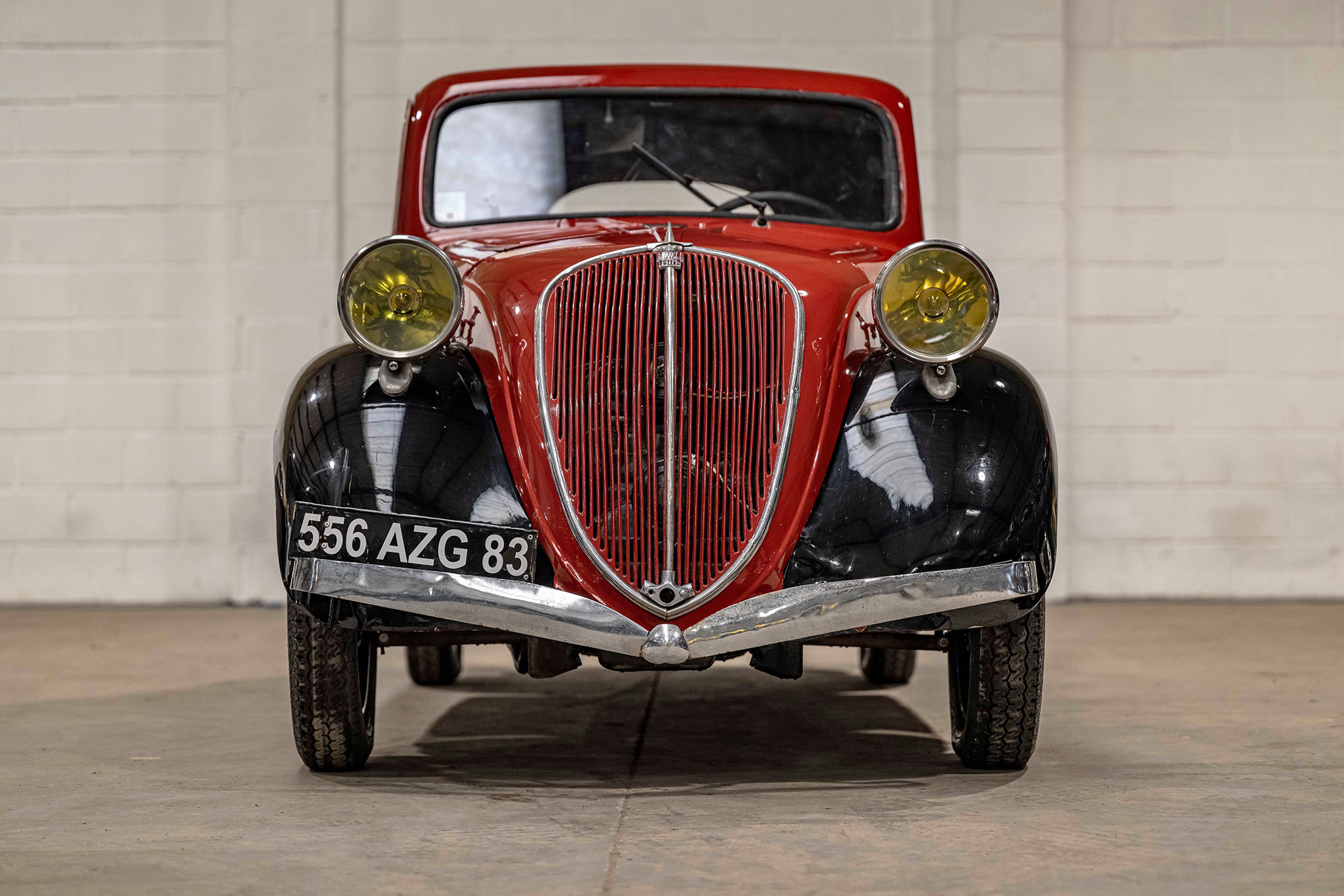
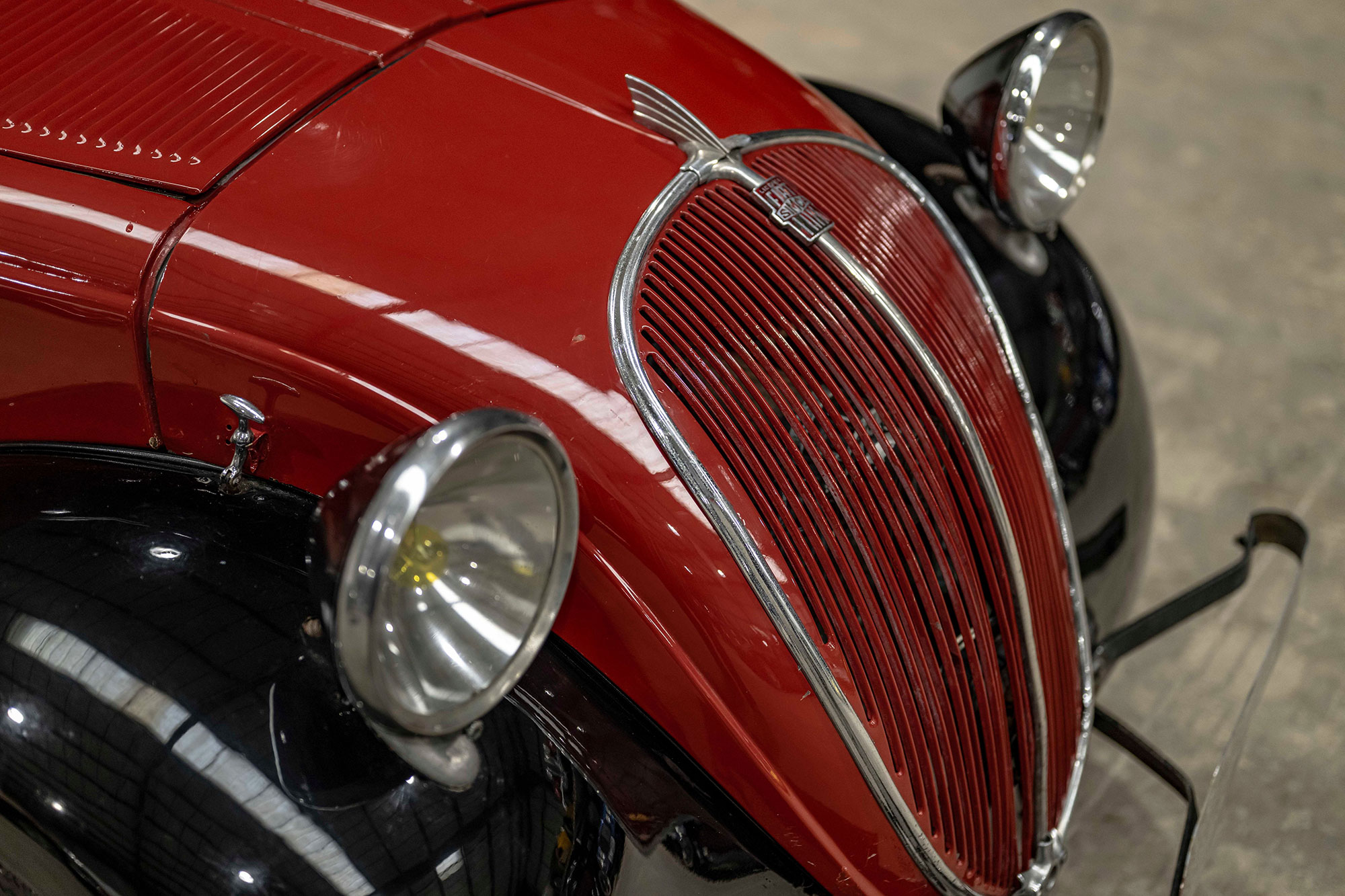
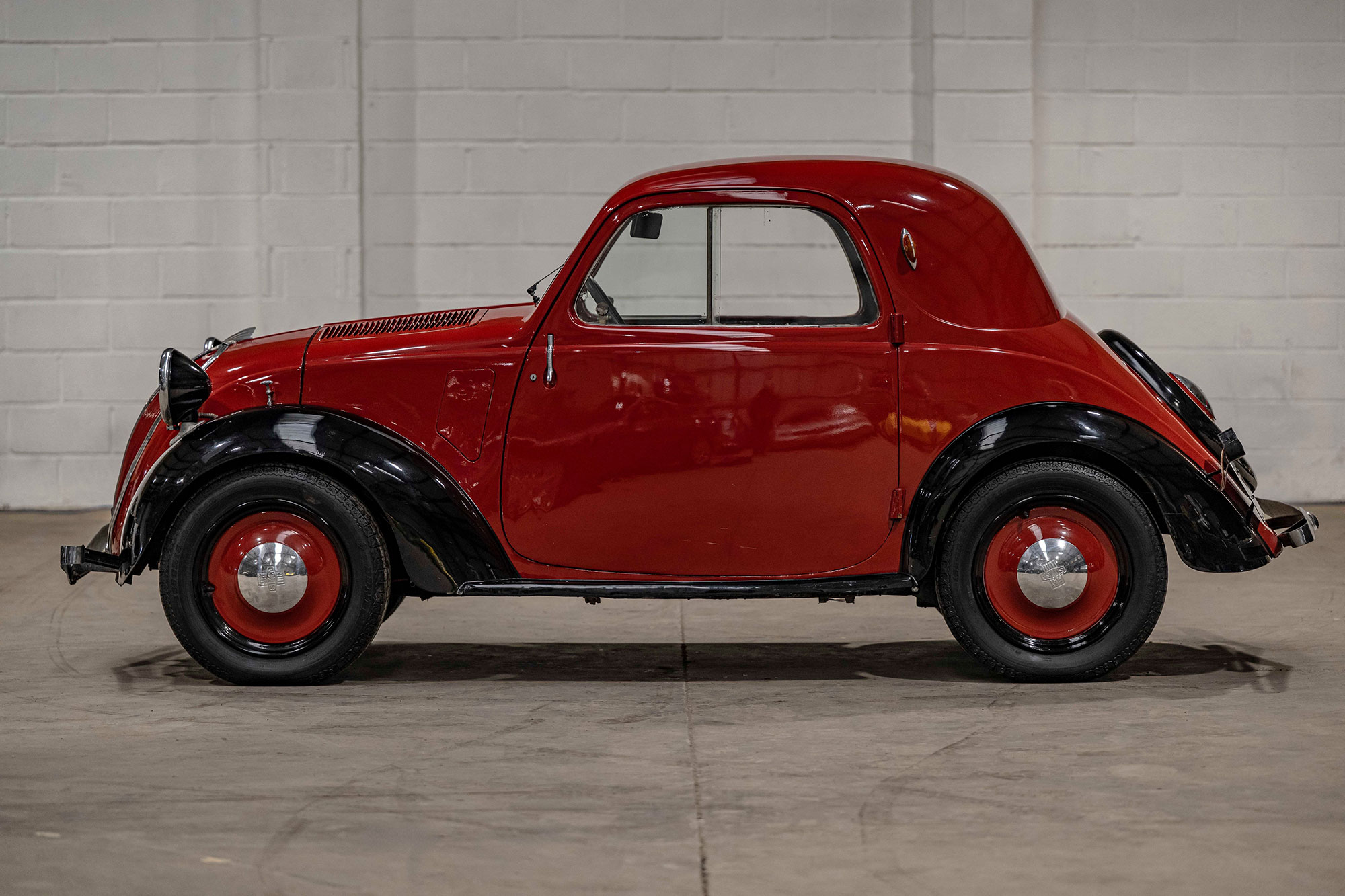
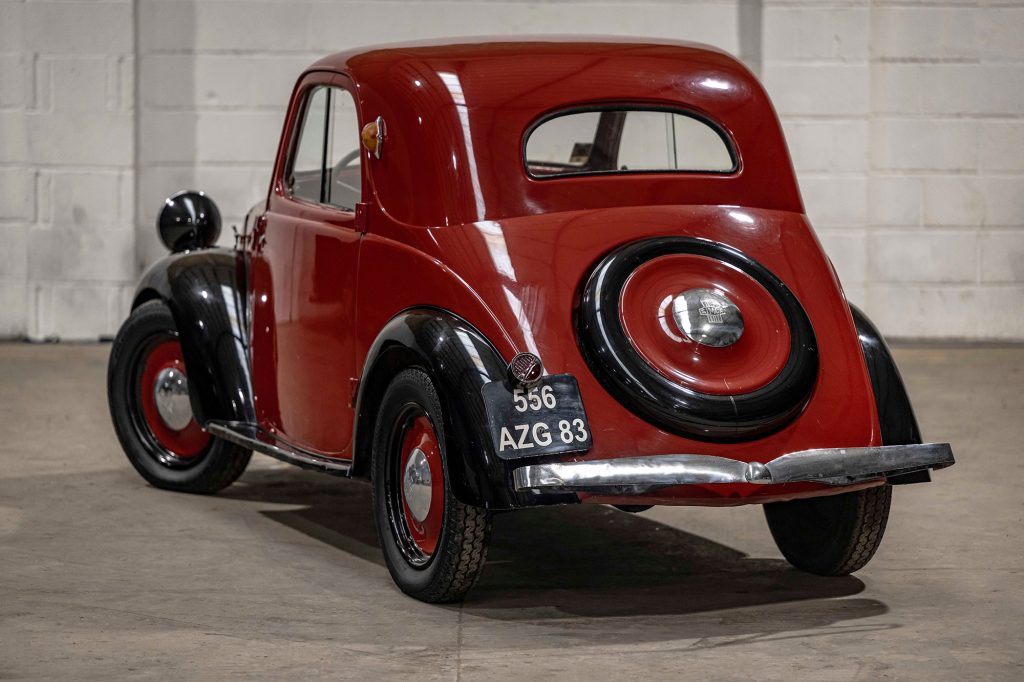
One look at this tiny Simca explains the Topolino nickname. Its large, external headlights and long, shield-shaped grille give it a face full of character—cheeky, expressive, and instantly endearing. From the side, the car looks abruptly shortened, which only adds to its quirks and personality.
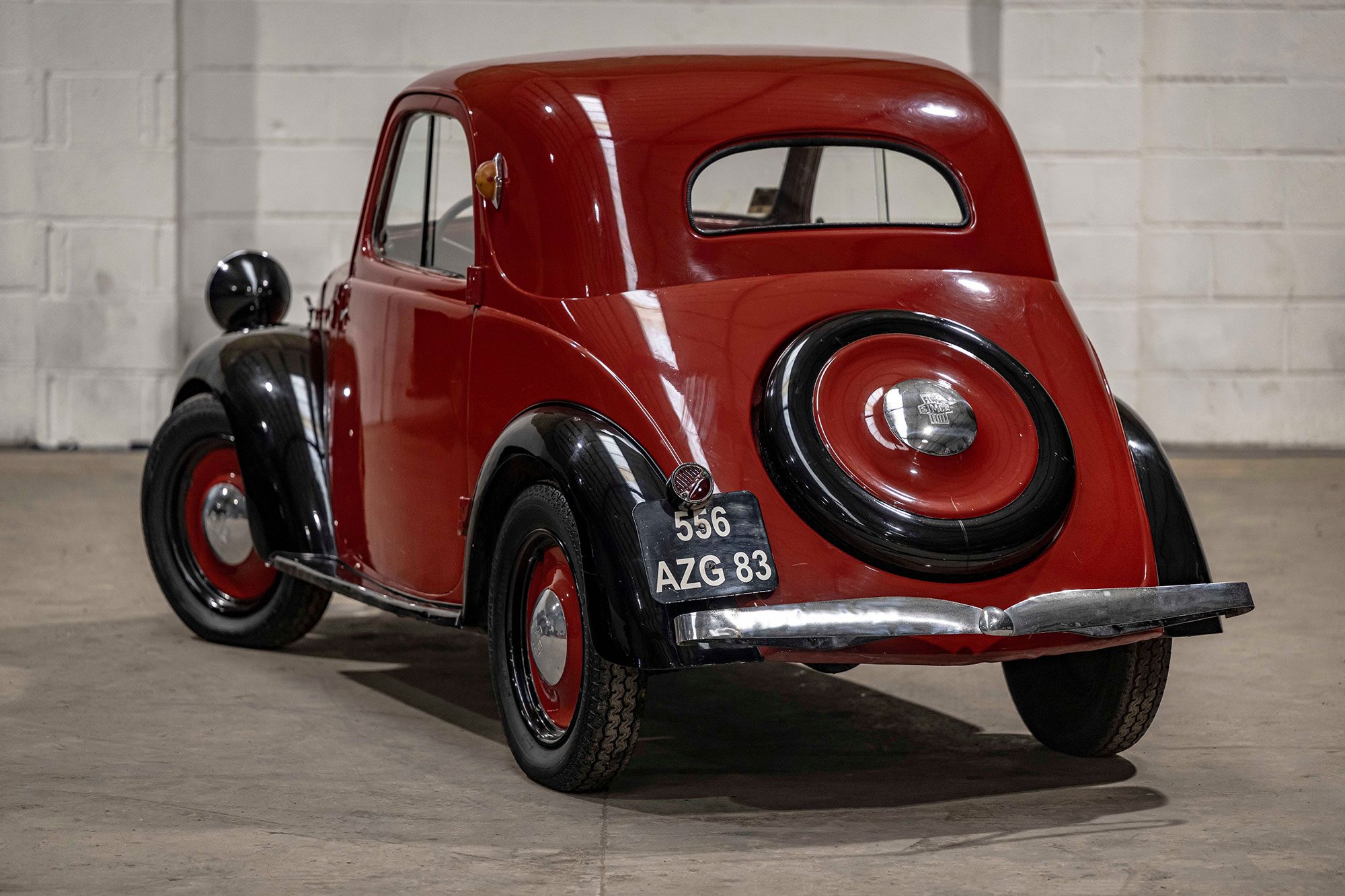
Its condition suggests a recent restoration. The bright red paint is thick and glossy, paired with black wings and a black spare-wheel cover that add contrast to the simple design. Chrome is used sparingly on the bumpers, grille trim, and door handles. Other delightful details include rear-hinged doors, slim running boards, and a louvred front valance.
There are minor imperfections: paint cracking on the roof, small chips here and there, and a perished windscreen seal. The top of the grille is cracked but intact. Overall, the body remains remarkably well-preserved for an 80-plus-year-old car.
The narrow 15-inch steel wheels are painted black with red centers and finished with embossed chrome hubcaps acknowledging the Fiat-Simca licensing. They’re fitted with slim Dunlop 125-section tyres that still show tread, though their age is unknown.
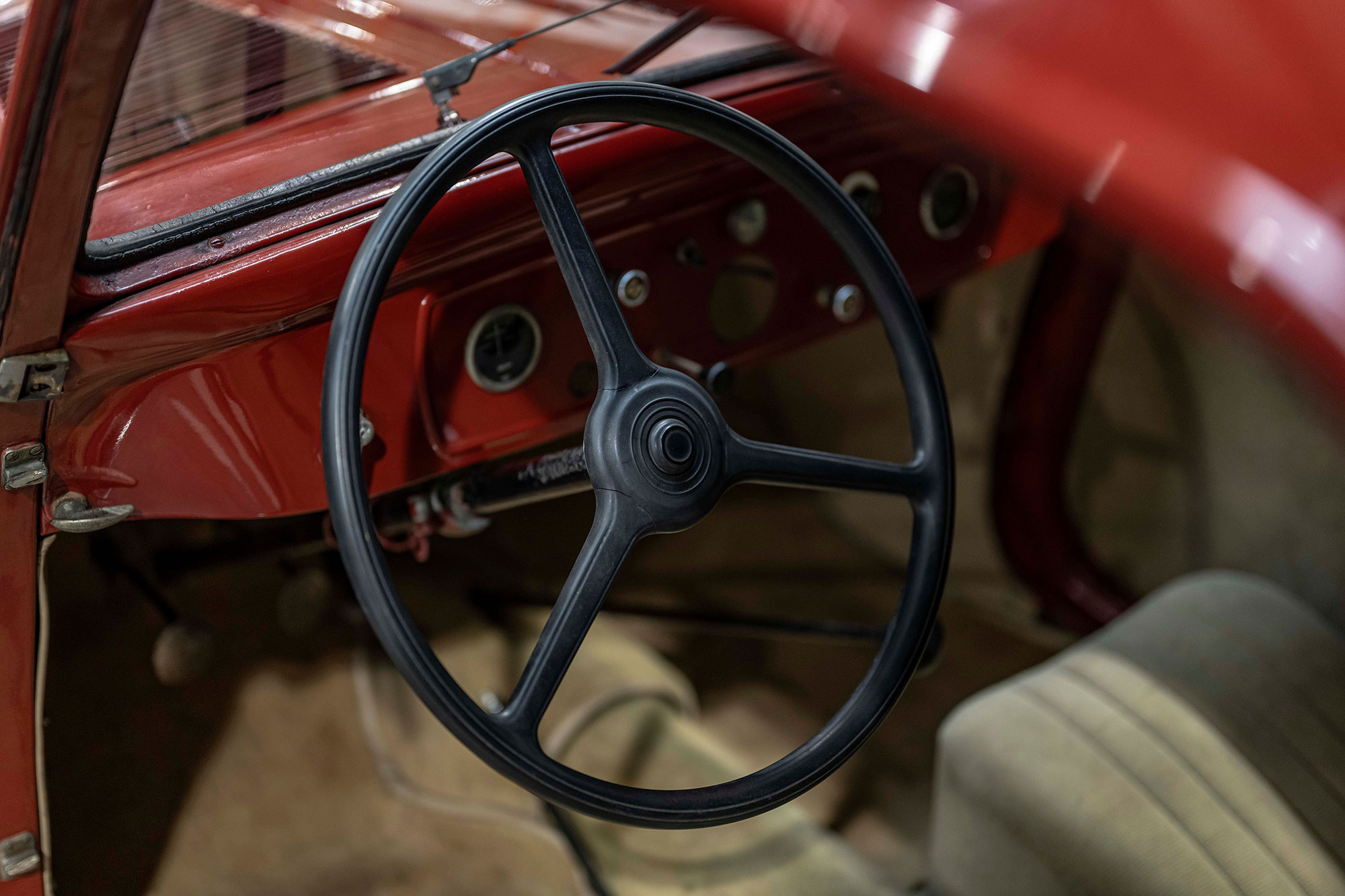
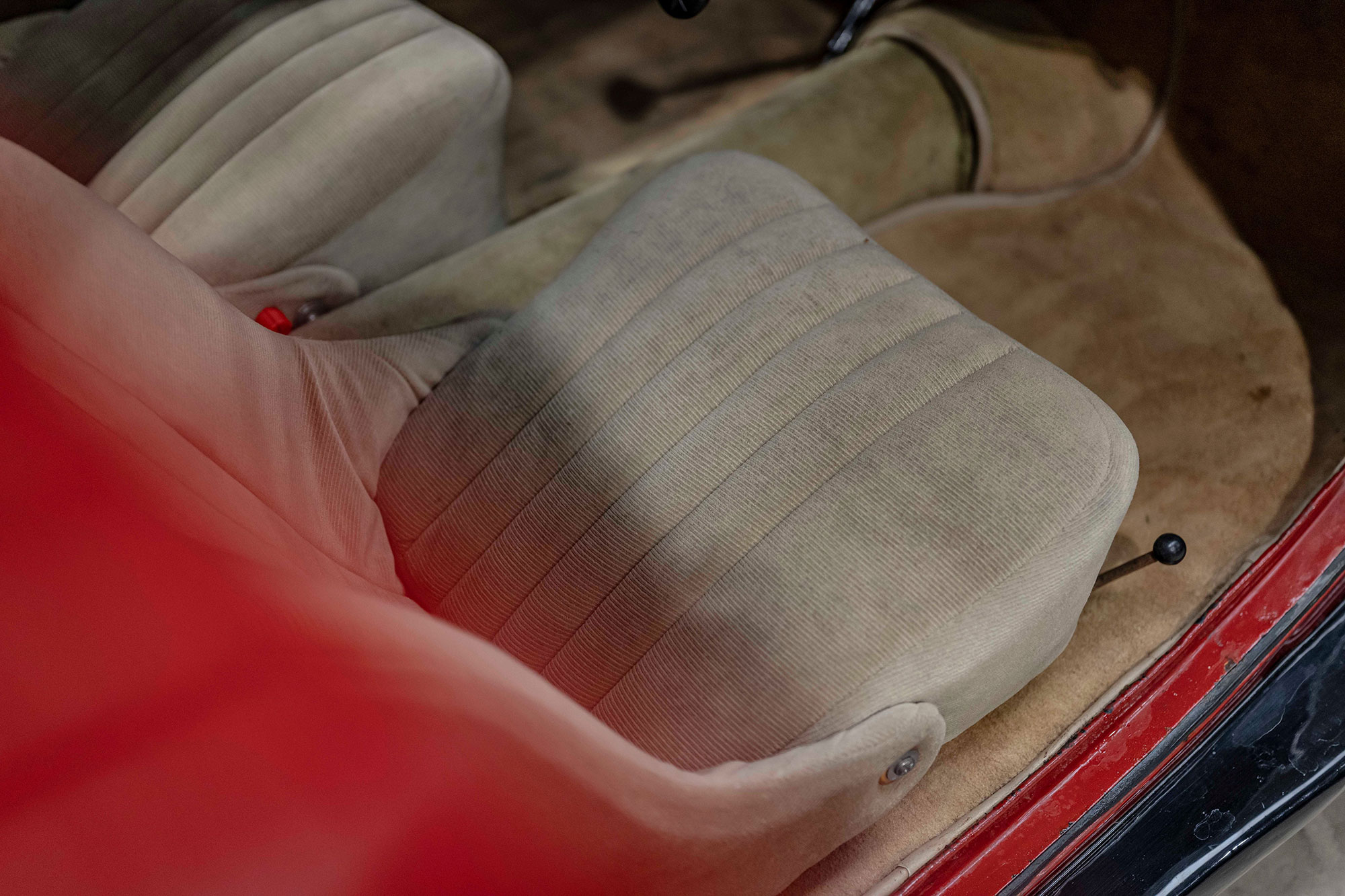
Inside, the Simca is charming in its simplicity but surprisingly plush for a budget car of its era. The seats are upholstered in taupe corded velour with supportive wraparound backrests. Their condition suggests they were redone during the restoration. The deep-pile, biscuit-colored carpets feel unexpectedly luxurious. Behind the seats is a small but useful luggage area. The door cards match the velour trim; the headlining is missing.

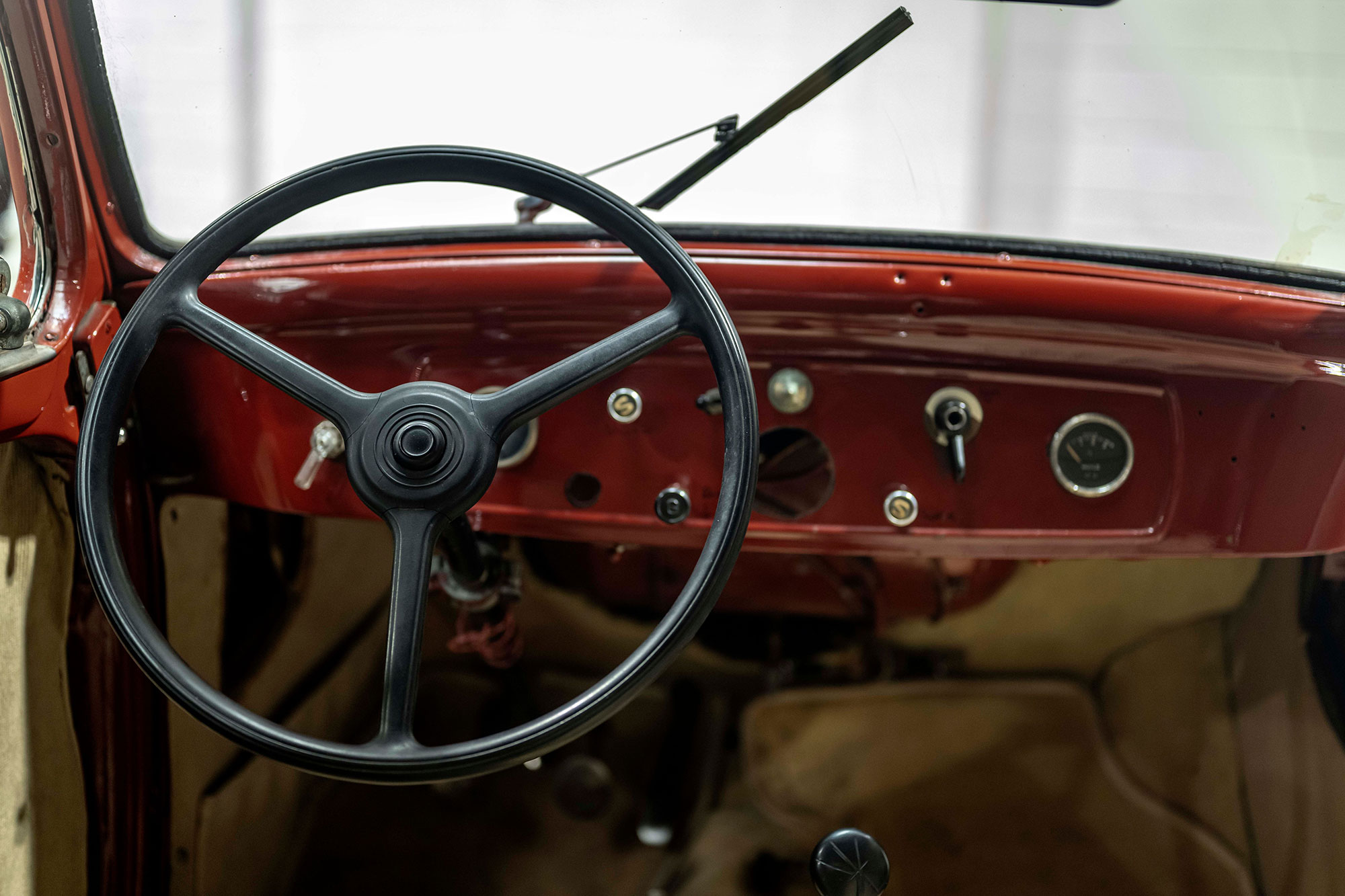
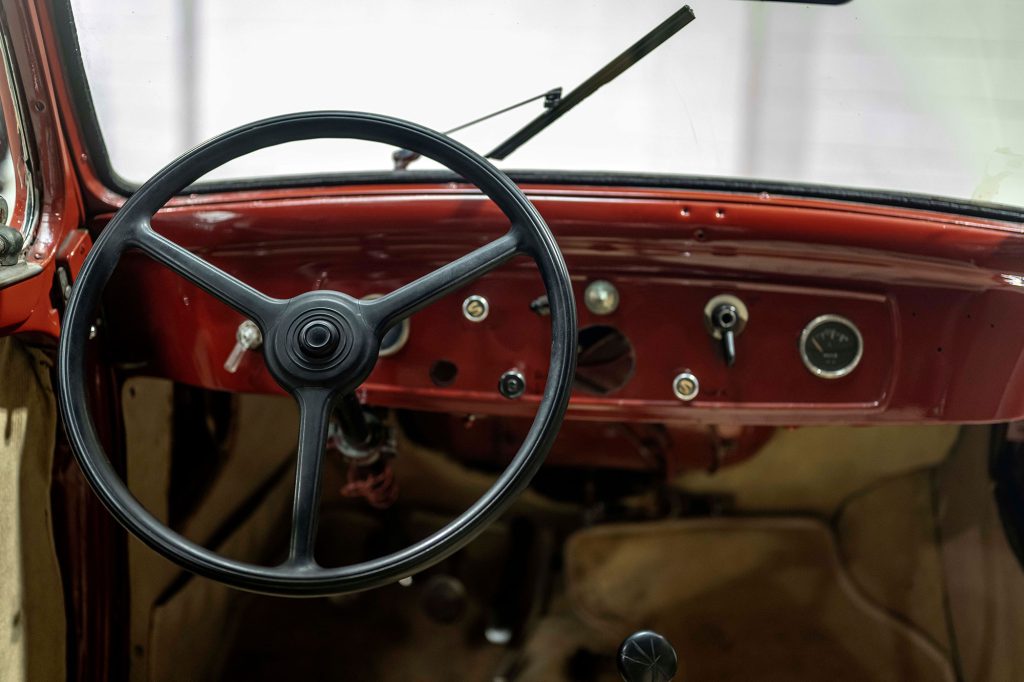
The dashboard is a simple painted metal panel holding just two Jaeger gauges—an ammeter and an oil-level indicator. The space where the speedometer once sat is now empty. A few switches remain, labeled in black marker. The original three-spoke Bakelite steering wheel is still in place.
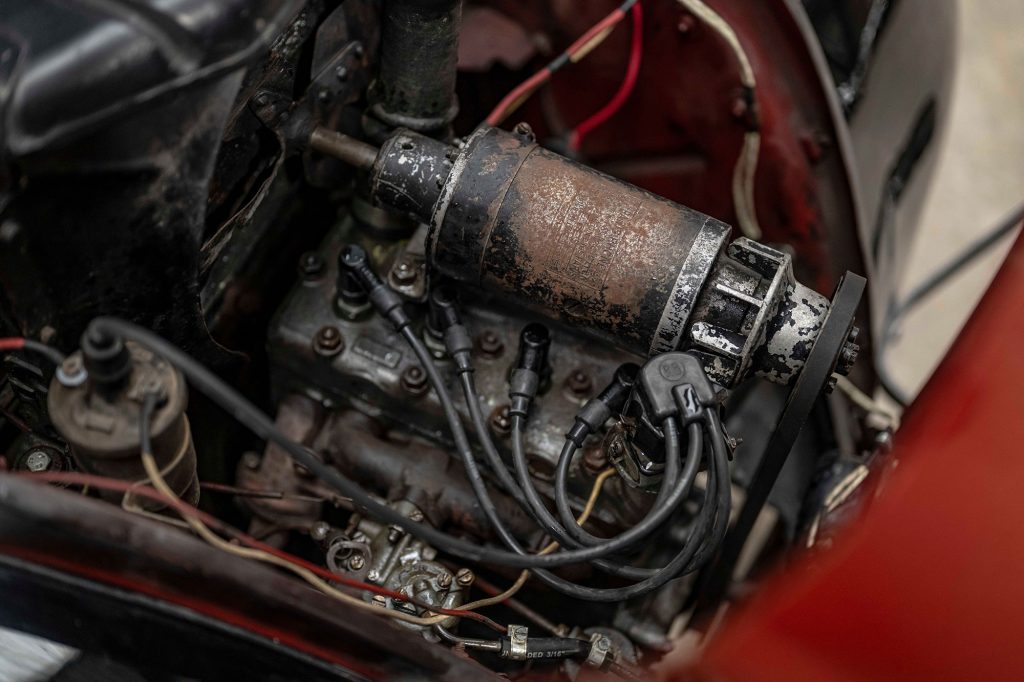
Designed for maximum economy, the Simca Cinq used a 569-cc side-valve four-cylinder engine producing roughly 12–14 hp. Thanks to its low weight—just over 500 kg—it could be driven with surprising liveliness through its four-speed manual gearbox. Period testing by the Automobile Club de France recorded an impressive 3.1 liters per 100 km (around the mid-70s mpg).
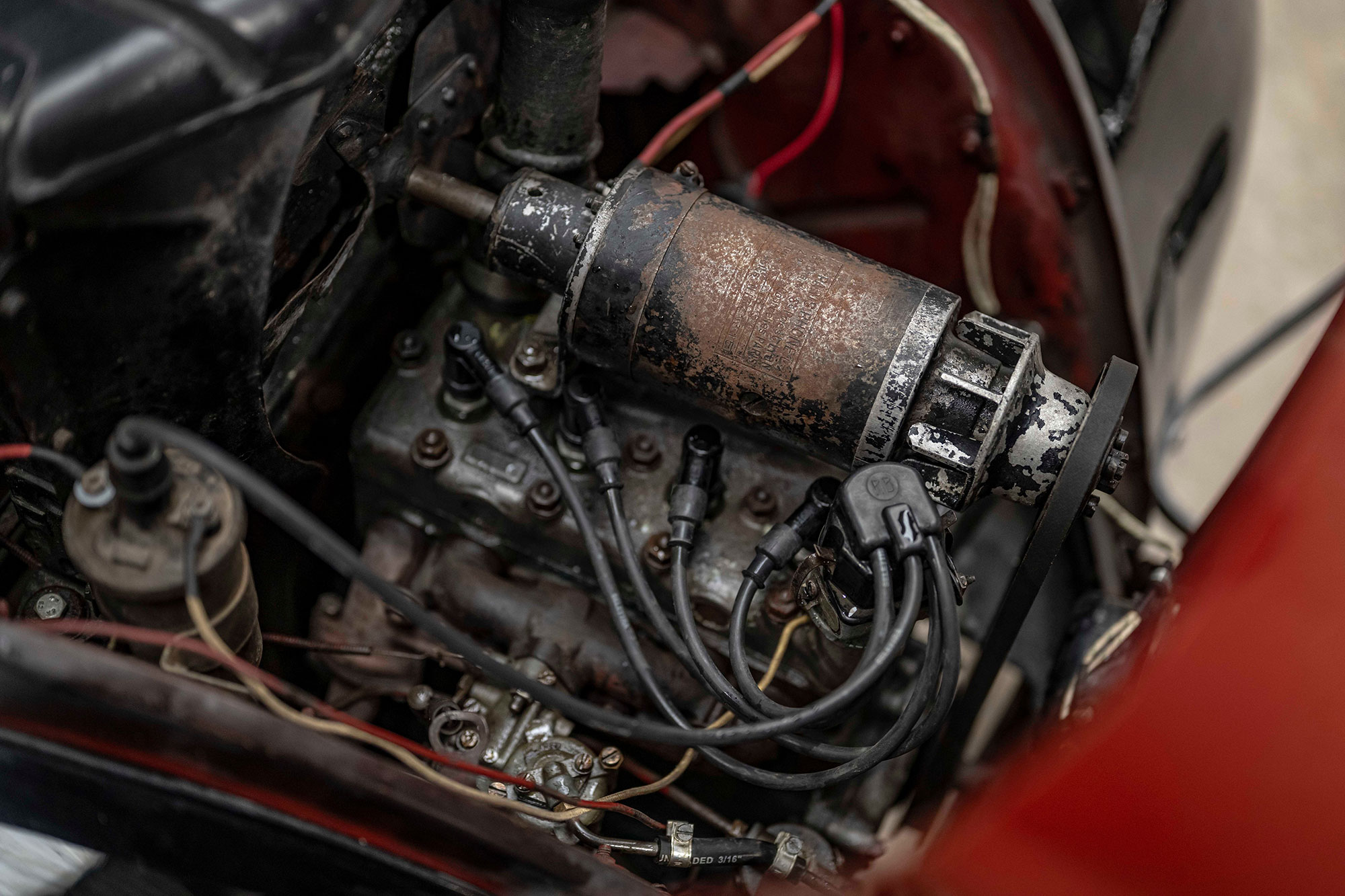
As shown in the accompanying video, this example runs smoothly with no unexpected smoke. Chris reports no mechanical issues. Under the twin louvred bonnet panels you’ll find the original chassis plate (number 3522) and engine number 3566. The forward-hinging nose reveals the compact engine and its unusual rear-mounted radiator. The underside looks solid and well protected by an older application of underseal.
The documentation is minimal but sufficient. The car has a UK V5 in the owner’s name, classifying it as a Historic Vehicle exempt from MOT and road tax. The file also includes paperwork from its 2021 import and a DVLA letter regarding registration. Like the car itself, the history folder is small but rather delightful in its own way.