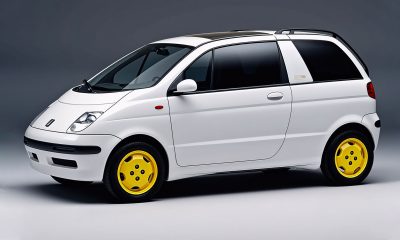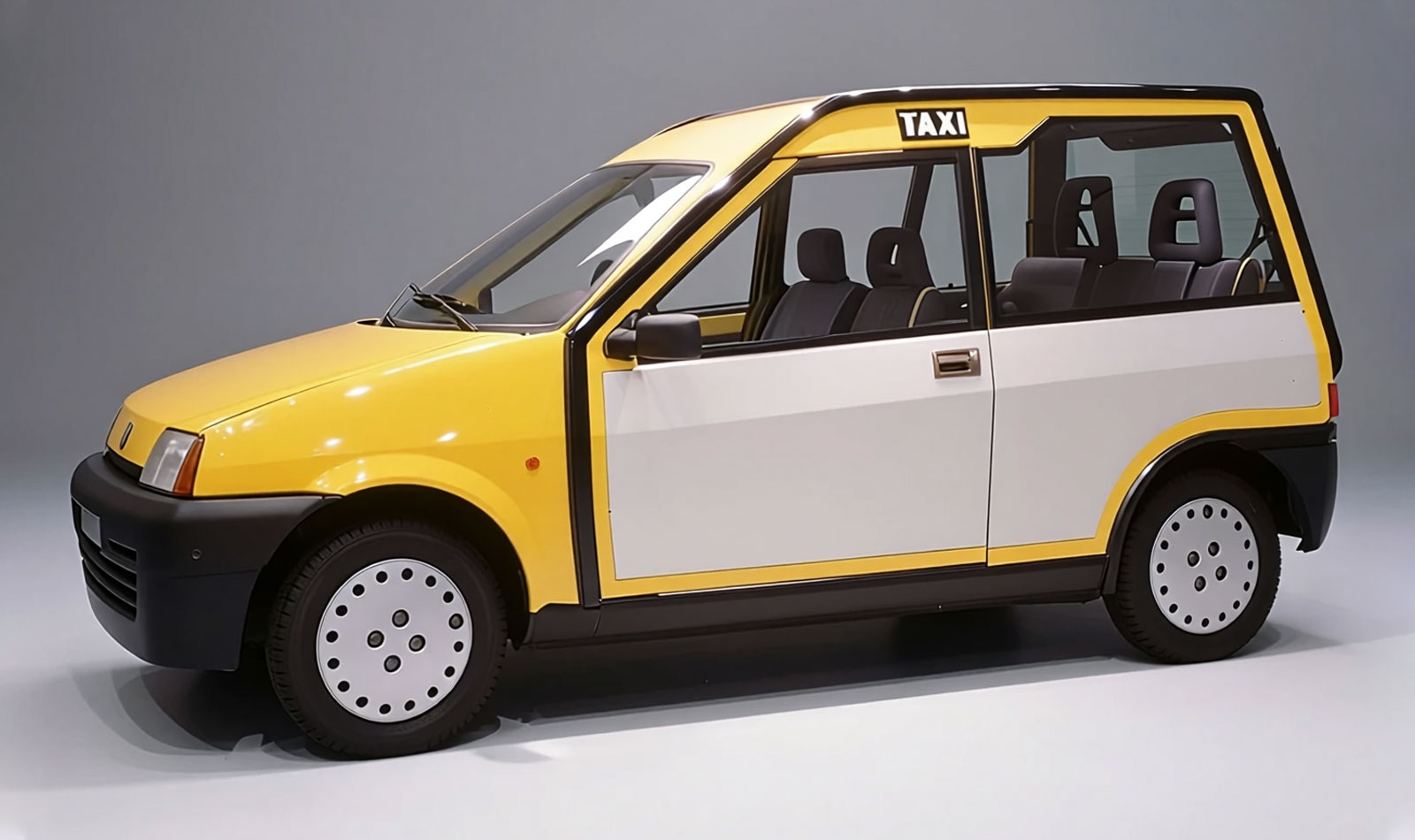
Fiat Cinquecento Babytaxi

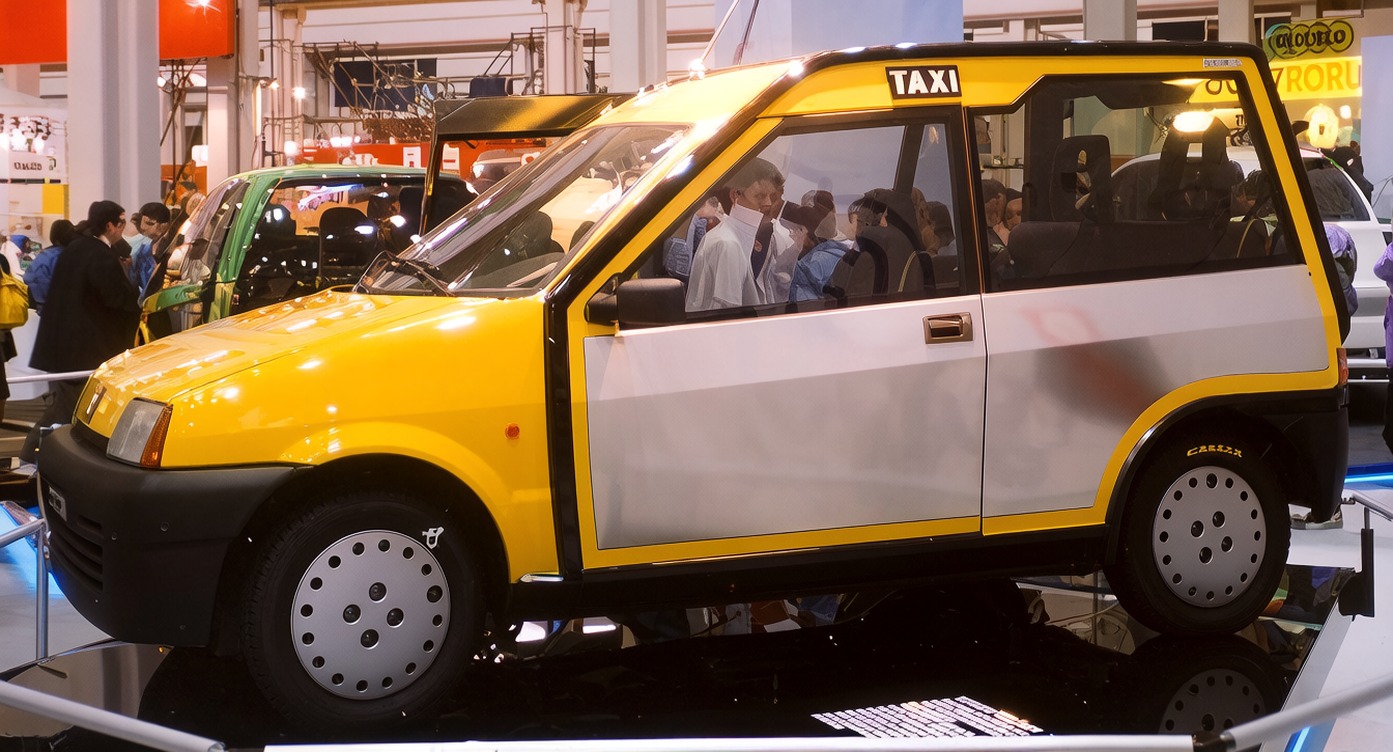
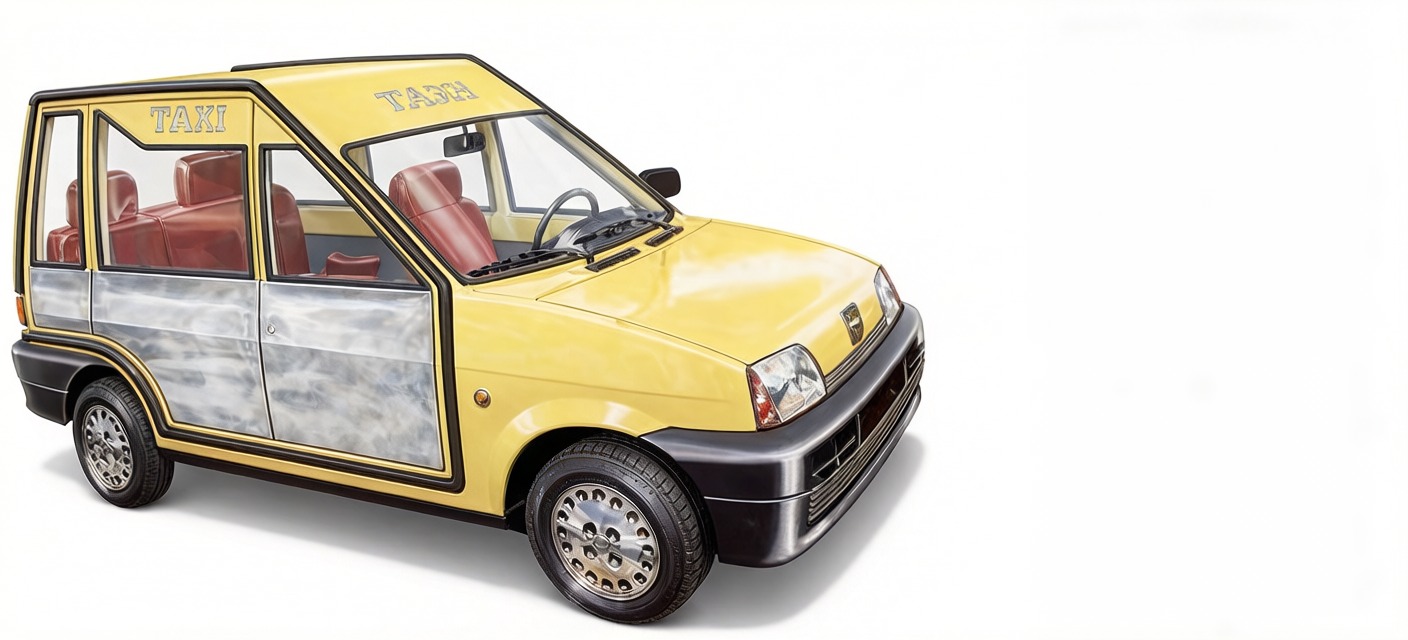
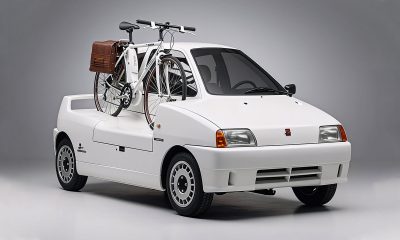
The Fiat Babytaxi by Boneschi was a one-off concept unveiled at the 1992 Turin Motor Show. Built on the Fiat Cinquecento platform, it formed part of a broader exploration into urban mobility solutions based on Fiat’s compact city car architecture.
Developed by Carrozzeria Boneschi, the Babytaxi served as a functional prototype investigating the feasibility of ultra-compact vehicles for city taxi use, with particular attention to accessibility, maneuverability, and efficient passenger flow.
Mechanically, the car remained standard. It retained the Cinquecento’s front-engine, front-wheel-drive configuration and was compatible with the production powertrains available at the time: either the 899 cc OHV unit or the 1,108 cc FIRE inline-four, both paired with a five-speed manual transmission. The chassis layout, suspension geometry, and drivetrain were left unchanged.
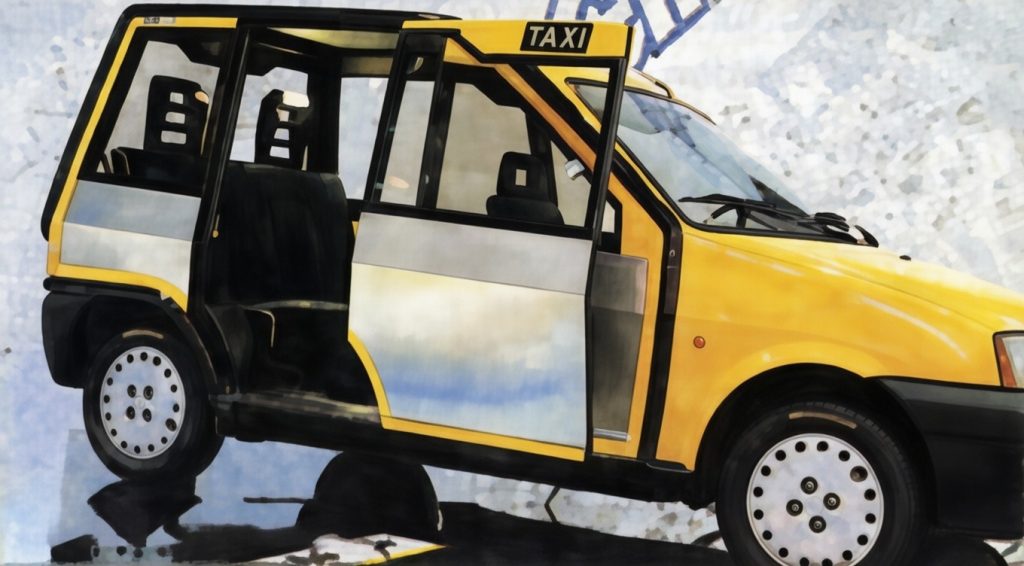
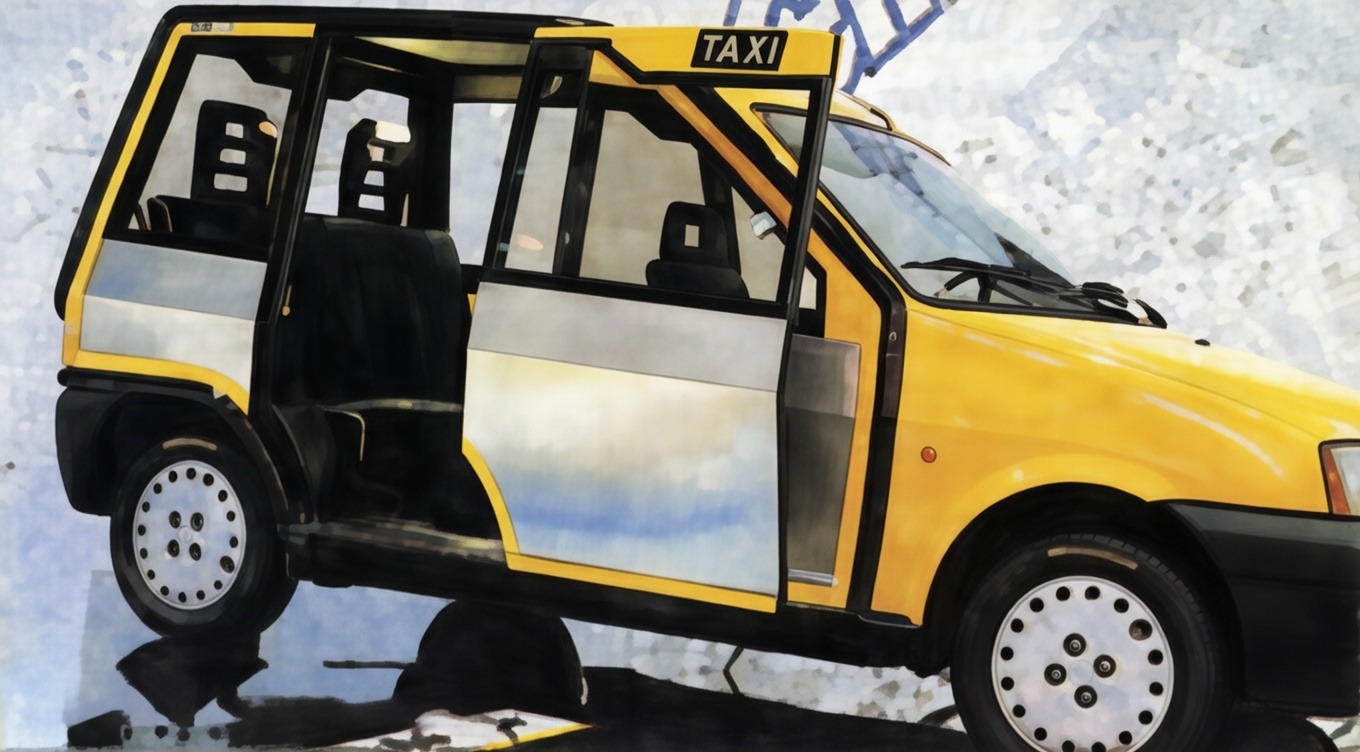
The transformation focused on the body and interior. Boneschi introduced an asymmetrical door arrangement, with a conventional front-hinged door on the driver’s side and a wide sliding door on the passenger side to simplify entry and exit in tight urban environments.
The roofline was raised toward the rear to improve headroom, and the cabin was reconfigured to maximize space within minimal exterior dimensions. While several original Cinquecento panels were retained, the coachbuilder added bespoke elements, including enlarged glass areas and a more squared-off rear section to enhance practicality.
The Babytaxi was designed in-house at Boneschi, with no individual stylist credited. It was never intended for production, and only a single example was built. No separate chassis designation beyond the base Fiat identification is known, and there are no documented ownership records. The concept remained with Boneschi for display and has not surfaced in public or private collections since its debut.
As a project, the Babytaxi reflects early 1990s Italian coachbuilding experimentation — a period marked by creative reinterpretations of mass-produced platforms for niche urban roles. Though it never progressed beyond the prototype stage, it stands as an example of how asymmetrical layouts and modular access solutions were being considered as answers to evolving city transport demands.