Joagar 2-seat car

In the 1950s, Joaquim Garcia — a musician, carpenter, and mechanic from Jaboticabal in the state of São Paulo — emerged as a true pioneer, designing and building several automobiles of his own.
Relying solely on his experience as a stationary engine mechanic, he developed his first gasoline engine, casting the block himself and manufacturing the crankshaft and connecting rods.
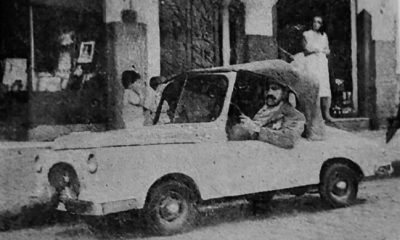
Tested in a self-built mini jeep, the engine later evolved into two further units: two-cylinder, two-stroke engines patented in early 1956 — one water-cooled, with a displacement of 756 cc and an output of 20 hp, and the other air-cooled, with 802 cc and 22 hp.
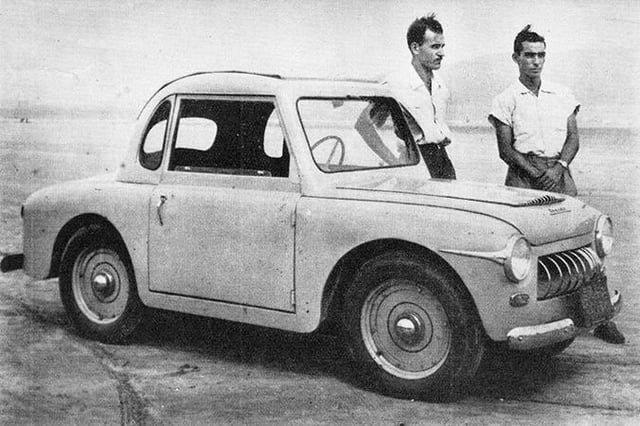
By that time, he built a compact 2-seat car. Built entirely in Brazil in 1954, the car relied almost exclusively on local craftsmanship; according to its creator, only the headlights, bearings, clutch disc, brake linings, and speedometer were imported.
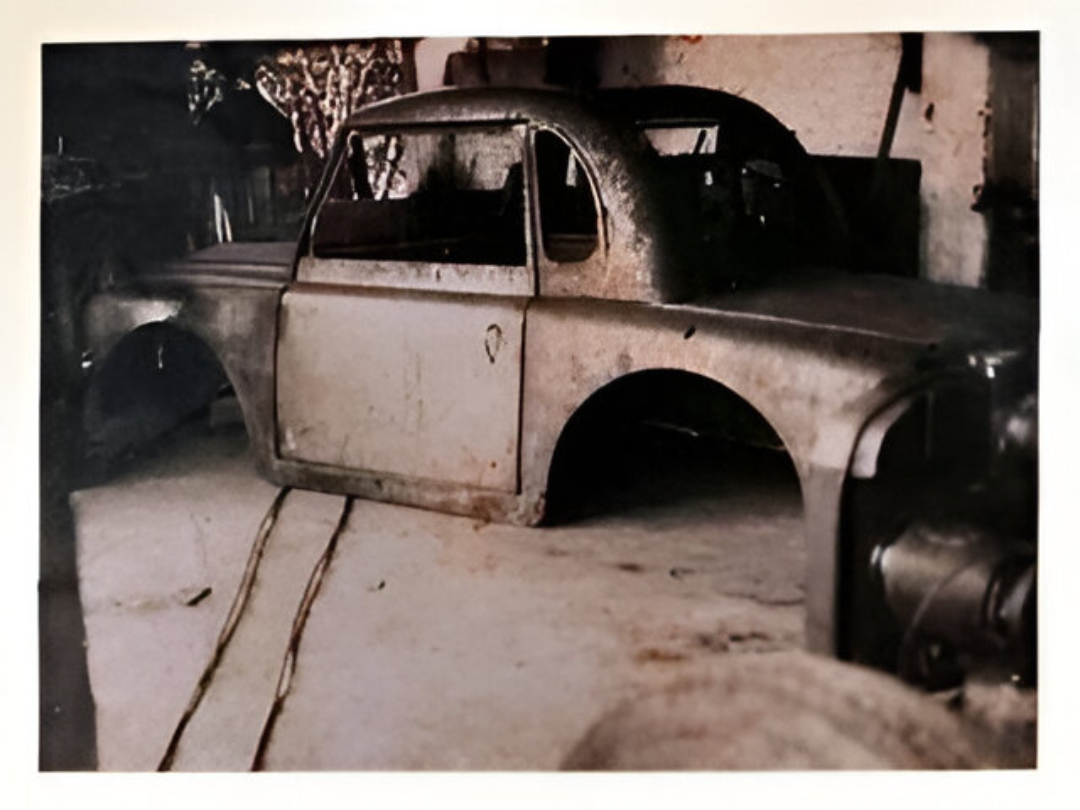
The first Joagar-branded car featured a fully hand-formed metal body, painstakingly crafted by hand.