Siva Llama

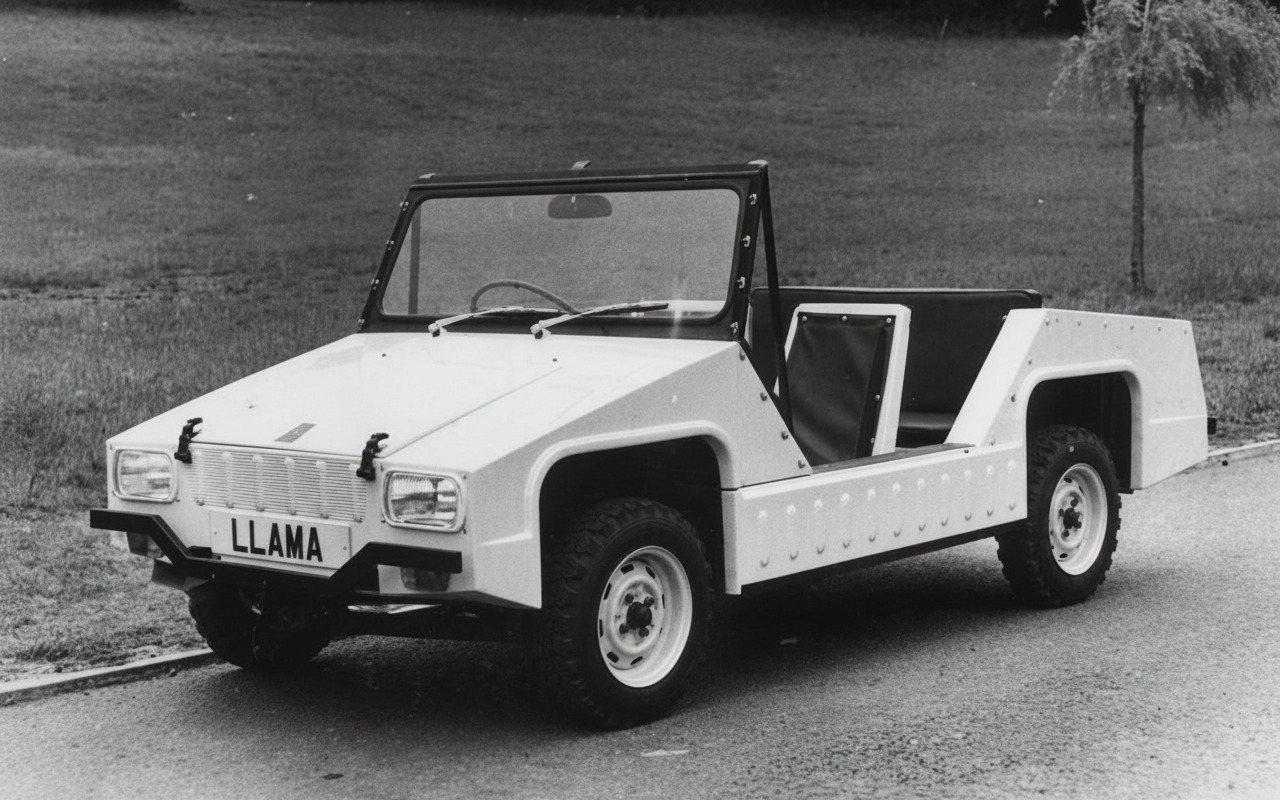
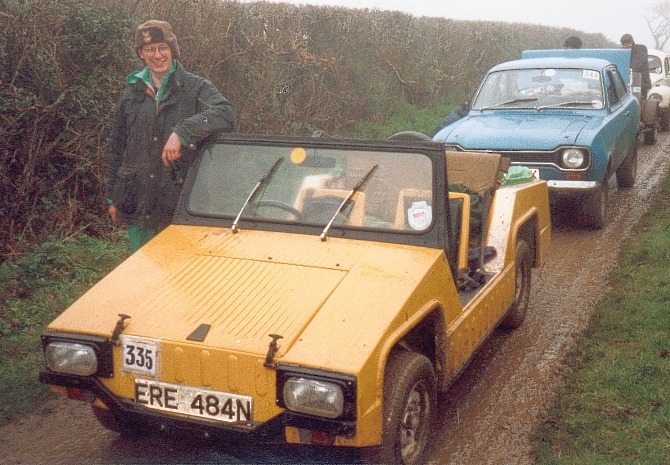
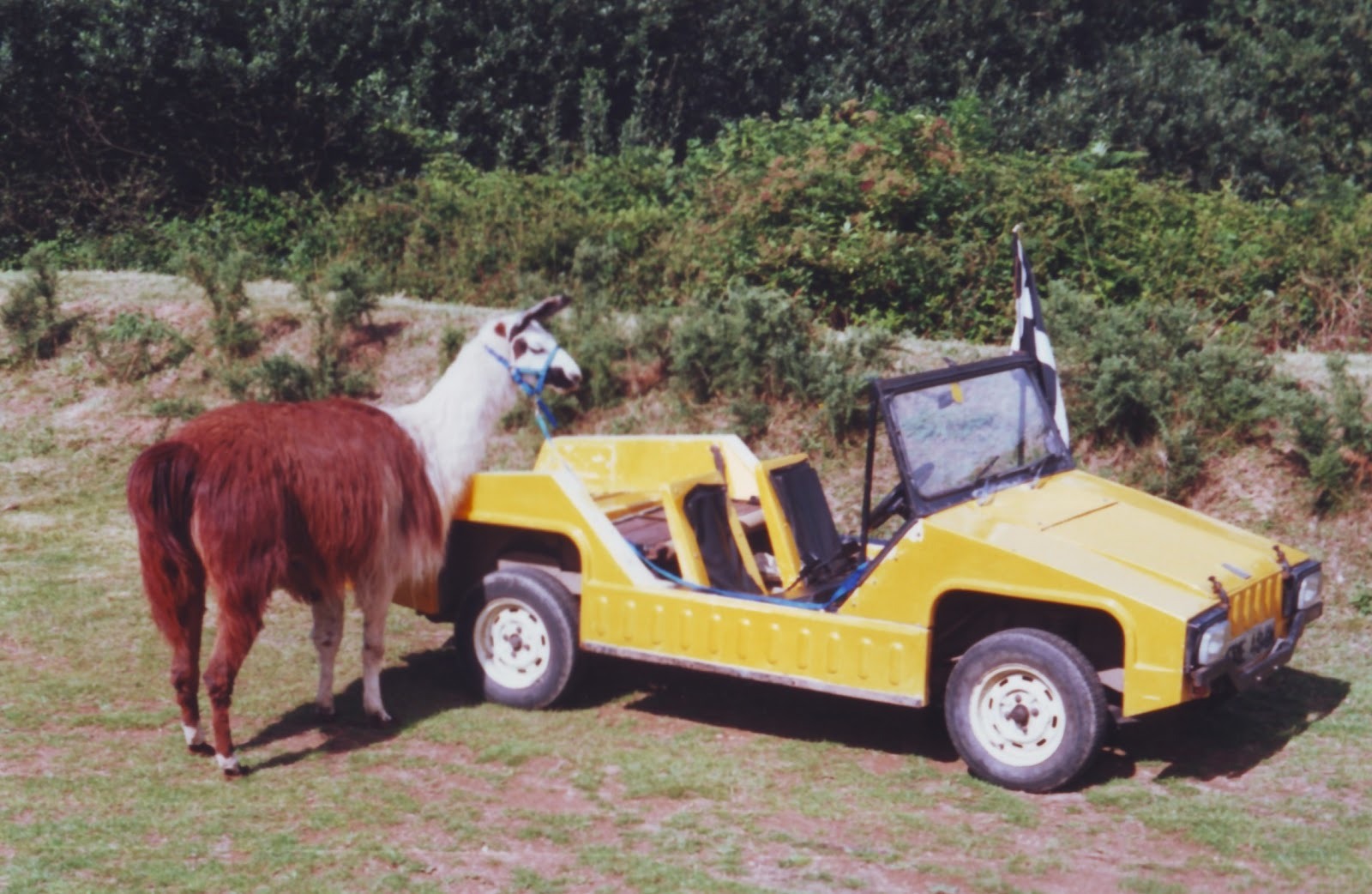
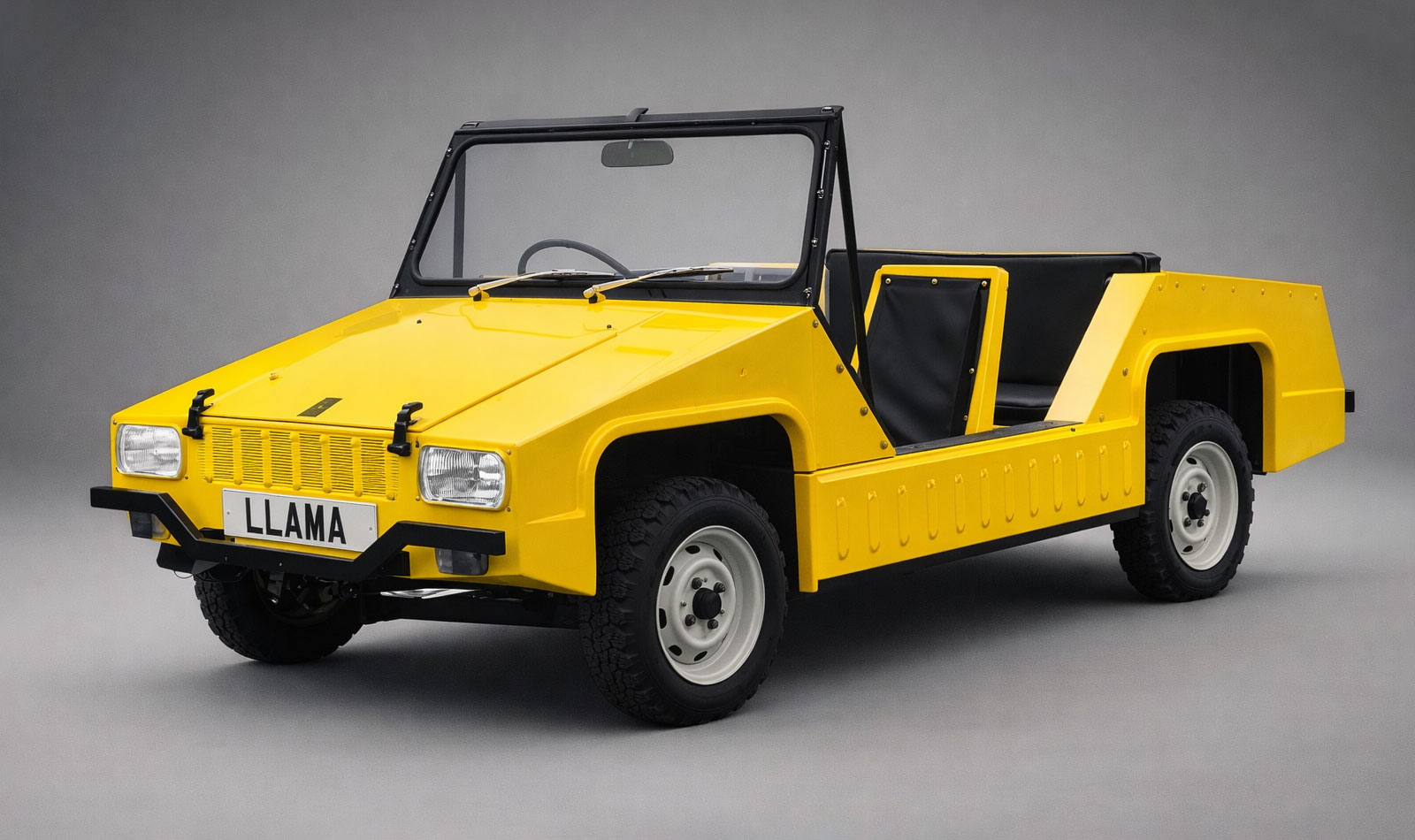
The Siva Llama was a British multi-purpose kit car from the 1970s, designed by Neville Trickett of the Siva Motor Car Co. in Aylesbury, Buckinghamshire.
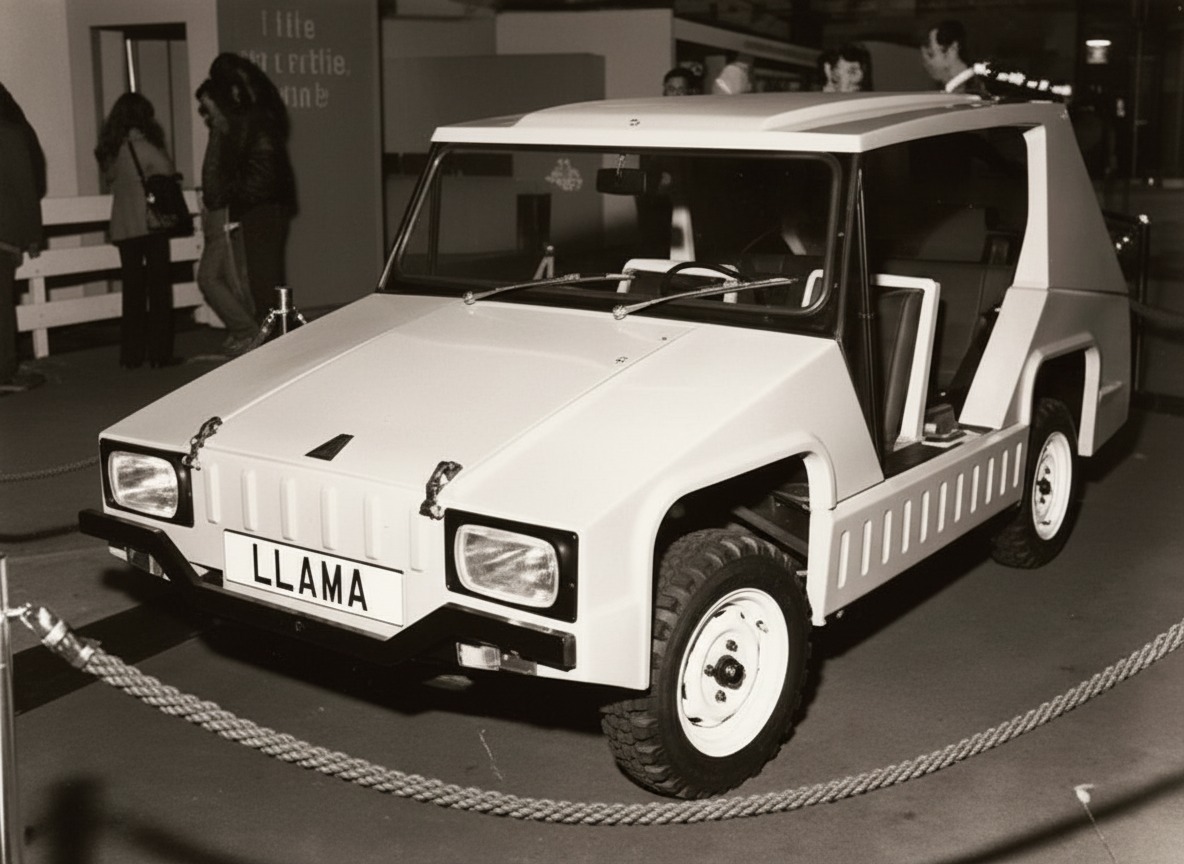
It was based on Hillman Imp mechanicals and could be assembled in about 80 hours as a DIY kit. The Llama was first presented at the 1974 London Motor Show and was marketed as a fun and utility vehicle, with brochure claims that it could be anything its buyer wanted it to be.
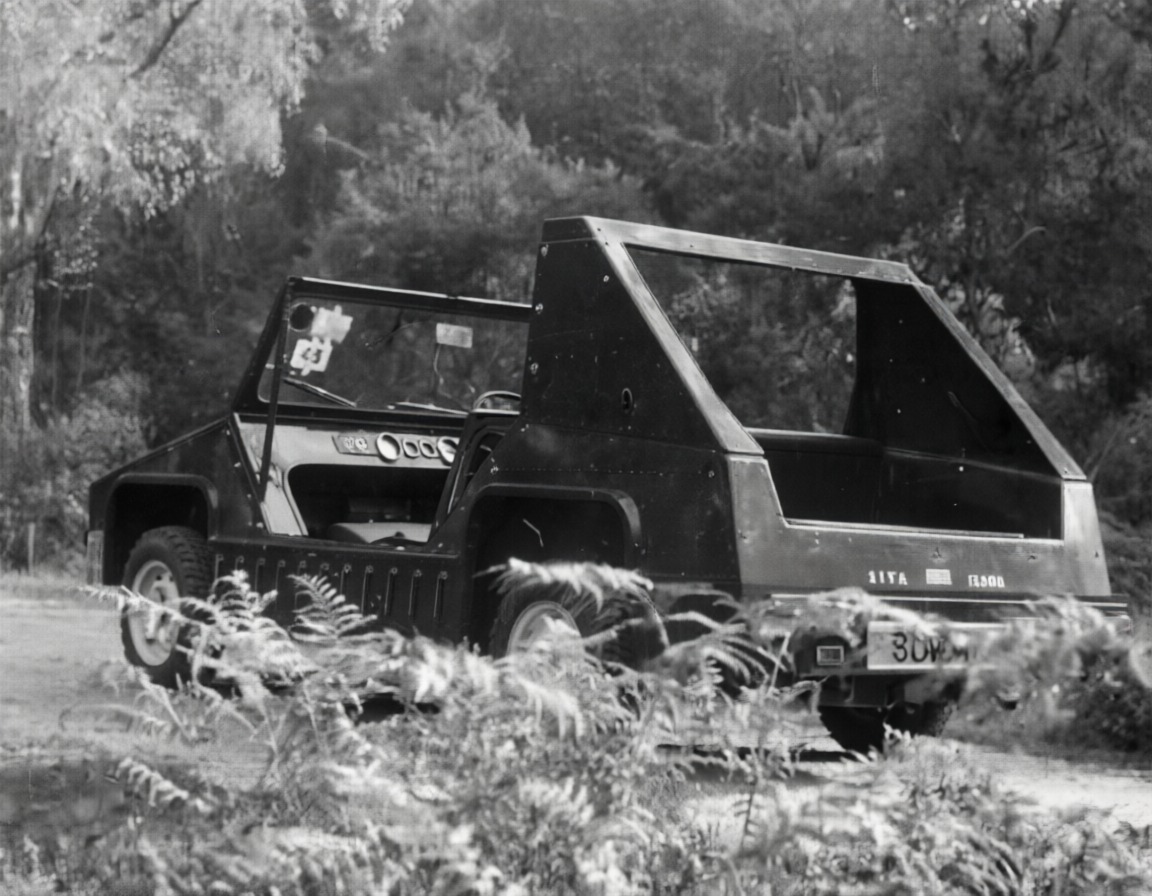
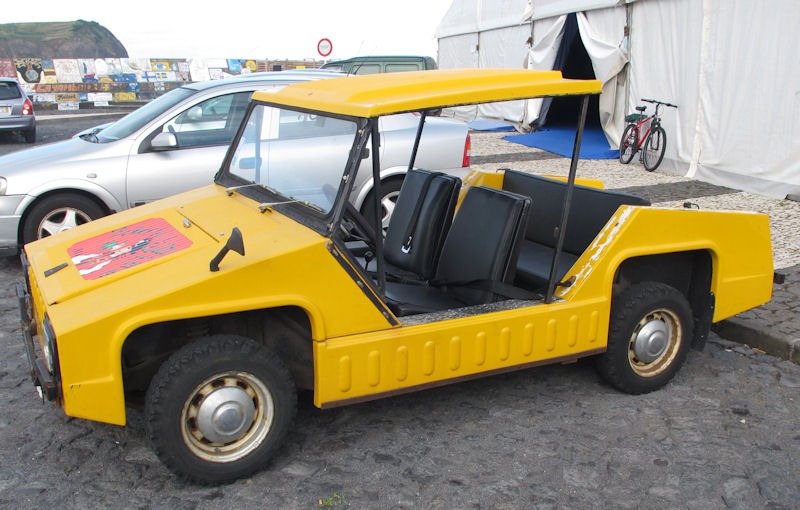
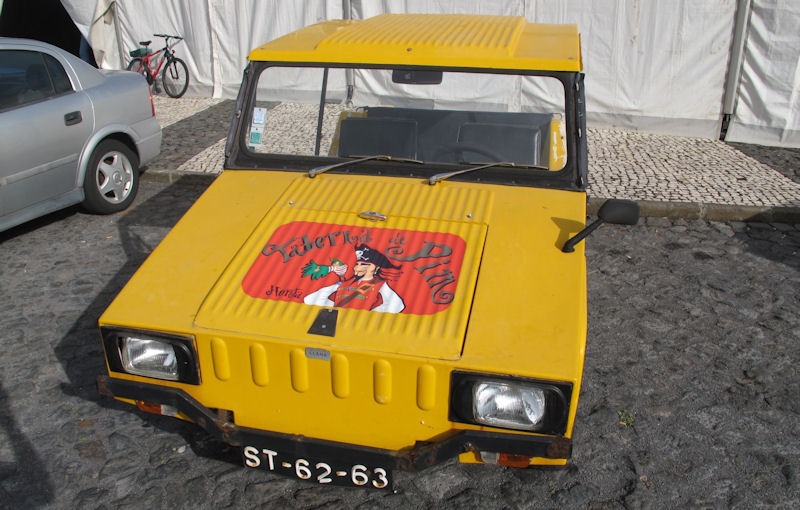
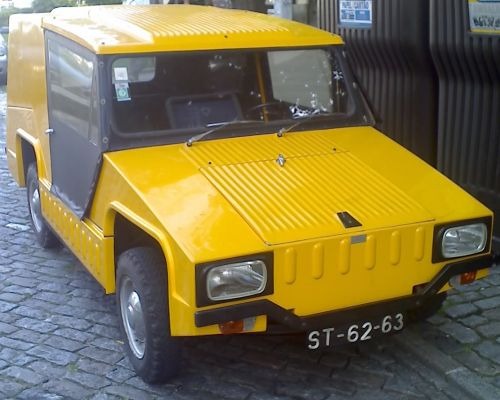
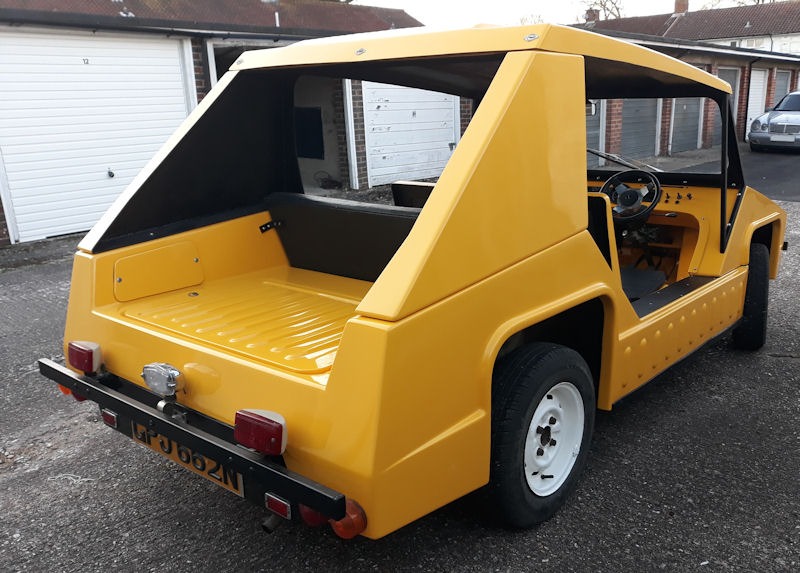
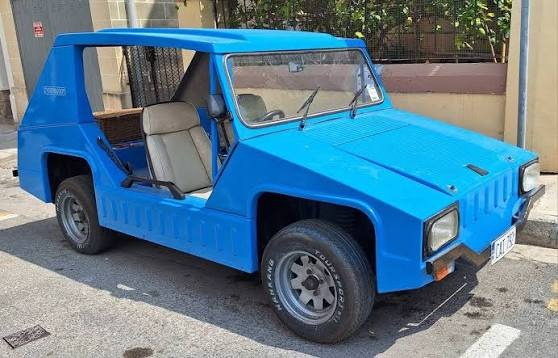
The Llama was recognizable from early 1970s episodes of the TV series “Doctor Who,” where it was driven by actor Jon Pertwee according to one source, though another source states the famous “Dr Who car” was a different earlier model by Trickett known as the Mule, and that the first Llama was seen in the series. The vehicle had a profile that looked like a slightly more aerodynamic Mini Moke, with a fiberglass body and a tough tubular steel chassis.
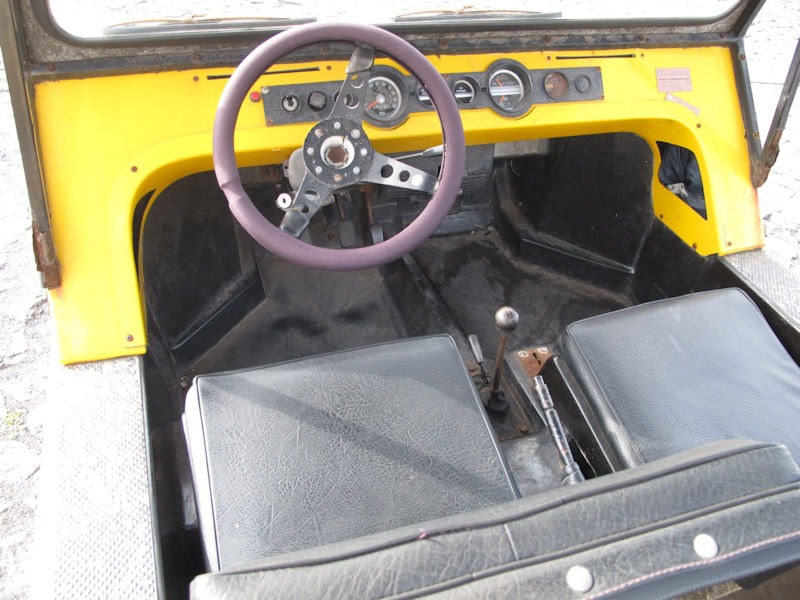
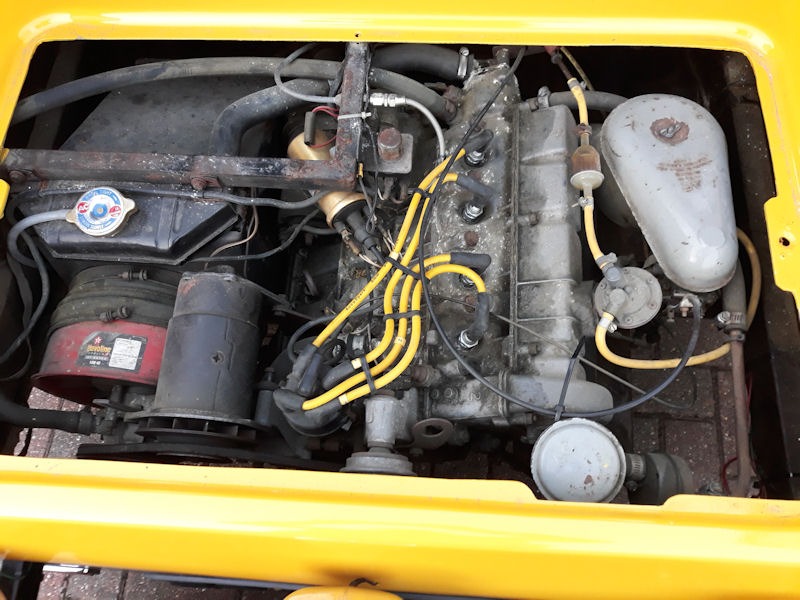
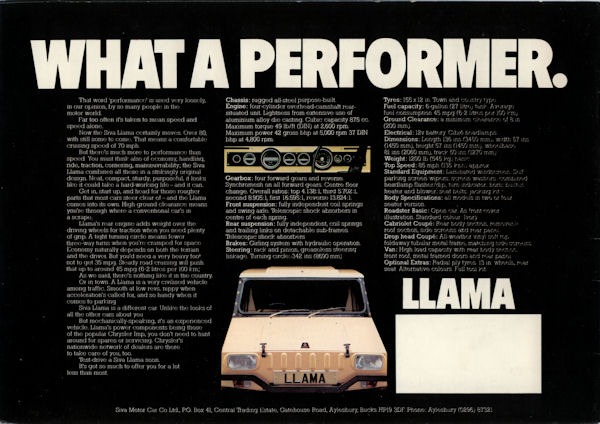
The Llama weighed just 1,200 lb (545 kg) and used the 875 cc four-cylinder overhead-camshaft rear-mounted Imp engine, which produced 42 gross bhp at 5,000 rpm or 37 DIN bhp at 4,800 rpm. This gave it a top speed of approximately 85 mph (135 kph) and a comfortable cruising speed of 70 mph. The four-speed gearbox had synchromesh on all forward gears with a center floor change. The Llama could be serviced at any Chrysler garage since it used Chrysler’s power unit and running gear.
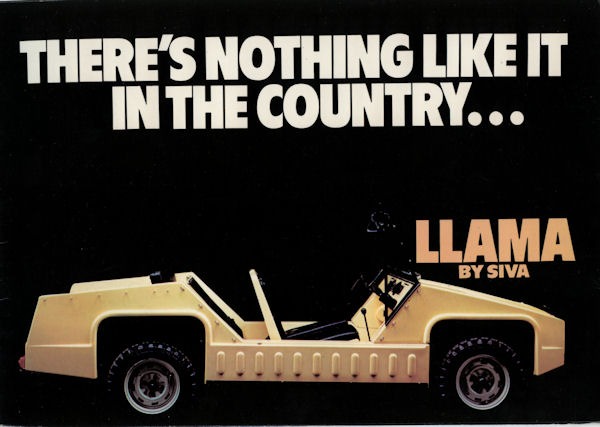
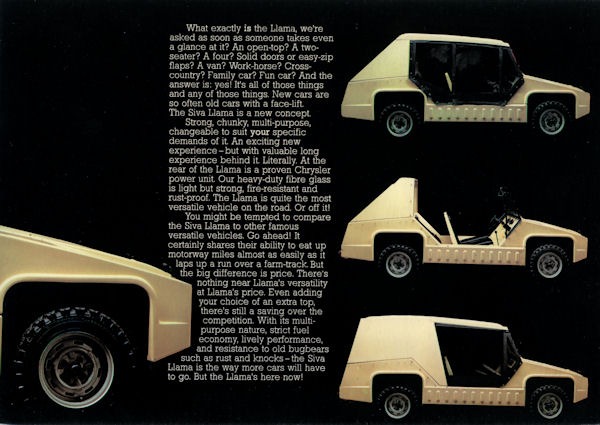
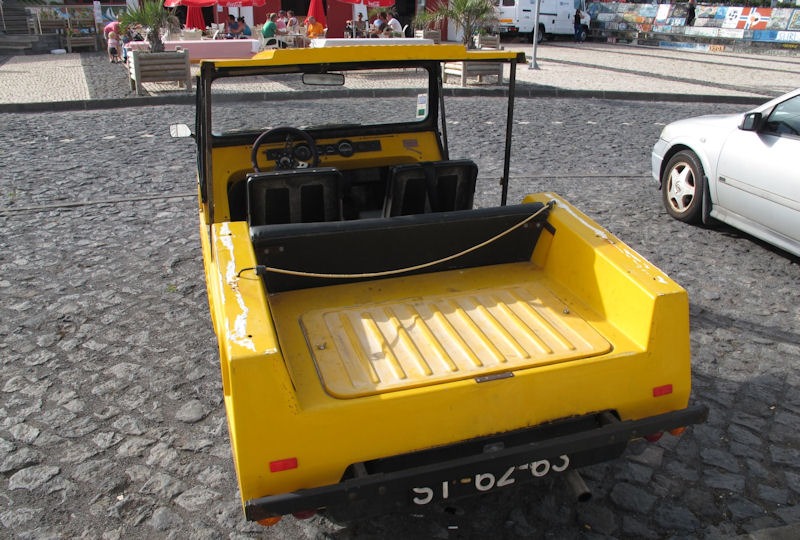
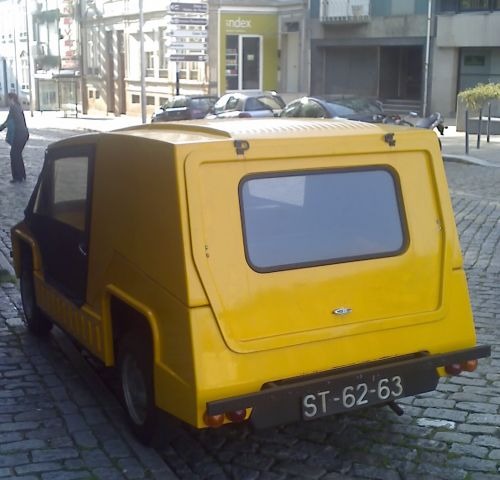
Available in a few different body configurations, the Llama could be a convertible, saloon, van, or open-top according to the brochure. The van version had high load capacity with a rear body section, front roof, metal-framed doors, and rear panel. The roadster basic was an open car, the cabriolet coup had a rear body section with removable roof section and side screens, and the drophead coup had an all-weather vinyl soft top with a foldaway tubular metal frame.
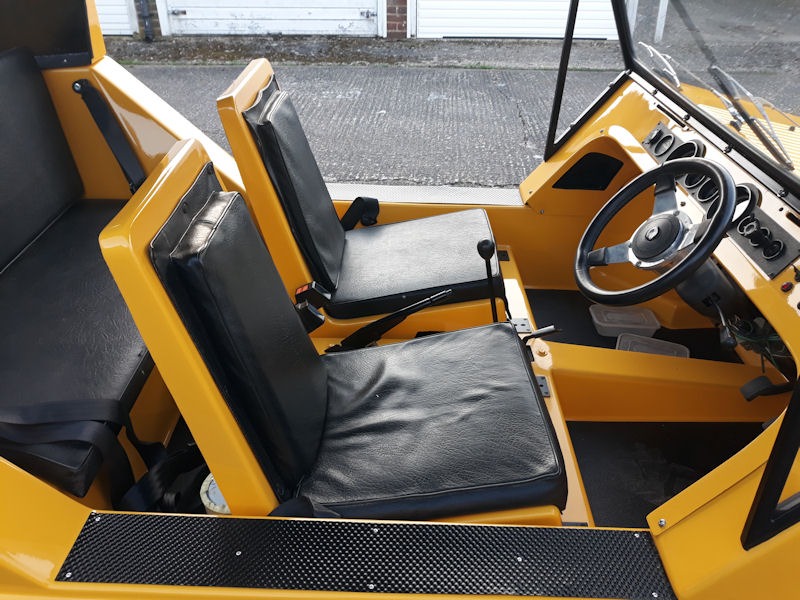
Standard equipment included a laminated windscreen, self-parking screen wipers, screen washers, combined headlamp flasher/dip, turn indicator, horn, built-in heater and blower, seat belts, and jacking kit.
Practical features included a detachable roof, high ground clearance of 8 inches (200 mm), a tight turning circle of 28 feet (342 inches or 8,690 mm), and rear engine placement that added weight over the driving wheels for traction. The Llama had a 6-gallon fuel tank and claimed average fuel consumption of 45 mpg (6.2 liters per 100 km), with steady road cruising pushing that to around 35 mpg for heavy foot drivers.
The complete vehicle was largely built from self-coloured GRP (glass-reinforced plastic) mounted on a treated steel chassis, and the heavy-duty fiberglass was described as light but strong, fire-resistant, and rust-proof.
Siva offered plans, tools, and techniques to any third-world country that wanted to set up an indigenous motor industry, and the publicity claimed the Llama was suitable for production in developing countries where there was a shortage of skilled labour and a need for industrialisation.

There were optimistic claims about expanding production to Lebanon, Malta, and the Middle East, with sales reportedly in Malta, Seychelles, the West Indies, and the Middle East, though in reality only a few dozen kits and cars were produced in Aylesbury.
Prices for the basic kit started at £395 plus VAT, while a fully built Llama was available from £1,150, though another source stated under £1,400. The Llama was produced in very limited numbers during 1976/1977, and the company folded in 1978. By that time, Hillman Imp production had stopped, which largely explains why a company named CTG Racing that purchased the moulds when the Siva Motor Car Co. was liquidated never produced any additional Llamas in any form.
Owners had mixed opinions about the Llama. Some criticism included that the gear change had suffered from the Imp-to-Llama transplant, nothing could be locked and even the engine was easily exposed by turning two screws and lifting the cover, poor design where the angle of entry of the accelerator cable into its guide tube could cause it to break, flimsy anchorages of the front seats, side panels that ought to be more rigid, and guaranteed no frills where wing mirrors, reversing lights, oil gauge, and interior light were not standard fittings.
However, Mike Sturrock, who restored the first Llama ever produced at age 15 in 1983, wrote that he was amazed at the strength of the chassis and body.