A Transformer Car Project by a Lada Designer

Mikhail Markiev, former head of the technical consulting group in Lada’s (AVTOVAZ) technical concepts department, developed many different prototypes. When he was already thinking about retirement, he came up with the concept of a small model car of his own design that could be offered to an independent company.
A frame-and-panel body is technologically efficient and inexpensive to develop, and it could become a successful business if the design proved successful.
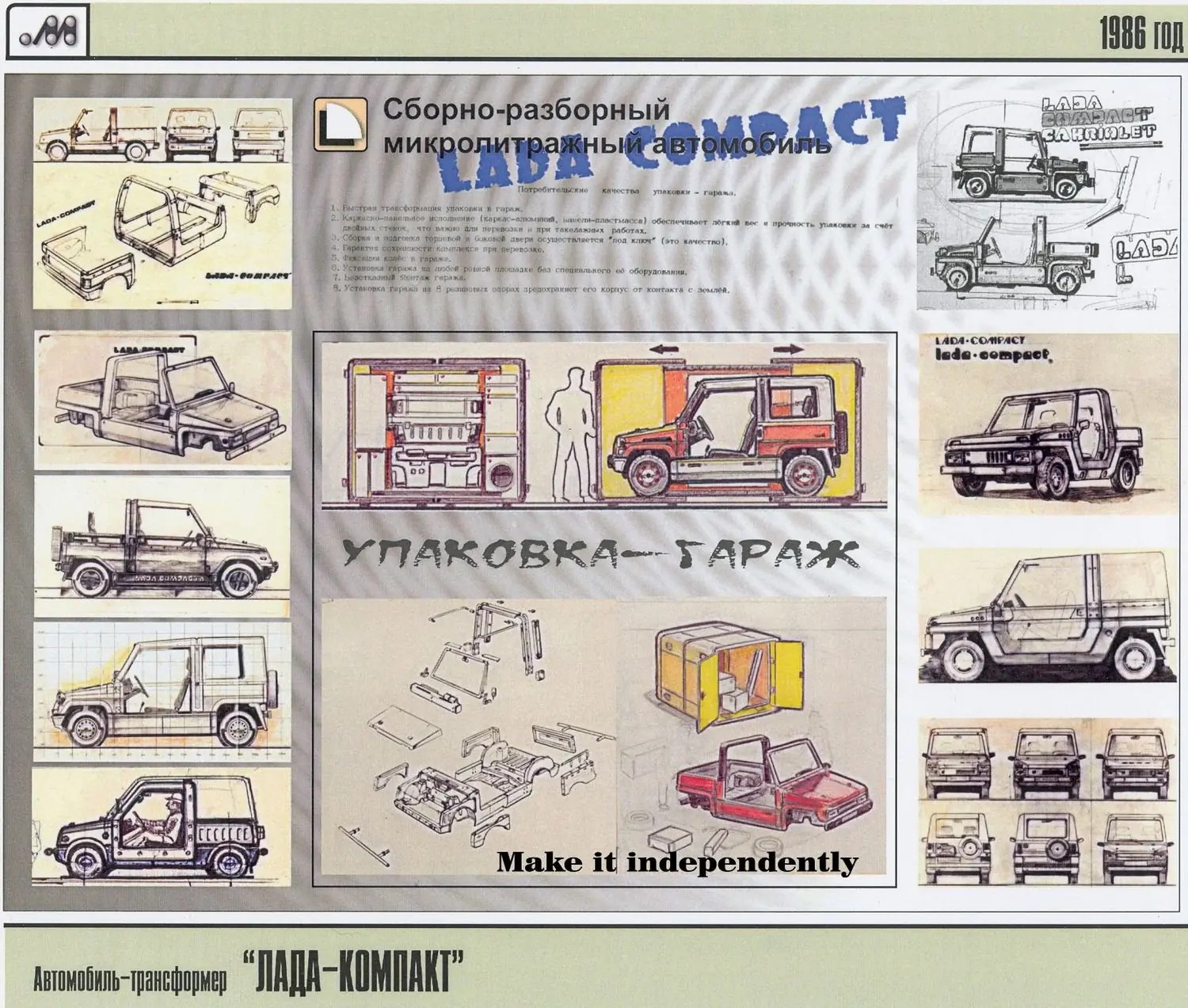
Markiev did not come up with the idea of a kit car from nothing. Back in 1984, while working in AvtoVAZ’s Design and Engineering Centre, he developed the concept of a modular, easily assembled off-road vehicle known in the technical documentation as the Lada “Compact.”
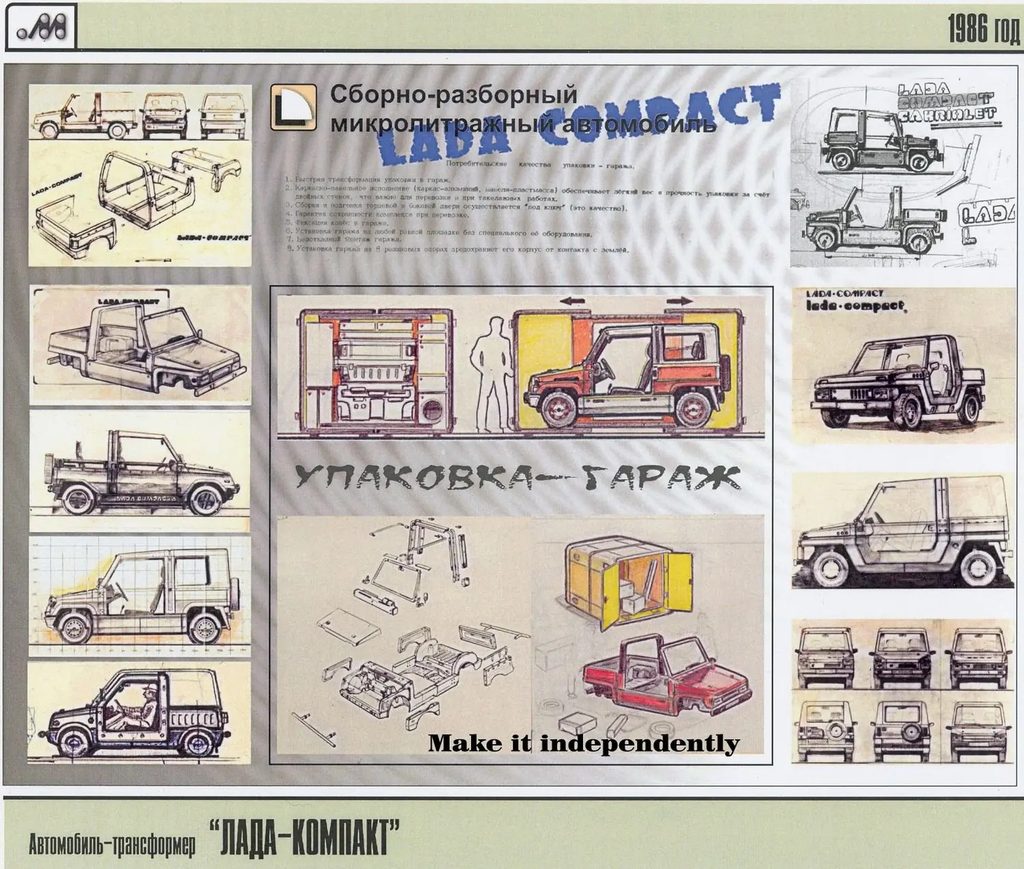
The original idea for the vehicle came from Marat Farshatov, then AvtoVAZ’s technical director, who kept the design bureau occupied with the project for two years. Nothing came of it at the time, although the designers prepared several versions of the body’s panel layout.
Now, many years later, Markiev returned to his earlier work.
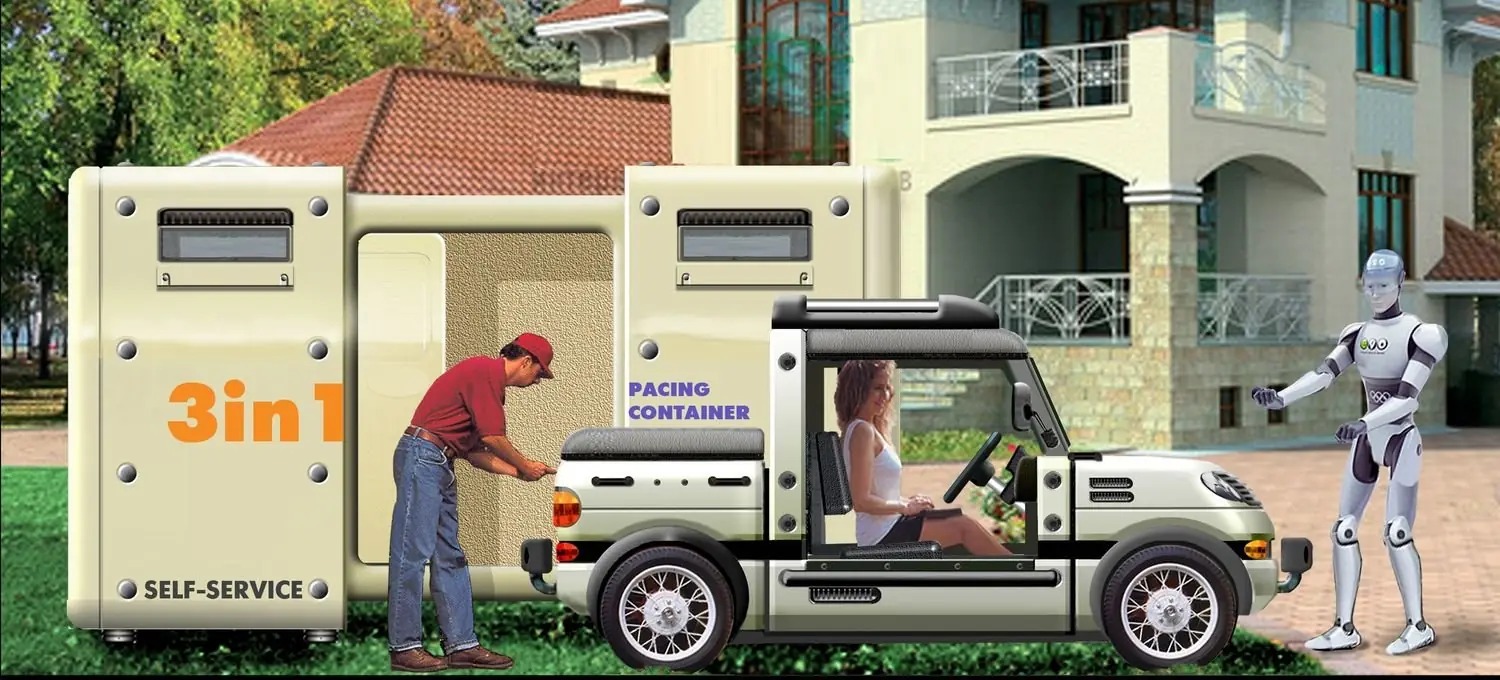
The body panels for the kit car could be manufactured at a single factory, fitted with production mechanical components, and sent to customers: assembly workshops, car dealerships, or private buyers who are comfortable using a screwdriver.
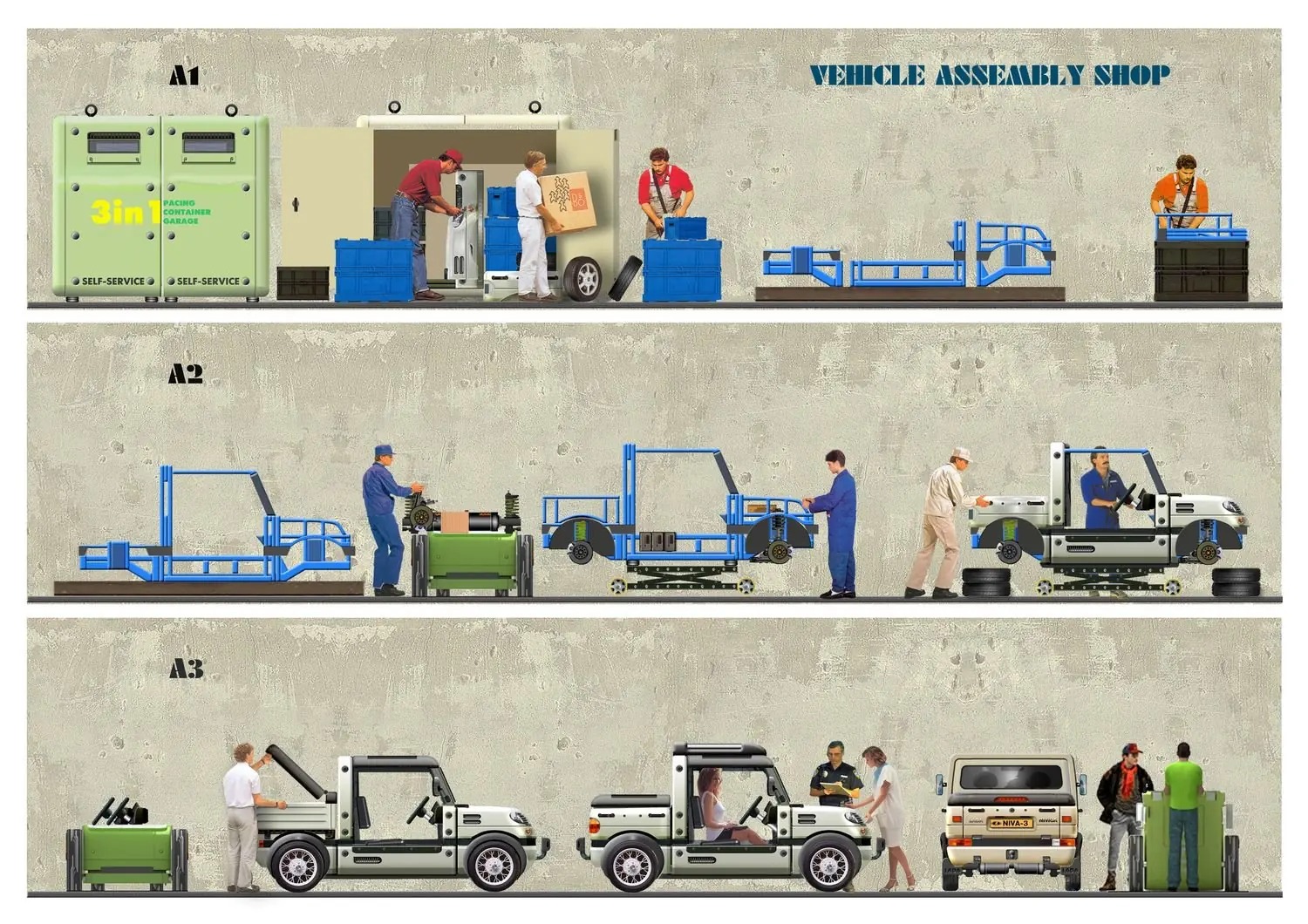
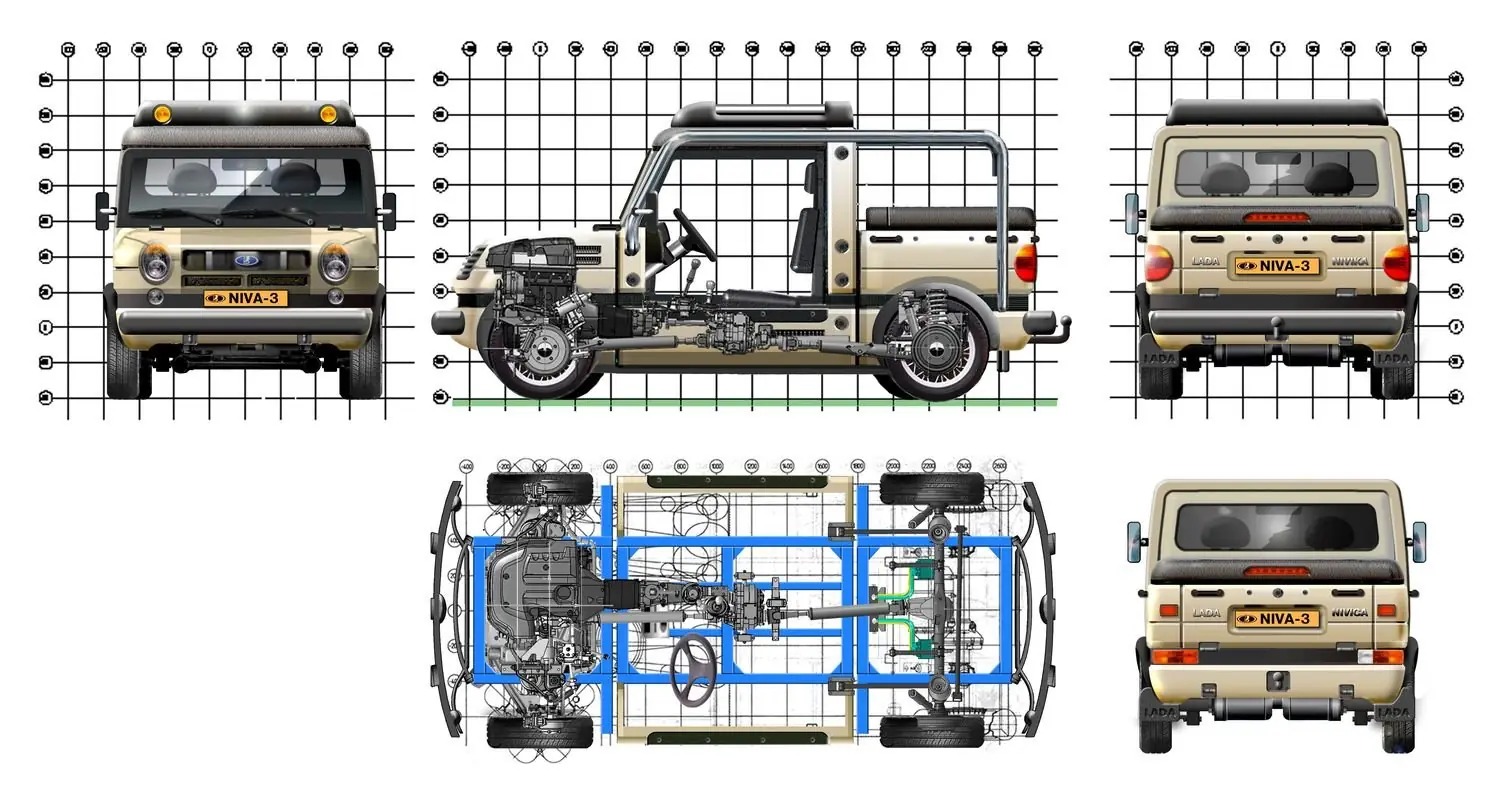
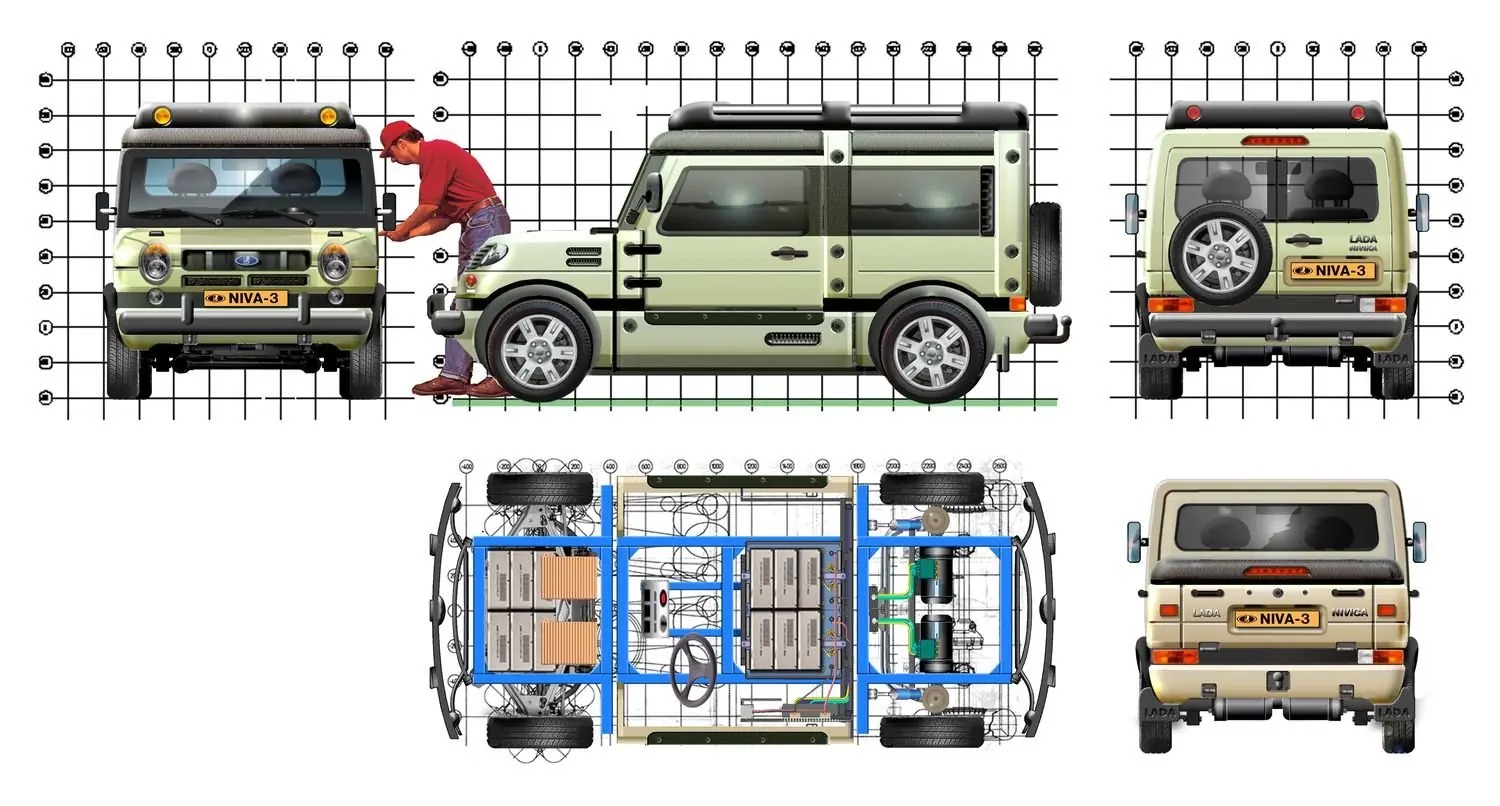
The chassis was designed as three separate sections, which were intended to be joined using bolts and special manufacturing fasteners. The illustrations show the assembly process in detail.
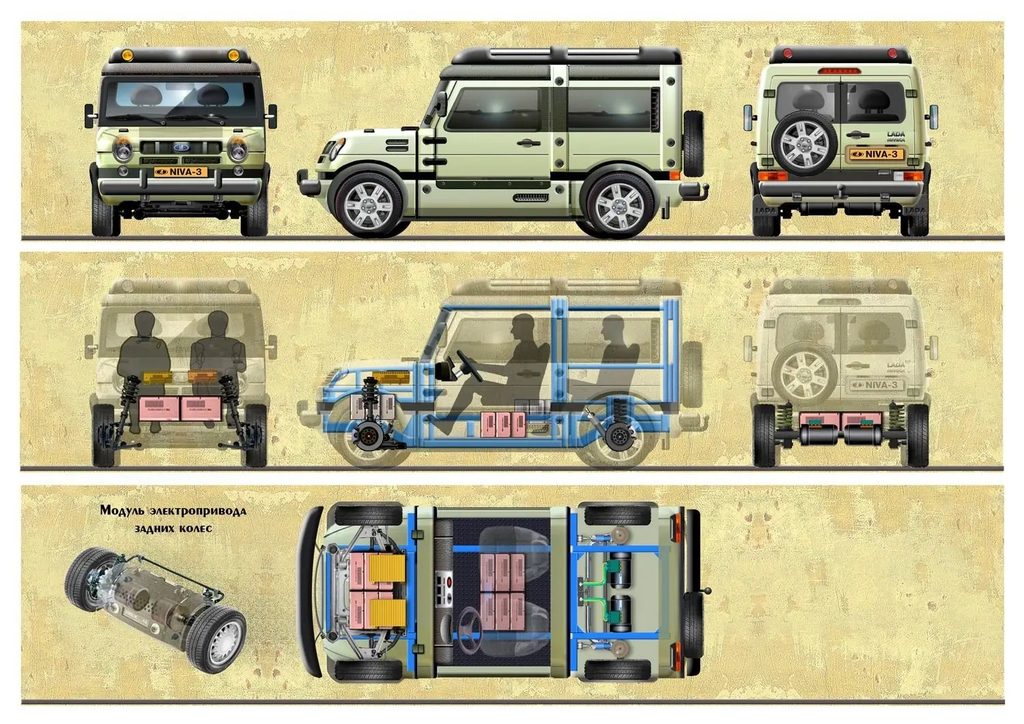
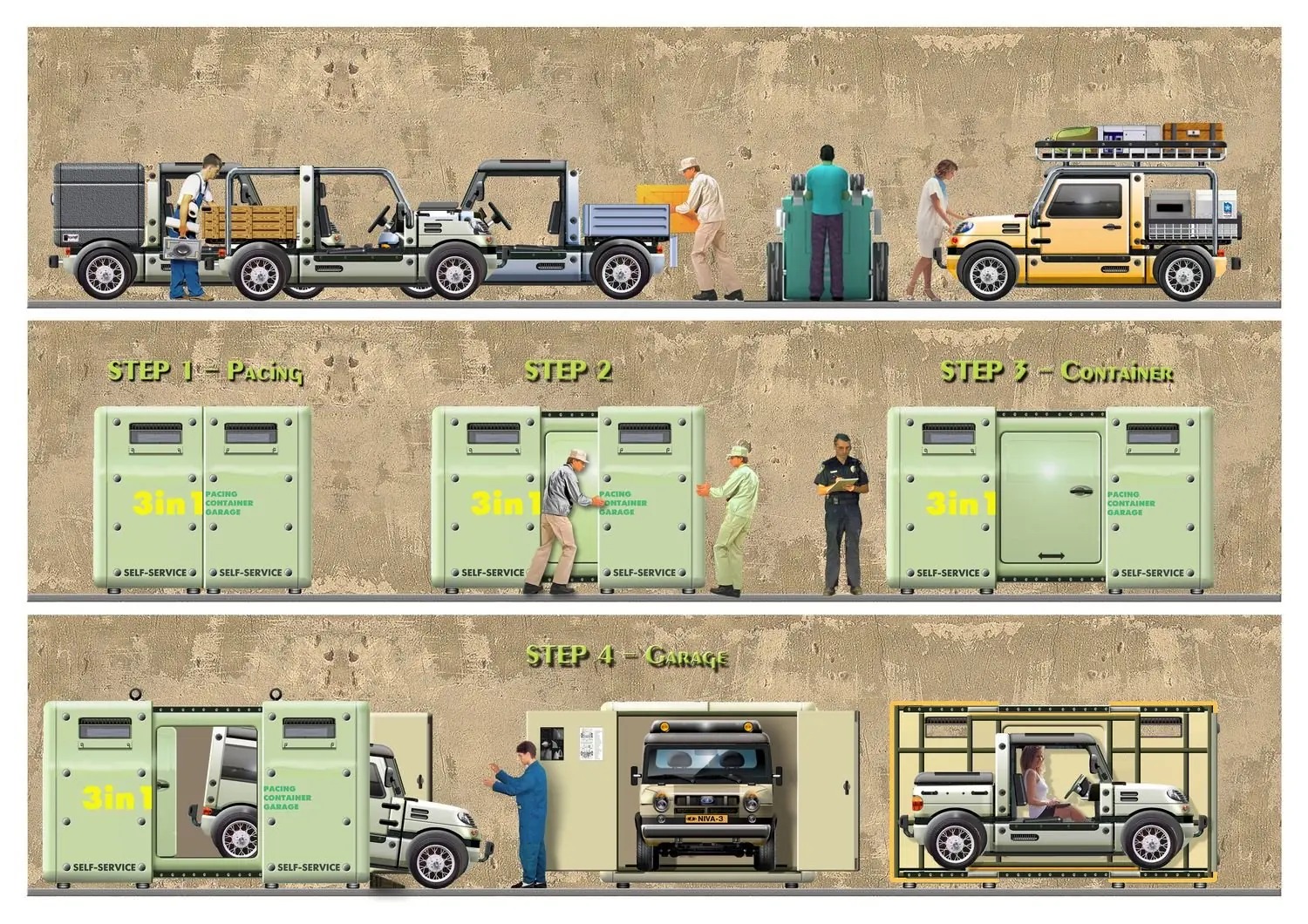
To assemble the car, only one lift is required. Perhaps a winch would also be needed to install the powertrain and rear axle. All the other components are relatively light and can be fitted by hand, without special equipment. The frame-and-plastic container can also be converted into a garage.
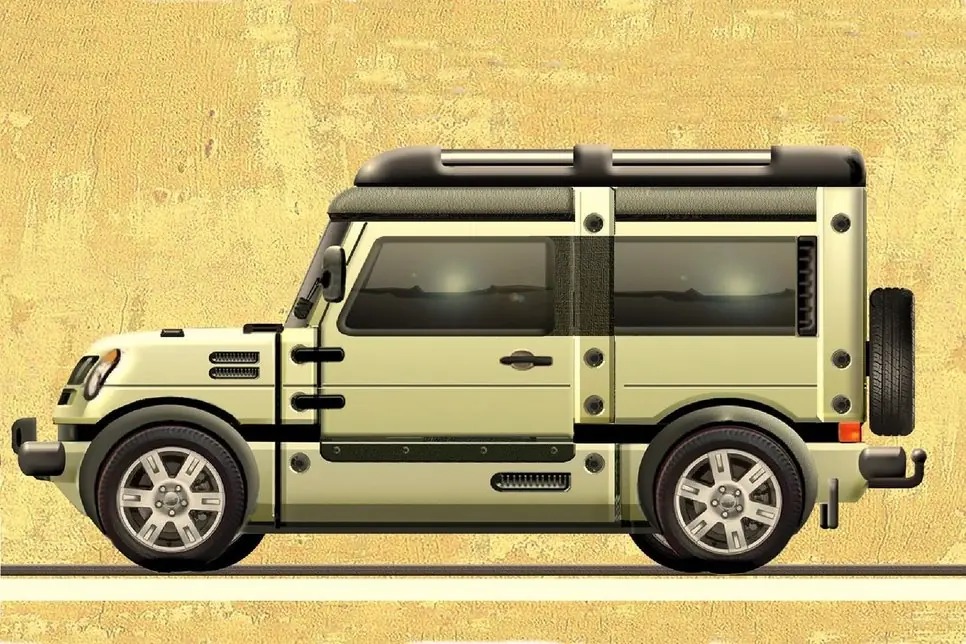
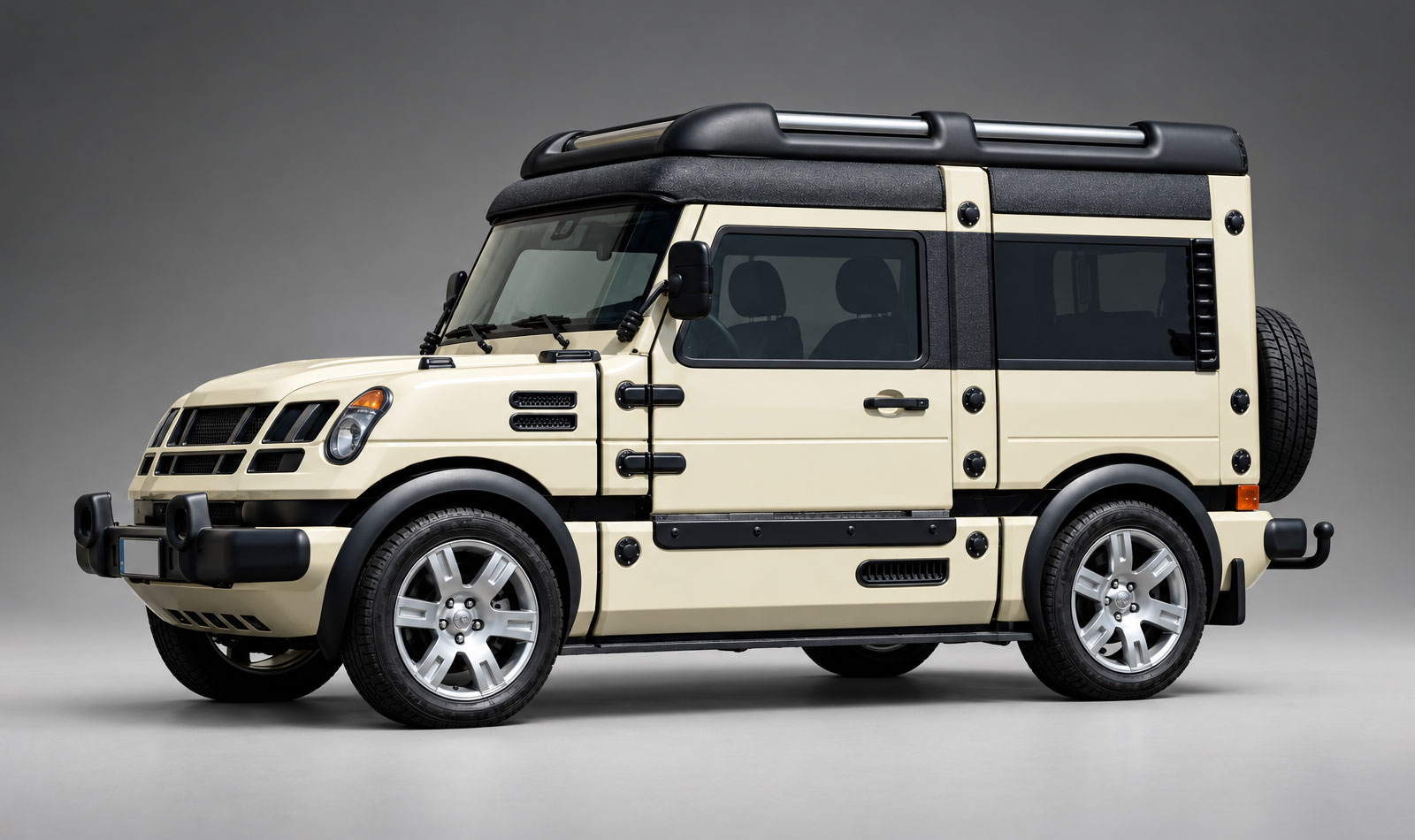
The name “Niva”-3 on the number plate should not be misleading: it is simply the designer’s imaginative choice and nothing more. This car has no connection to the real “Niva”-3 project, officially known as the Lada 4×4 NG.
Markiev simply assumed that the vehicle would use Niva mechanical components, so he used that name. However, if one looks closely at its proportions, Markiev’s car is smaller than the old Niva and is closer in size to the Oka.
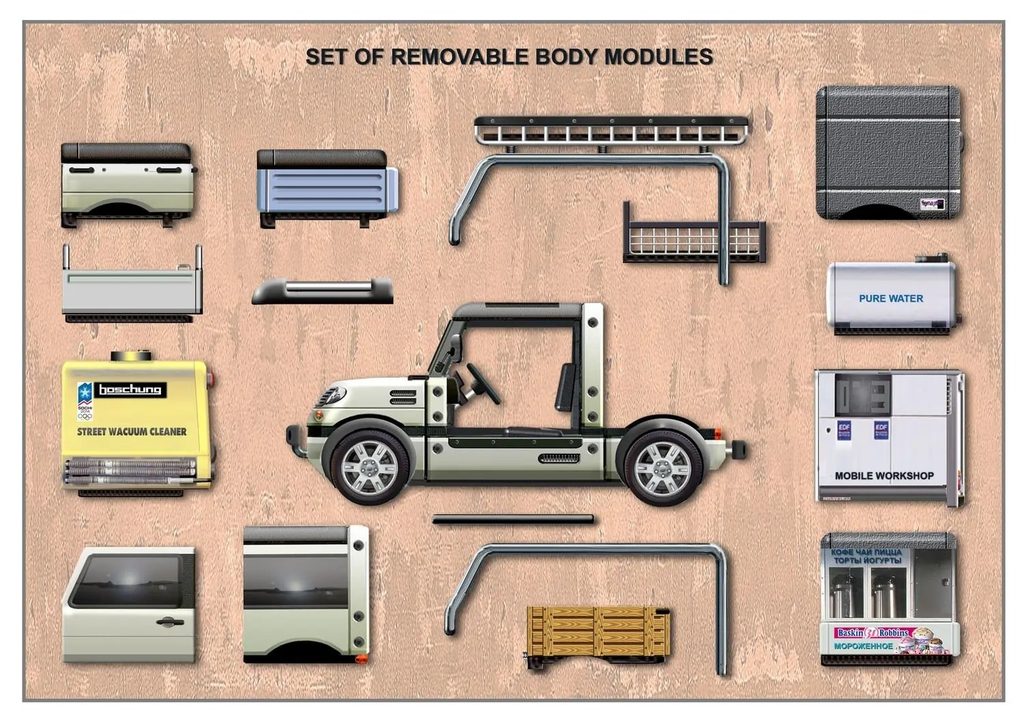
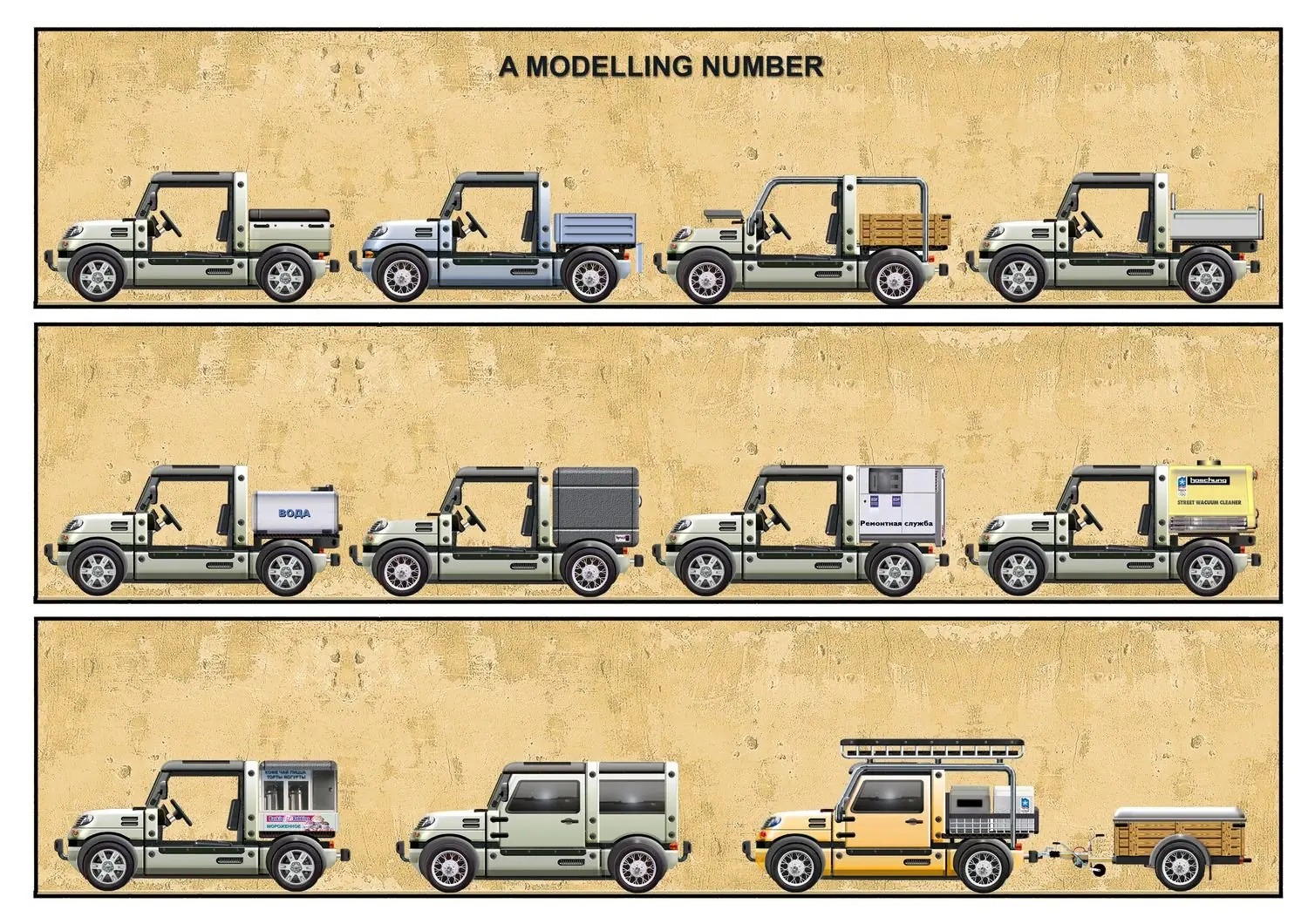
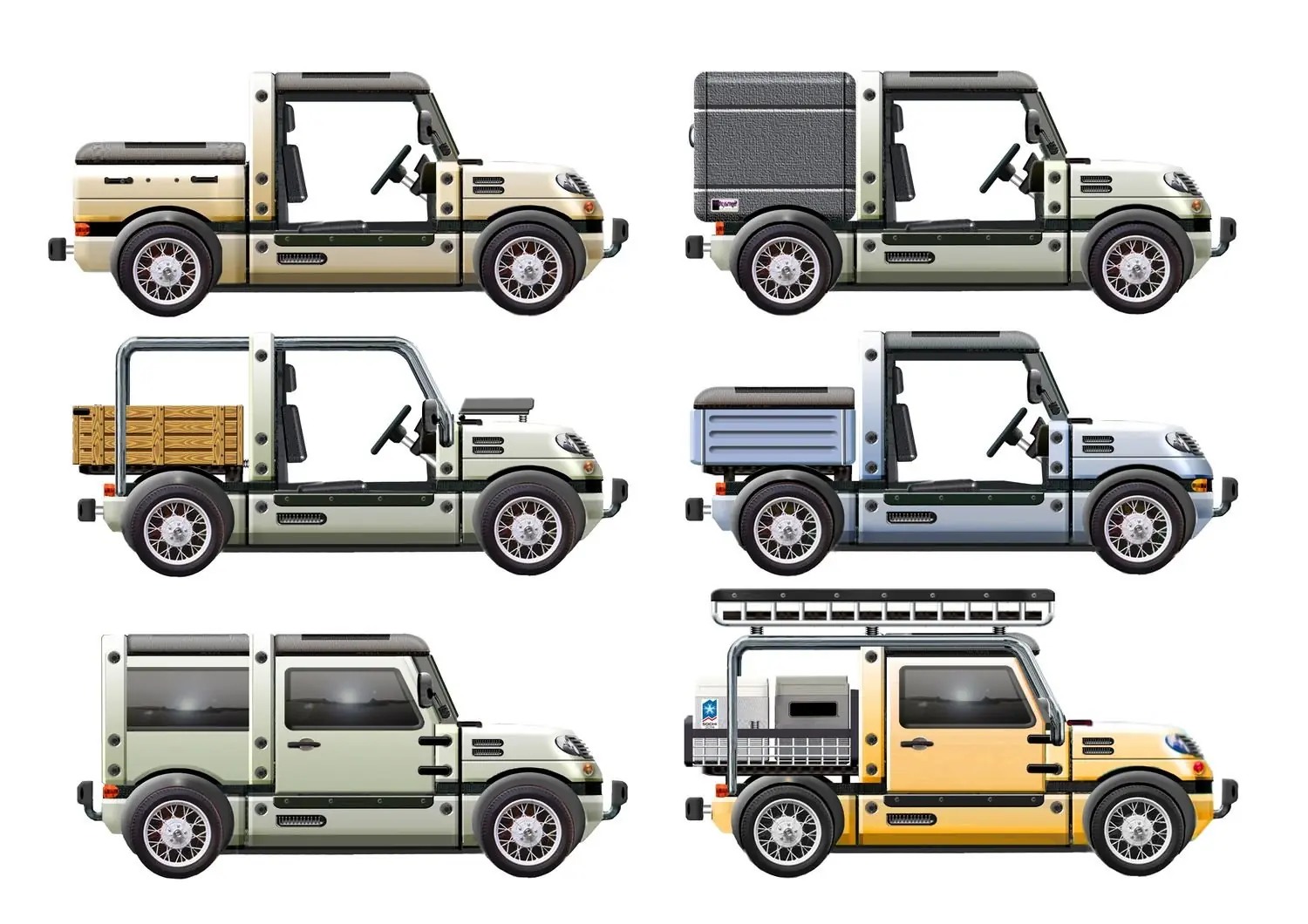
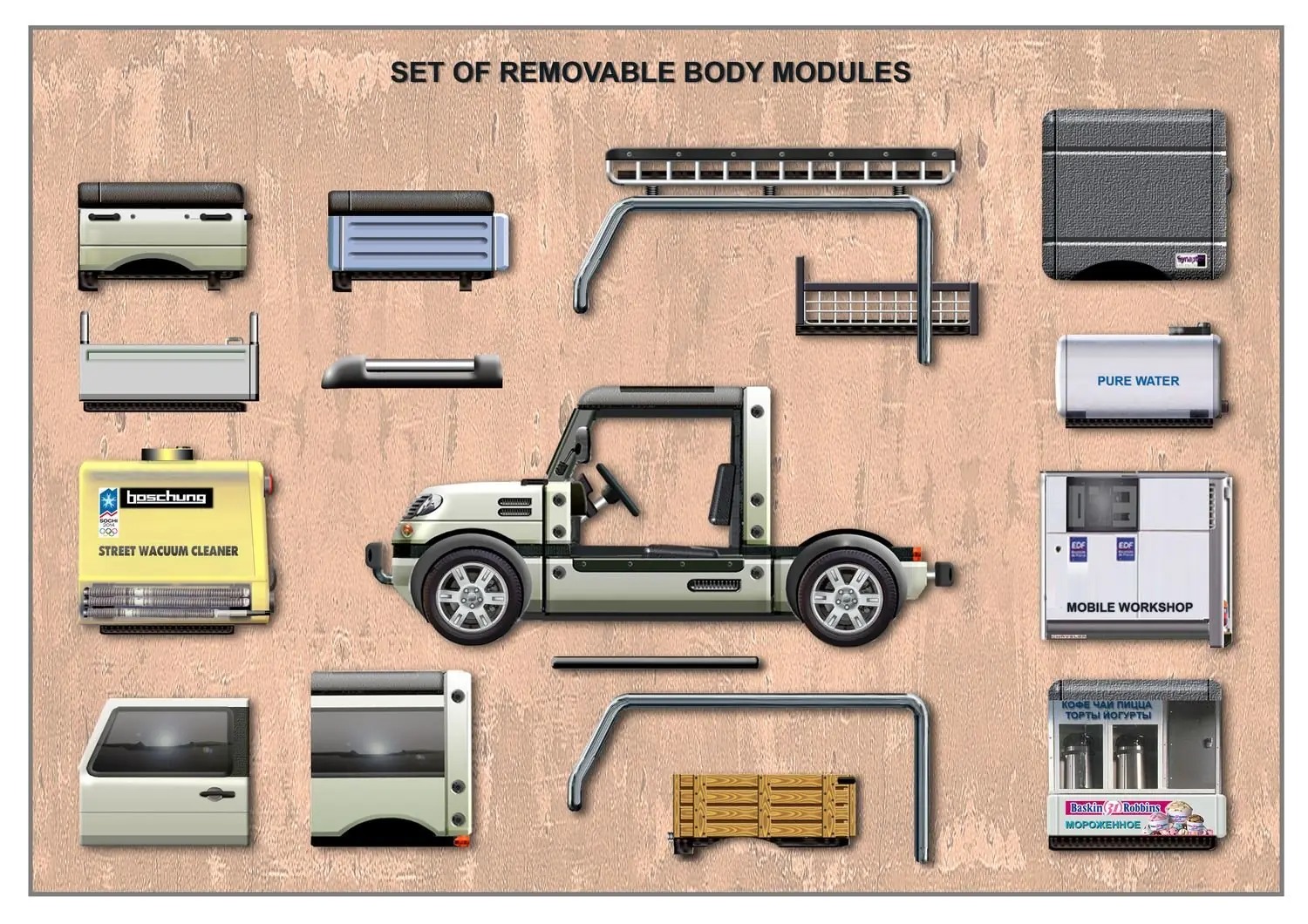
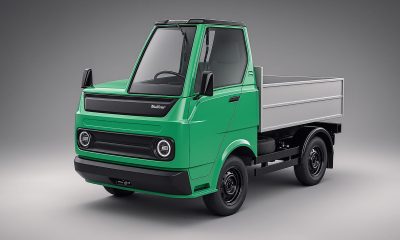
After producing the first sketches, Mikhail Ivanovich went further and designed an entire family of vehicles based on his kit-car concept. If the cab were made as a two-seater, the space behind it would become available for commercial use. This immediately opened up possibilities for a wide range of versions, from a milk truck to a dump truck.
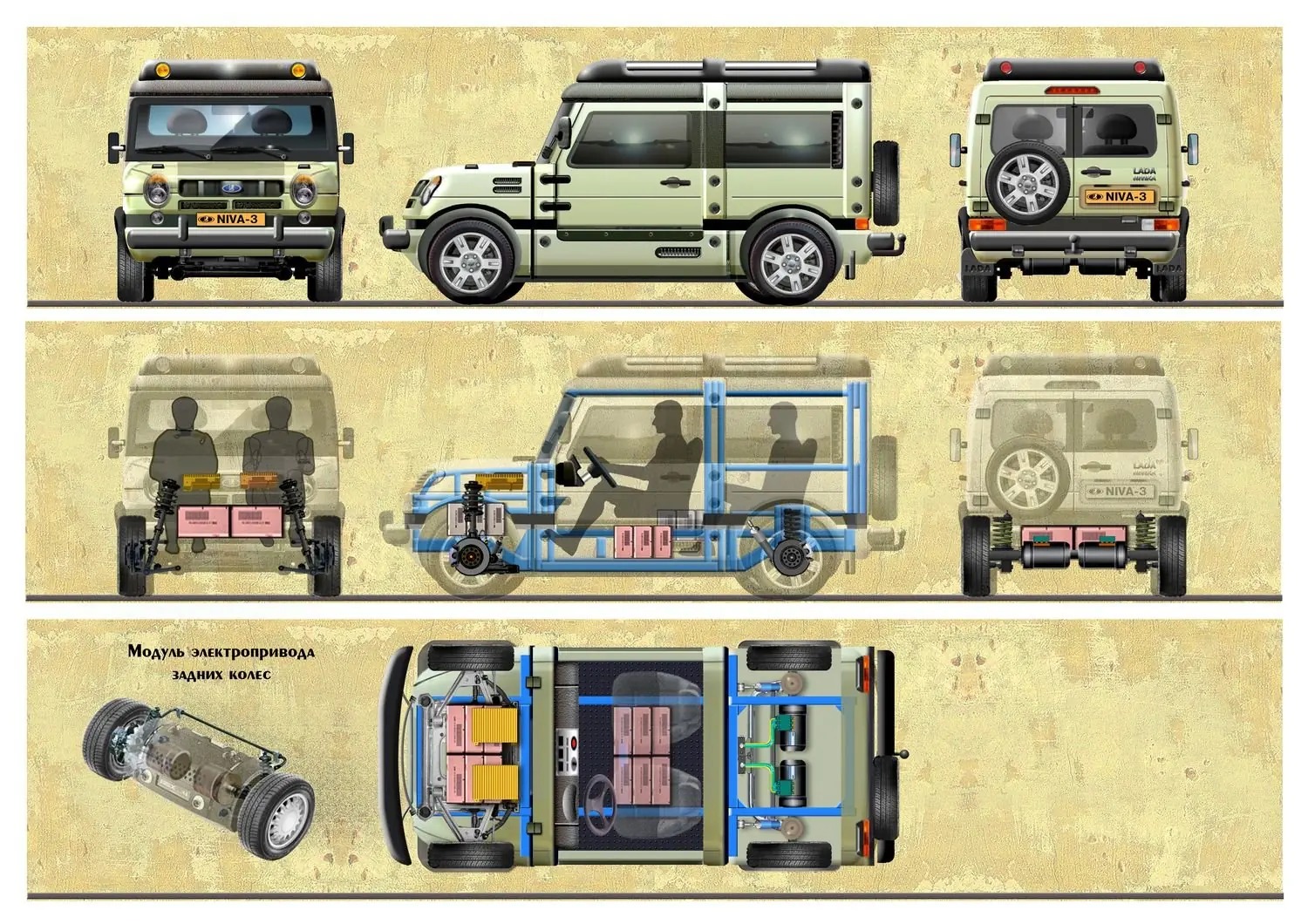
The most interesting aspect is that the chassis could easily be redesigned for electric drive, with traction batteries located in the centre of the body and two battery packs at the front. The drive unit could be supplied as a separate module manufactured at a specialised plant.
Markiev believes that the drive system from the “Mait” golf car could be used. It has a 30 kW, 110-volt version that has already been tested and could be quickly adapted for series production.