Mini Spiritual Too

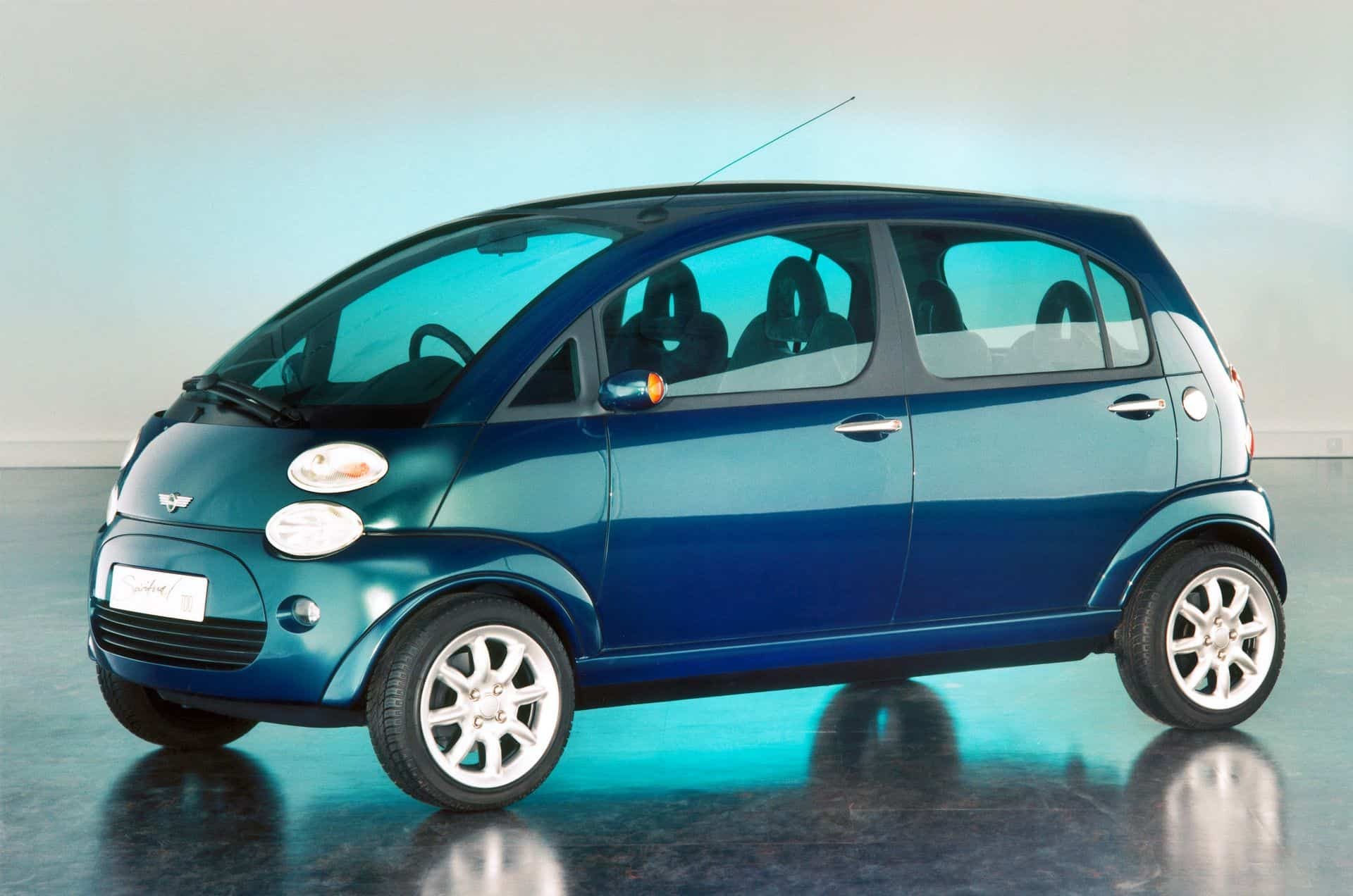
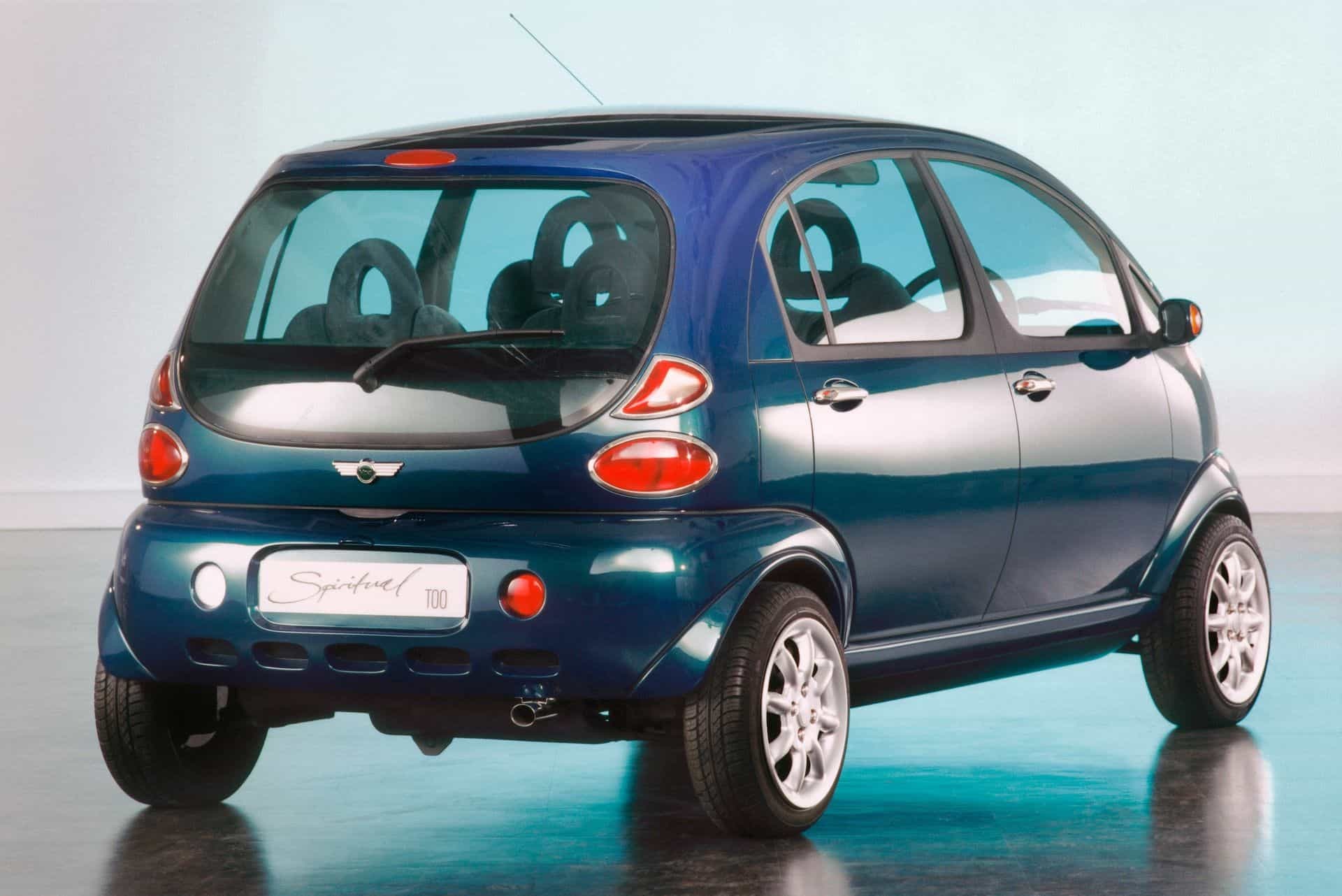
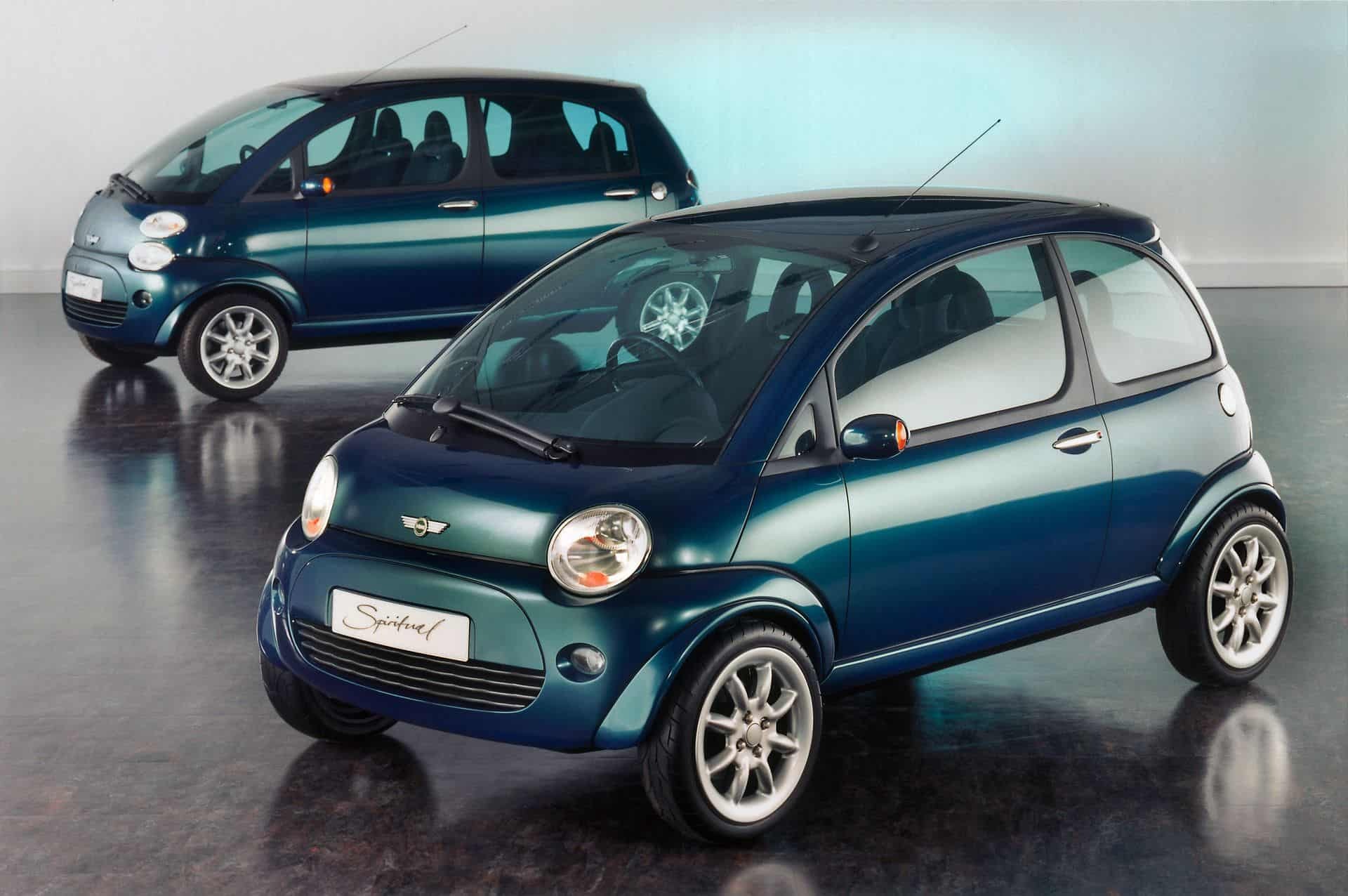
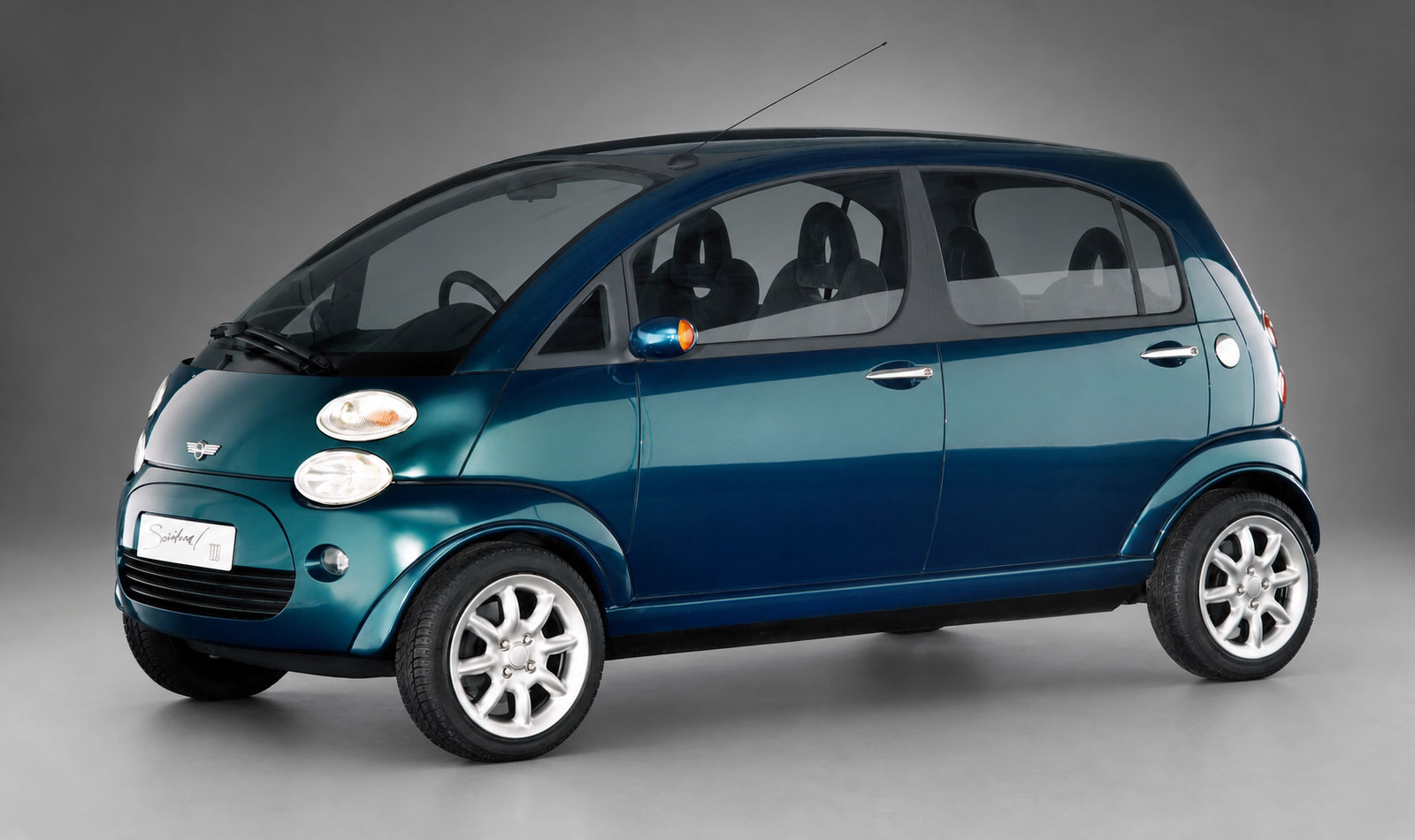
The 1997 MINI Spiritual Too was a five-door concept car unveiled alongside the three-door MINI Spiritual at the Geneva Motor Show in 1997.
While the standard Spiritual represented a compact three-door interpretation of the Mini concept, the Spiritual Too pushed the packaging idea further with a more practical five-door layout and a short snout, designed to maximize interior space in the true spirit of the original 1959 Mini.
The Spiritual Too was a stretched version of the standard Spiritual, with a wheelbase increased by approximately 40 cm. This extension allowed the vehicle to accommodate five doors and five seats, transforming it from a three-door microcar into a practical five-passenger vehicle.
Despite the longer wheelbase, the Spiritual Too remained under 3.5 meters in overall length (approximately 3.1 to 3.5 meters depending on the source), yet offered cabin volume reportedly comparable to a full-size luxury sedan like the BMW 7 Series.
The concept achieved its remarkable interior space thanks to its monobox shape, extremely short overhangs, and a high roofline that maximized headroom and visibility. The one-box design with a rear-engine layout eliminated the need for a traditional engine bay, freeing up more room for passengers.

The wheels were positioned at the extreme corners of the body, and the car featured a futuristic stance that looked more like a micro-MPV than a conventional hatchback.
Power came from a 1.1-liter four-cylinder K-Series engine, a step up from the 800cc three-cylinder unit used in the standard three-door Spiritual. The K-Series engine family was designed as a small, lightweight powerplant for small cars used primarily in urban environments.
The Spiritual Too was to use the latest version of the Hydragas suspension system, a fluid-linked system developed by Alex Moulton that connected the front and rear dampers diagonally to improve ride comfort. This system required very little space, using nitrogen-filled hollow spheres instead of conventional steel or rubber springs.
The exterior design featured distinctive “two-storey” oval headlamps that set it apart visually from the standard Spiritual. The design language was deliberately modern, with smooth, flowing surfaces and almost no ornamentation.
There were subtle nods to the original Mini, like rounded headlamps and minimalist detailing, but nothing about it felt like a tribute act. The concept was designed to be inexpensive to manufacture, with a steel frame and plastic paneling.
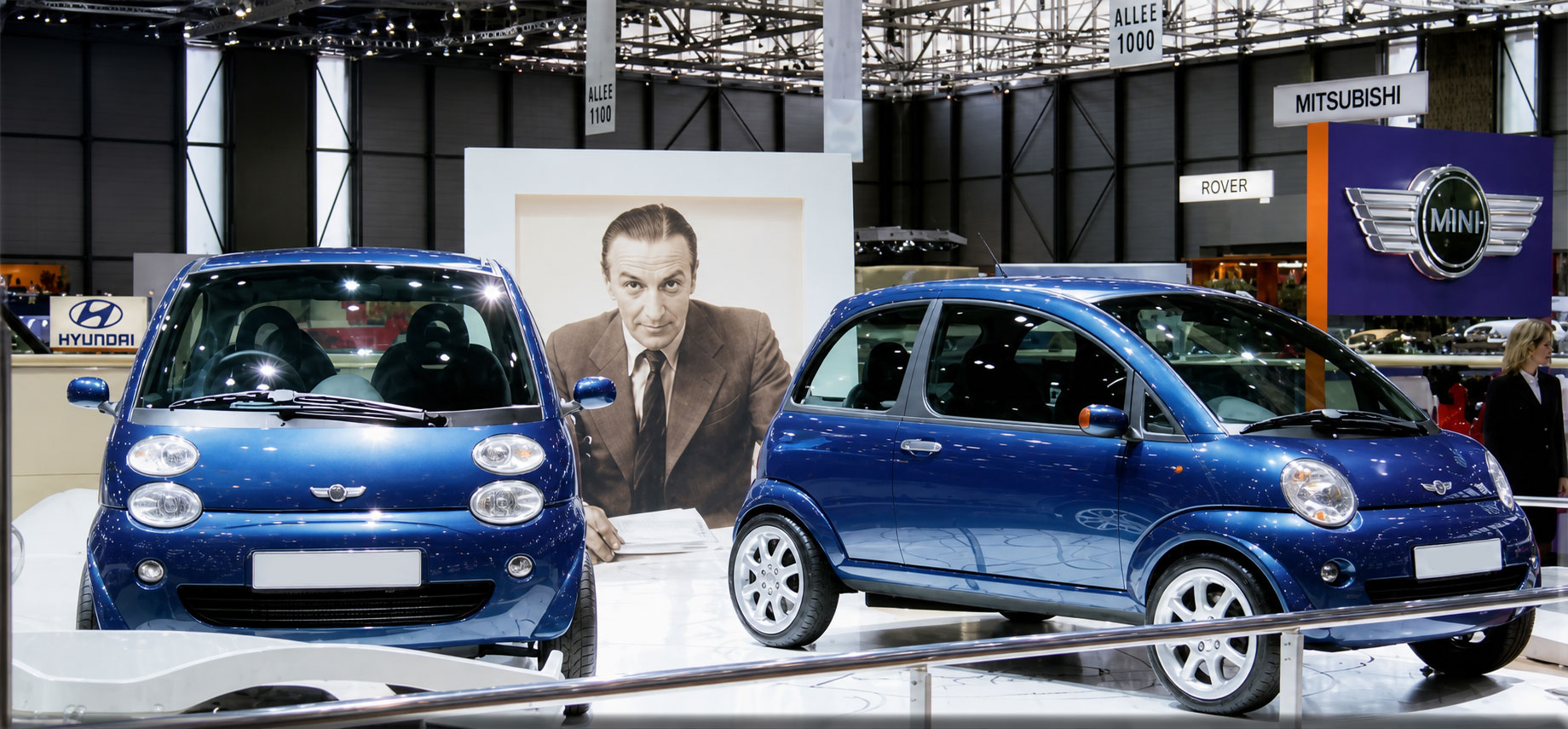
The Spiritual Too weighed approximately 900 kg, compared to around 700 kg for the standard three-door Spiritual. Both concepts were developed at Rover’s Gaydon facility and were based on the same idea of maximizing interior space that had defined the 1959 Mini as a mobility solution. The concepts were shown at the 1997 Geneva Motor Show to help build publicity for the Mini brand in the run-up to the pre-launch of the new production car at that year’s Frankfurt Motor Show.
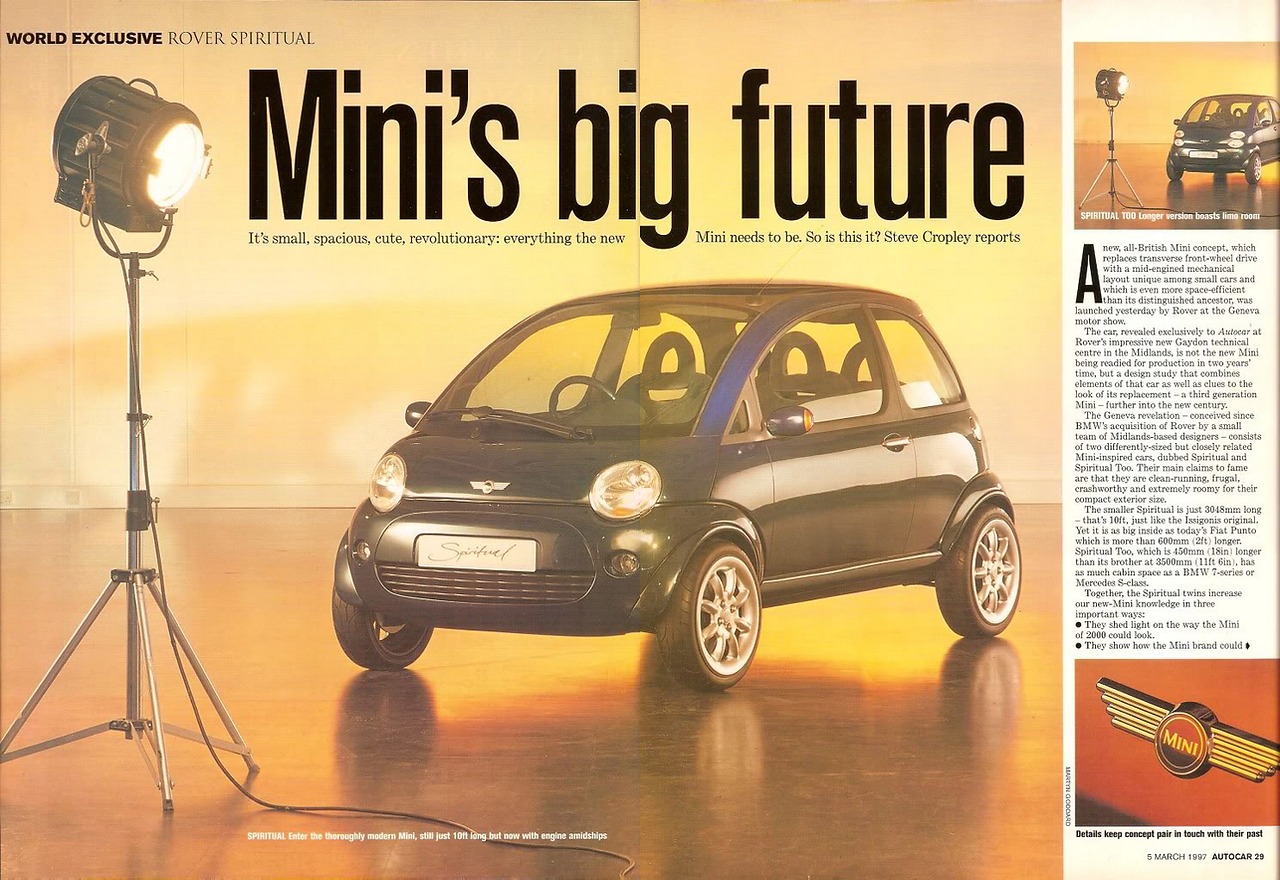
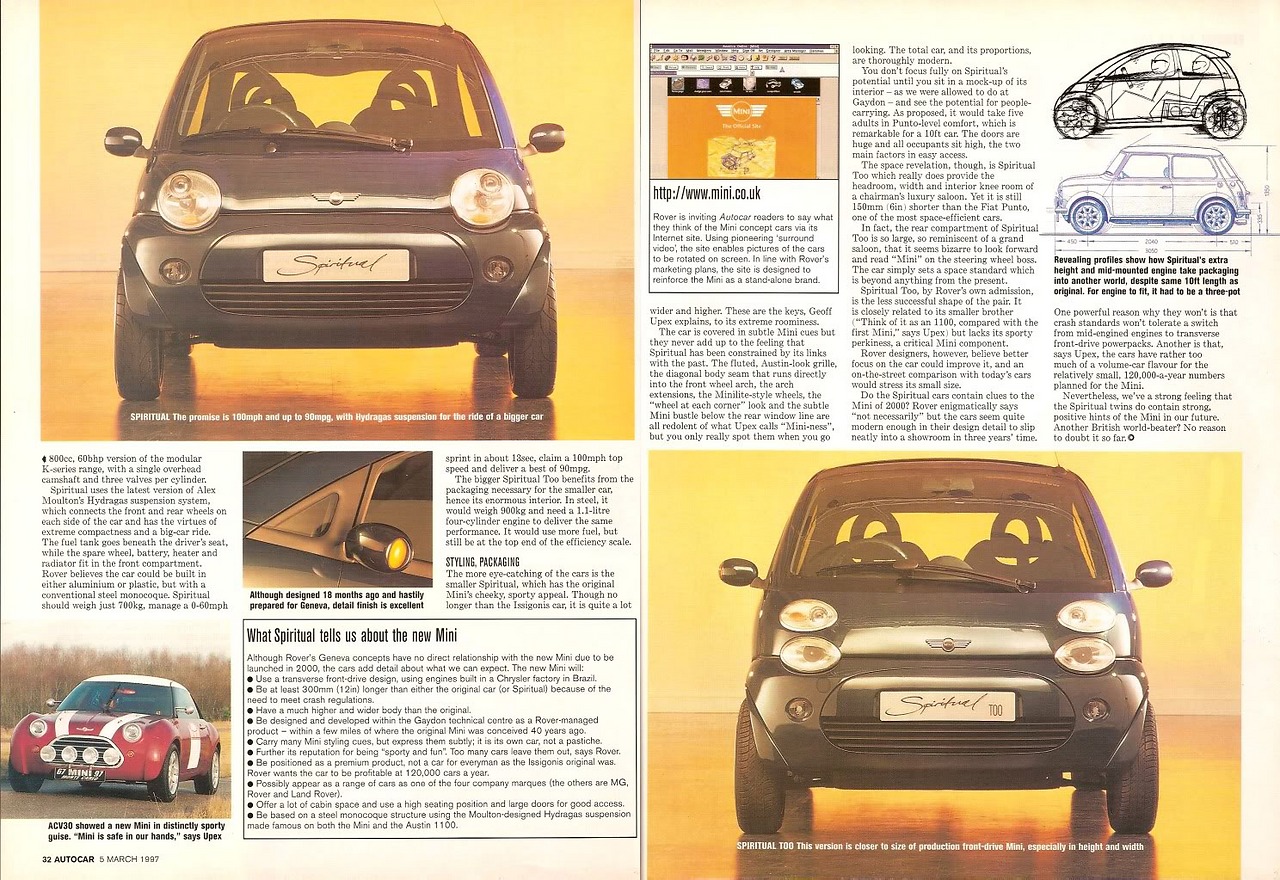
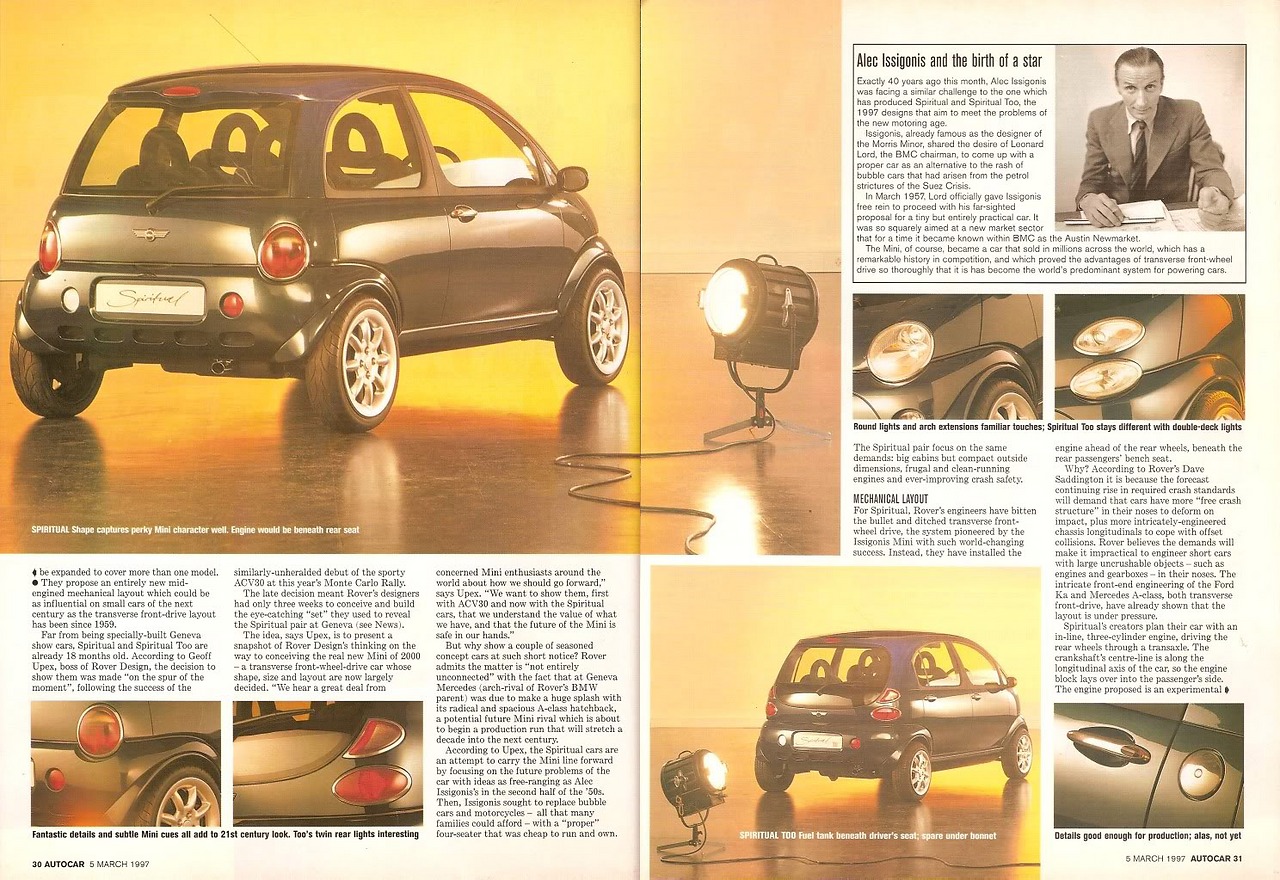
Despite its innovation, the Spiritual Too never made it beyond the concept stage. The Mini and Midi twins (the internal names for the standard and long-wheelbase versions) had already been passed over at the famous 1995 Gaydon shootout, where management decided which Mini concept would be developed into a production car.
They were rejected in favor of a more conventional and sporting proposition, although then-BMW Group boss Bernd Pischetsrieder liked them, stating that they were at least a decade ahead of their time.
BMW ultimately chose to pursue a design with broader emotional appeal, rooted in heritage and global brand identity. That direction led to the Frank Stephenson-designed R50 MINI, which launched in 2001 and became an instant hit.
The decision wasn’t just about styling—it was about marketing, platform sharing, and international sales potential. The new MINI received a transversely mounted front engine, front-wheel drive, and the same proportions as the original, albeit stretched to a length of 3.62 meters.
Even though the Spiritual Too was shelved, its emphasis on maximizing interior space within a small footprint became a defining feature of every new MINI, from the first R50 to later variants like the Clubman and Countryman. The concept’s approach to non-traditional layout and packaging encouraged BMW engineers to think more freely, especially as the industry began experimenting with electrification and alternative drivetrains.