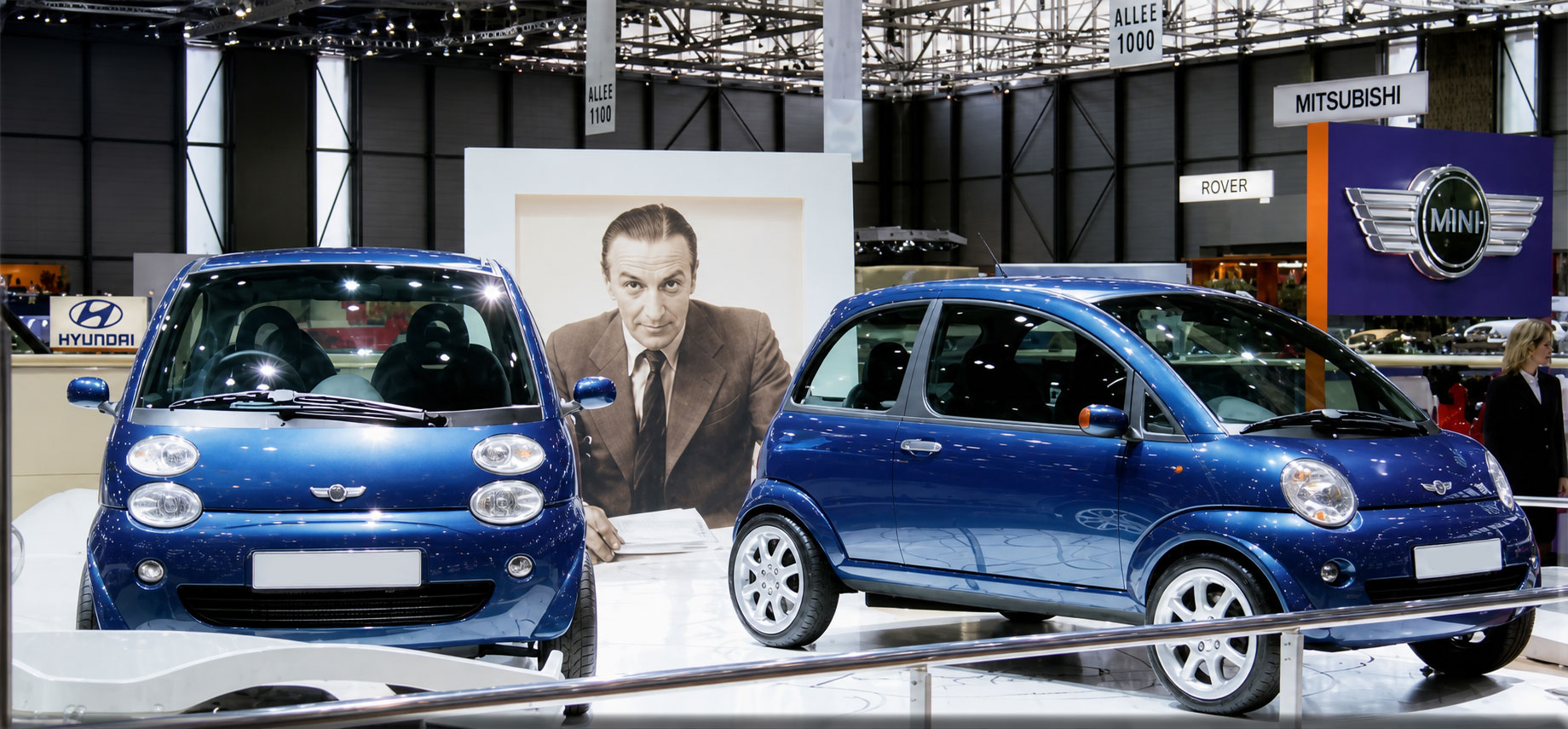
Mini Spiritual

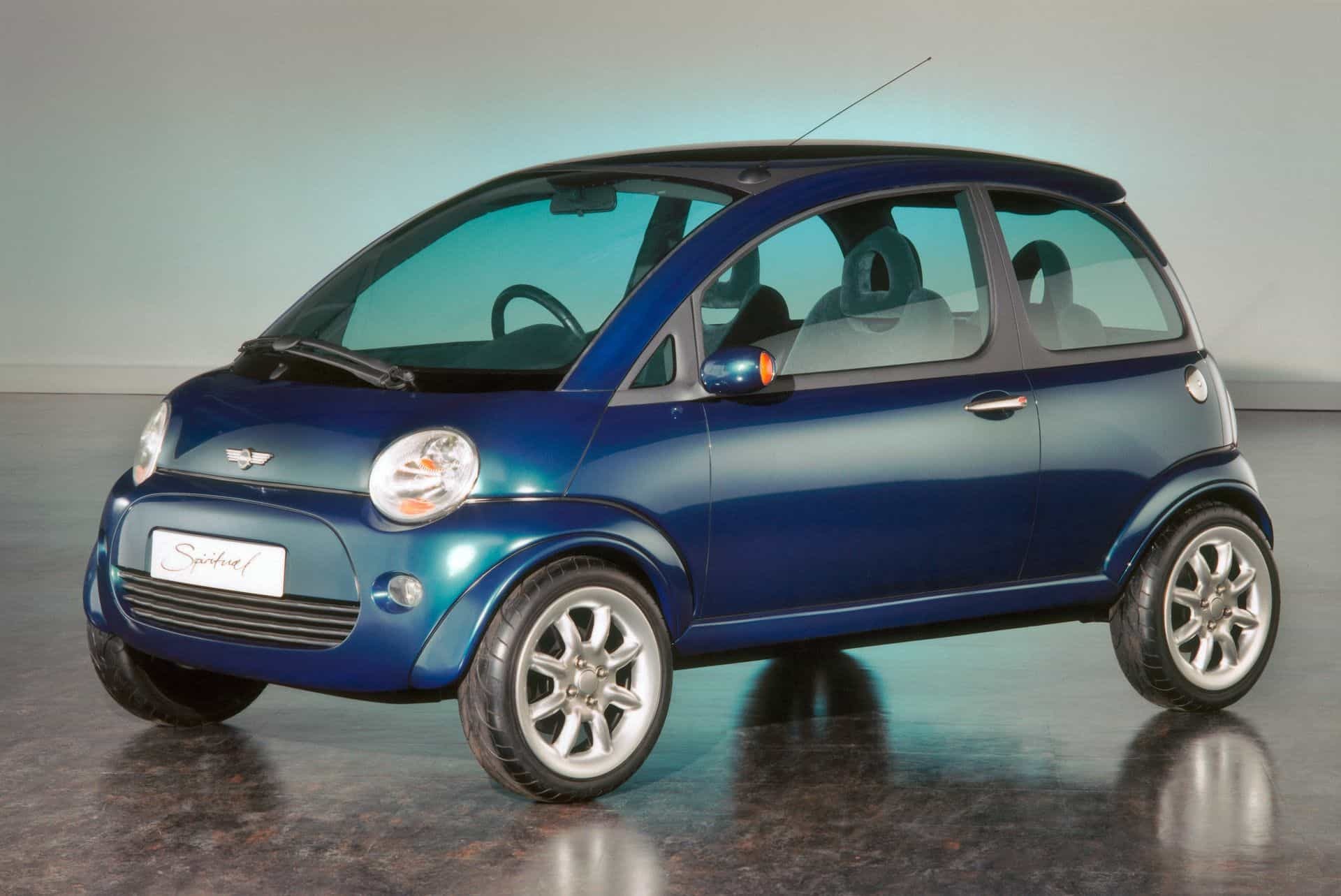
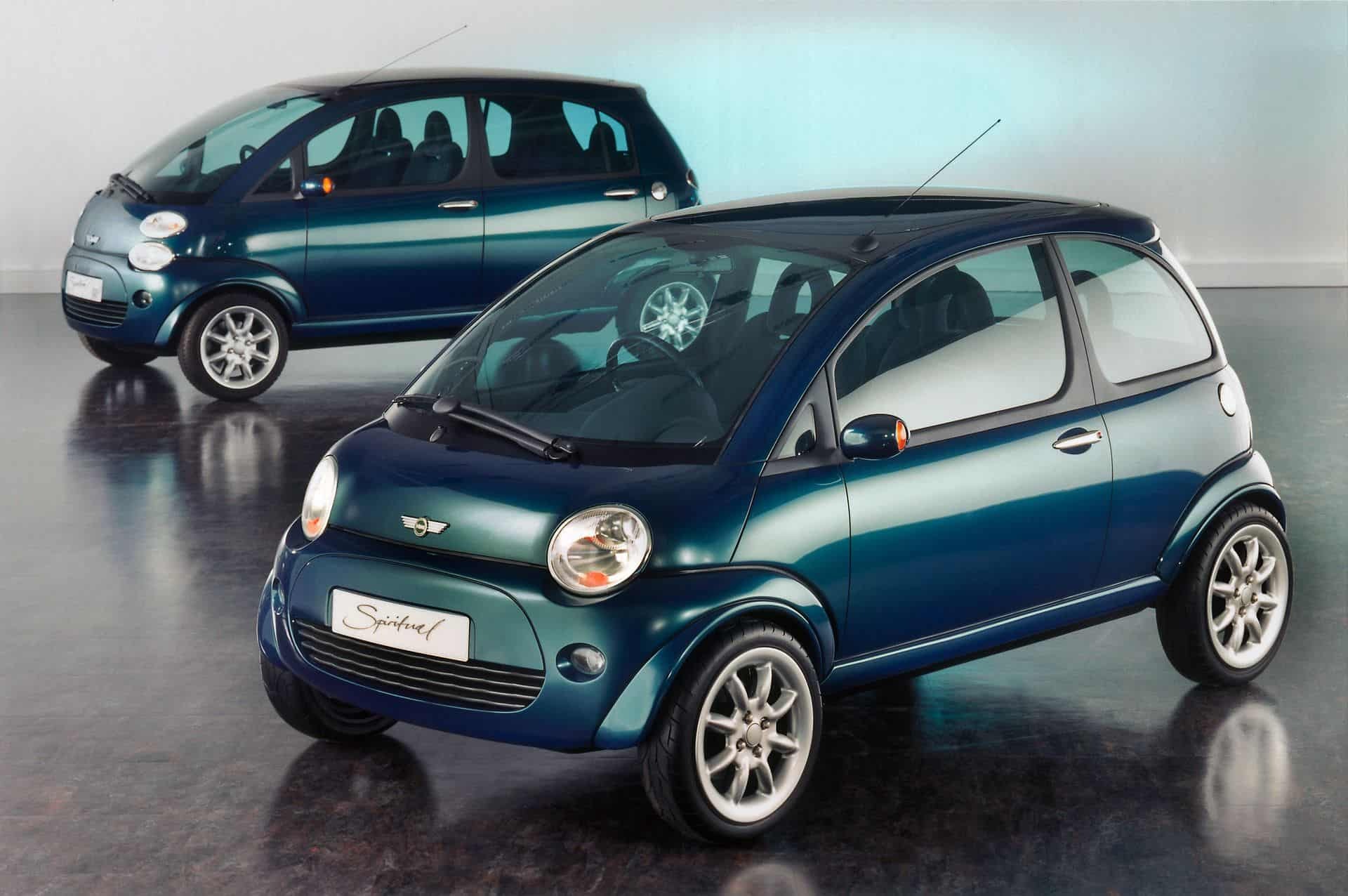
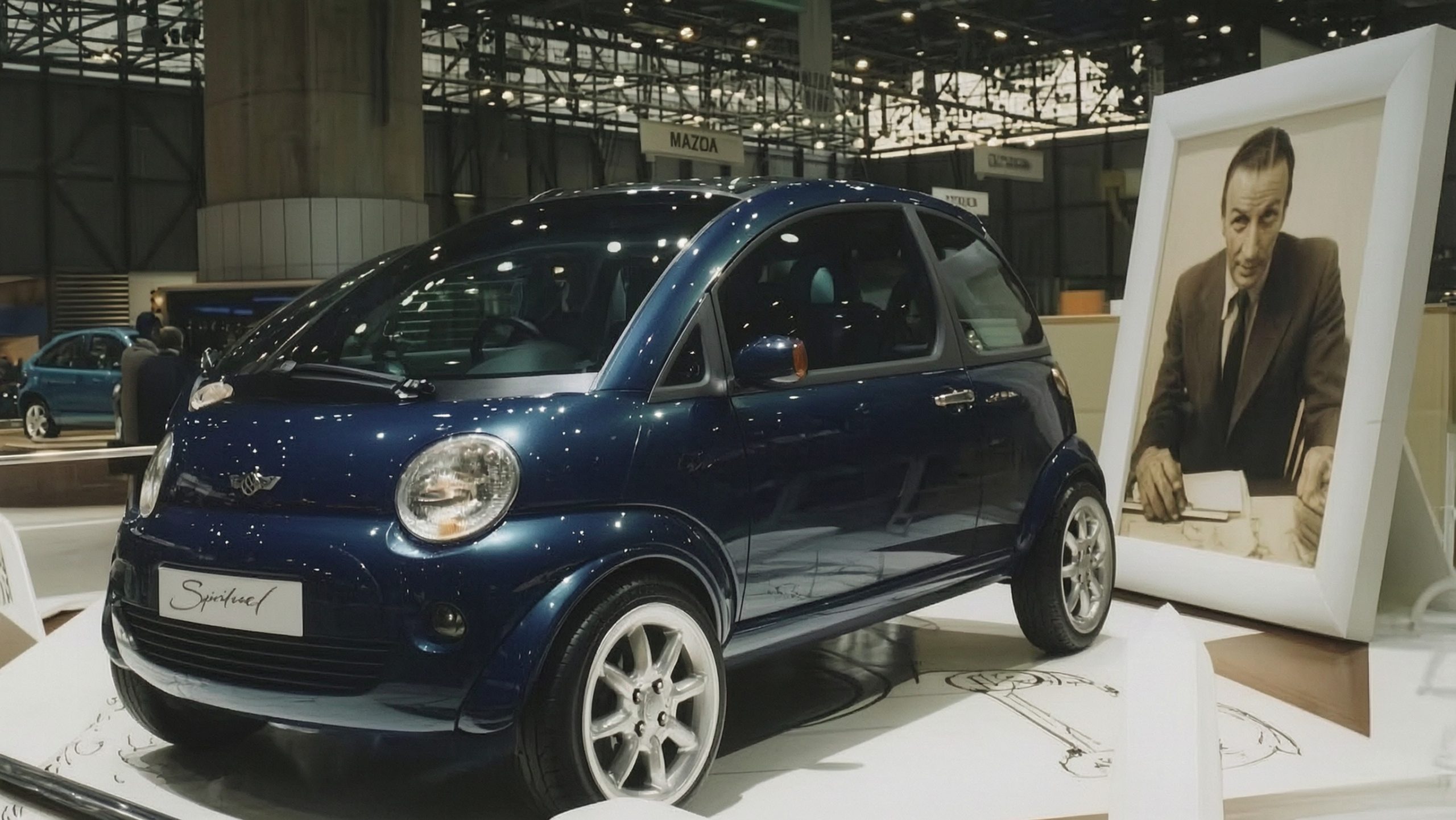
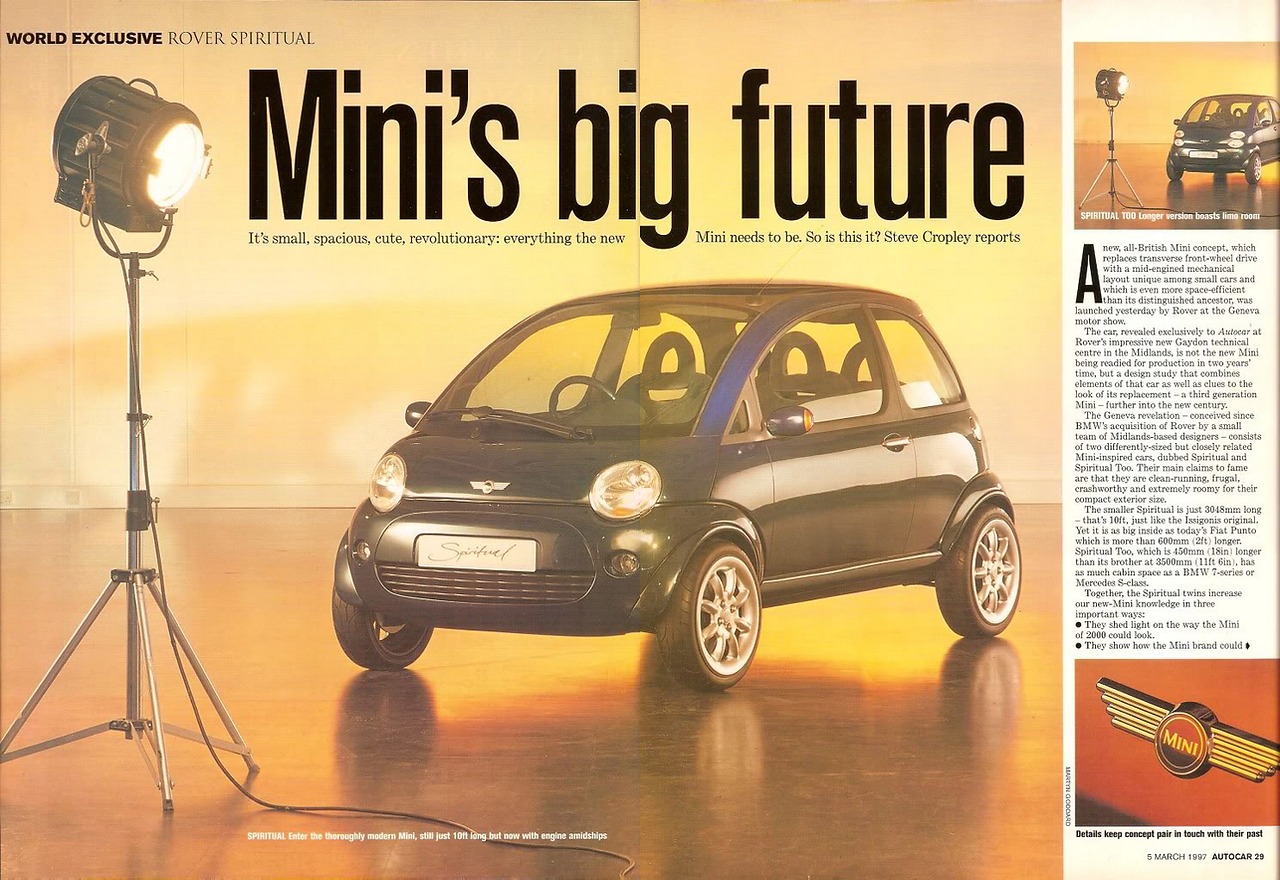
The 1997 MINI Spiritual Concept was a radical alternative vision for the future of the Mini brand, unveiled at the Geneva Motor Show in 1997 by Rover under BMW ownership.
At the time, the original Mini had become a cultural icon, but its production days were numbered. While most people today know the story ended with the 2001 retro-styled MINI designed by Frank Stephenson, the Spiritual represented a completely different path that very nearly defined the brand’s future.
The Spiritual was designed by Oliver Le Grice and his team at Rover as a minimalist, forward-thinking study in how to do small cars differently. It looked nothing like the Mini everyone knew, with no cheeky retro touches, no chrome grilles, and no Union Jack flair.
Instead, it was a clean-sheet design that prioritized space, efficiency, and clever engineering. The concept emerged from a serious investigation into replacing the Mini that began in 1993, when Design Director Gordon Sked asked his team to think outside the box and recreate the spirit of the 1959 original without worrying about carry-over parts.
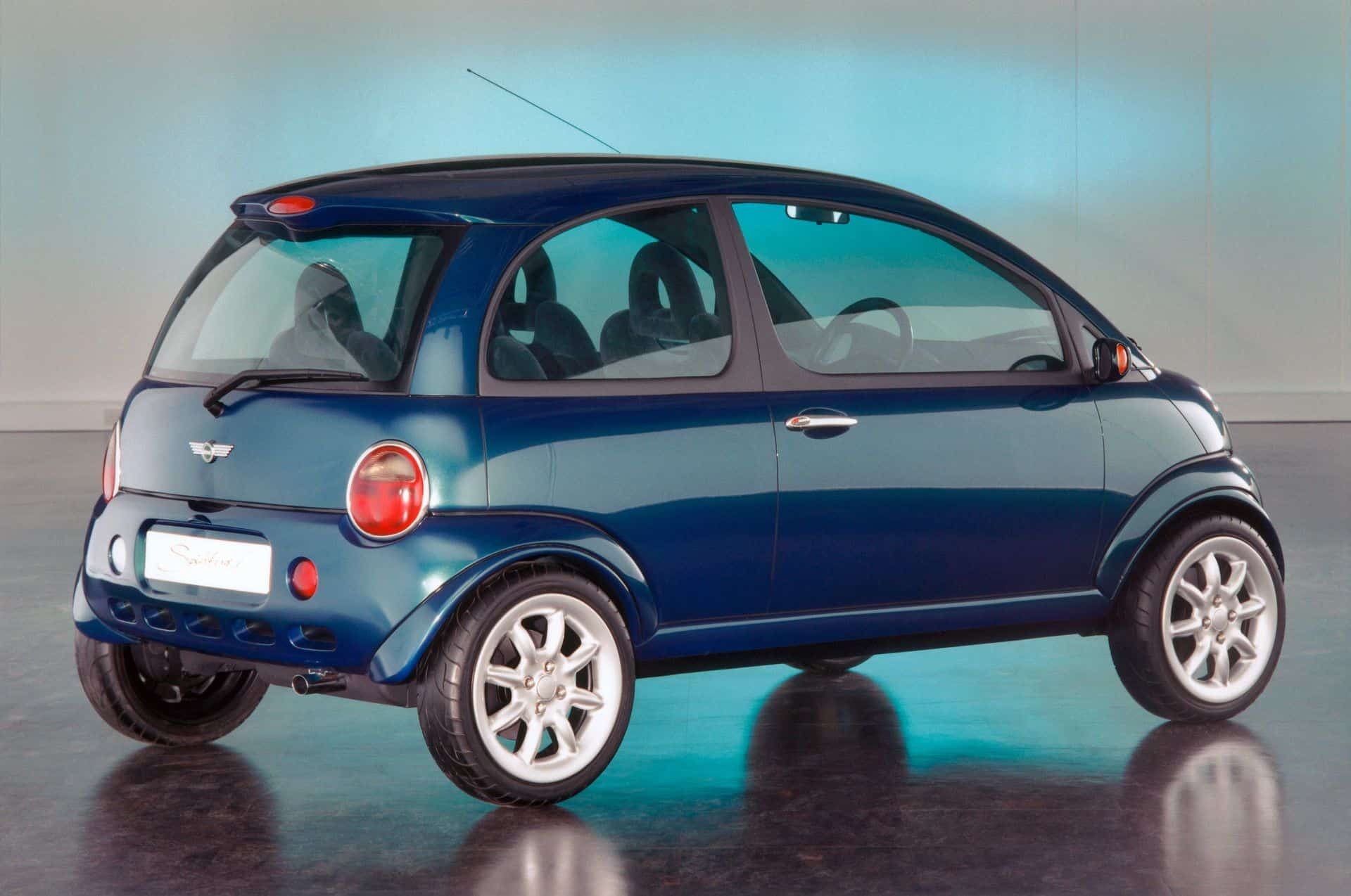
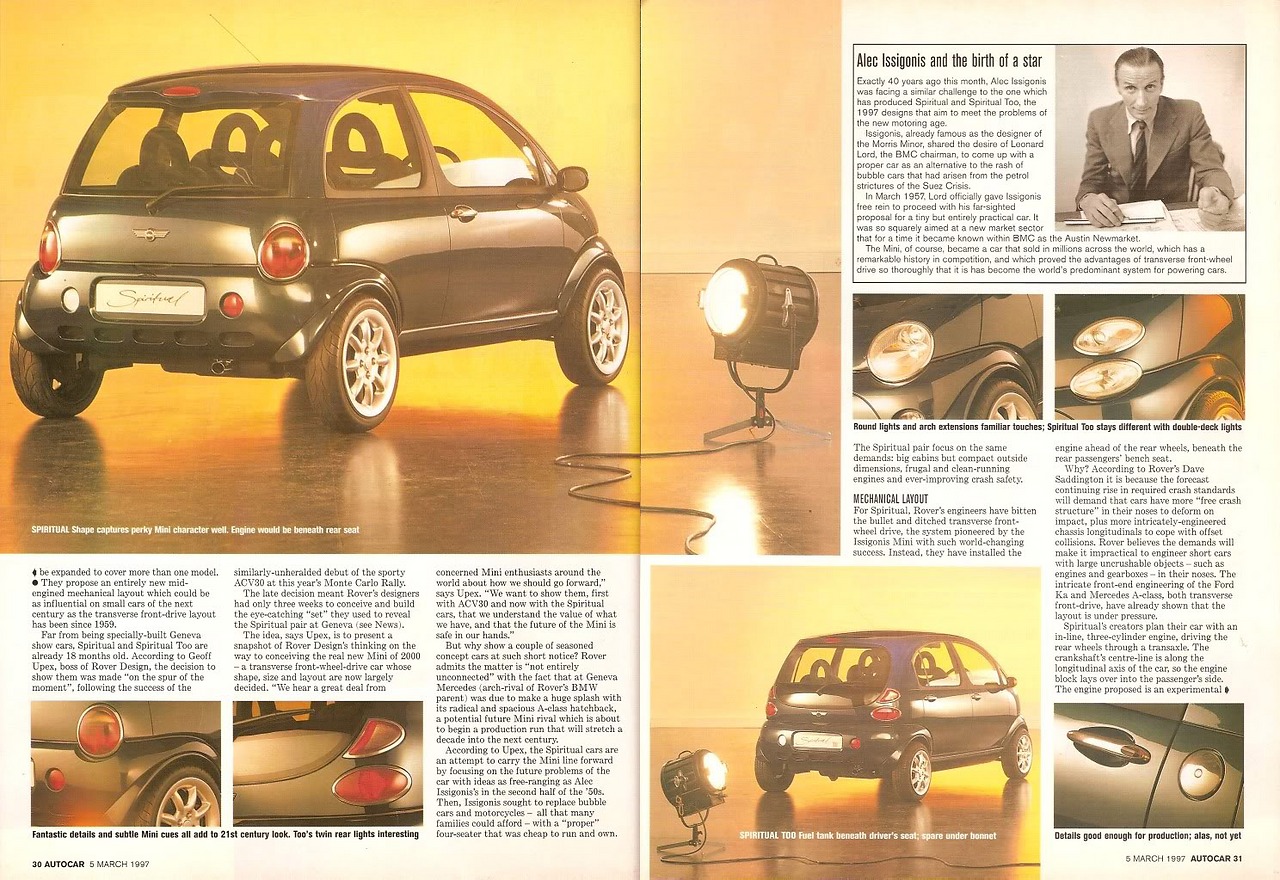
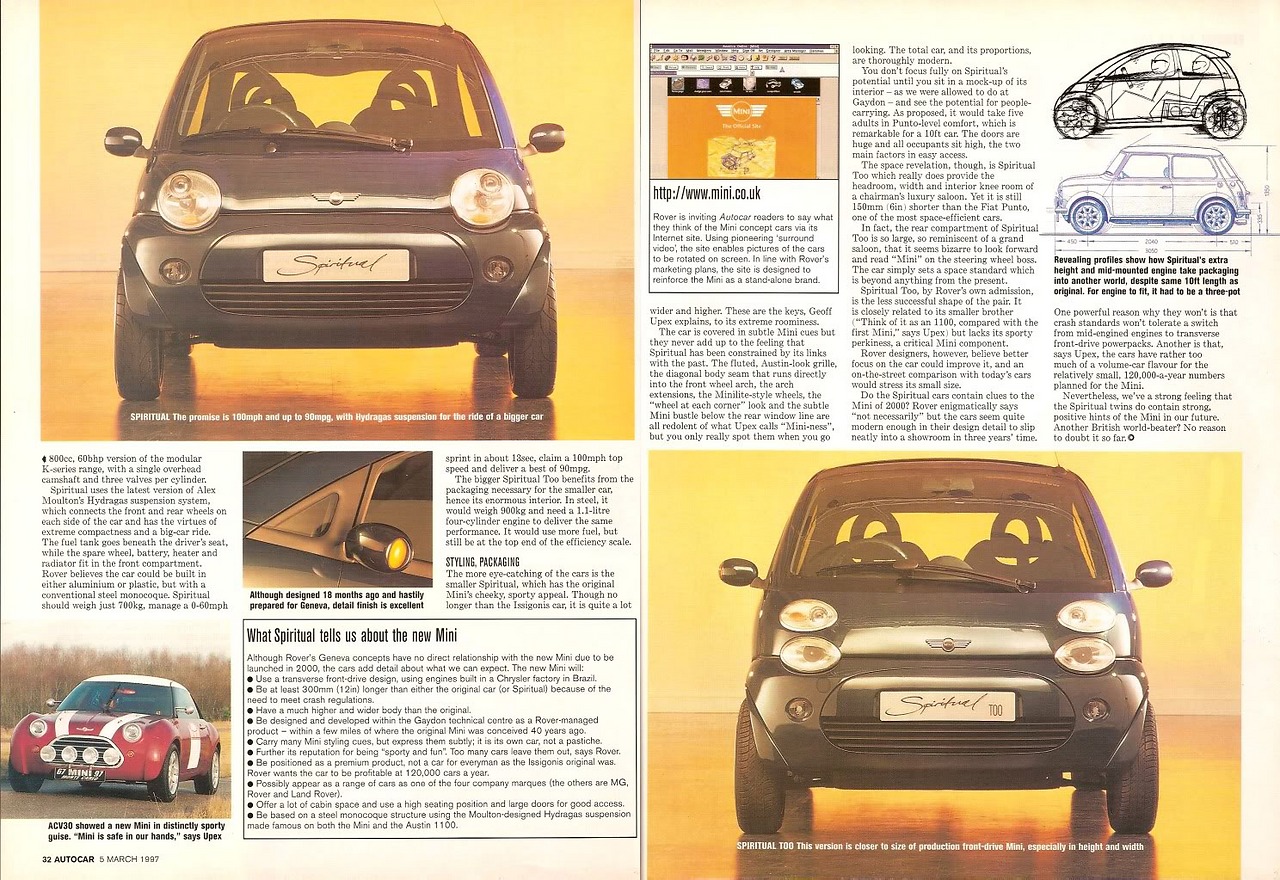
The one-box, rear-engined minicar was a packaging marvel with an overall length of around 10 feet (approximately 3 meters), just like the original Mini. Engineers placed a small three-cylinder 800cc K-Series engine producing around 60 hp under the rear seat, eliminating the need for a traditional engine bay and freeing up more room for passengers.
The result was a three-door car about the same length as the original Mini but with dramatically improved interior space. The wheels were positioned at the extreme corners of the three-meter-long body, and the car was designed to be inexpensive to manufacture.

Instead of chasing retro charm, the design language of the Spiritual was deliberately modern. It featured smooth, flowing surfaces, almost no ornamentation, and a futuristic stance that looked more like a micro-MPV than a hatchback.
There were subtle nods to the original Mini, like rounded headlamps and minimalist detailing, but nothing about it felt like a tribute act. This was an attempt to preserve the Mini’s core purpose—space efficiency, simplicity, and clever packaging—without getting caught up in its image. Some observers described it as a Daewoo Matiz lookalike held together by a steel frame garnished with plastic paneling, and it was widely criticized as personality-free.
The engineering was just as unconventional as the styling. The Spiritual used Hydragas suspension, a fluid-linked system developed by Alex Moulton that connected the front and rear dampers diagonally to improve ride comfort.
This system was a development from British Leyland and required very little space, using nitrogen-filled hollow spheres instead of conventional steel or rubber springs, eliminating the need for pressure pumps. The rear-engine, rear-wheel-drive layout with a mid-mounted powertrain was a radical departure from the original Mini’s front-engine, front-wheel-drive configuration.
A stretched five-door version called the Spiritual Too was also shown at the same 1997 Geneva Motor Show alongside the standard Spiritual, though it remained a separate concept study.
Despite its innovation, the MINI Spiritual never made it beyond the concept stage. The concepts had already been passed over at the famous 1995 Gaydon shootout, where management decided which Mini concept would be developed into a production car.
They were rejected in favor of a more conventional and sporting proposition, although then-BMW Group boss Bernd Pischetsrieder liked them, stating that they were at least a decade ahead of their time. The project was put on ice, only to be dusted off for the 1997 Geneva Motor Show, where it was unveiled to help with the build-up of Mini publicity in the run-up to the pre-launch of the new car at that year’s Frankfurt Motor Show.
BMW ultimately chose to pursue a design with broader emotional appeal, rooted in heritage and global brand identity. That direction led to the Frank Stephenson-designed R50 MINI, which launched in 2001 and became an instant hit.
The decision wasn’t just about styling—it was about marketing, platform sharing, and international sales potential. The new MINI received a transversely mounted front engine, front-wheel drive, and the same proportions as the original, albeit stretched to a length of 3.62 meters.
Even though the Spiritual was shelved, its ideas didn’t go to waste. In the years that followed, several of the Spiritual’s lessons quietly filtered into other projects. The emphasis on maximizing interior space within a small footprint became a defining feature of every new MINI, from the first R50 to later variants like the Clubman and Countryman.
The concept’s approach to non-traditional layout and packaging encouraged BMW engineers to think more freely, especially as the industry began experimenting with electrification and alternative drivetrains. The Spiritual helped establish an internal culture at MINI that wasn’t afraid to explore the weird and unconventional.
Later concepts like the 2011 Rocketman or the more recent Urbanaut echoed its values—compact exterior dimensions, roomy interiors, and designs that didn’t always stick to tradition.