How Are Cubans Dealing With the Oil Blockade? By Converting a Fiat 126p to Run on Wood Gas

After the United States imposed an embargo on oil product imports to Cuba, ordinary Cubans have been forced to find creative ways to keep their vehicles running. One solution is converting them to run on wood gas.
Residents of the Caribbean “island of freedom” have extensive experience keeping decades-old cars alive. In Havana, you can still see massive American cars from the 1950s that were imported during the rule of the pro-American dictator Fulgencio Batista. After Fidel Castro seized power during the Cuban Revolution, many of those cars continued driving for decades with engines taken from Soviet vehicles such as GAZ and VAZ models.
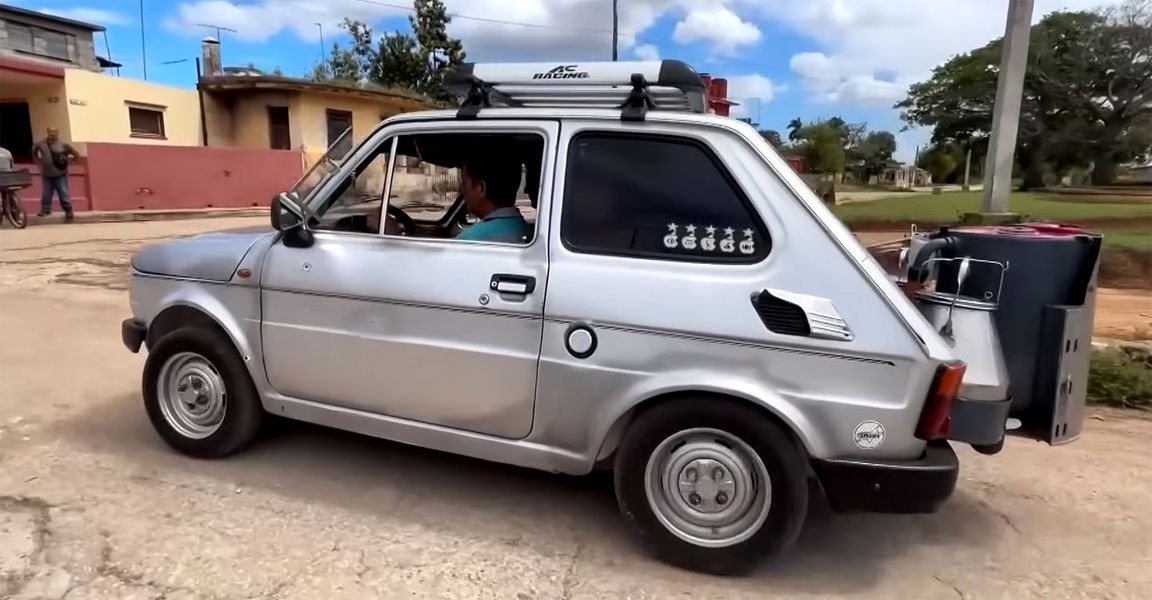
However, that only works if fuel is available — and after the U.S. embargo on petroleum products, Cuba has faced severe shortages. Cuban resident Juan Carlos Pino decided to solve his transportation problem in his own way. He converted his 1980 Polish-built Fiat 126p, widely known as the “Maluch,” to run on wood gas.
Pino designed and built the entire wood-gas system himself. He drew inspiration from his uncle as well as from the Drive on Waste website, which provides instructions for converting gasoline engines to run on wood gas.
Wood gas as a fuel is far from new. It was widely used in many European countries, including Czechoslovakia, during the 1930s — particularly throughout the Great Depression and later during World War II.
Wood gas was officially described as an engine fuel in the 1986 publication Wood Gas as Engine Fuel, released by the United Nations Food and Agriculture Organization (FAO). However, the scientific journal Nature had already discussed its potential use in regions lacking oil as early as 1934.
Wood gas is a synthetic gaseous fuel based primarily on carbon monoxide. It is produced through the incomplete combustion of biomass and other carbon-based materials, including charcoal.
Gasification takes place inside a wood-gas generator — essentially a top-loaded furnace where biomass is burned. The process produces a mixture of carbon monoxide, hydrogen, methane, and carbon dioxide. Unfortunately, it also generates carcinogenic substances in the form of tar-containing polycyclic aromatic hydrocarbons. While tar is harmful to human health, it also increases the energy content of the gas and therefore engine performance.
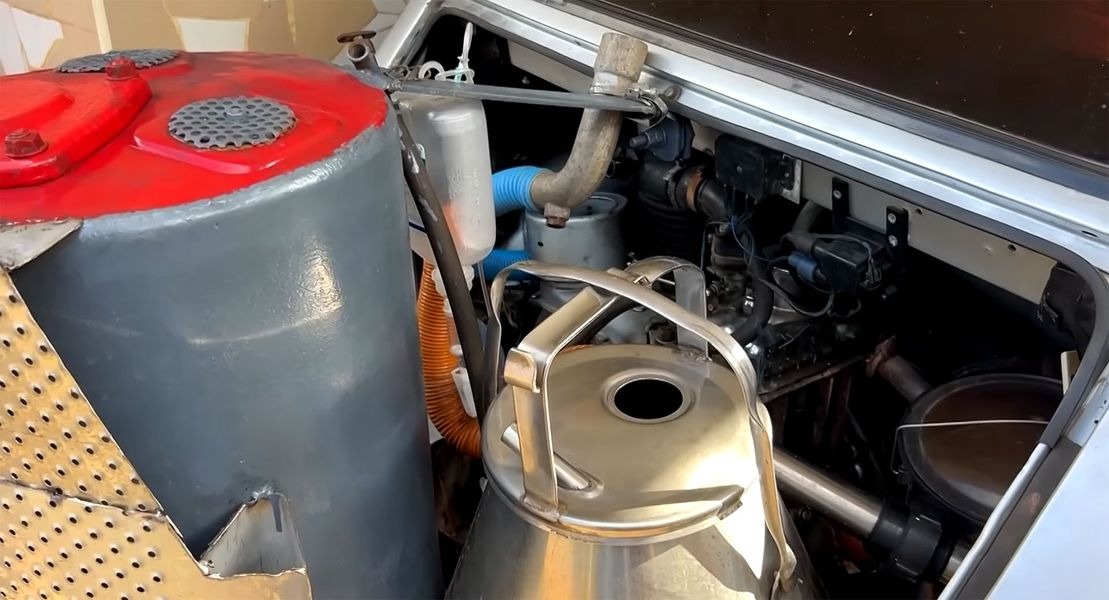
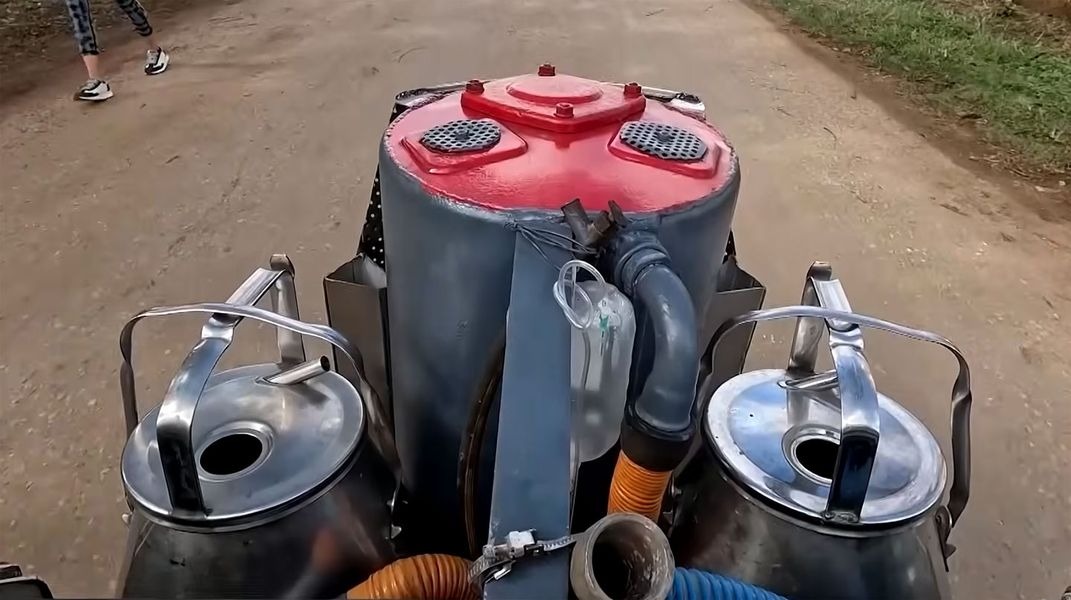
Pino built the gas generator himself using a propane cylinder. The wood gas is routed through a cooling chamber and filter before reaching the engine’s carburetor. A blower is used only when starting the engine; once running, the pistons naturally draw the gas into the carburetor.
The conversion proved successful during one of the first test drives. Pino managed to travel 85 kilometers and reached a top speed of 70 km/h.