Skorpion & Super Skorpion

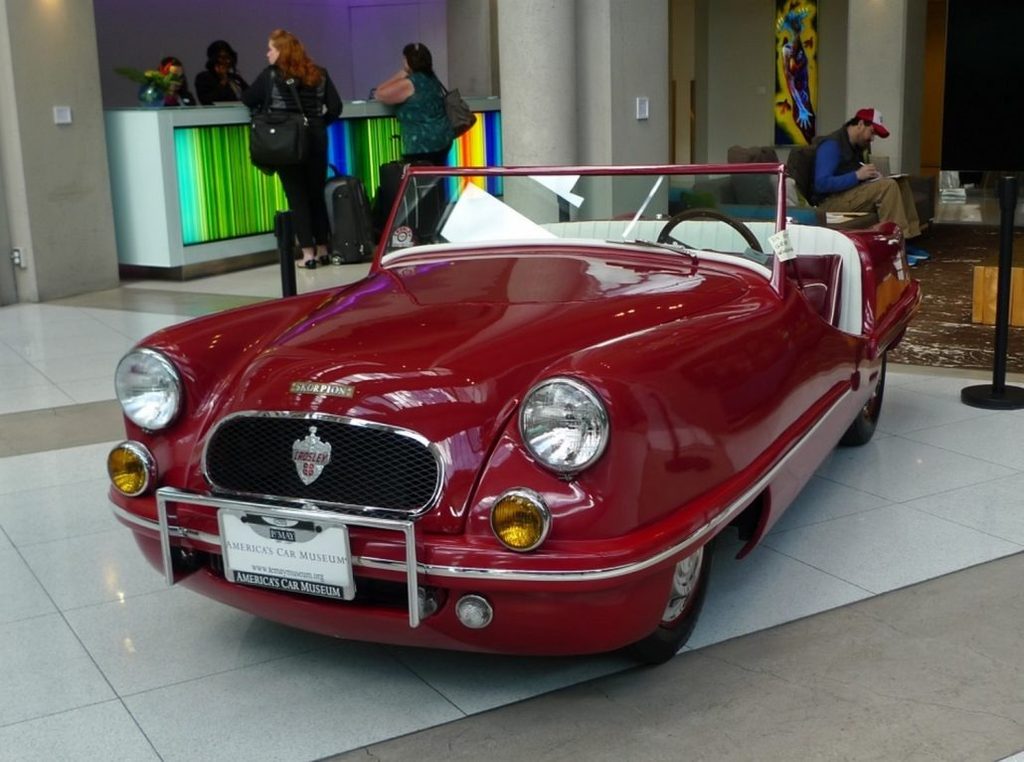
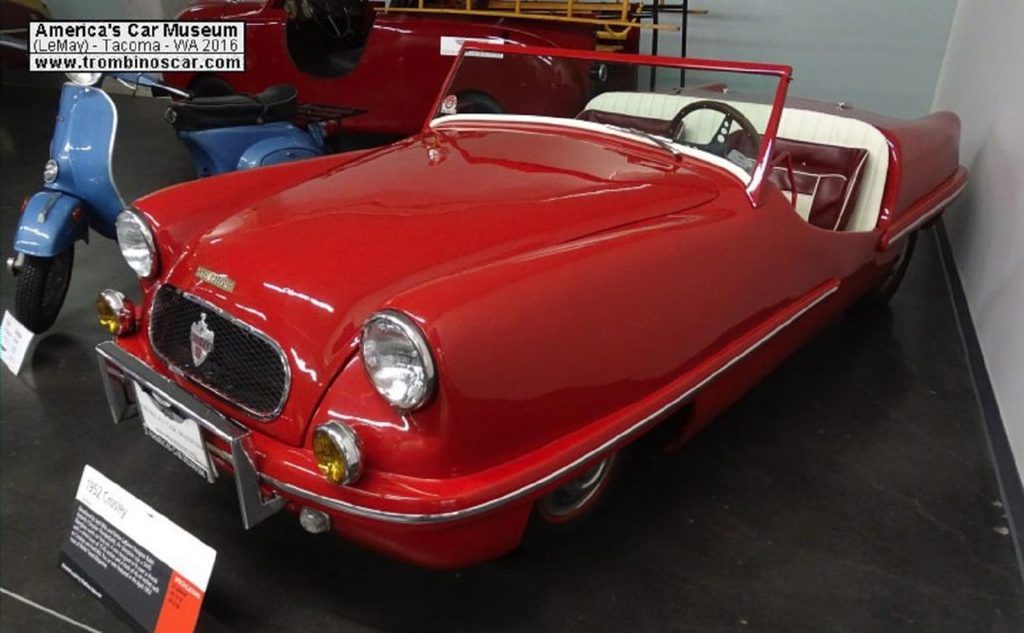
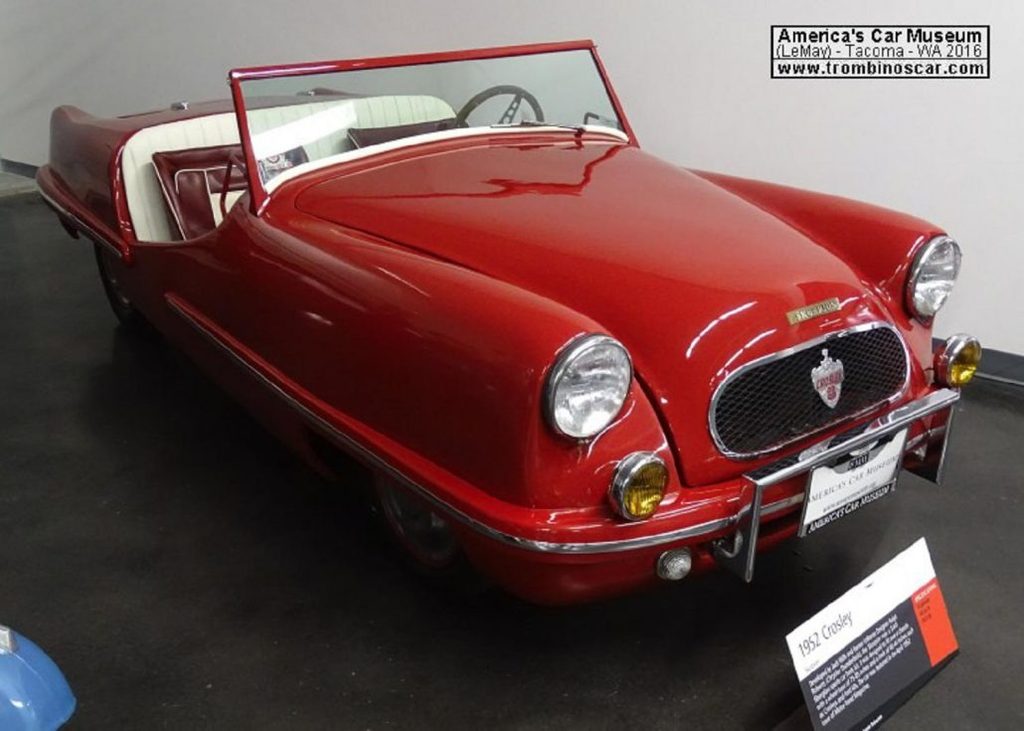
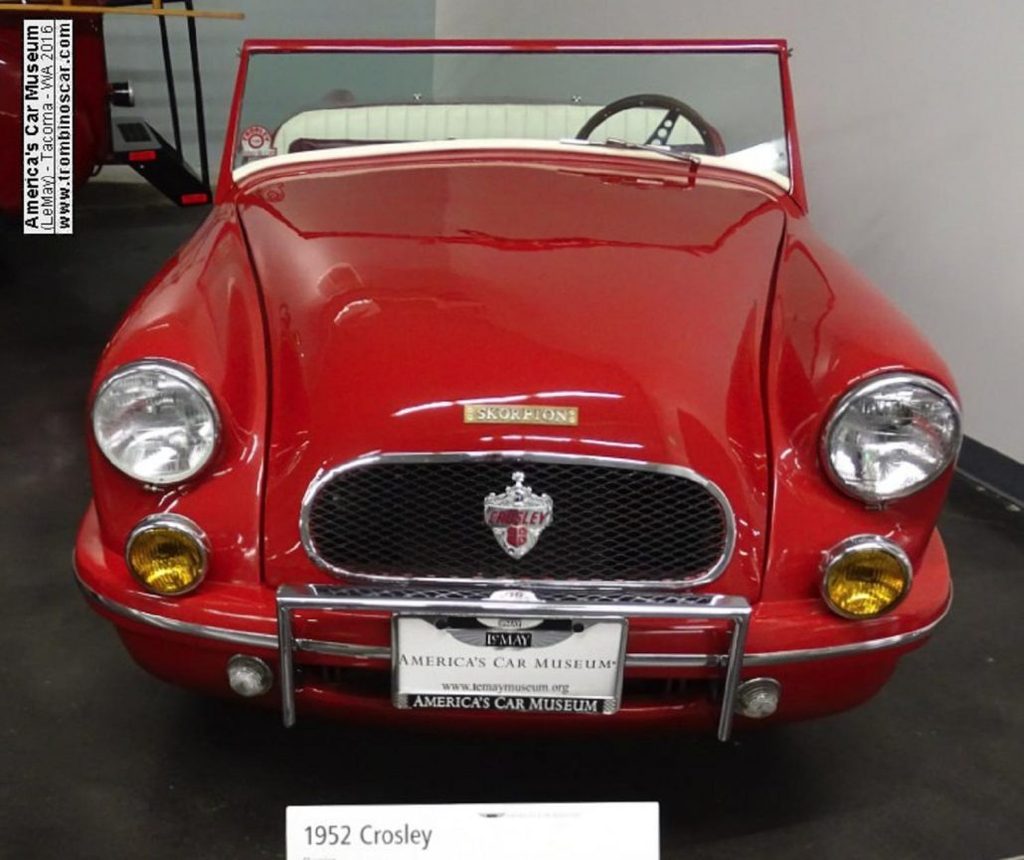
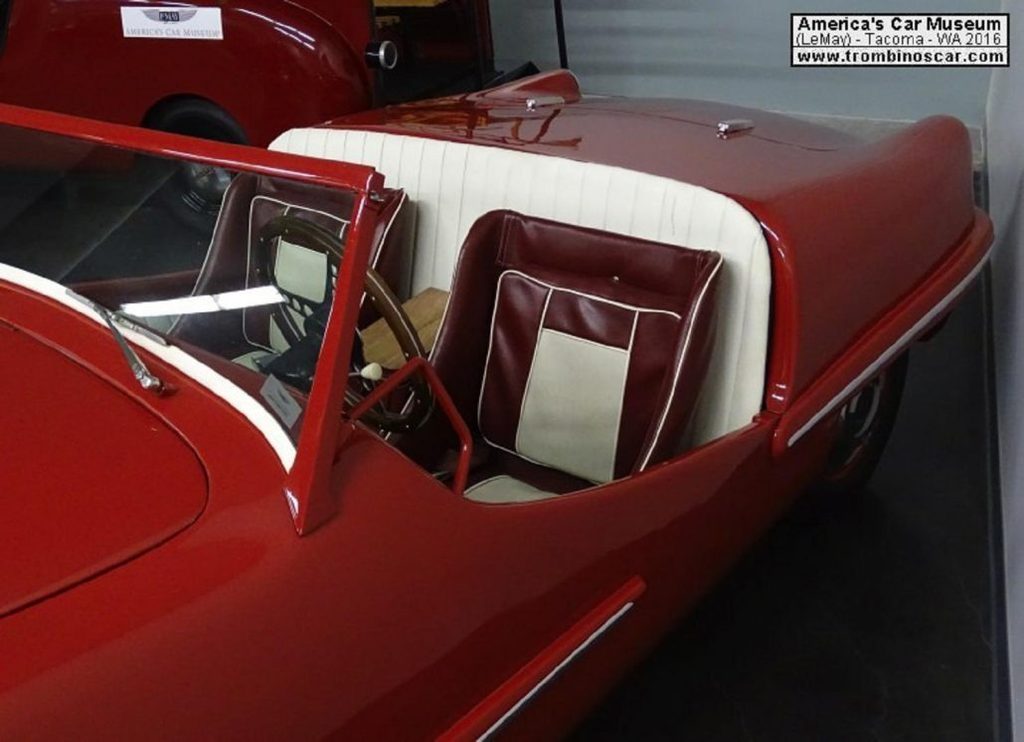
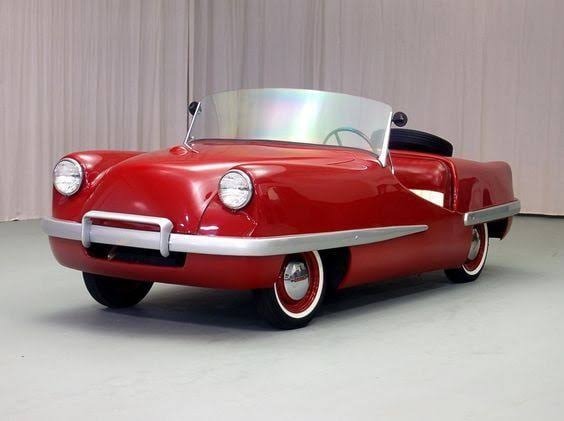
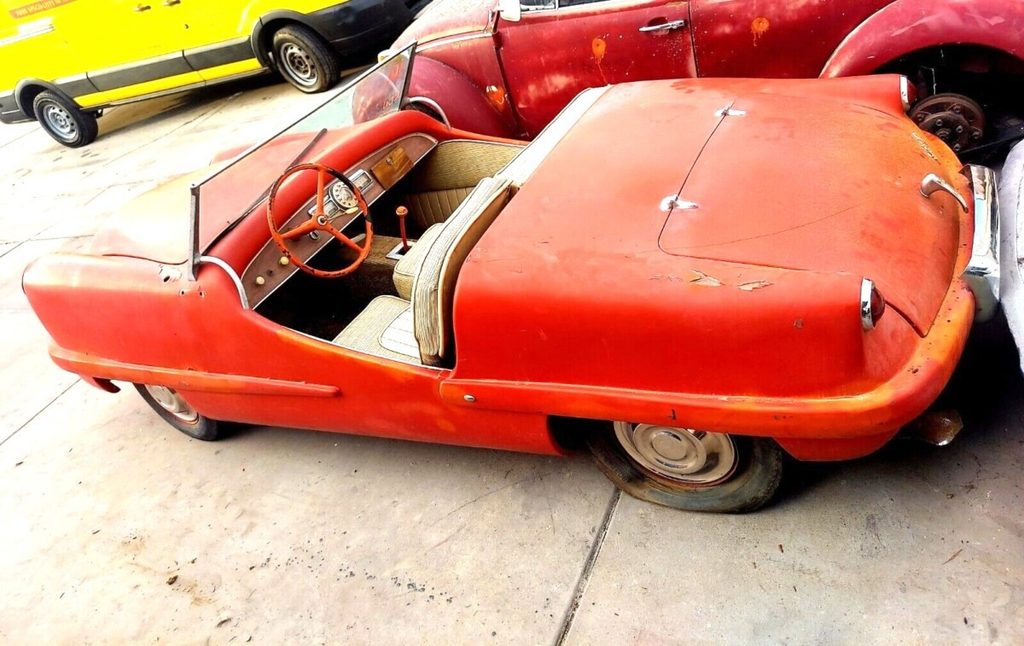
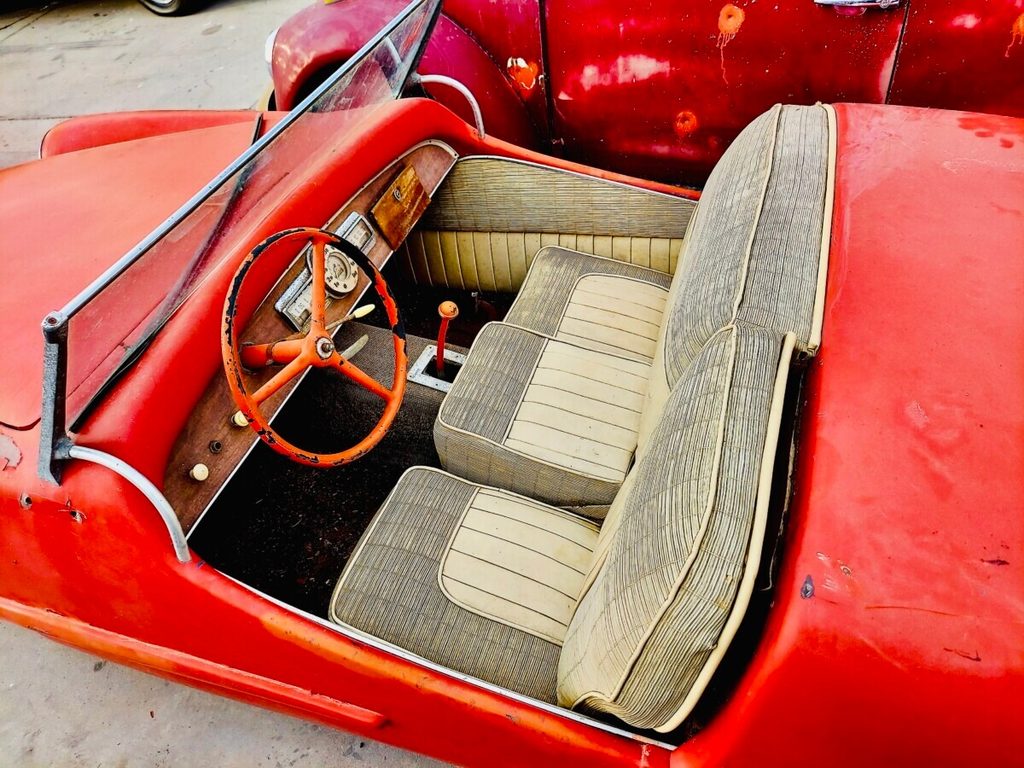
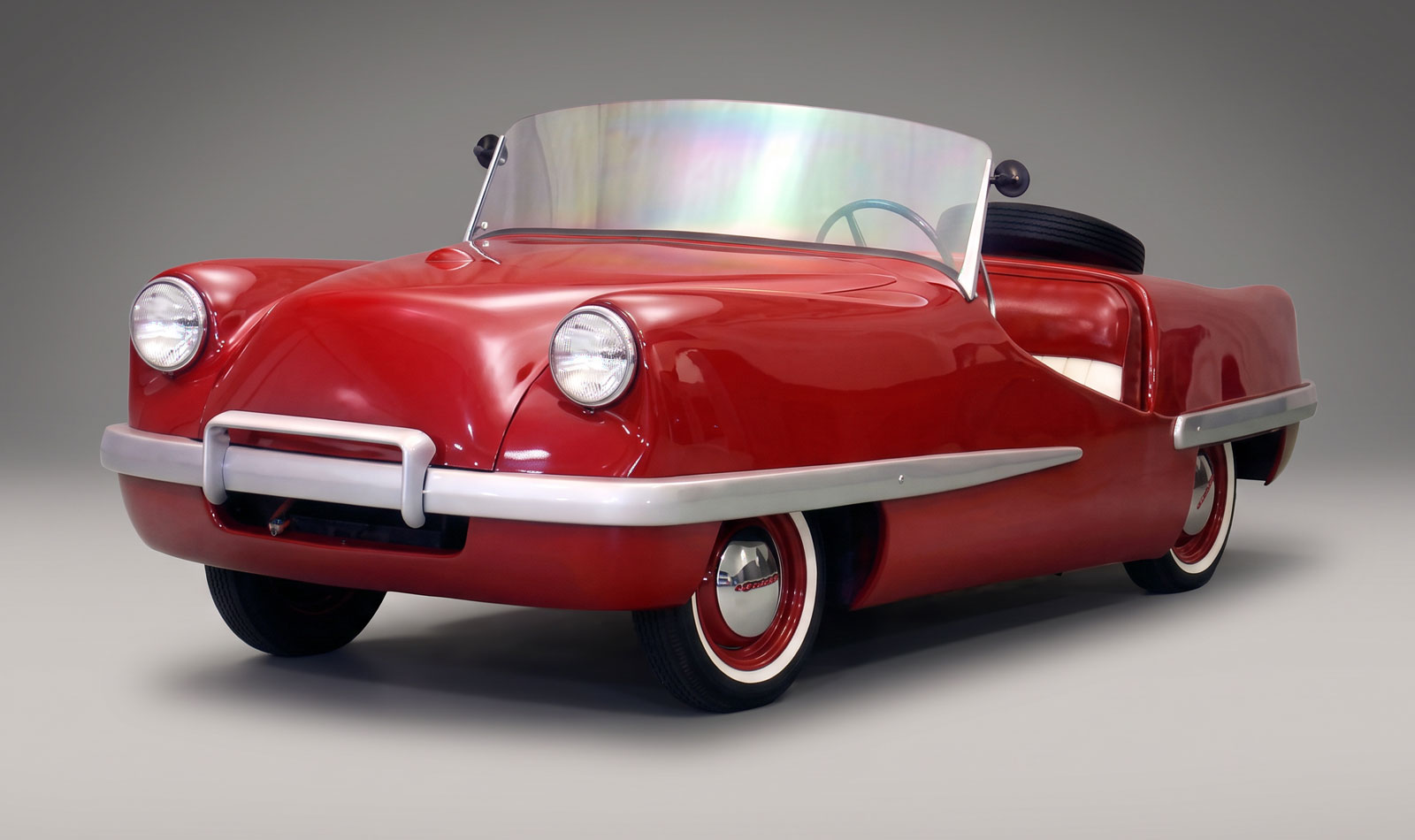
The Skorpion was a small American sports car with a fibreglass body, developed in California after the Second World War. Its story began in 1942, when LeBaron coachbuilder and Chrysler designer Ralph Roberts joined plastics specialist Jack Wills to investigate new applications for glass-fibre construction.
Wills and Roberts established the Wills and Roberts Manufacturing Company in Pasadena. During the war, the firm produced plastic housings for Aerojet and fibreglass boats that could be dropped by the U.S. military. After the war, the partners began searching for products suitable for peacetime manufacturing. Roberts proposed a small car with a plastic body mounted on a compact chassis.
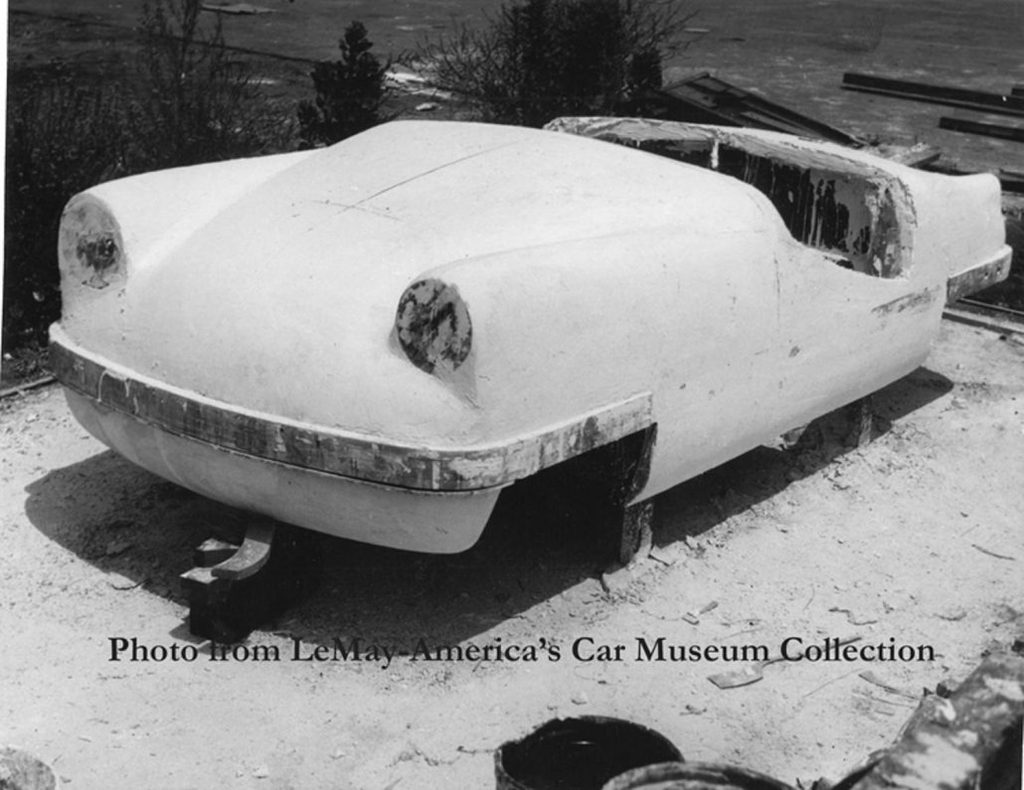
He developed the initial design as a one-eighth-scale clay model. Wills then produced a full-size plaster buck, which was used to create moulds for the fibreglass body panels. Around 1949, Wills involved his friend and neighbour Burton “Burt” Dake, owner of Plastics, Inc. in Pasadena. Dake’s company manufactured products ranging from dice to Revell model-car kits and was interested in the developing glass-fibre process.
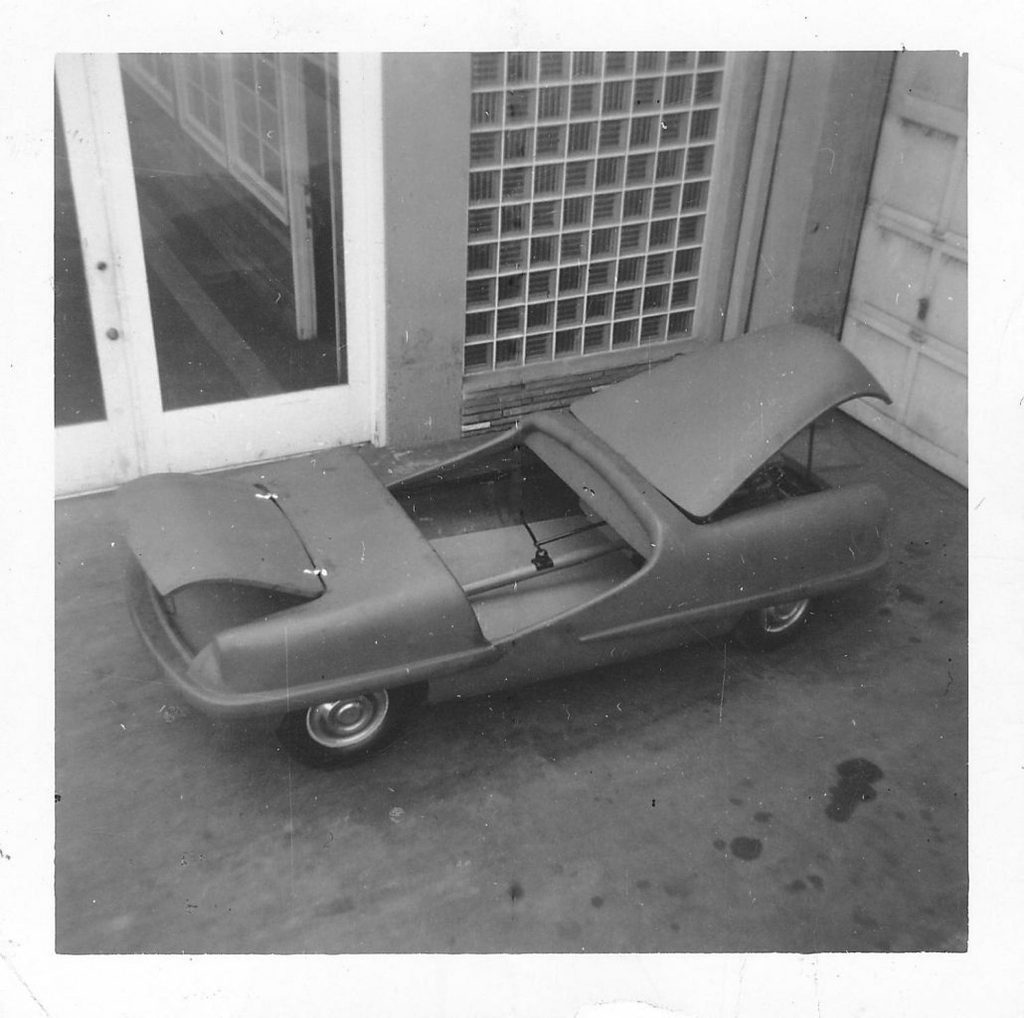
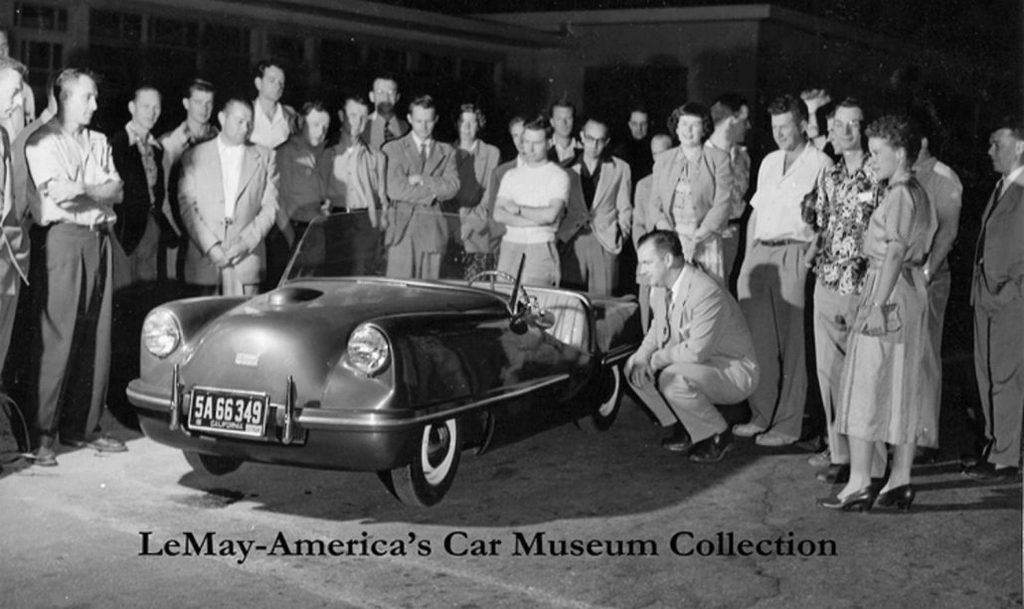
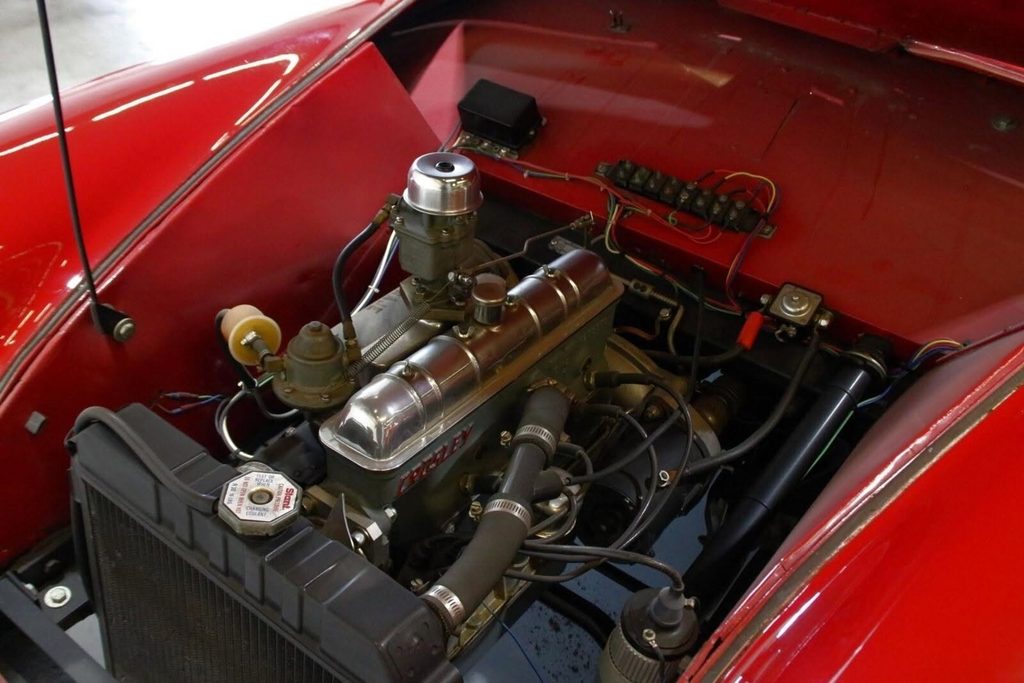
Using the moulds, the team hand-built four bodies and installed them on modified Crosley frames. The first version was called the Wasp and used surplus Indian motorcycle engines mounted at the rear. The team later decided that the car needed more power and returned to the Crosley engine. A redesigned bonnet was created to accommodate the engine at the front, producing the car that became the Skorpion. Ralph Roberts selected the name, using the German spelling of “scorpion.”
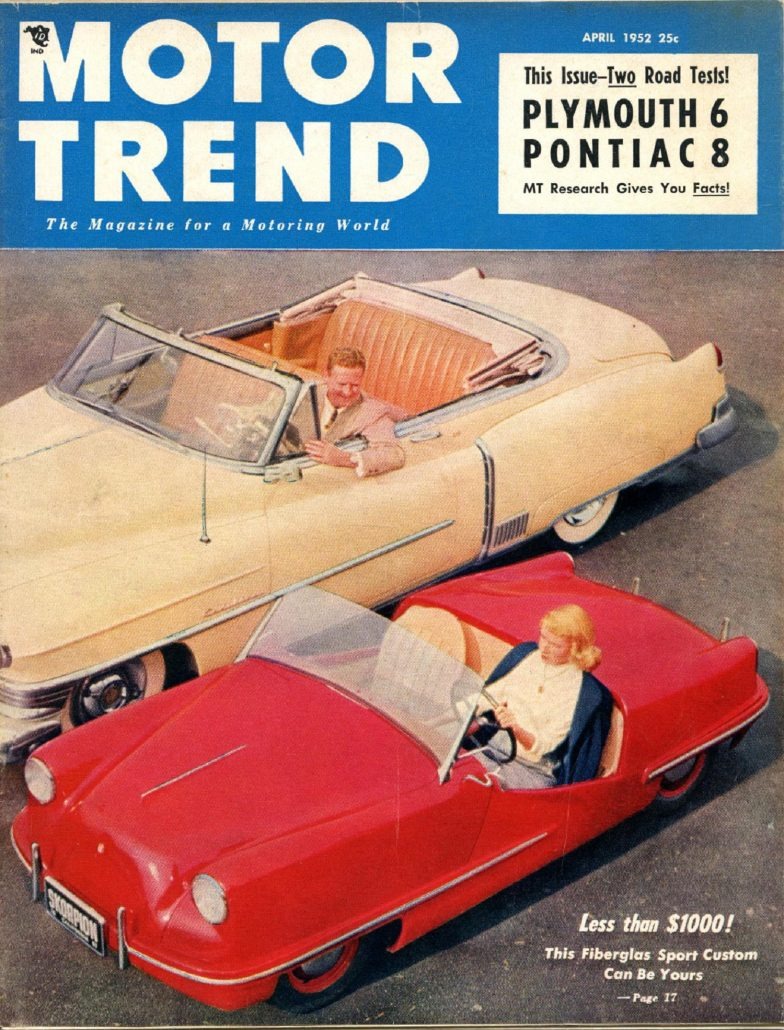
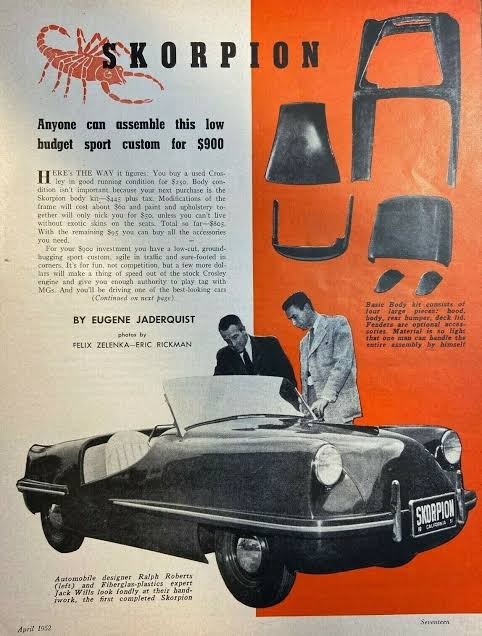
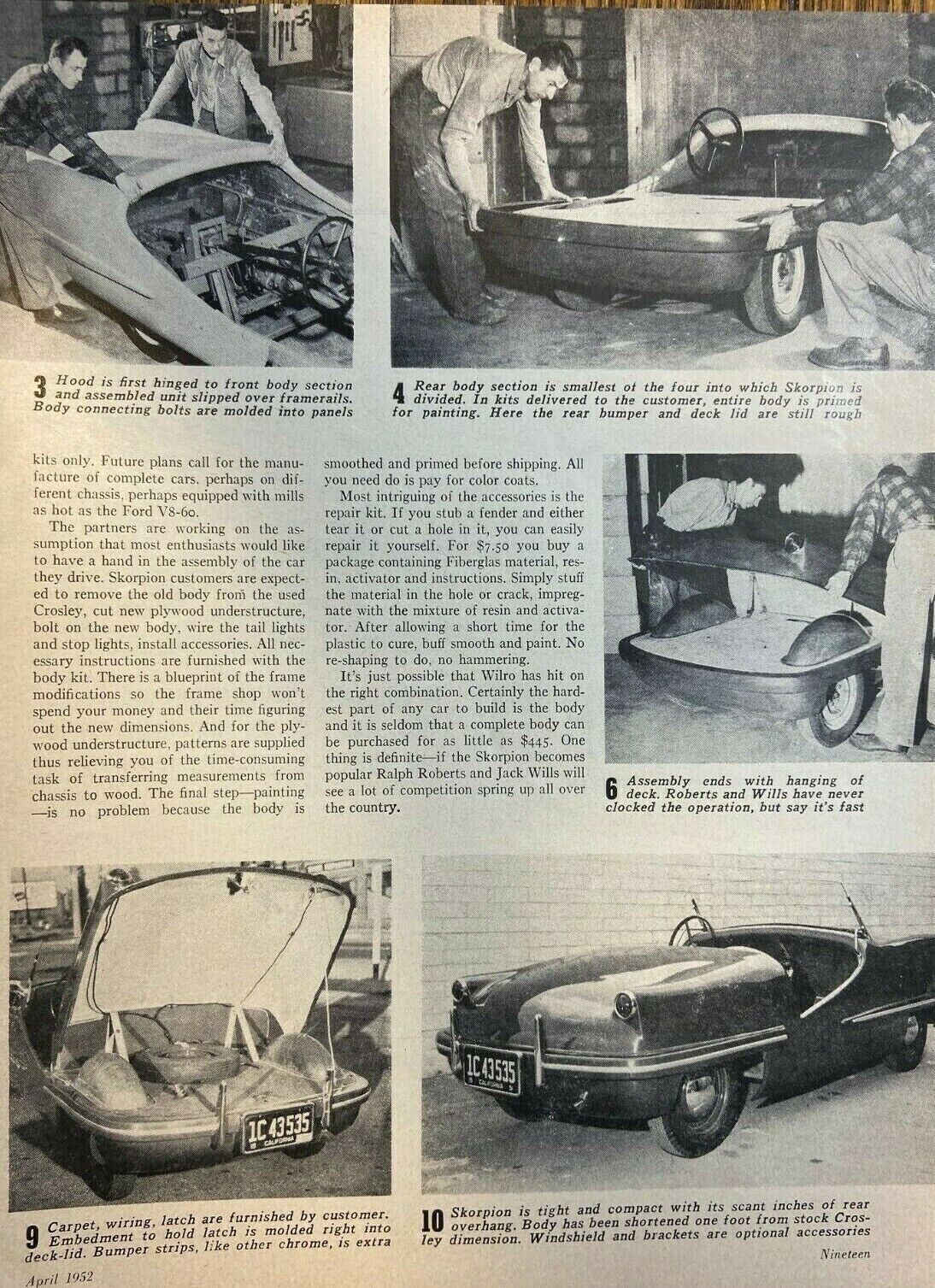
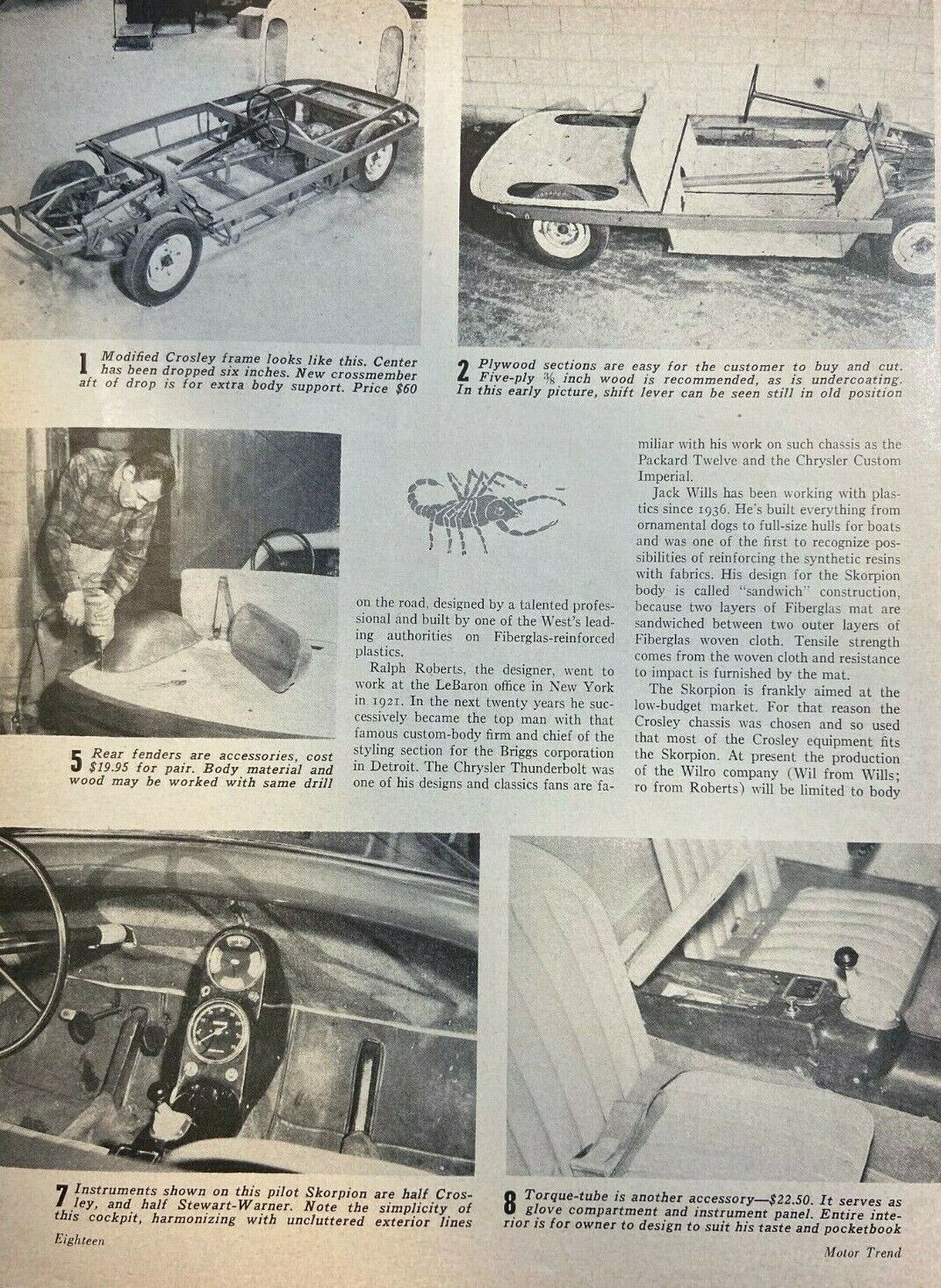
The fibreglass cars began attracting attention as development progressed. The Wasp and Skorpion were invited to appear at the 1951 Los Angeles Motorama, and the Skorpion received a feature article in the April 1952 issue of Motor Trend.
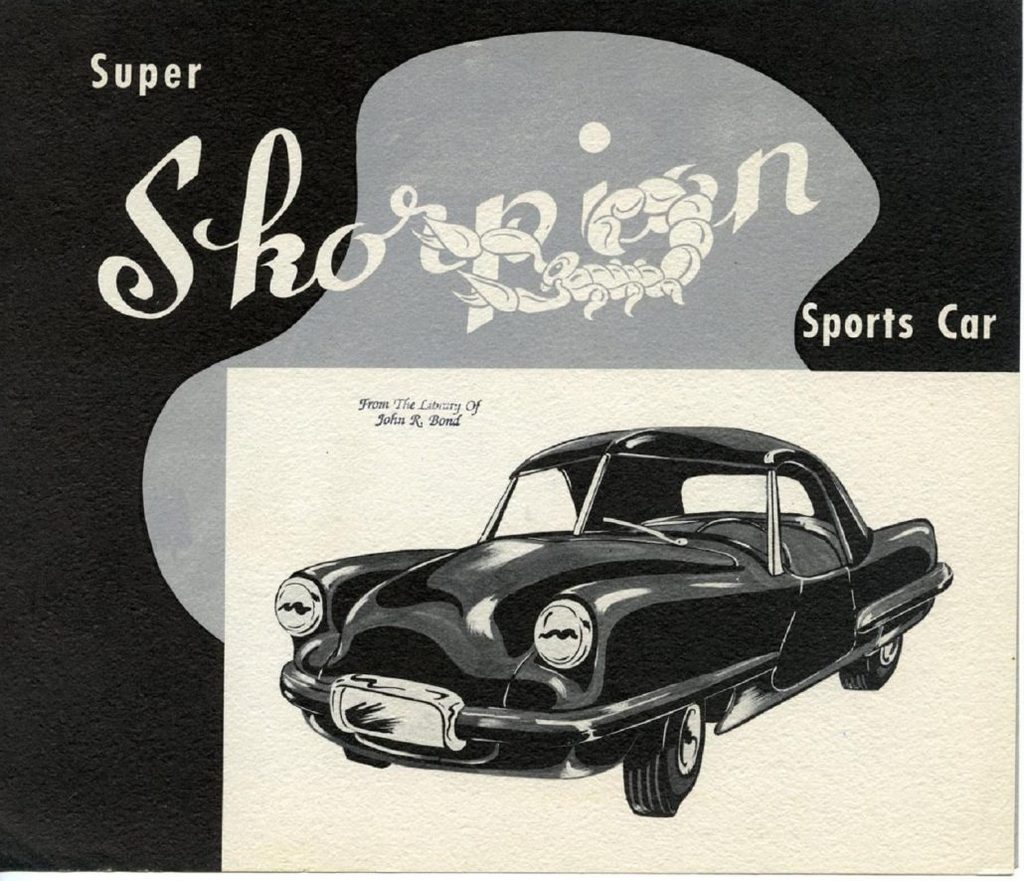
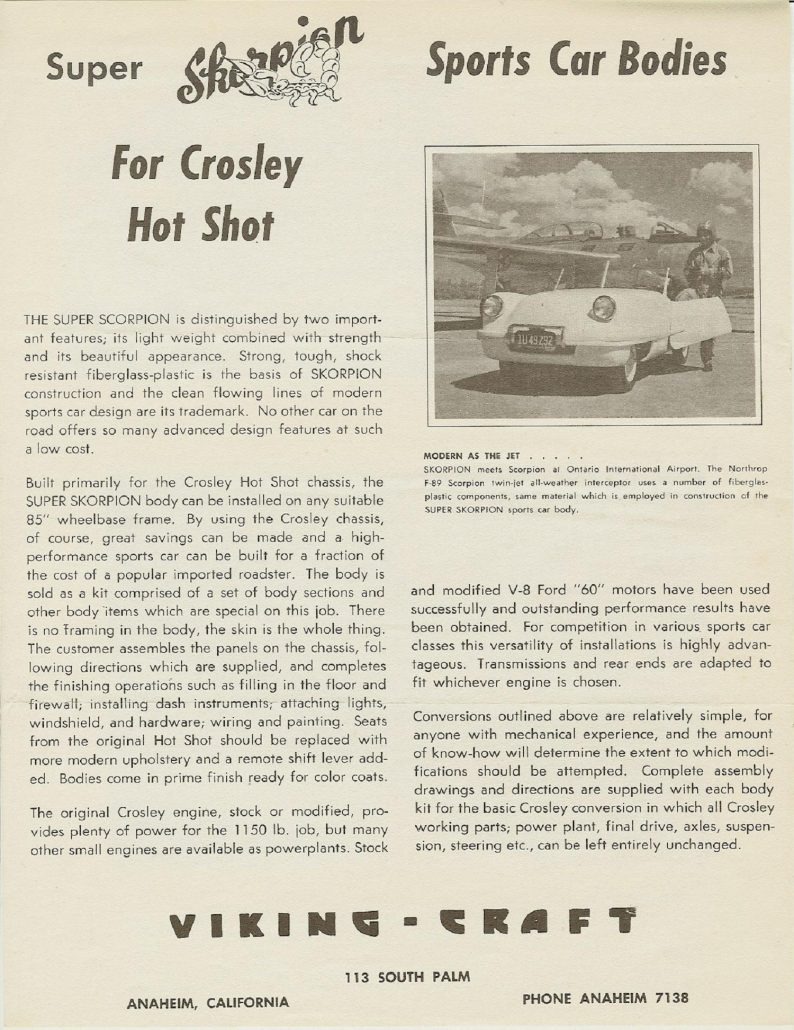
Production and marketing were handled by the WilRo Company, a post-war partnership formed by Wills and Roberts. The Skorpion was offered primarily as a body kit that could be installed on a variety of chassis. The basic body kit cost $445 and was designed for frames with wheelbases of up to 80 inches and track widths between 40 and 44 inches. Suggested engines included the Crosley, Ford V8-60 and Offenhauser units.
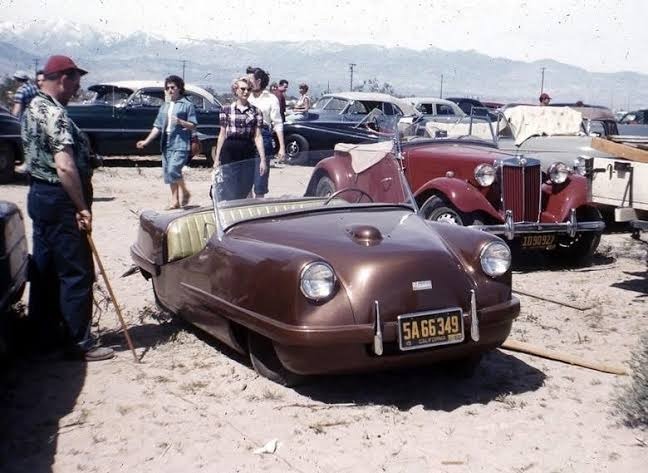
Approximately 25 Skorpion bodies were produced before Jack Wills sold the business in 1952 to Doug Caruthers. His company, Viking-Craft Manufacturing of Anaheim, continued producing the kits under the name Super Skorpion and complete cars until 1954. Wills later stated that approximately 150 kits had been made in total.
Burt Dake built his first Skorpion on a Crosley chassis using one of the first 25 kits. He kept the car for many years and used it with his wife Stellanne and their children before eventually selling it. In 1983, Dake began searching across the United States for another Skorpion. With help from Jack Wills, he located a 1952 Crosley-based example and restored it completely, later painting it red to match his first car.
Dake entered the restored Skorpion at the 1984 Napa Concours, where it received second place in its class. That same year, Dake, Wills and Roberts reunited with the car at the Laguna Seca Car Show in Carmel, California.