


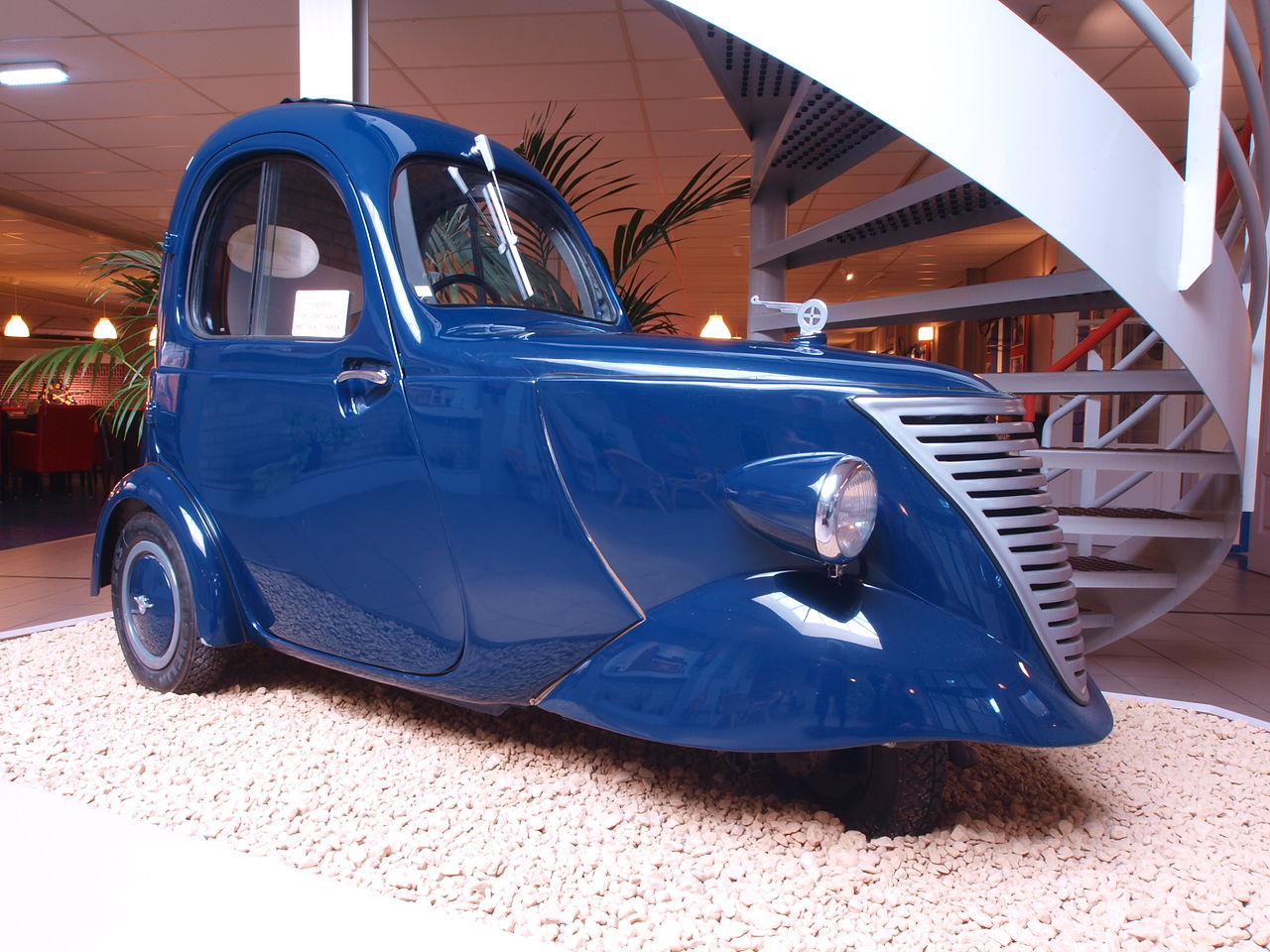

Peugeot
Peugeot VLV

The two-seater Peugeot VLV (Voiture Légère de Ville, which means Light City Car) electric vehicle was created by the French concern Peugeot in 1941 in response to the restrictions of the German occupation authorities on the consumption of fuel by the French.
It was a miсrocar with an open-top and one headlight, equipped with a 3.5 hp electric motor with a drive to a single rear wheel and four 12-volt lead-acid batteries. Top speed was just 36 km/h, and the battery charge was enough for 80 kilometers. It was 2.67 m long and 1.21 m wide. It weighs 350 kg. The weight of the batteries was 160 kg.
During 1941-1942, 377 3-VLVs were made. Then the production of the car was banned by the German authorities.
Specifications:
- Production period: 1941-1945
- Overall production: 377
- Construction: Ladder frame
- Maximum engine power: 3.5 hp
- Drive: Single rear wheel
- Weight: 350 kg
- Top speed: 36 kph
- Range: 80 km
- Length: 2670 mm
- Width: 1210 mm


| Maker | Peugeot |
|---|---|
| Country | France |
| Production years | 1941–1942 |
| Production status | Production (377 built) |
| Type | Open two-seat electric car |
| Motor | 3.5 hp electric, single rear wheel, four 12 V lead-acid batteries |
| Dimensions | 2.67 m × 1.21 m |
| Weight | 350 kg |
| Top speed | 36 km/h |
| Range | 80 km |





You must be logged in to post a comment Login