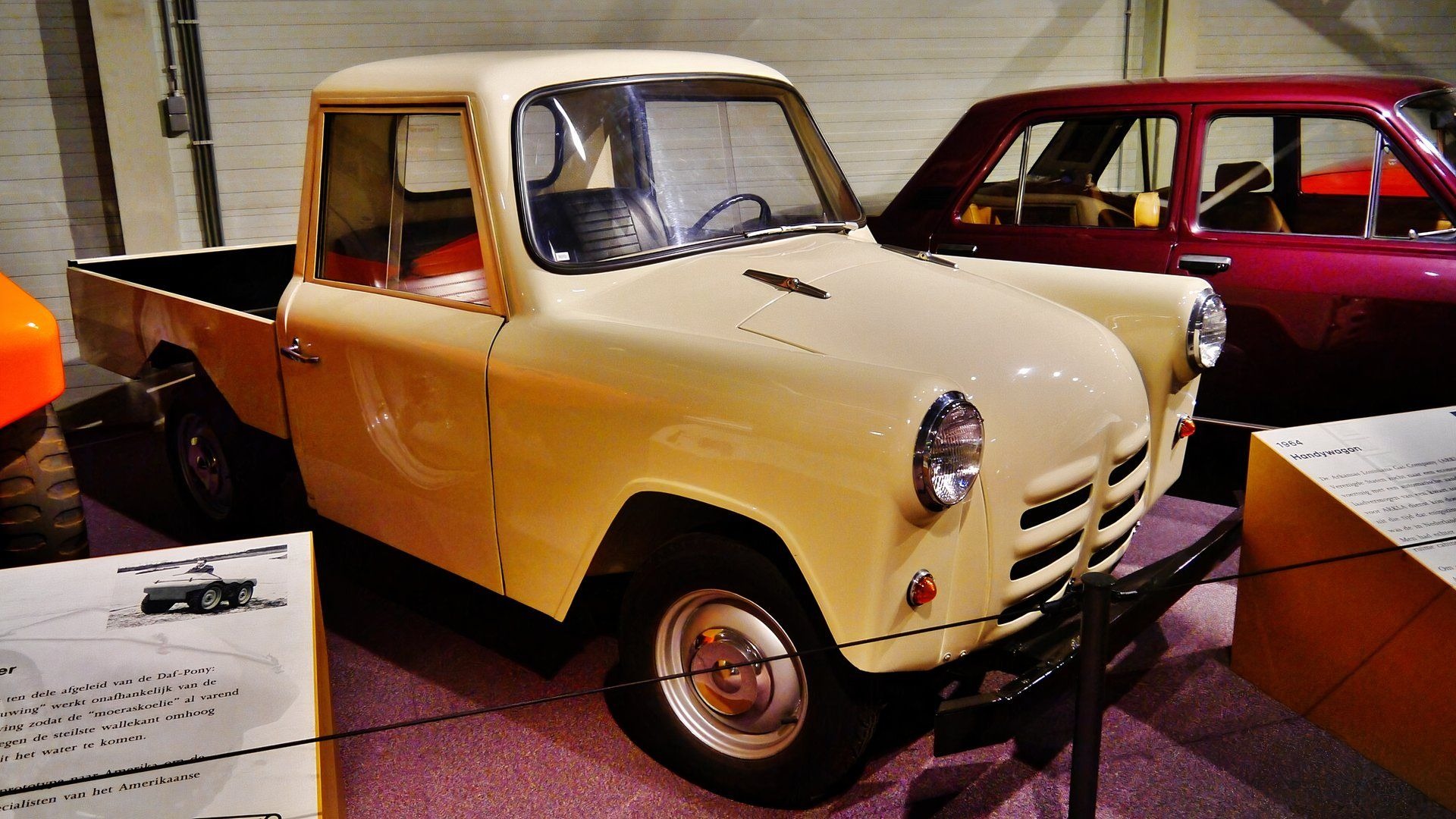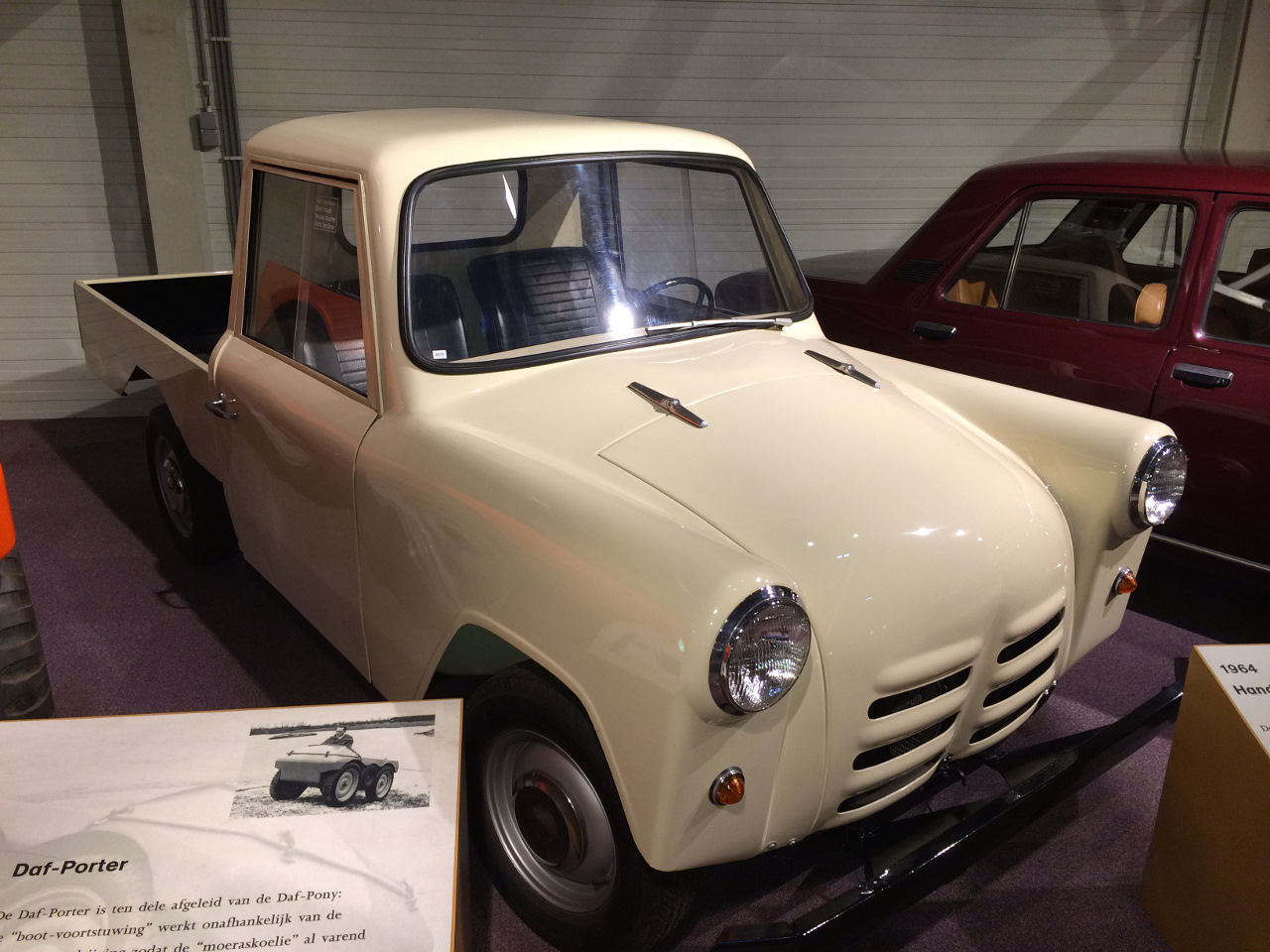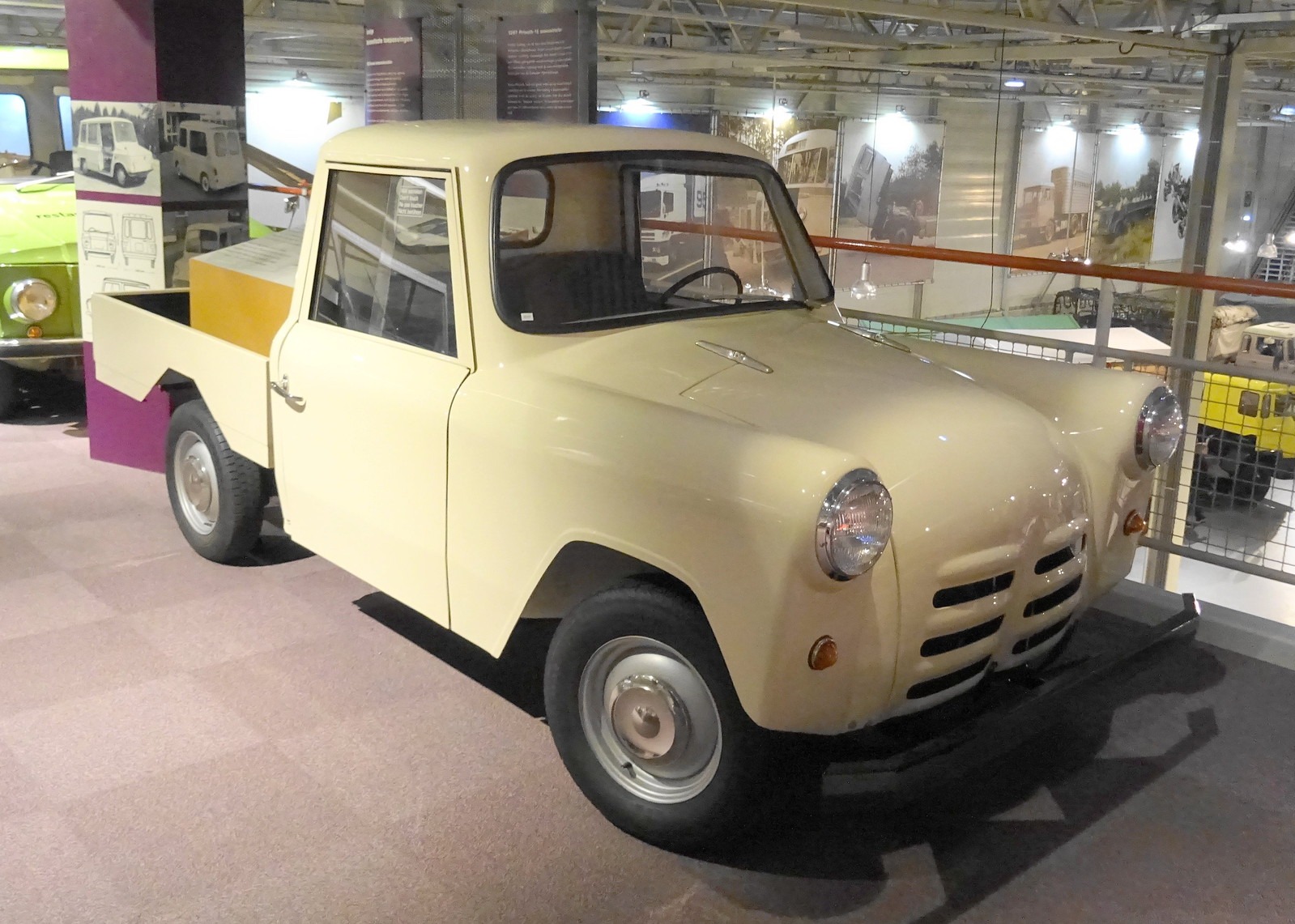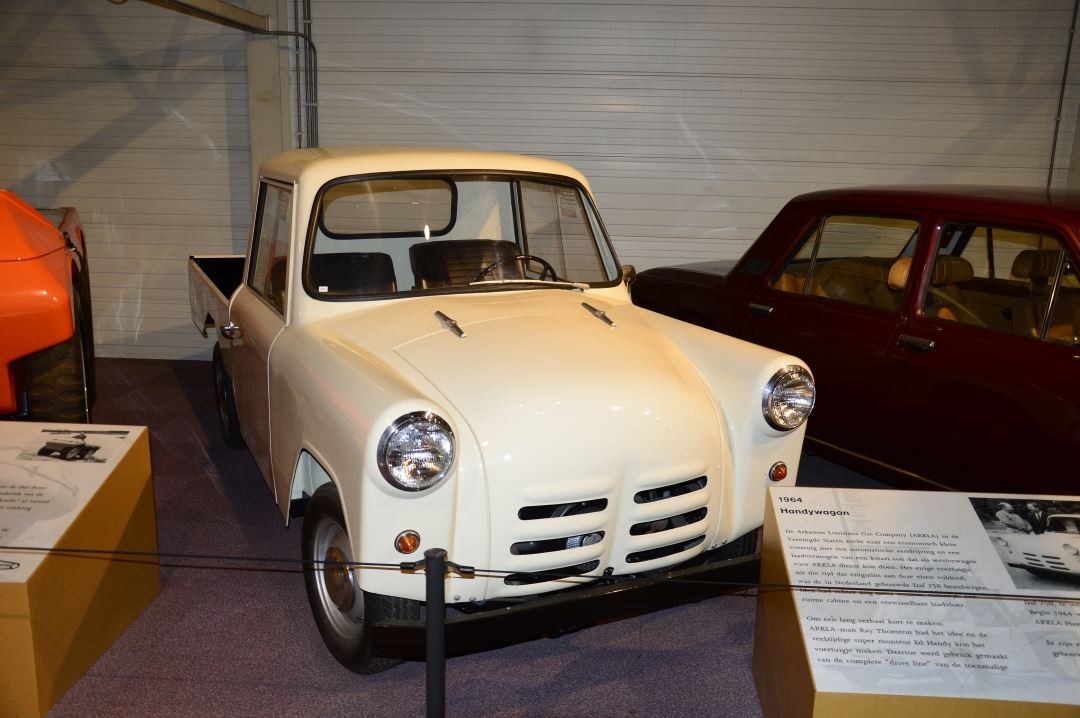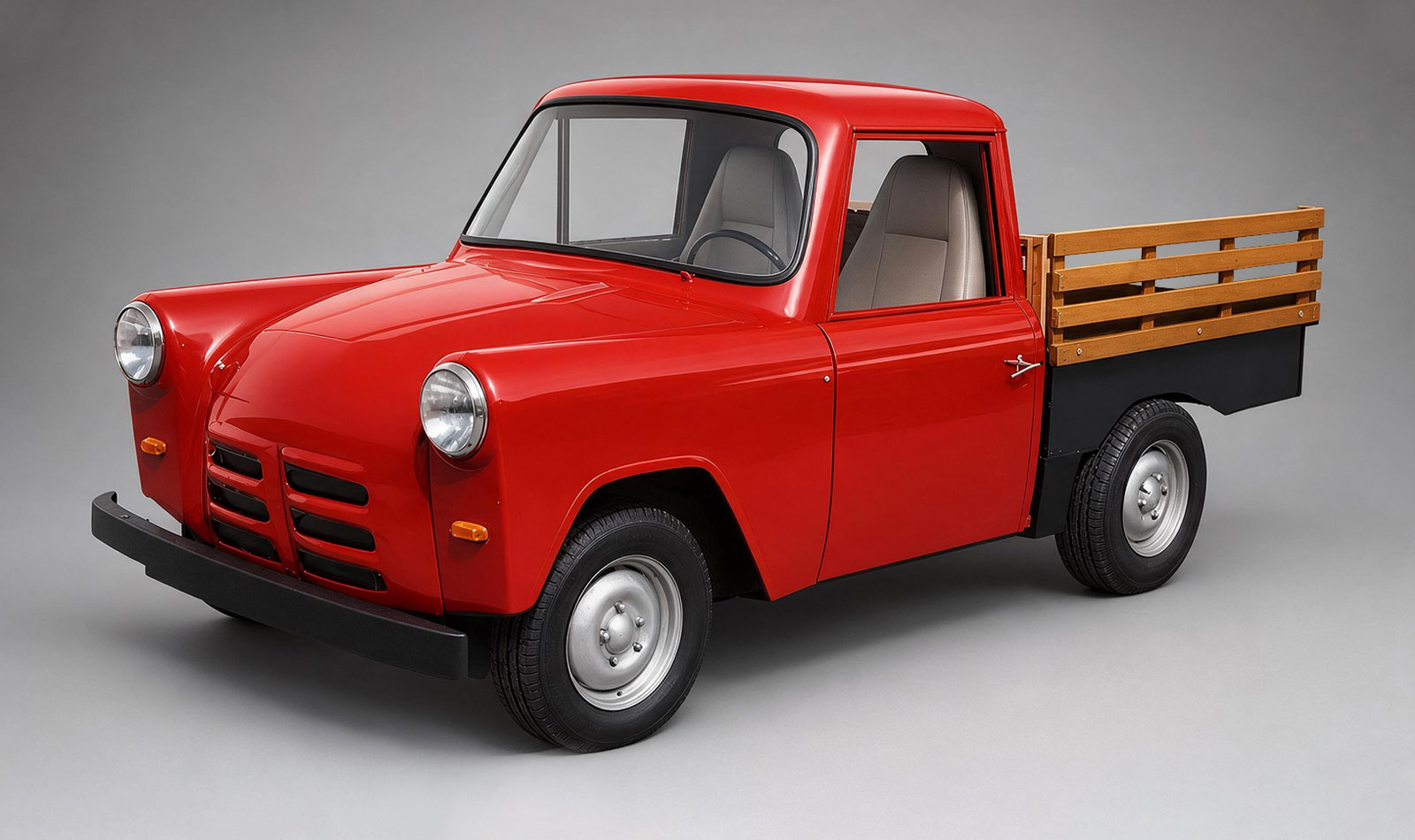
Arkla Handywagon

The Arkla Handywagon was a compact American utility truck developed by the Arkansas Louisiana Gas Company in the early 1960s.
Created for the company’s own service operations, it used a lightweight fibreglass body, a small DAF engine and a continuously variable transmission at a time when CVTs were still rare in the automotive world.
Arkla was a natural-gas utility company founded in 1934 through the merger of several pipeline businesses in Arkansas and Louisiana. By the beginning of the 1960s, its chairman, Wilton “Witt” Stephens, believed the company’s large V8-powered service trucks were unnecessarily expensive to operate.
The vehicles were used to inspect gas meters, carry tools and deliver light loads, tasks that did not require the size or power of a full-size American pickup.
Stephens asked company lawyer Ray Thornton and pipeline construction foreman Ed Handy to develop a smaller and more economical work vehicle. Their requirements included a payload capacity of 900 lb, a curb weight below 3,000 lb and fuel consumption of at least 35 mpg. The project became the 1964 Arkla Handywagon.
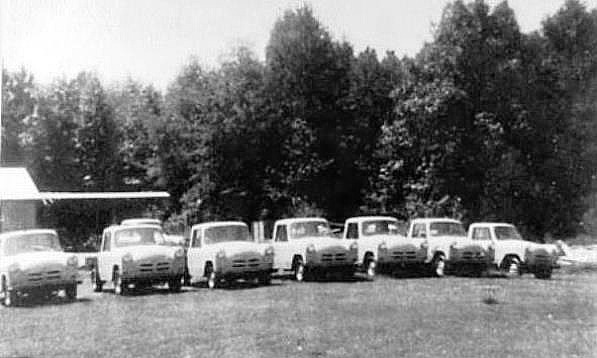
The truck was assembled in Handy’s workshop near Arkla’s headquarters in Little Rock, Arkansas. Its custom steel body-on-frame chassis was welded by hand, while the fibreglass cab and cargo bed were produced by Razorback Boat Company in Malvern. Arkla had acquired the boat manufacturer in 1959, allowing the truck body to be developed using the company’s experience with fibreglass construction.
For its mechanical basis, the team selected the DAF 750. The Handywagon used its 746 cc air-cooled horizontally opposed two-cylinder engine, which produced 30 hp. The engine was paired with DAF’s Variomatic transmission, an early continuously variable transmission that used rubber V-belts and adjustable cone-shaped pulleys.
The Variomatic drove the rear wheels independently and continuously changed the drive ratio as speed and load varied. It did not use a conventional reverse gear. Instead, a control in the cab changed the transmission ratio so that the vehicle could reverse using the same basic system that propelled it forward.
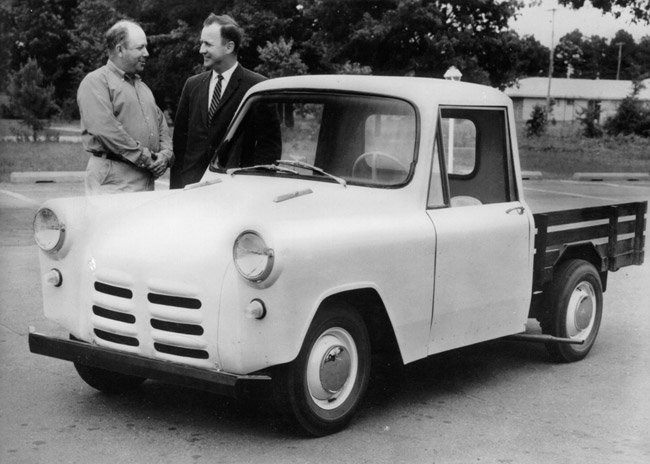
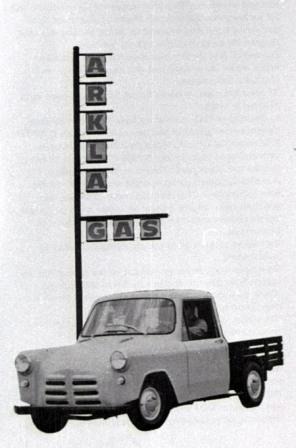
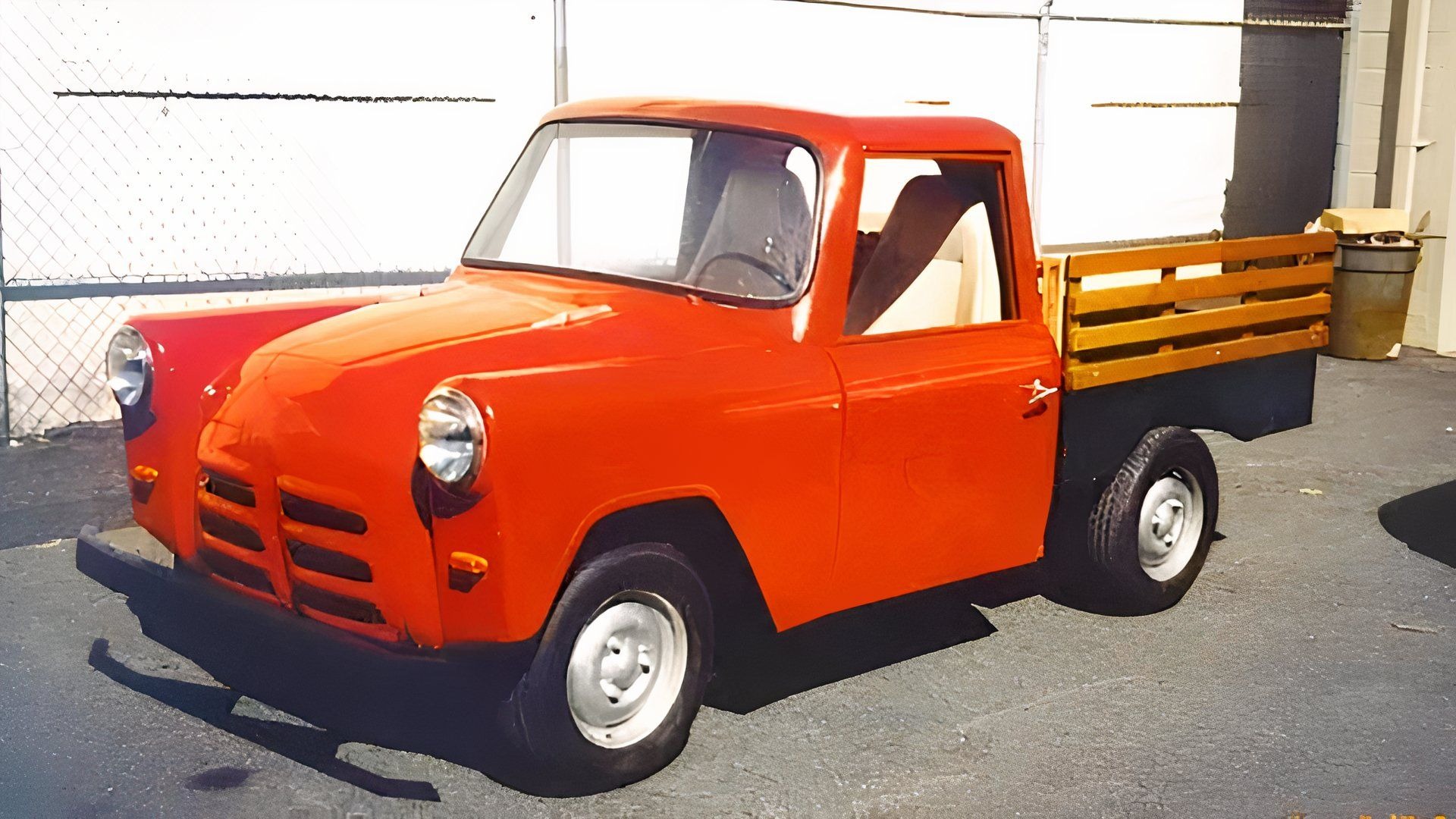
The Handywagon had a cheerful, rounded appearance, with prominent headlights and a compact pickup body. Its fibreglass panels were intended to be easy to repair or replace, an important consideration for vehicles working on utility routes. The truck was not designed for speed, but for economical movement on local roads and backcountry routes.
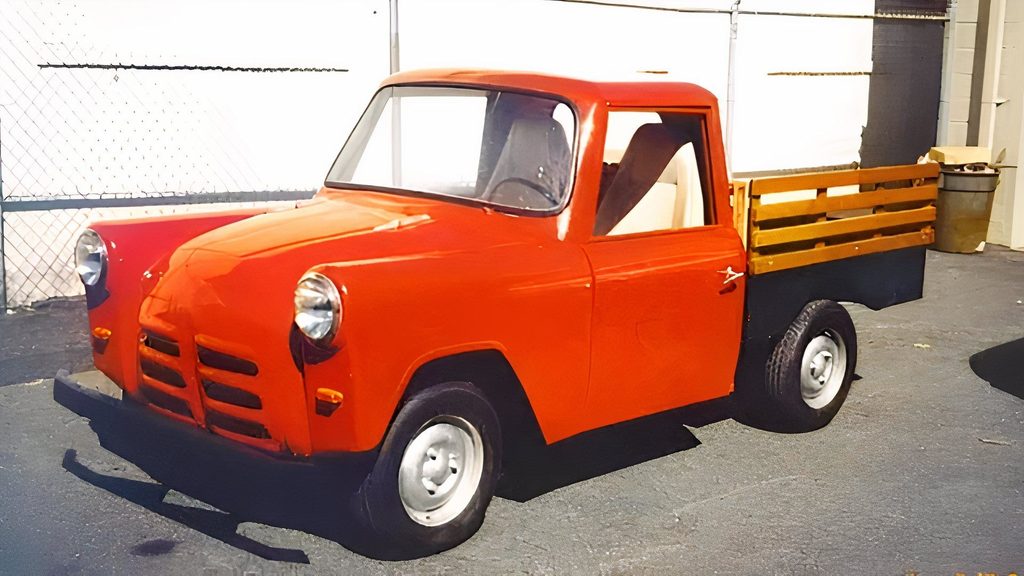
The first Handywagons entered regular service in May 1964. Their economy and reliability reportedly met or exceeded Arkla’s expectations. The company initially planned to produce the vehicles only for internal use, but Witt Stephens later asked Thornton and Handy to examine the possibility of limited commercial production.
The proposed plan called for approximately 1,000 vehicles to be built at a target price of $1,000 each. The actual cost was calculated at roughly $1,240 per vehicle, making the project less attractive financially. Although production reached approximately one truck per day, the larger manufacturing programme was abandoned after only 97 Handywagons had been built. Some sources give a lower estimate of between 80 and 97 vehicles.
The completed trucks remained in Arkla service for about ten years before being replaced. Their limited production ended before the fuel crisis of the 1970s created greater demand for economical vehicles, leaving the Handywagon as an unusual example of an efficient American light truck developed ahead of its time.
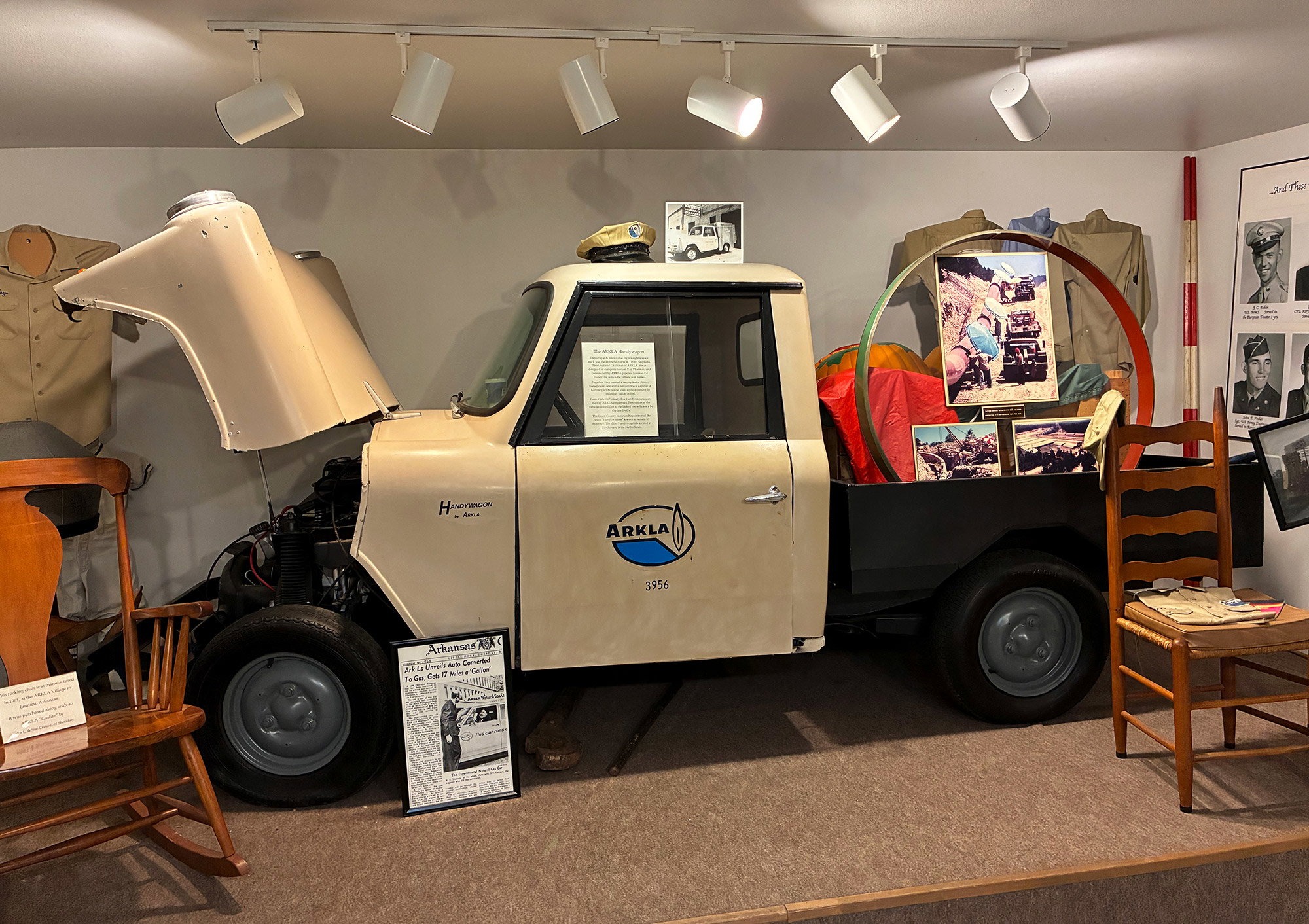
Only three examples are known to survive. One is held by the DAF Museum in Eindhoven, the Netherlands, another remains associated with Arkla, and a third is displayed at the museum in Grant County, Arkansas. The Handywagon was the only American pickup truck to use a CVT for several decades, until the Ford Maverick Hybrid introduced another CVT-equipped American pickup in 2022.