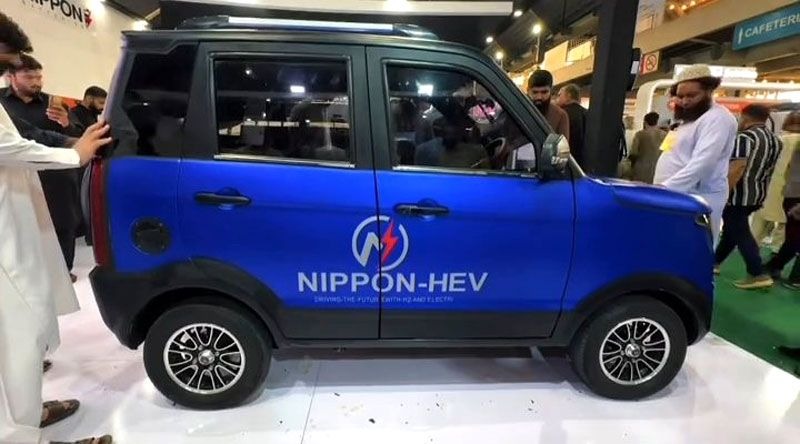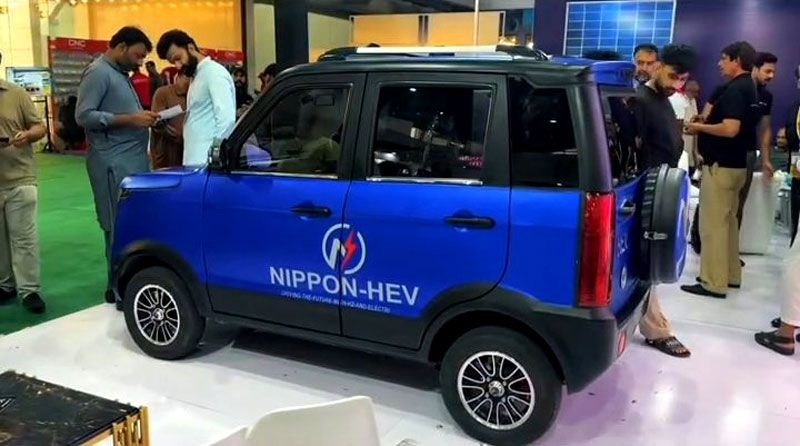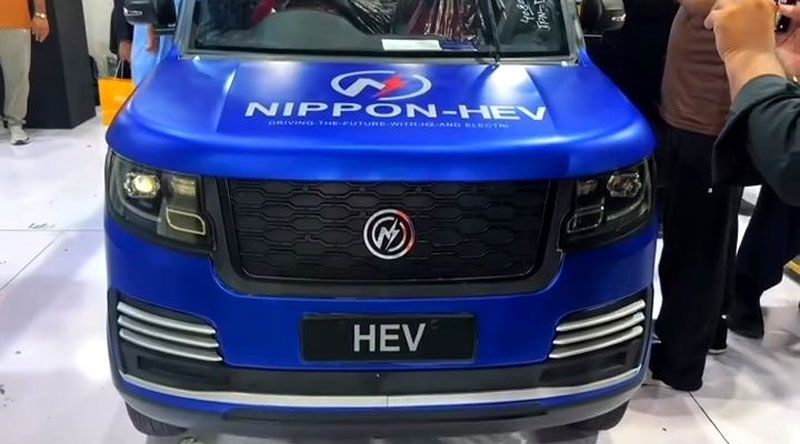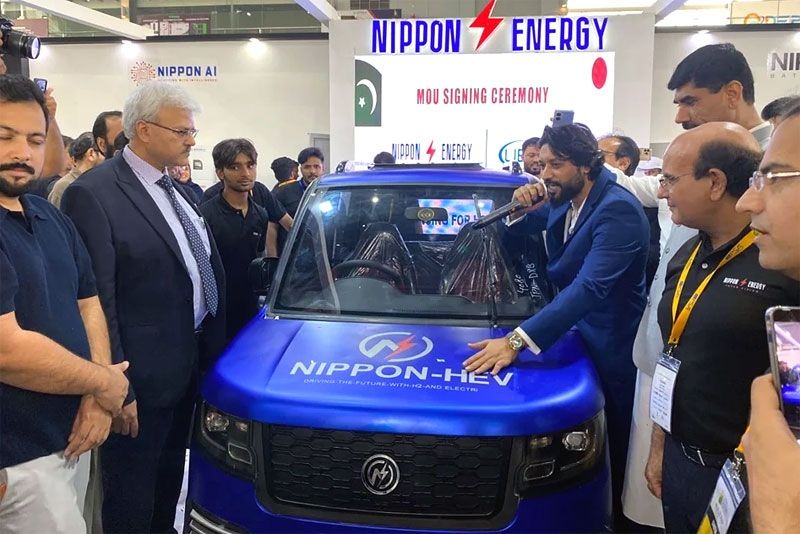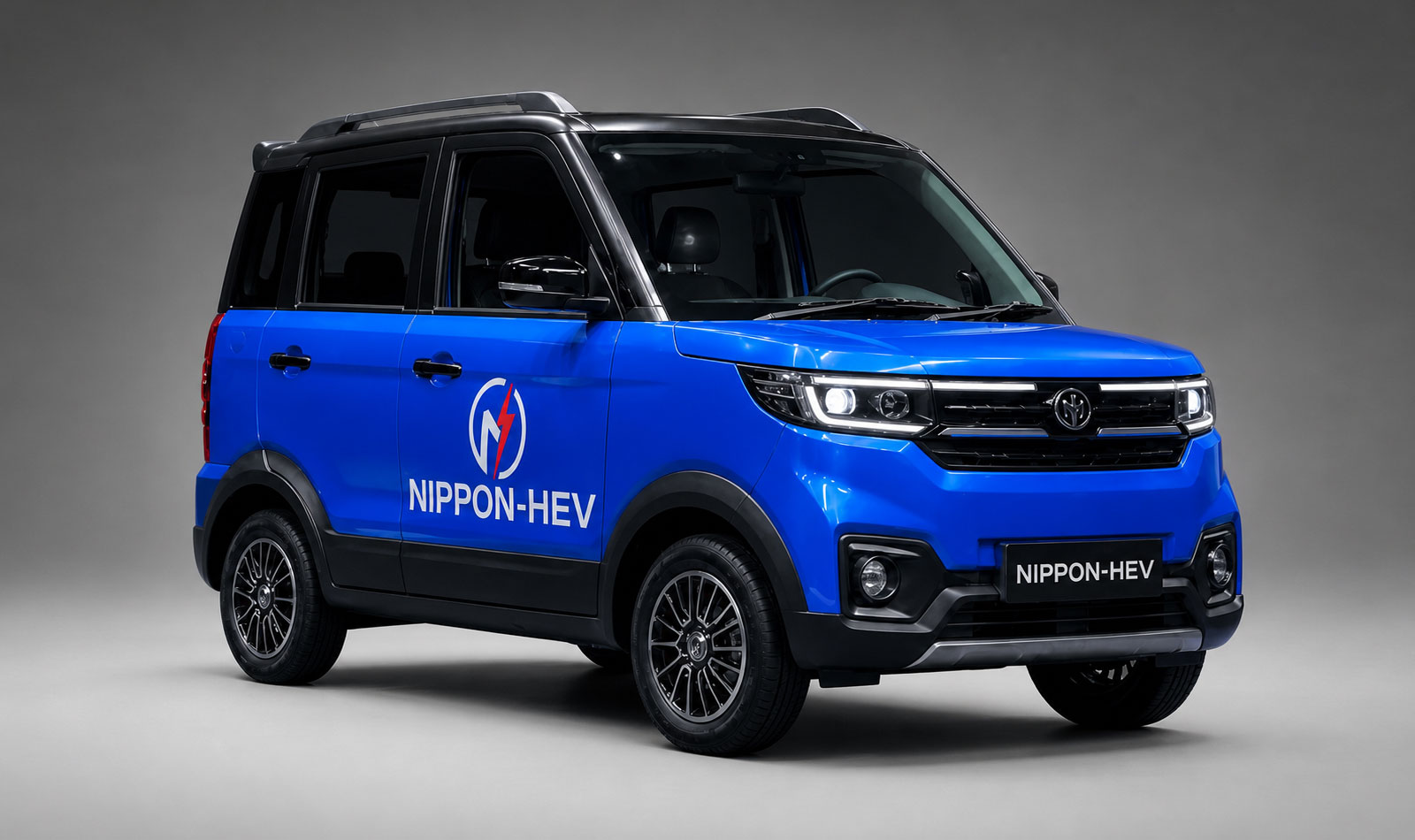
Nippon-HEV prototype

Hydrogen cars have yet to make a real breakthrough, even though several automakers continue to invest heavily in the technology. A new vehicle from Pakistan claims it could change that with a very low price and an extraordinary driving range—but it almost certainly will not, because the project shows all the signs of being a scam.
Pakistan is not known for developing its own automobiles. Although it ranks among the world’s larger vehicle-producing countries, nearly all of that production consists of locally assembled Chinese models built from imported kits.
As in neighboring India, Suzuki dominates the Pakistani market, and the vast majority of vehicles sold are inexpensive gasoline-powered models. Electric mobility remains extremely limited.
That makes the announcement from Pakistani company Nippon Energy particularly surprising. The firm claims to have developed a hydrogen-powered vehicle capable of traveling more than 1,500 km on a single tank. For comparison, established hydrogen fuel-cell cars such as the Toyota Mirai and Hyundai Nexo typically offer around 600–700 km of range, and they carry roughly 6 kg of hydrogen. Nippon Energy claims its vehicle can achieve more than double that range with only a 3 kg hydrogen tank.
A look at the vehicle itself immediately raises doubts. It is clearly based on a generic Chinese low-speed electric vehicle (LSEV) from the heavy quadricycle category, similar in concept to European microcars such as the Aixam or Citroën Ami.
These vehicles are sold in China for very low prices and are available from multiple manufacturers through wholesale platforms such as Alibaba. The original versions usually come with lead-acid batteries and a range of only a few dozen kilometers.
The Pakistani version is claimed to use a 30 kW electric motor, have a top speed of 90 km/h, and combine a hydrogen fuel-cell system with a battery to achieve a total range of up to 1,800 km. However, the company has provided no credible evidence that such technology is actually installed in the tiny vehicle.
At the exhibition where it was shown, the accompanying “hydrogen system” appeared to be a random collection of components connected with transparent plastic tubing and labeled “Nippon AI.” A motorcycle displayed nearby was said to use the same powertrain.

Nippon Energy says the car will cost the equivalent of about €8,000 and claims to have received more than 1,200 reservations for the car and over 8,000 for the motorcycle on the first day alone. The company also stated that the displayed prototypes were imported from Japan and that future production would take place in Pakistan with 85% local content. In reality, both the vehicles and the technology appear to be Chinese in origin.
The most implausible part of the project is the promised “home hydrogen generator.” According to the company, a solar-powered household unit would produce enough hydrogen to fill the 3 kg tank in just 20 seconds. That would require extremely high pressures and an enormous flow rate far beyond what a small domestic electrolyzer could realistically achieve. Even modern commercial 700-bar hydrogen stations need several minutes to fill a passenger car.
The energy calculations make the claim even less believable. Producing 1 kg of hydrogen by electrolysis requires roughly 50–55 kWh of electricity. Filling a 3 kg tank would therefore require more than 150 kWh of electrical energy. A typical household solar installation would need several days of strong sunlight to generate that much power, not a few seconds.
The company appears to be trying to create credibility through its name: “Nippon” is the Japanese word for Japan. However, the business is based in Pakistan, its management is local, and its website is filled with “Coming soon” placeholders and obviously AI-generated promotional images. Even the supposedly future vehicle shown on the website is not the boxy microcar from the exhibition, but a crudely modified Audi rendered by artificial intelligence.

Nearly every technical claim made by the company can be challenged. A tiny lightweight vehicle could certainly have low energy consumption, but achieving 500 km from just 1 kg of hydrogen is far beyond what current fuel-cell passenger vehicles can do. Fitting a fuel-cell stack, hydrogen tanks capable of storing gas at 700 bar, safety systems, and a substantial battery into such a small platform would also be extremely difficult.
Pakistani officials and supporters present the project as a way to reduce dependence on imported oil, lower emissions, and develop new battery technologies for vehicles and energy storage. Based on the available evidence, however, it looks far more like an attempt to collect money from overly trusting customers than a genuine breakthrough in hydrogen mobility.
Pakistan has seen a remarkably similar episode before. In 2012, inventor Agha Waqar Ahmad claimed to have developed a “water-powered car” that could supposedly travel 40 km on a single liter of water and even generate electricity for a household.
His invention received widespread media attention, attracted support from government ministers, and was briefly discussed at the highest levels of government before Pakistan’s scientific community demonstrated that the claims violated basic physical principles. The new Nippon Energy project appears to follow a very similar pattern.