Opel Twin

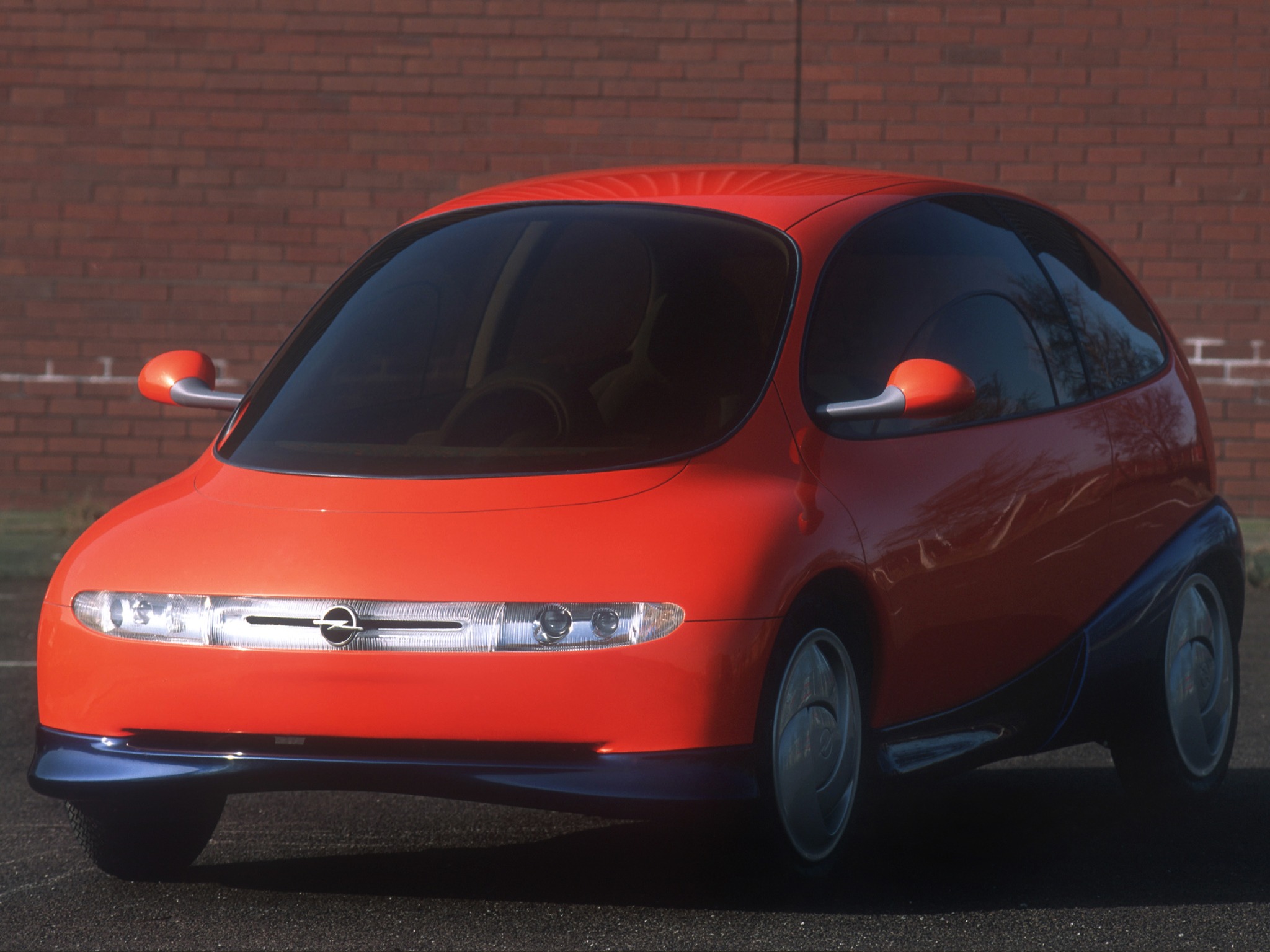
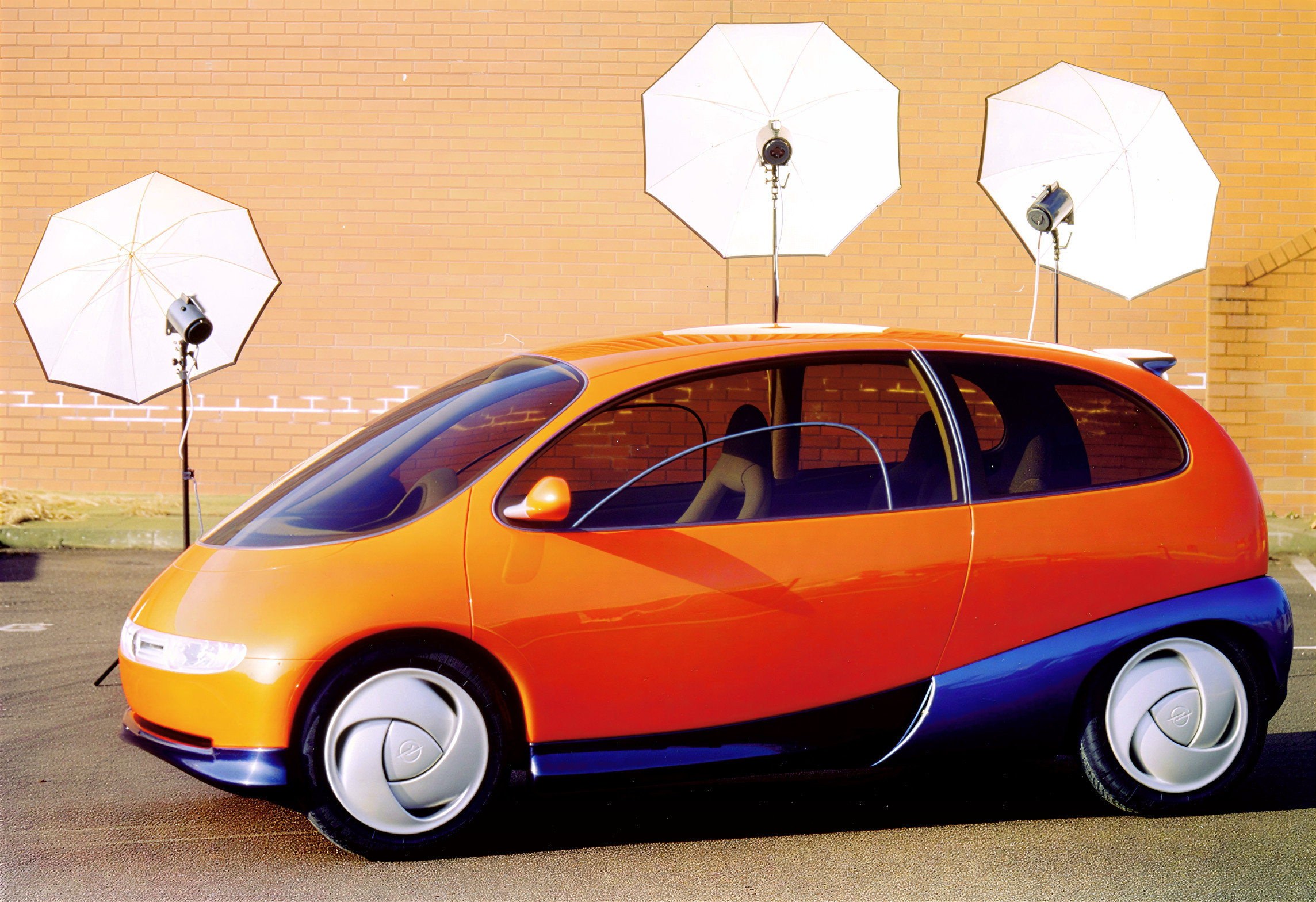
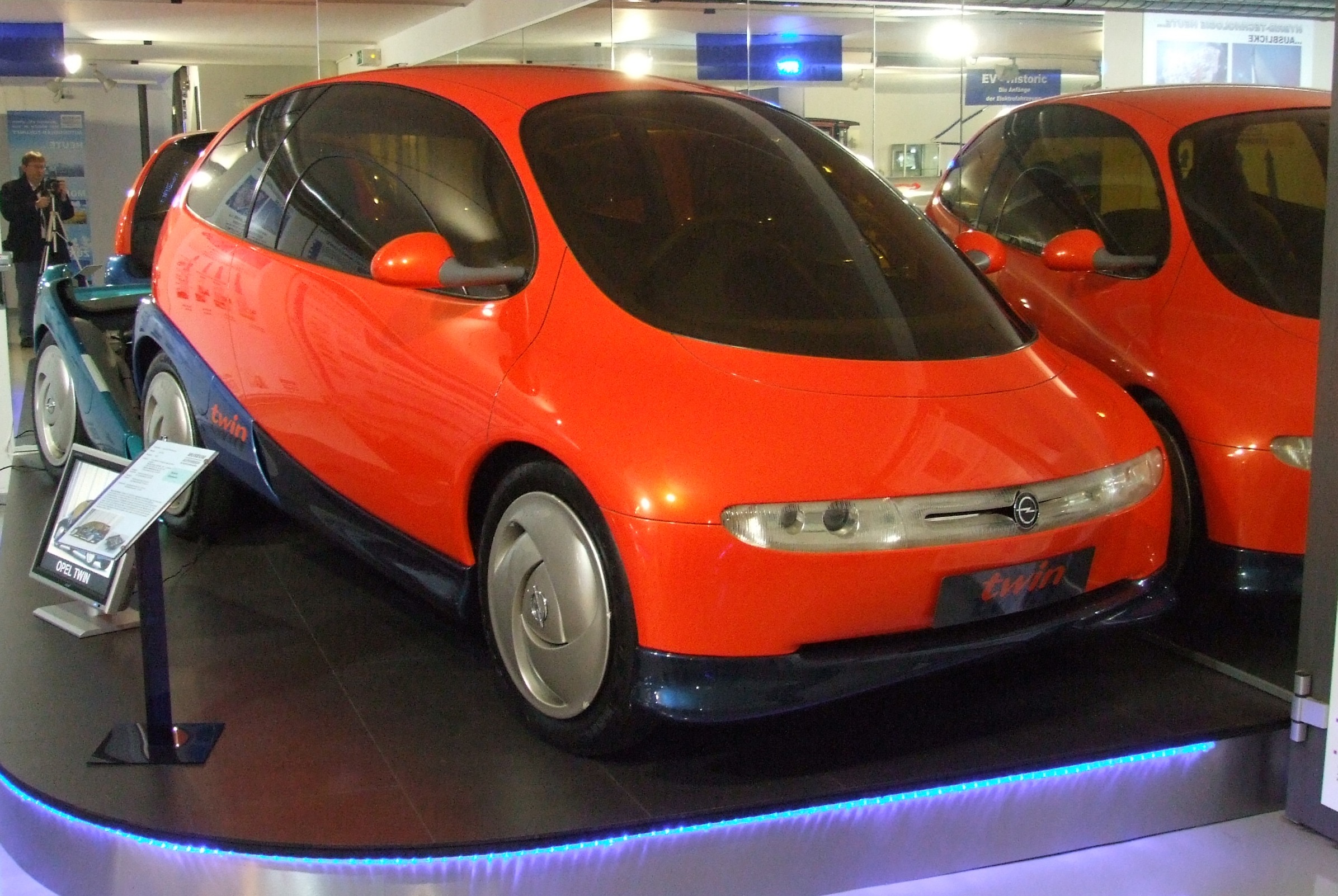
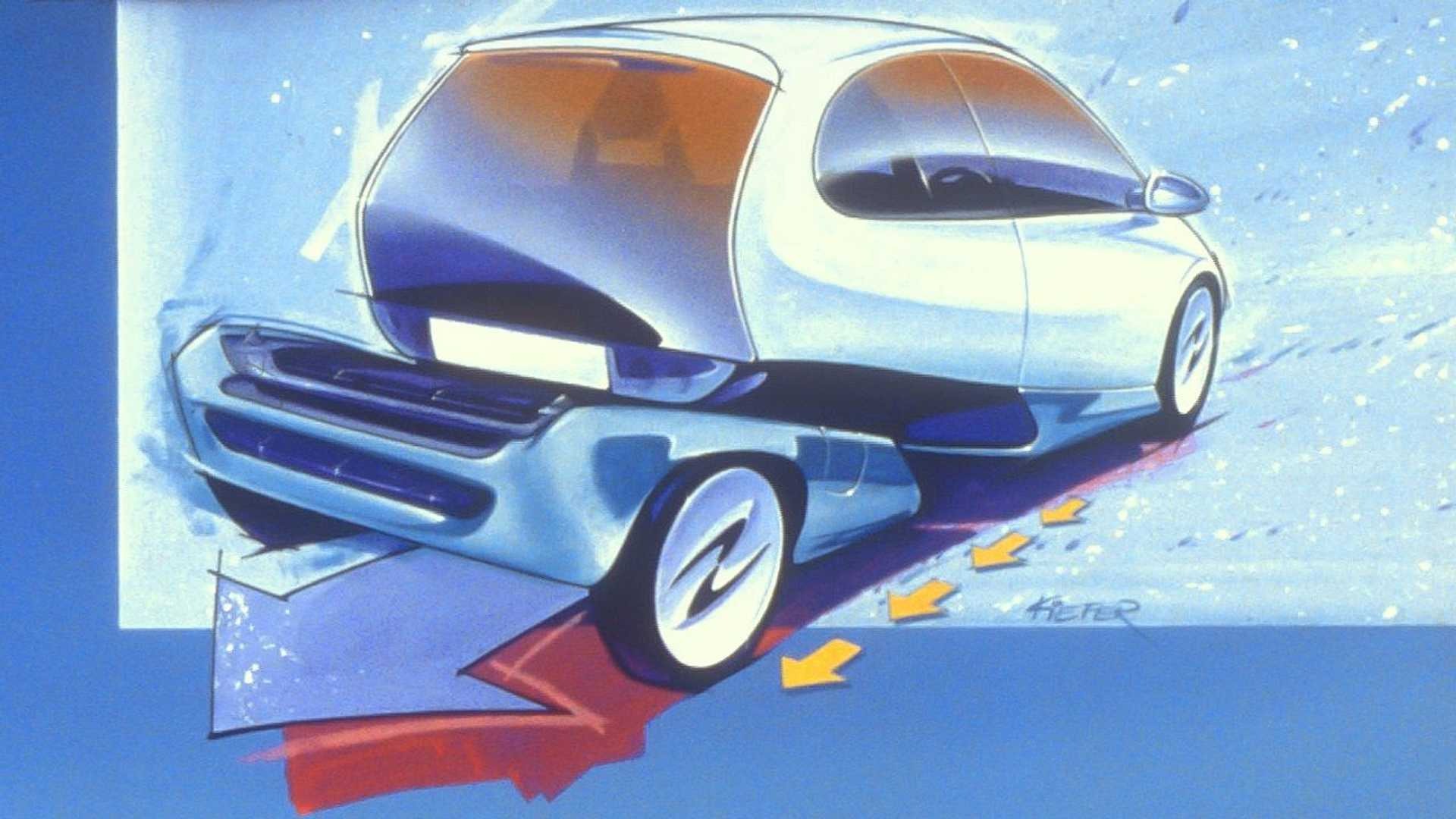
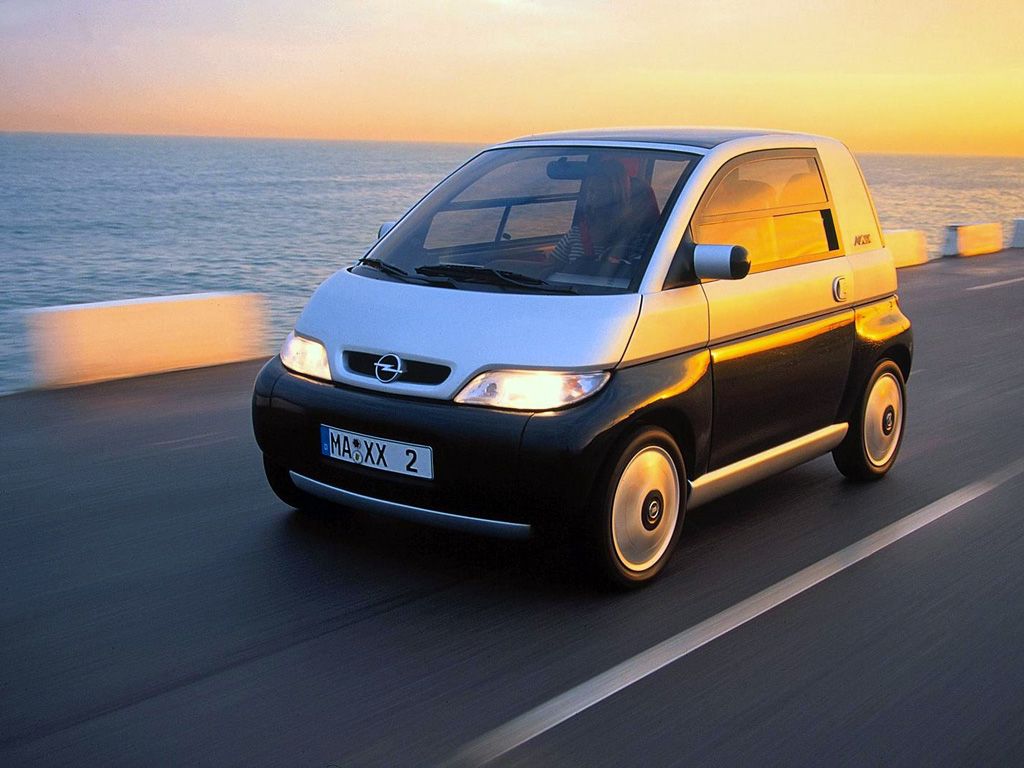
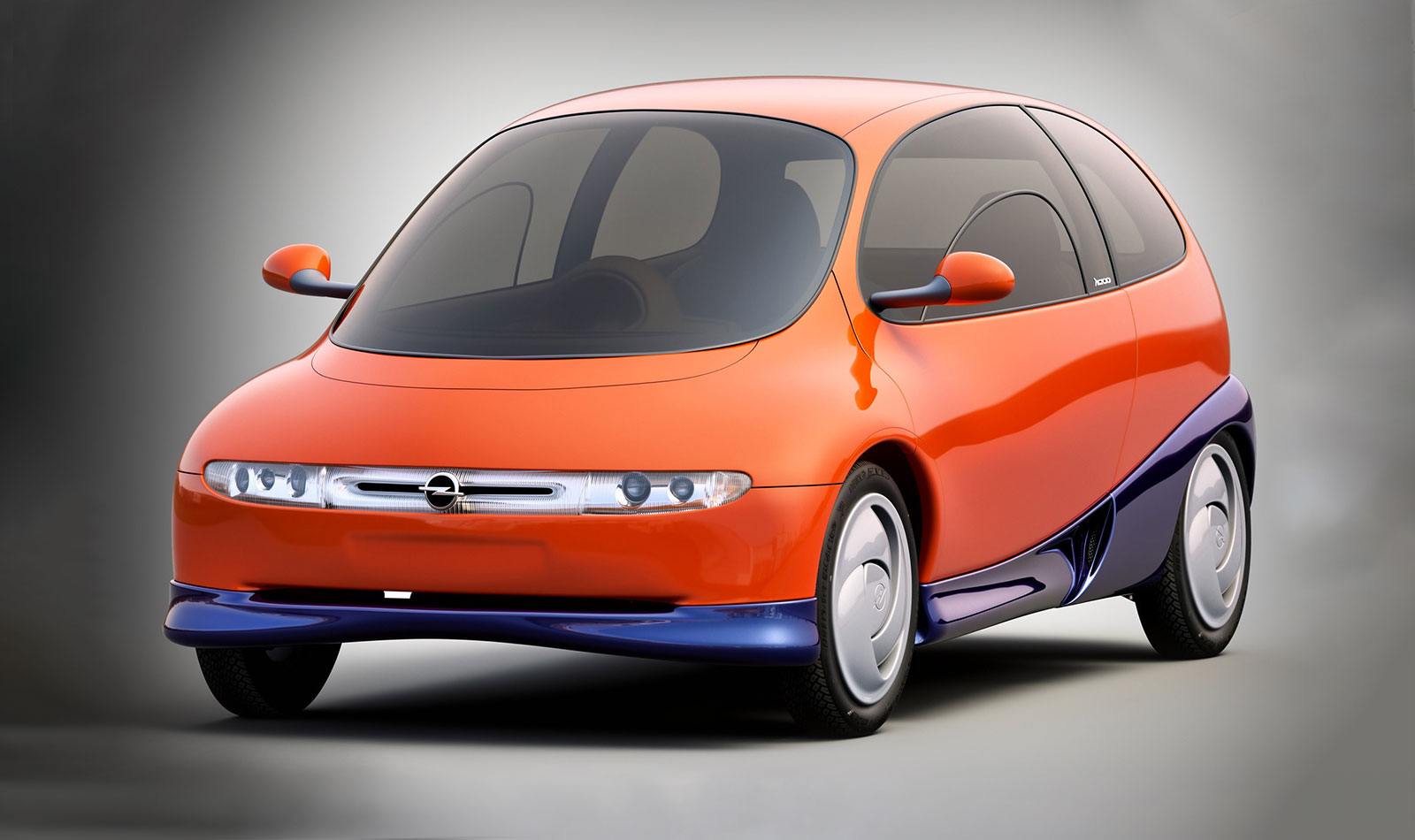
Unveiled in 1992, the Opel Twin put forward an idea that was remarkably futuristic for its era.
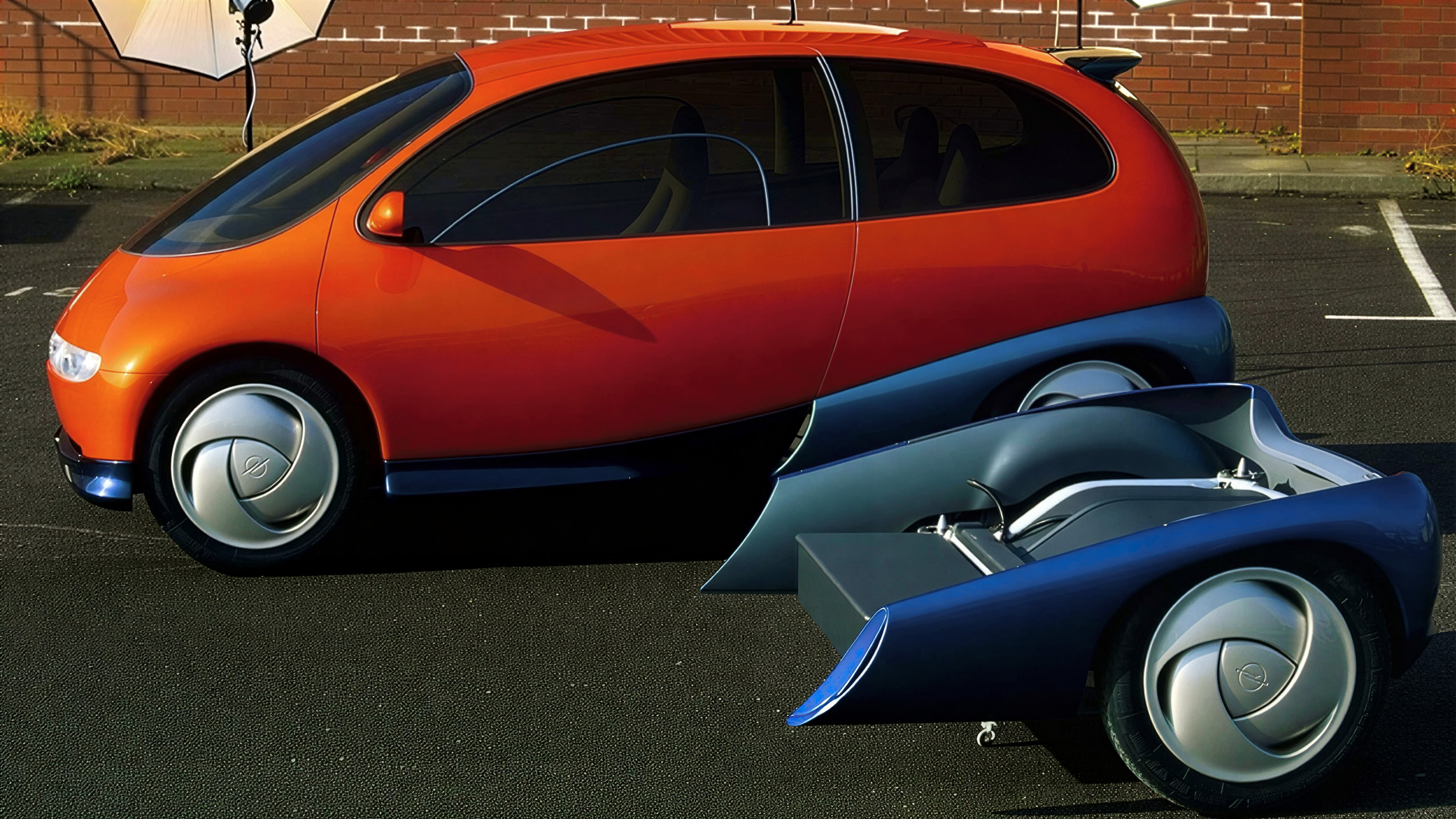
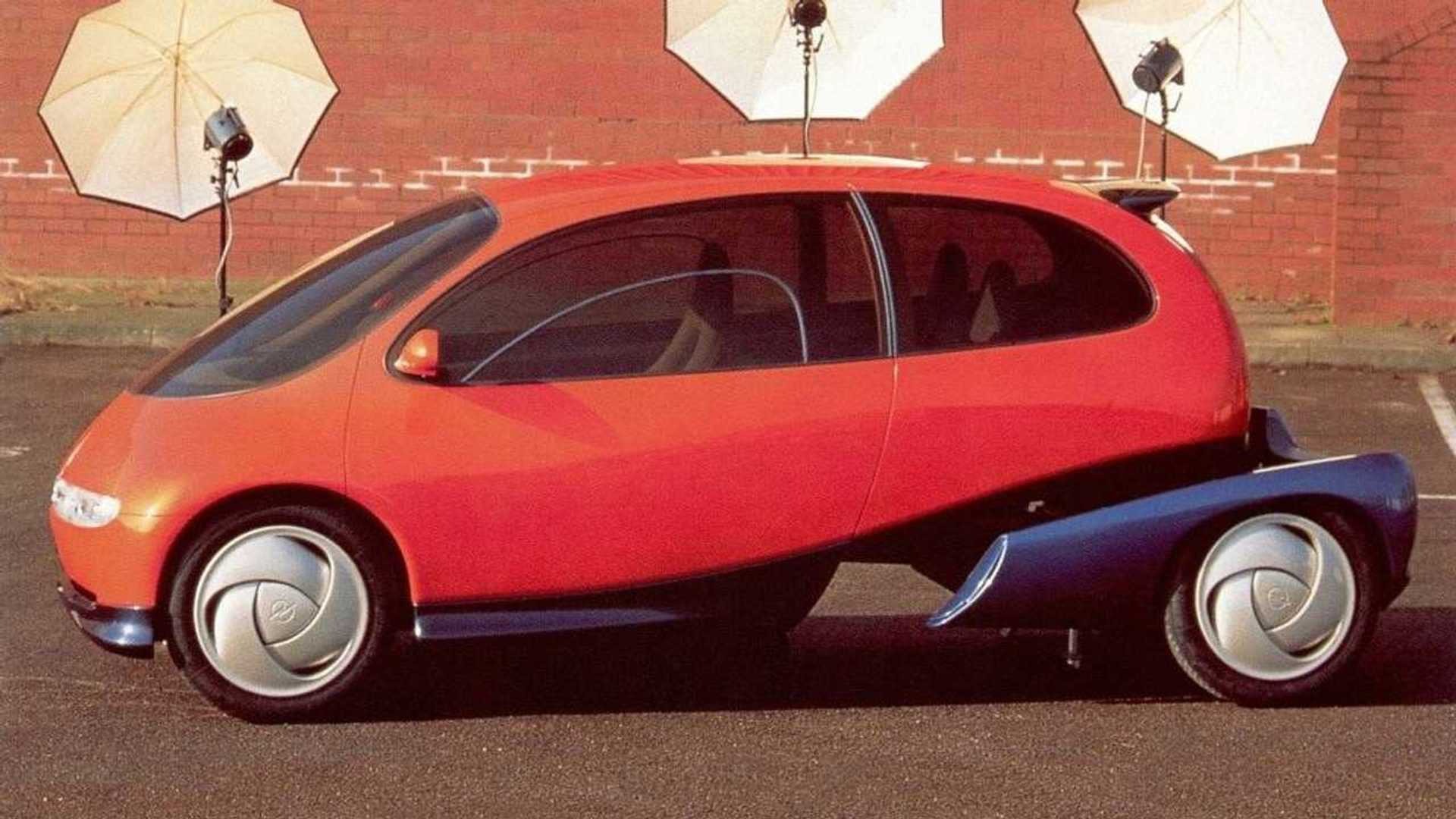
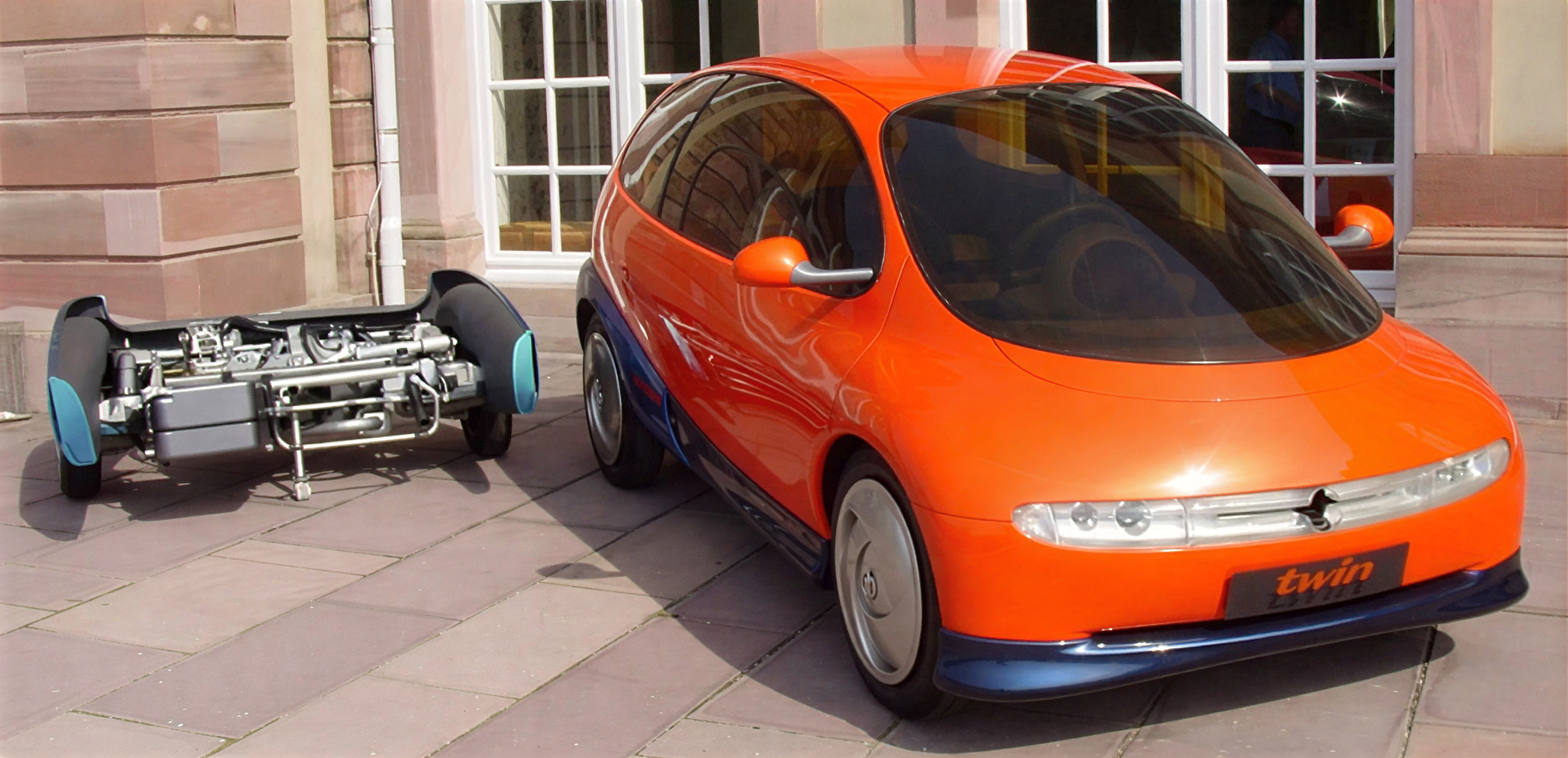
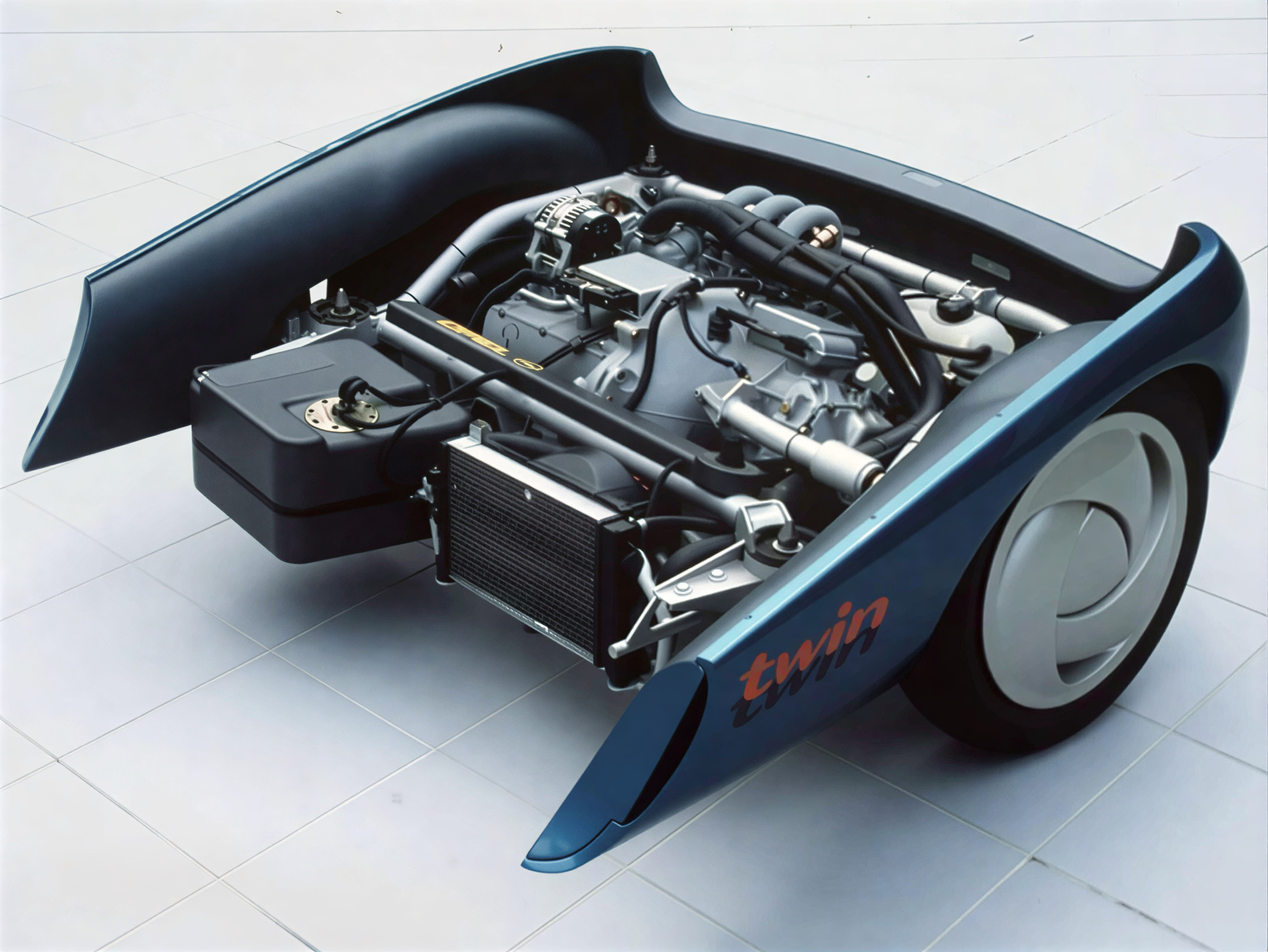
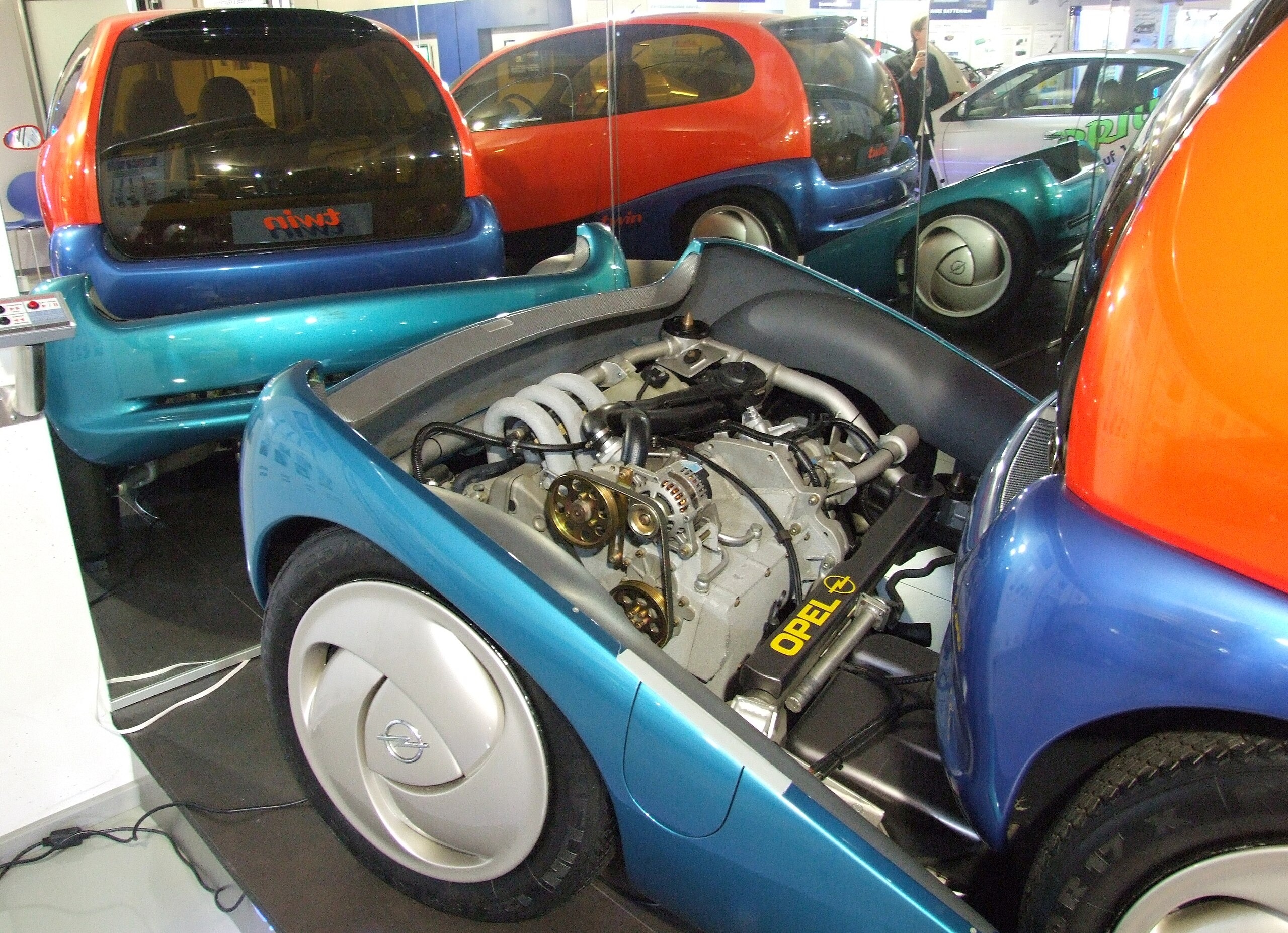
At the heart of the concept was a modular drivetrain system in which the engine, transmission, rear axle, and energy storage were packaged into a single interchangeable unit.
This design allowed the car to be configured with different propulsion modules depending on environmental needs or operating costs.
For longer highway journeys, the Twin could be fitted with a compact 0.8-liter three-cylinder gasoline engine producing 34 horsepower, while urban and short-distance use was handled by an electric setup featuring two wheel-hub motors rated at 14 horsepower each.
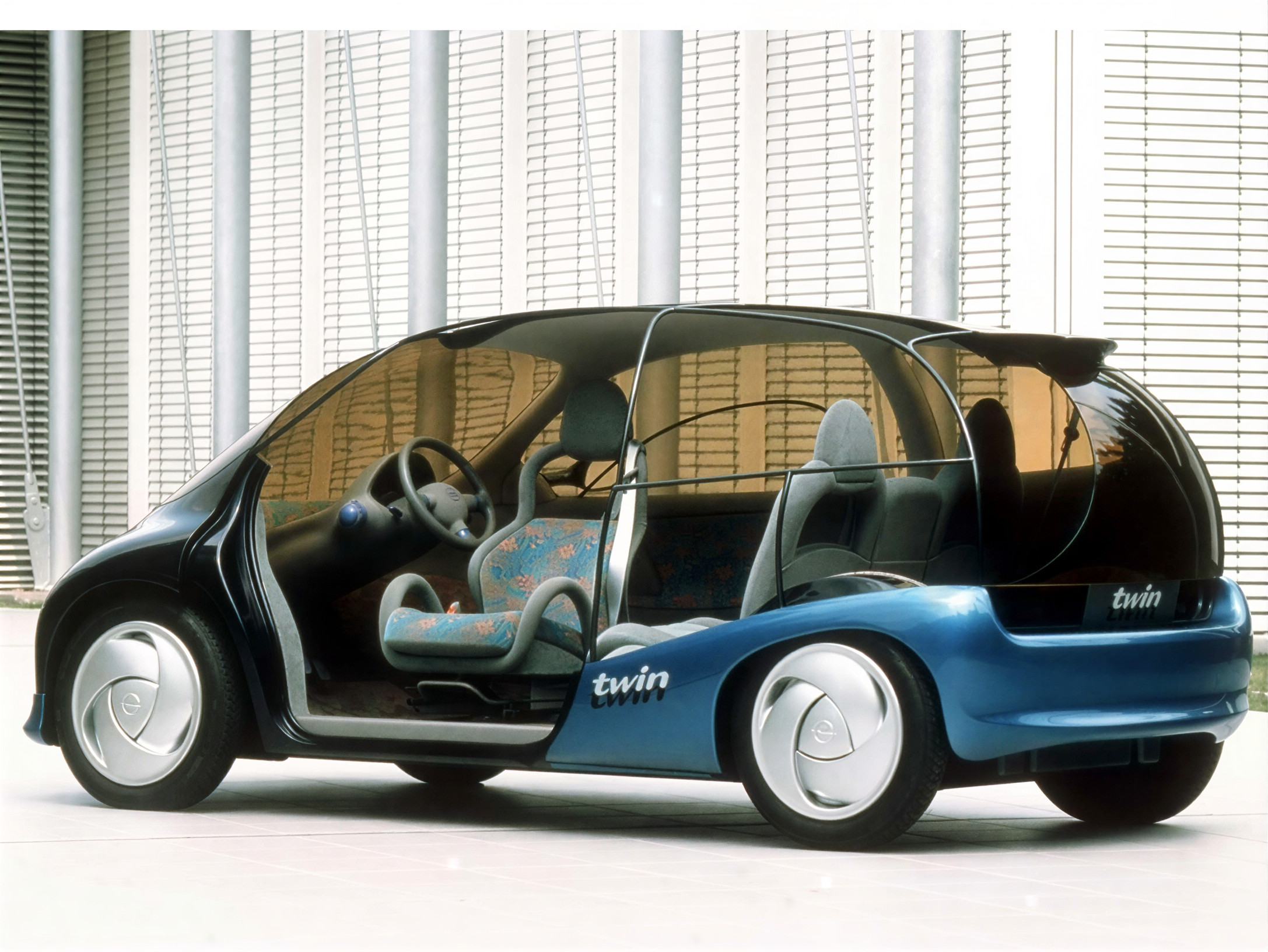
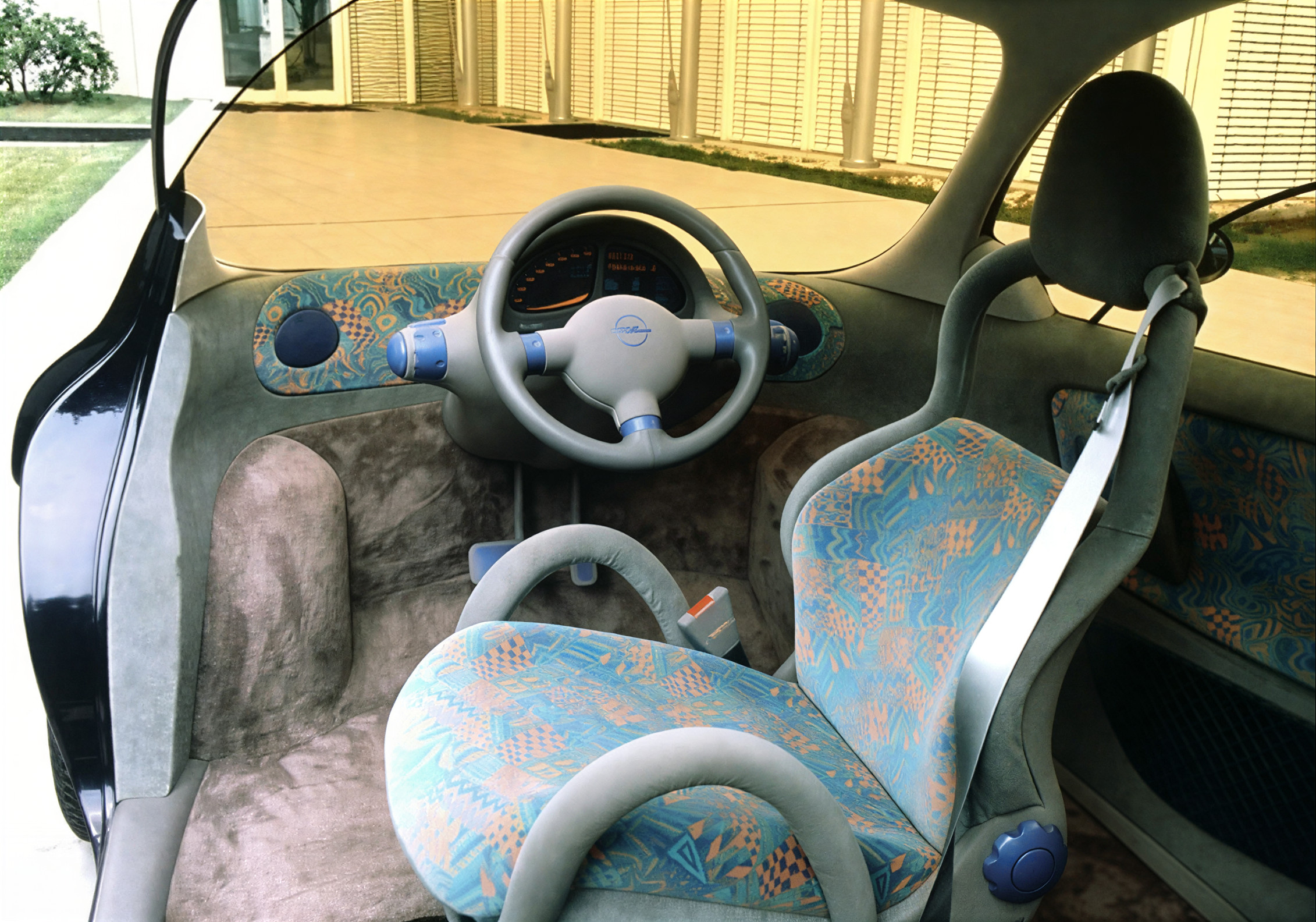
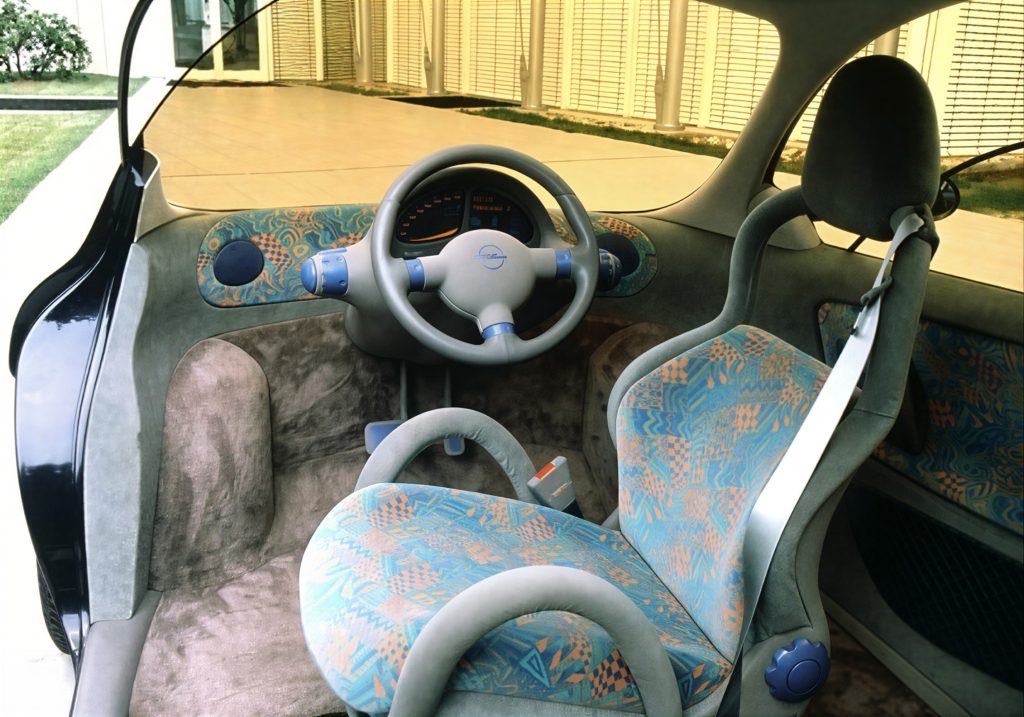
By locating all drivetrain components at the rear, Opel was able to rethink the interior entirely, placing the driver in a central front seat and arranging space for three passengers behind, creating an unconventional but efficient seating layout.
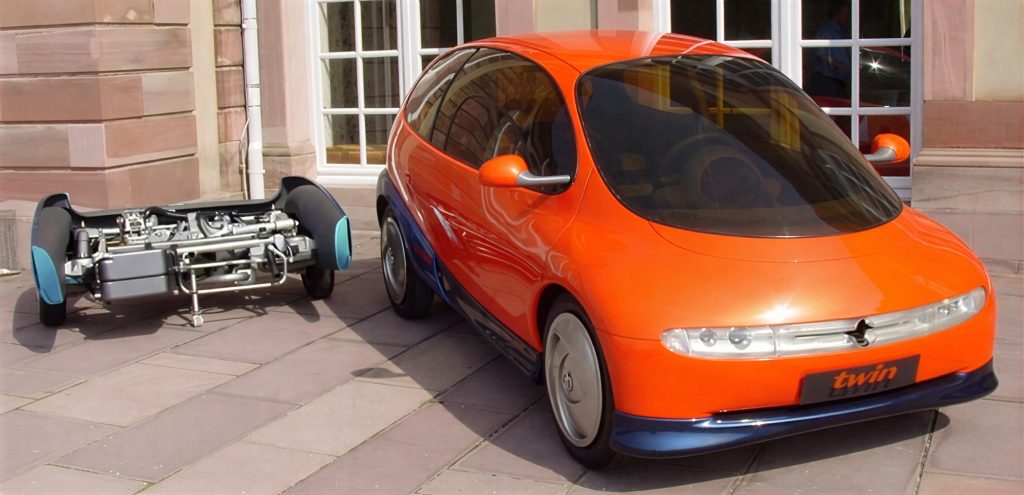
The original Opel Twin existed as a full-scale demonstration model intended to gauge public reaction to the concept, with Opel hoping to gather feedback and refine the idea into a road-going prototype. In practice, the project never progressed beyond the study stage, and only a scale model is known to survive today.
The Twin also served as a showcase for Opel’s efforts to reduce fuel consumption and carbon dioxide emissions. Its gasoline drive module was engineered for a target consumption of 3.5 liters per 100 kilometers, using an 800 cc three-cylinder engine with four valves per cylinder paired to a six-speed automatic transmission.
Lightweight construction, optimized aerodynamics, and low rolling-resistance tires were central to achieving this figure. To minimize overall height, the engine was mounted on its side, and an automatic start/stop system was included to reduce fuel use in urban driving. Performance estimates for this configuration included a 0–100 km/h time of 20 seconds, a top speed of 140 km/h, and an average driving range of approximately 571 kilometers.
For the electric module, Opel drew on experience gained from earlier prototypes such as Impuls I and Impuls II. The Twin was designed to use compact wheel-hub motors, eliminating the need for a differential or half-shafts, with each motor driving its wheel directly through a fixed 7:1 ratio.
Power was managed by a two-part electronic control system. Each three-phase asynchronous motor produced 10 kW (14 hp) and 24 Nm of torque, allowing the electric Twin to accelerate from 0 to 50 km/h in seven seconds and reach a top speed of around 120 km/h. Energy consumption at a steady 90 km/h was calculated at roughly 11.5 kWh per 100 kilometers.
At the core of the electric module was the battery, weighing around 250 kilograms. Opel planned to use a then-developing “cold” high-energy battery based on lithium-carbon chemistry, with an energy density of about 200 Wh per liter. The proposed battery pack measured 145 liters in volume, weighed approximately 290 kilograms, and stored 29 kWh of energy, giving the electric Twin an estimated range of about 250 kilometers.