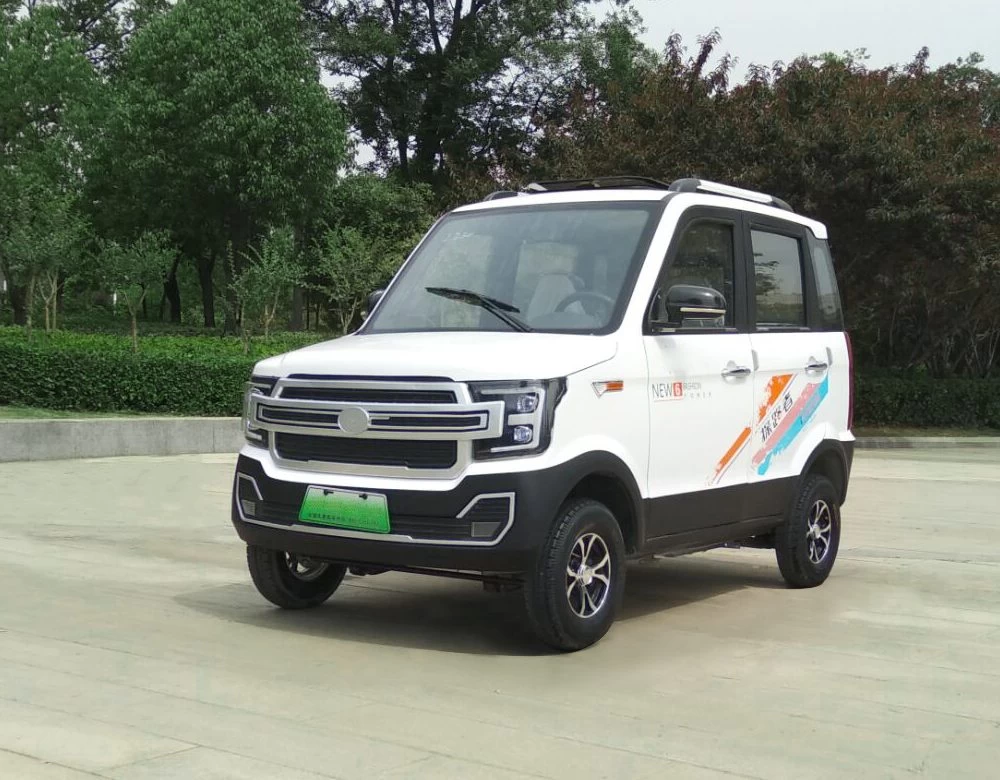
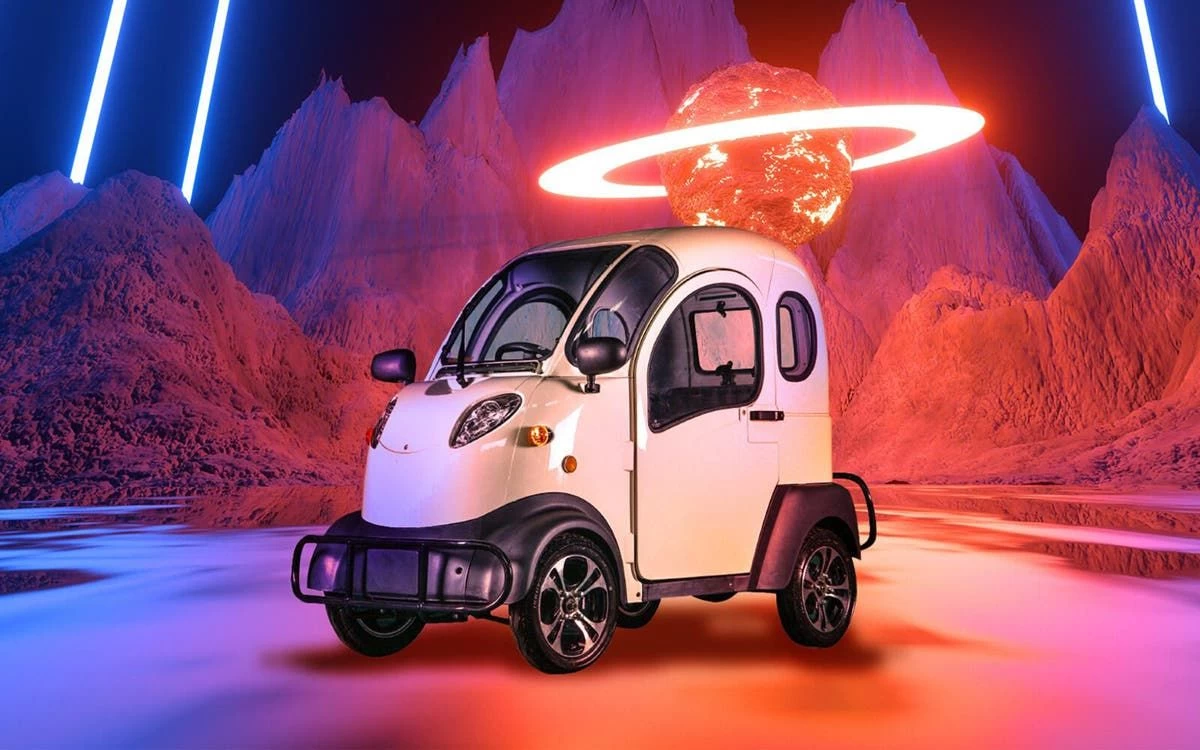
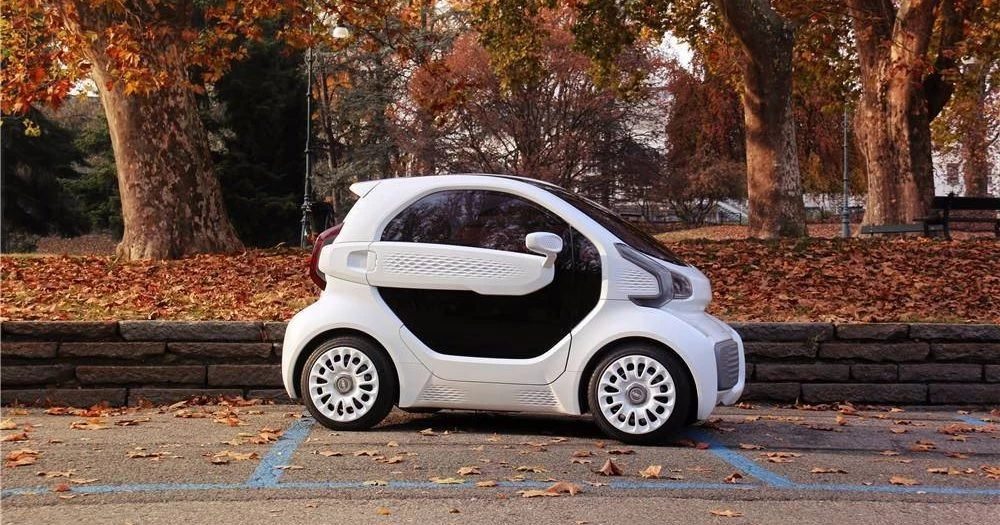
Huahai QB15

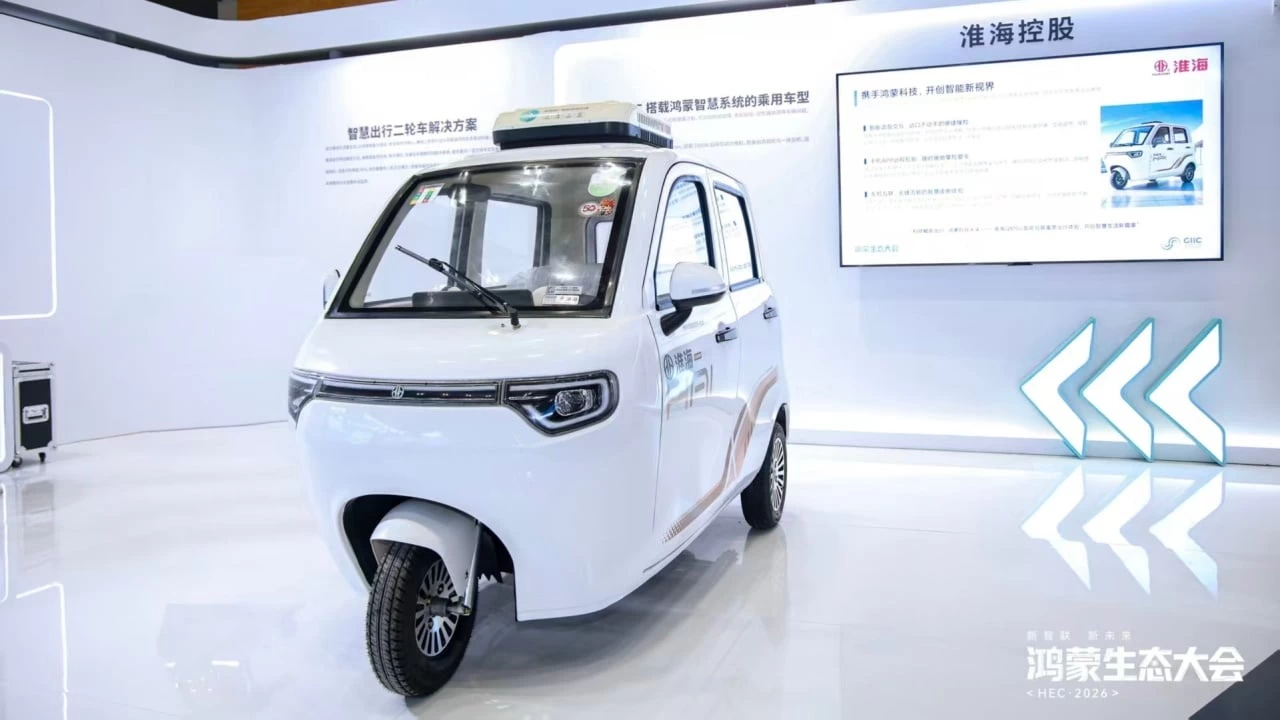
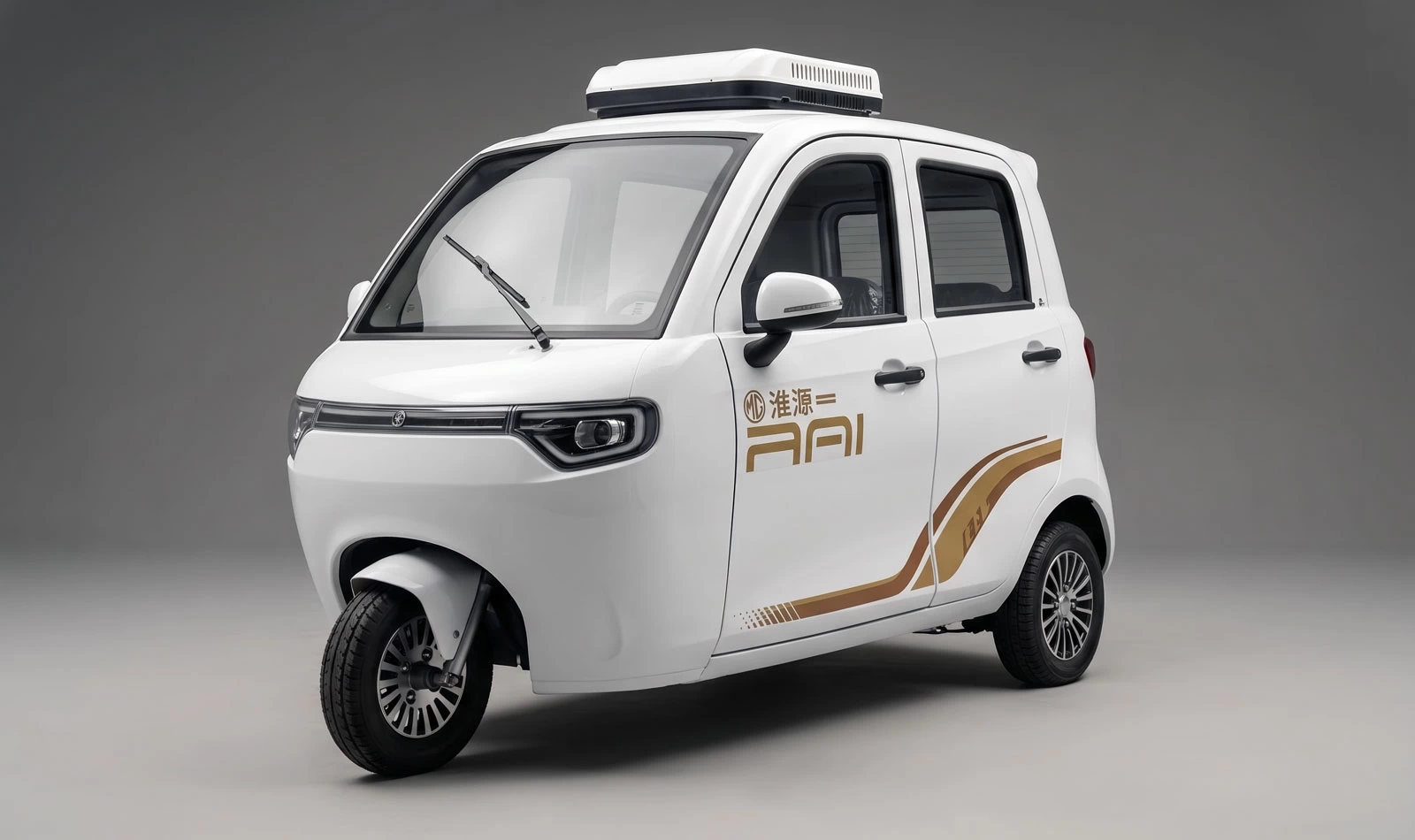
Huawei has brought its HarmonyOS smart-cockpit technology to an electric three-wheeler, making the Huaihai-built trike the first three-wheeled vehicle to receive the company’s connected cockpit functions.
The vehicle was shown at Huawei’s 2026 HarmonyOS Ecosystem Conference in Shenzhen, where it was presented alongside a certificate confirming compatibility with other devices in the HarmonyOS ecosystem.
Unlike many Huawei-backed passenger cars sold under the Harmony Intelligent Mobility Alliance, or HIMA, Huawei is acting only as a technology supplier here. Huaihai is responsible for the trike’s design, development, manufacturing and marketing, while Huawei provides the smart-cockpit system and connected services.
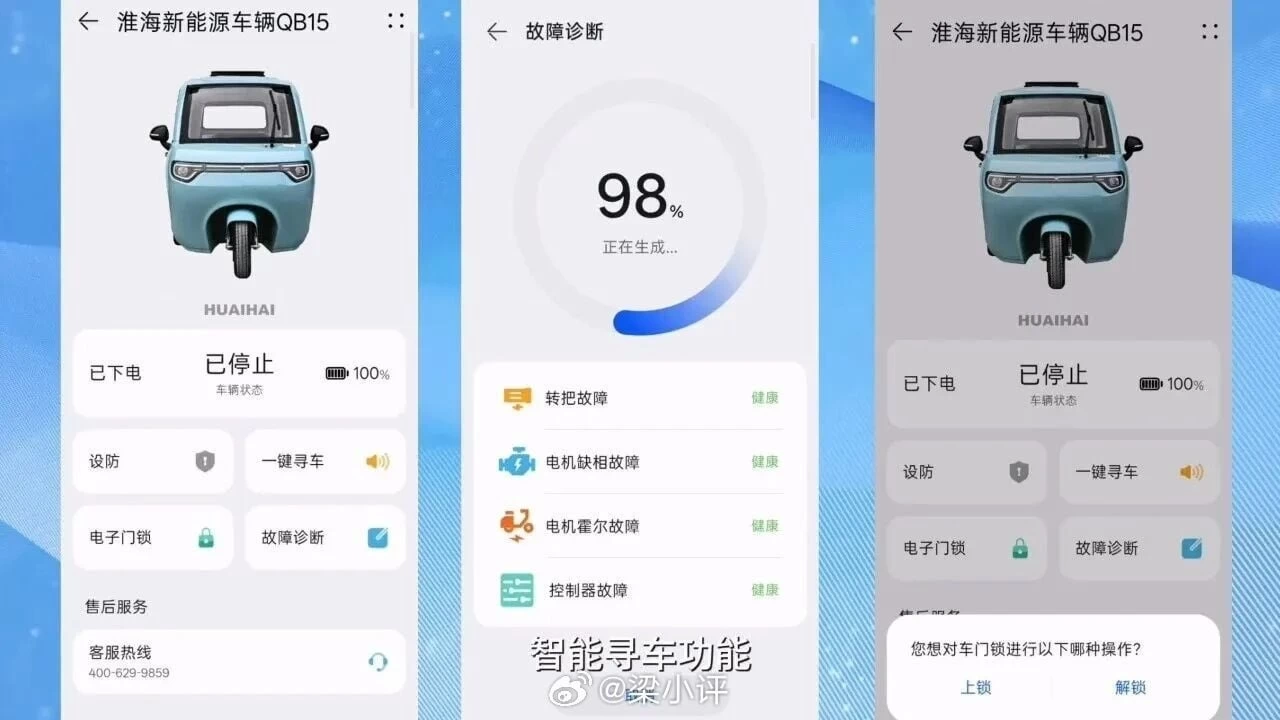
The trike can understand complex voice commands, connect with HarmonyOS smartphones and use remote functions through a dedicated phone app. Screenshots shown at the conference indicate that owners can locate the vehicle, lock and unlock its doors remotely and run system diagnostics from their phone.
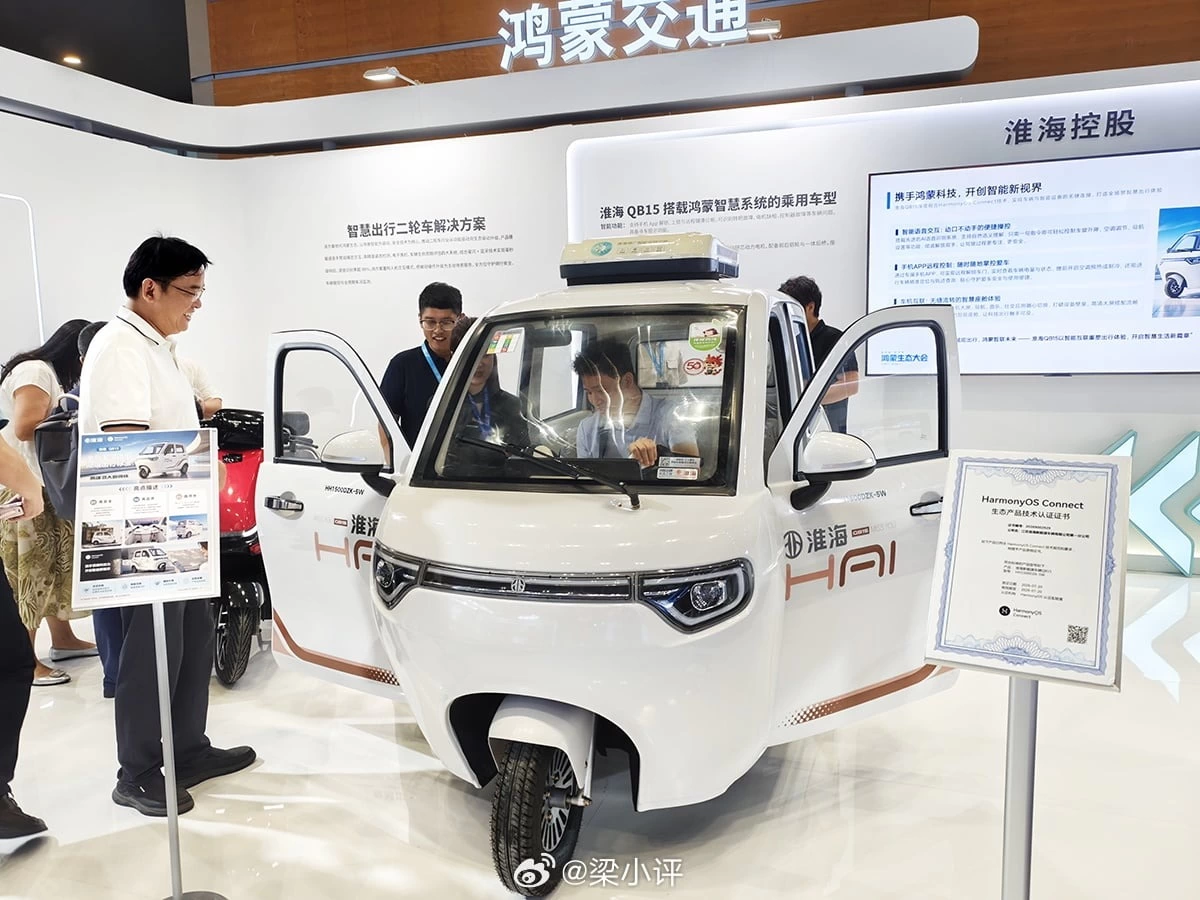
The system also supports CarPlay-like interconnectivity with HarmonyOS phones. It is implied that riders can use voice commands to enter navigation destinations or adjust climate-control settings, functions that are more commonly associated with modern electric cars than with small three-wheelers.
Huawei’s involvement is notable because the trike is a low-cost, enclosed electric three-wheeler rather than a premium passenger vehicle. Similar enclosed trikes typically sell for about 10,000 yuan, or roughly US$1,500, in China, although neither Huawei nor Huaihai has announced pricing for this particular model.
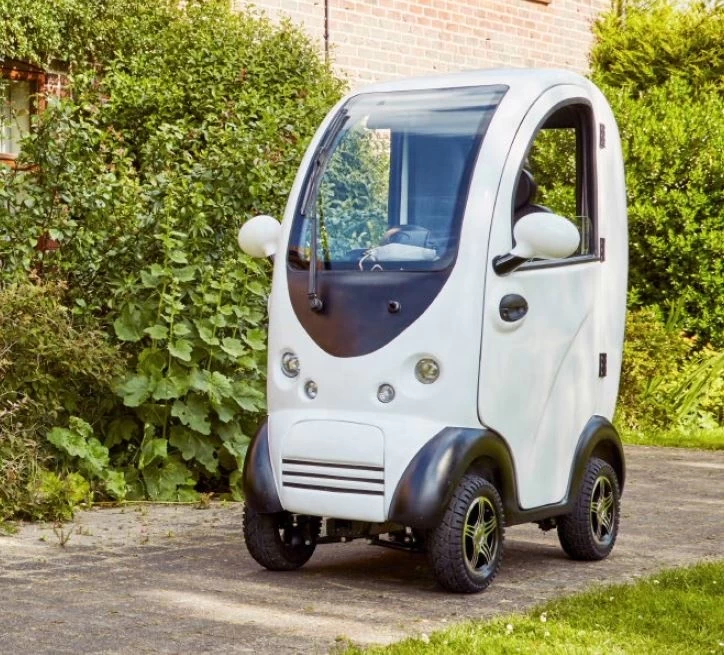
Enclosed e-trikes are widely used in China for short journeys within residential communities, local neighbourhoods and small commercial operations. Many use simple electric drivetrains and small lead-acid batteries; a model with a 2.1 kWh battery may offer a range of roughly 30 to 50 km.
The market has changed considerably in recent years. E-trikes once operated in a legal grey area, often requiring neither registration, insurance nor a driving licence, which made them especially popular with older buyers seeking inexpensive and uncomplicated transport.
As regulations tightened, enclosed trikes were increasingly classified as motorcycles and became subject to similar rules as conventional four-wheeled vehicles. That change brought larger and more established manufacturers into the segment, creating the conditions for a more technologically advanced product such as the Huawei-equipped Huaihai trike.
A large aftermarket has also developed around these vehicles. Owners can add two-speed gearboxes, petrol range extenders, air conditioning and even diesel cabin heaters, reflecting the trike’s role as a practical, low-cost work and local-transport tool.
The Huawei-Huaihai trike suggests that smart-cockpit technology is no longer limited to cars. Falling component costs, intense competition in China’s connected-vehicle market and growing demand for digital features have made it commercially viable to equip even a budget three-wheeler with smartphone connectivity, remote control and voice assistance.
Whether buyers will pay extra for these features remains uncertain. The trike’s core appeal is likely to remain affordability, simplicity and practicality, but Huawei’s HarmonyOS integration could give Huaihai a meaningful advantage in a market where basic transport is increasingly expected to be connected.