
EMTA Patent Images Reveal a Boxy Electric Kei Car for Japan’s Toughest Market

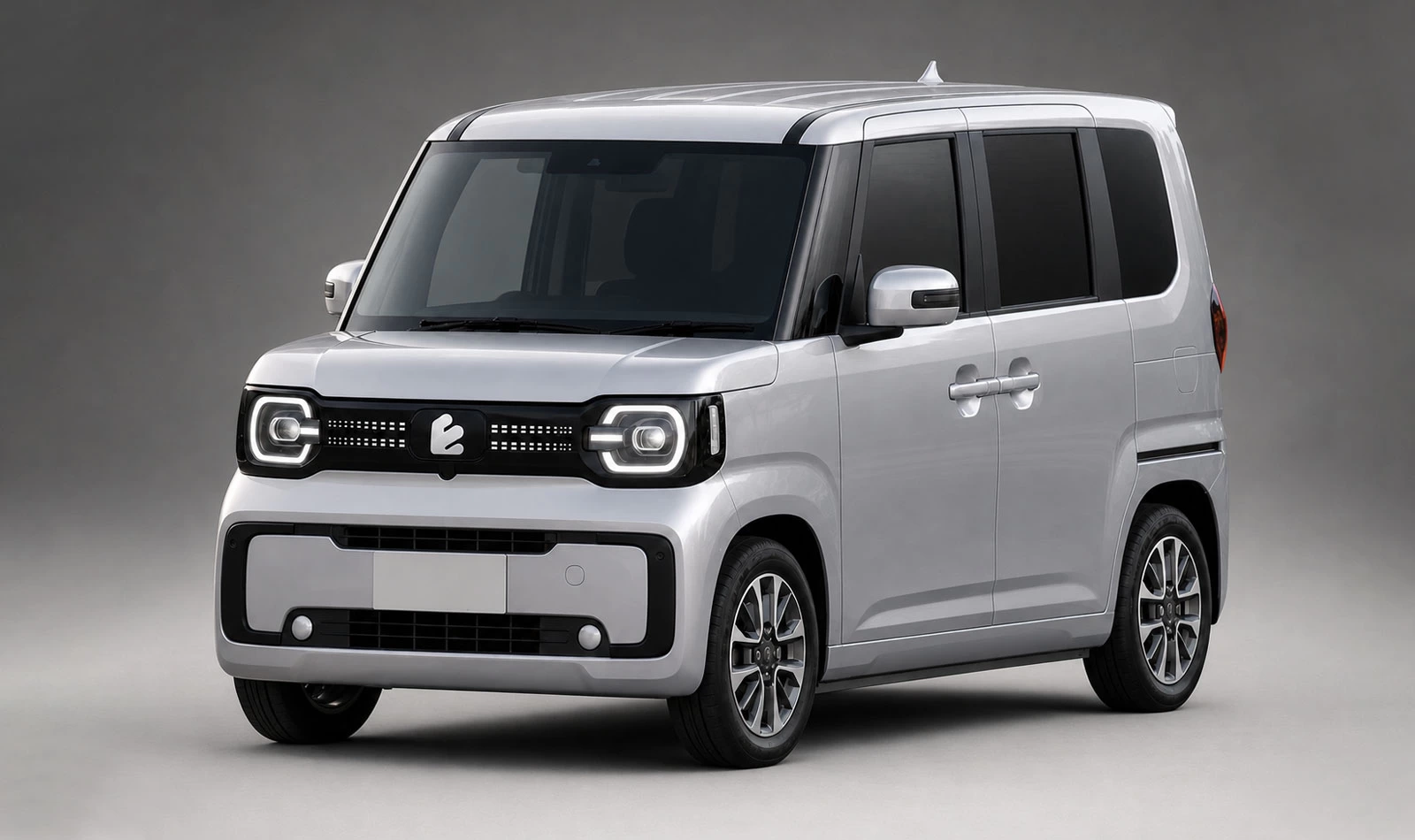
EMTA is the first model from EMT, a Singapore-based automotive joint venture created to enter Japan’s uniquely important kei-car market. Newly published patent images show a tall, boxy electric microvan with rear sliding doors and a separate rugged-looking “softroader” version, positioning it as a direct challenger to BYD’s Racco as well as Japan’s established electric kei-car makers.
The Emta brand was announced in May 2026 by Electric Mobility Technologies, or EMT. The venture brings together Chery Automobile and Jiangsu Yueda Automobile Group, each with a 27.27 percent stake, alongside Japan’s Autobacs Seven and battery maker Gotion, each with 18.18 percent, and industrial-equipment company Anest Iwata with 9.09 percent.
The partnership is deliberately structured for the Japanese market. Chery supplies the vehicle platform, electric drivetrain and driver-assistance technology; Yueda’s Yancheng plant in China is expected to build the vehicles; Gotion provides batteries; Autobacs handles sales and service channels in Japan; and Anest Iwata contributes quality support.
EMT’s chief technology officer, Yamamoto, has said that the company’s future is “Made in Japan,” although the first Emta cars are expected to be produced in China. The company has also opened a research and development centre in Yokohama and planned prototype testing on Japanese roads from September 2026.
The first Emta model is expected to launch in Japan in the first half of 2027. It was first shown as a concept in May, but the patent images published in October reveal a considerably more production-ready design.
The vehicle is a kei car, Japan’s tightly regulated category of very small vehicles. Early reports indicated a length of about 3.4 metres and a width of about 1.48 metres, dimensions that sit within the country’s kei-car limits.
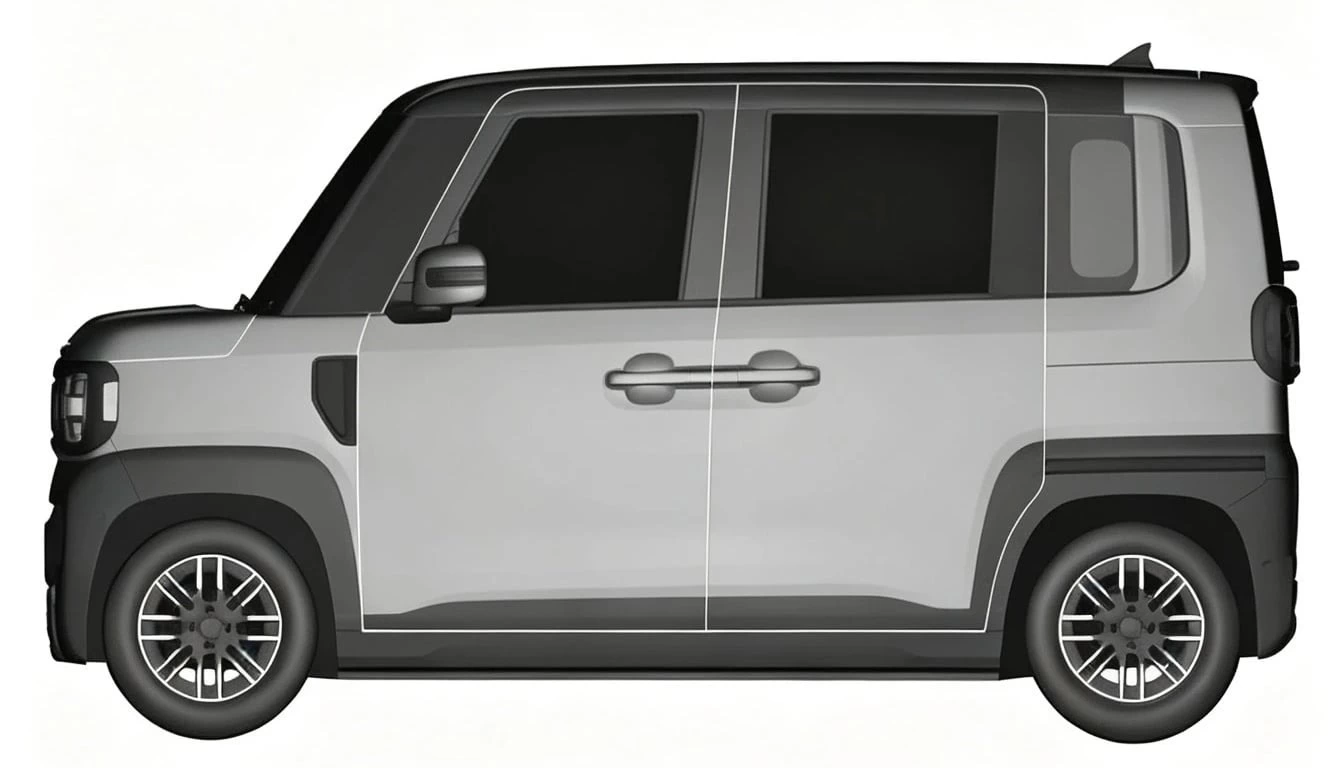
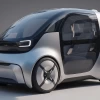
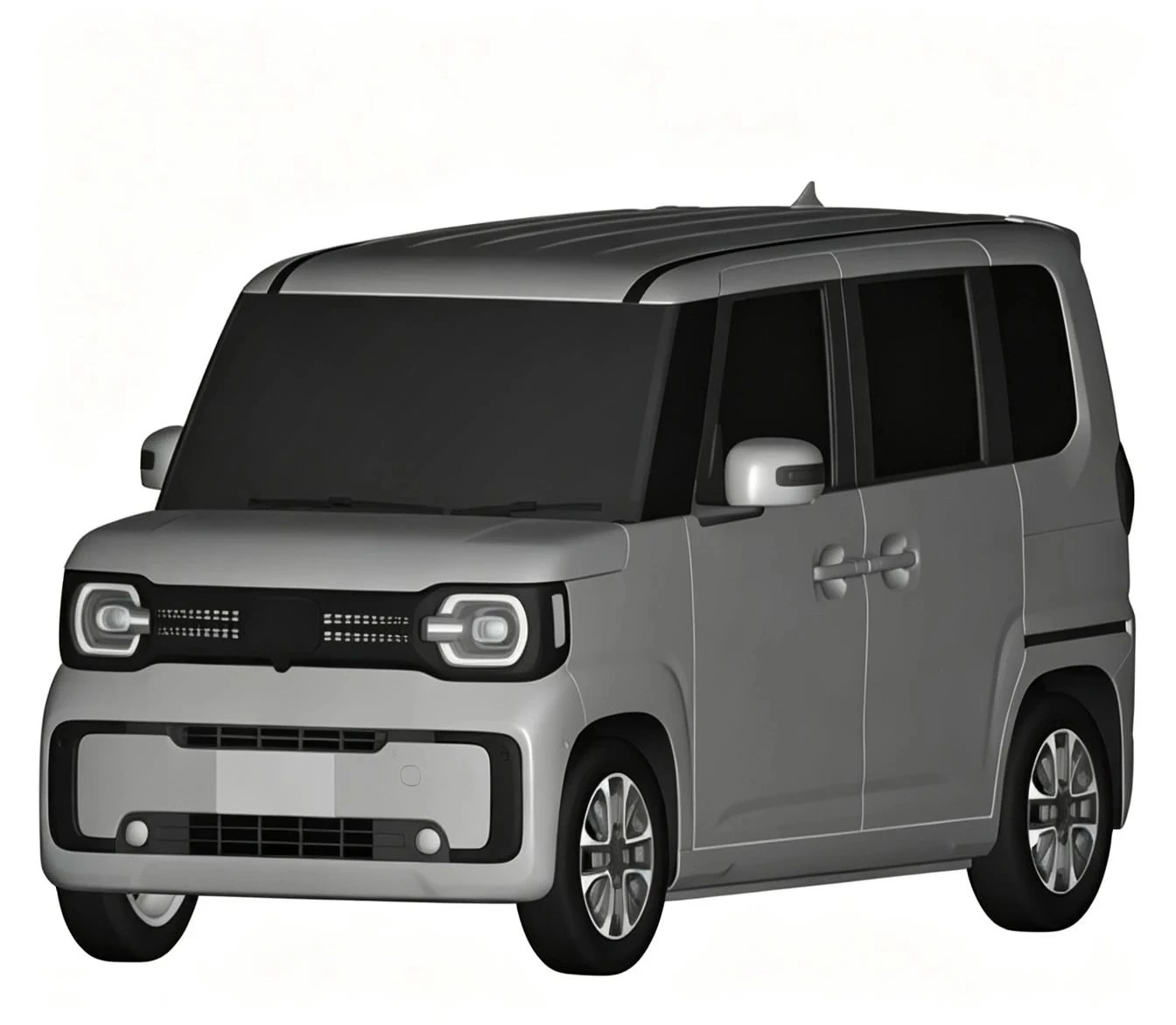
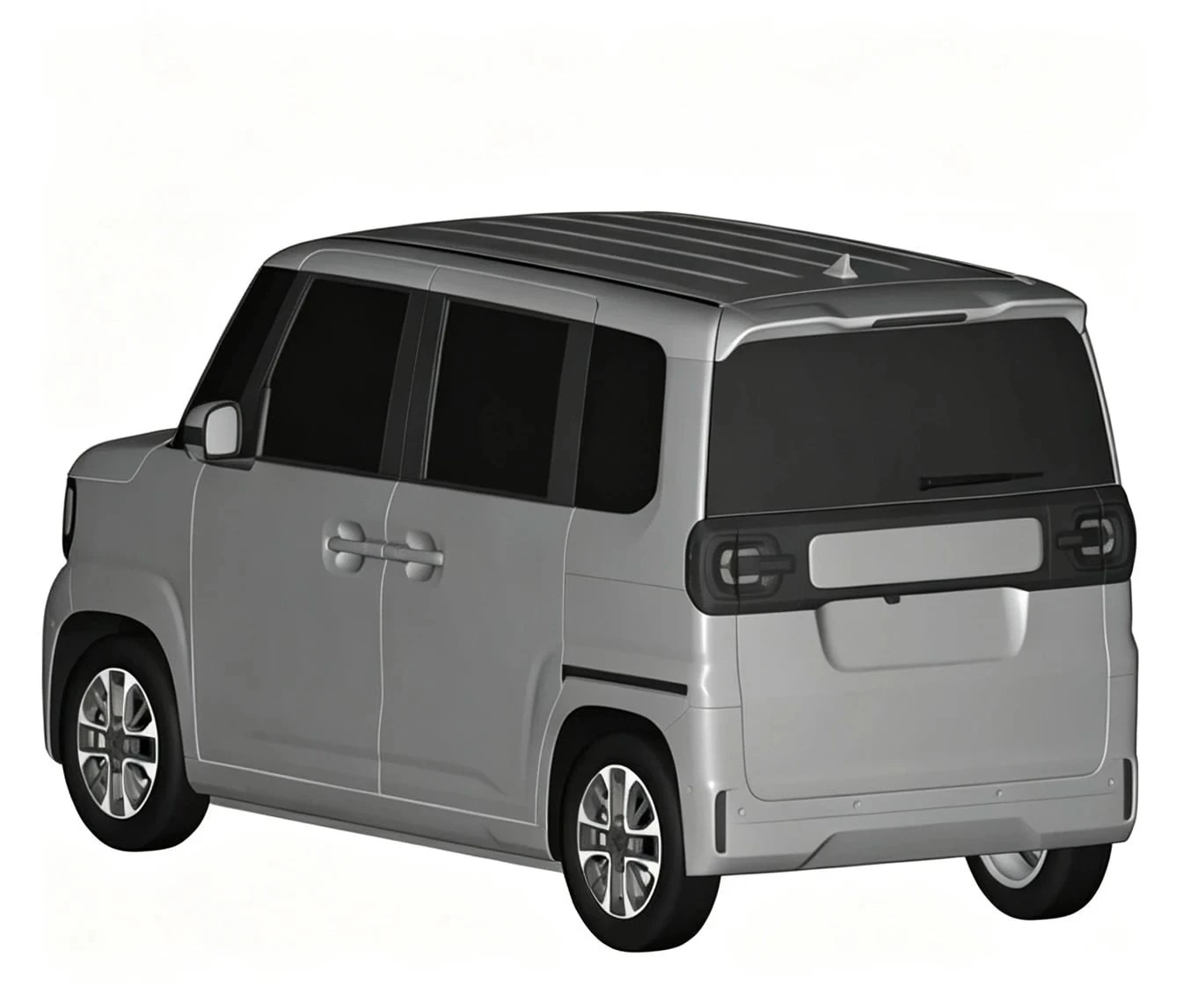
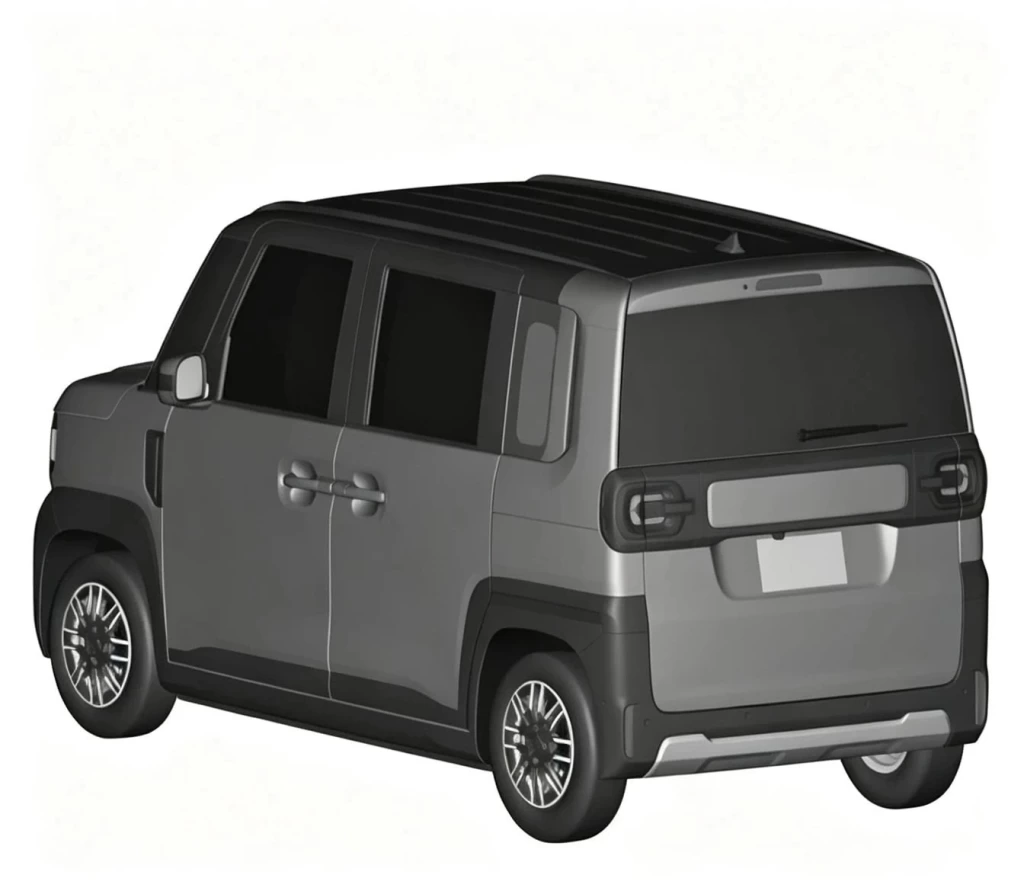
The patent drawings show a high, boxy body designed to make the most of the limited external dimensions. The wheels are tucked closer to the body than on the earlier concept, while the bodywork is stretched outward to make full use of the legal kei-car envelope.
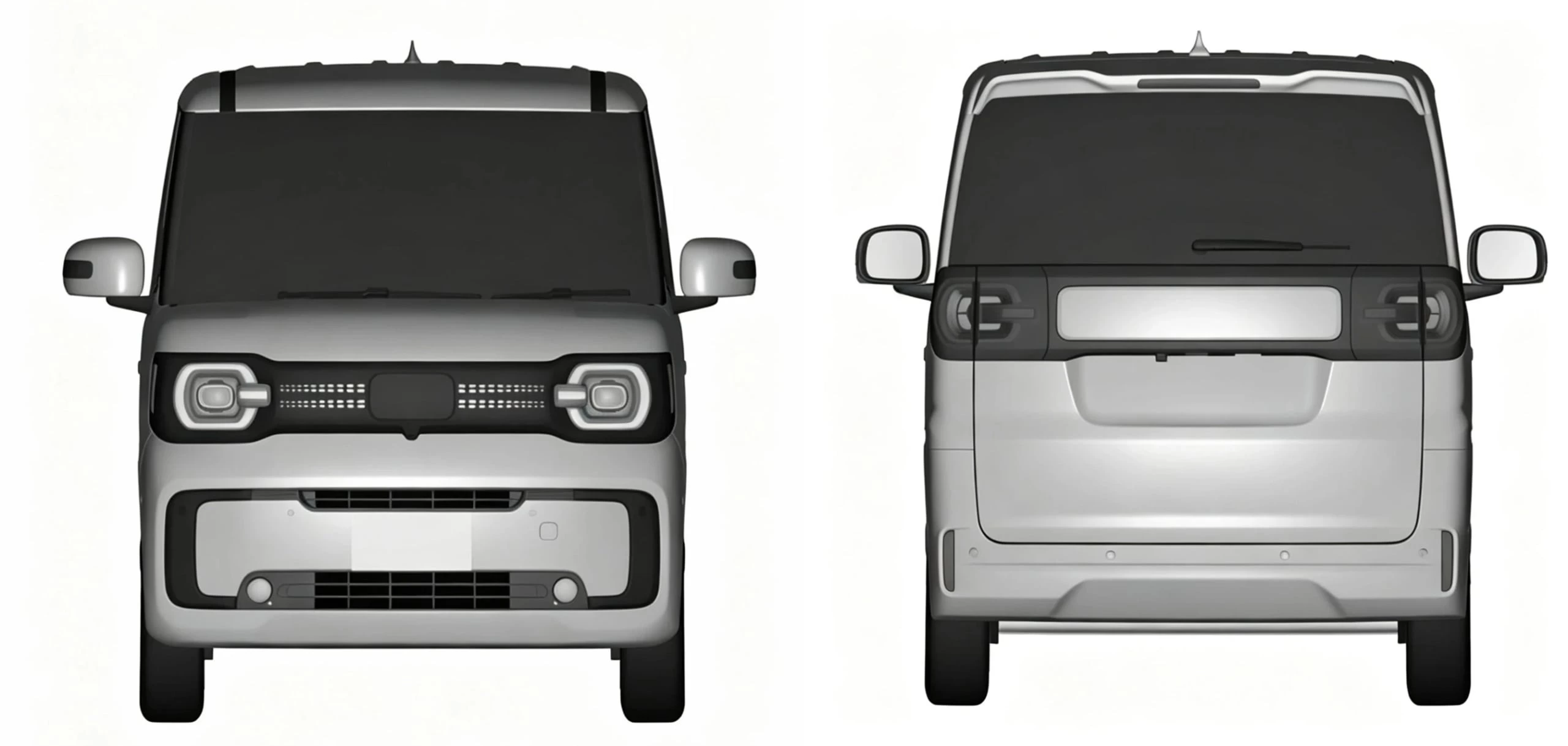
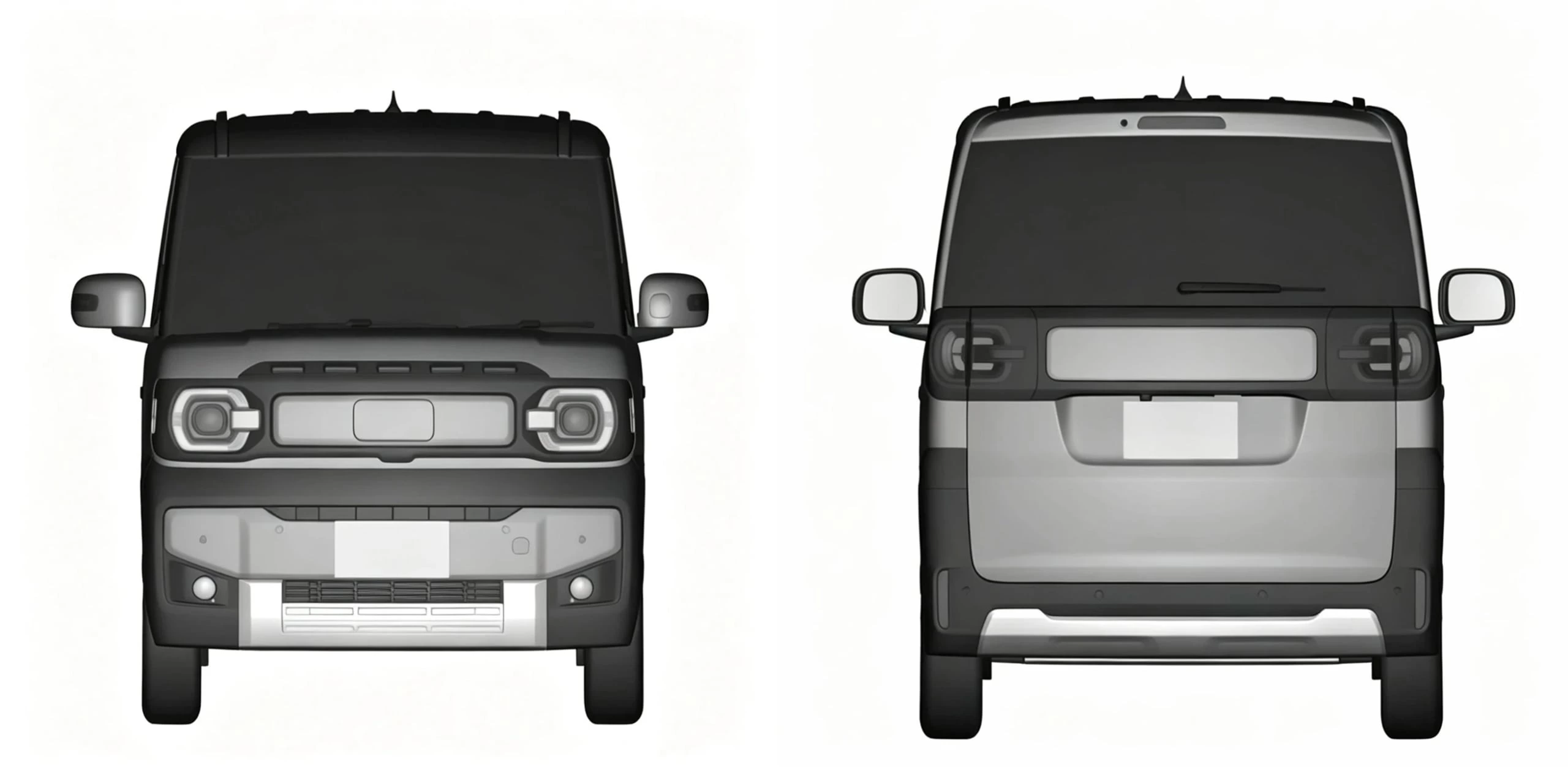
At the front, the production design replaces the concept’s protruding bumper with upper and lower grille slats and lower fog lights. The headlights and grille sit beneath the bonnet line, while the blacked-out grille is slimmer in the middle.
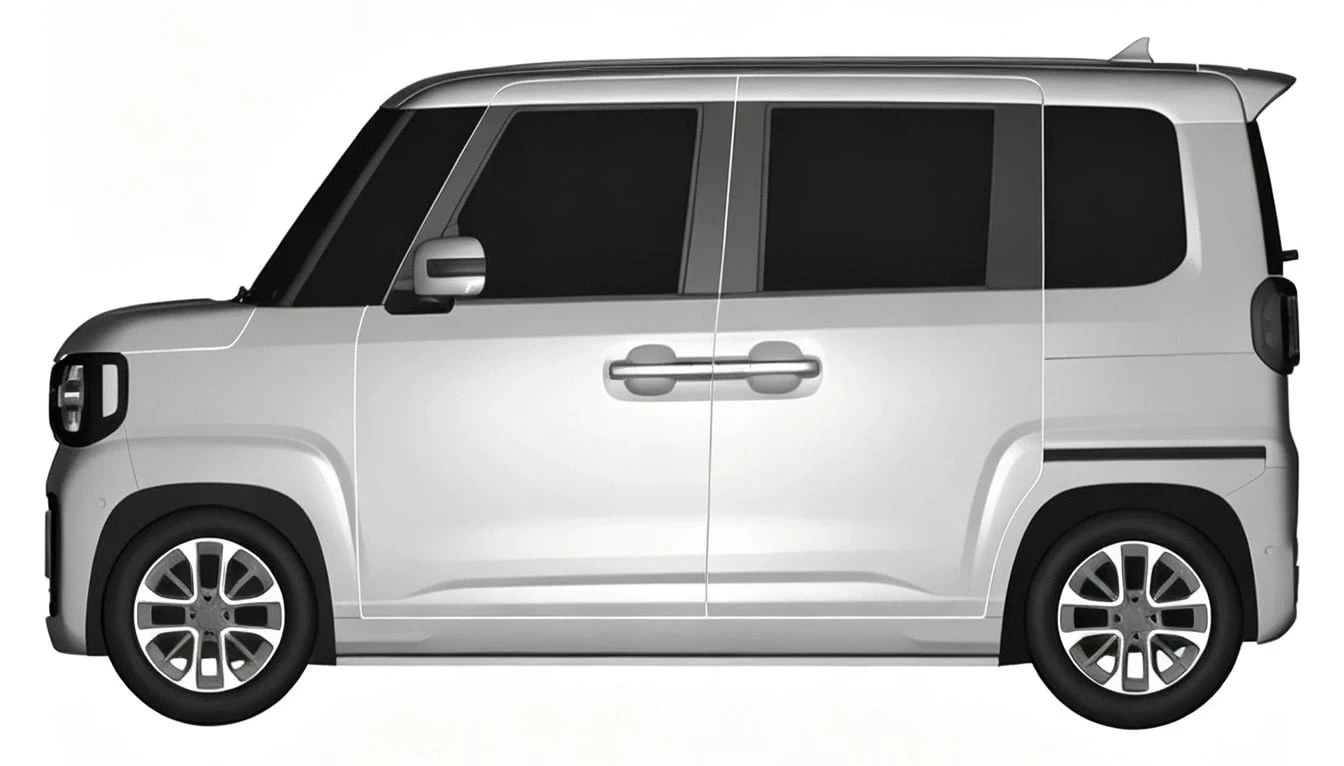
Along the sides, the Emta uses conventional door handles rather than the concept’s flush-fitting items. The rear door handles are positioned close to the B-pillars, and visible sliding-rail details indicate rear sliding doors, a practical feature commonly found on Japanese kei cars.
At the rear, the Emta has a full-width light bar that echoes the front lighting design. Between the rear lights and above the licence-plate recess is a panel that could serve as a customisable LED display or simply as a decorative painted surface.
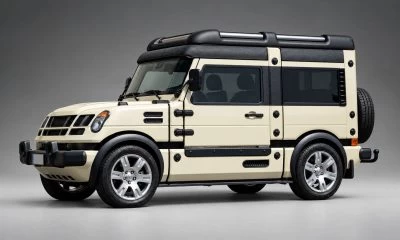
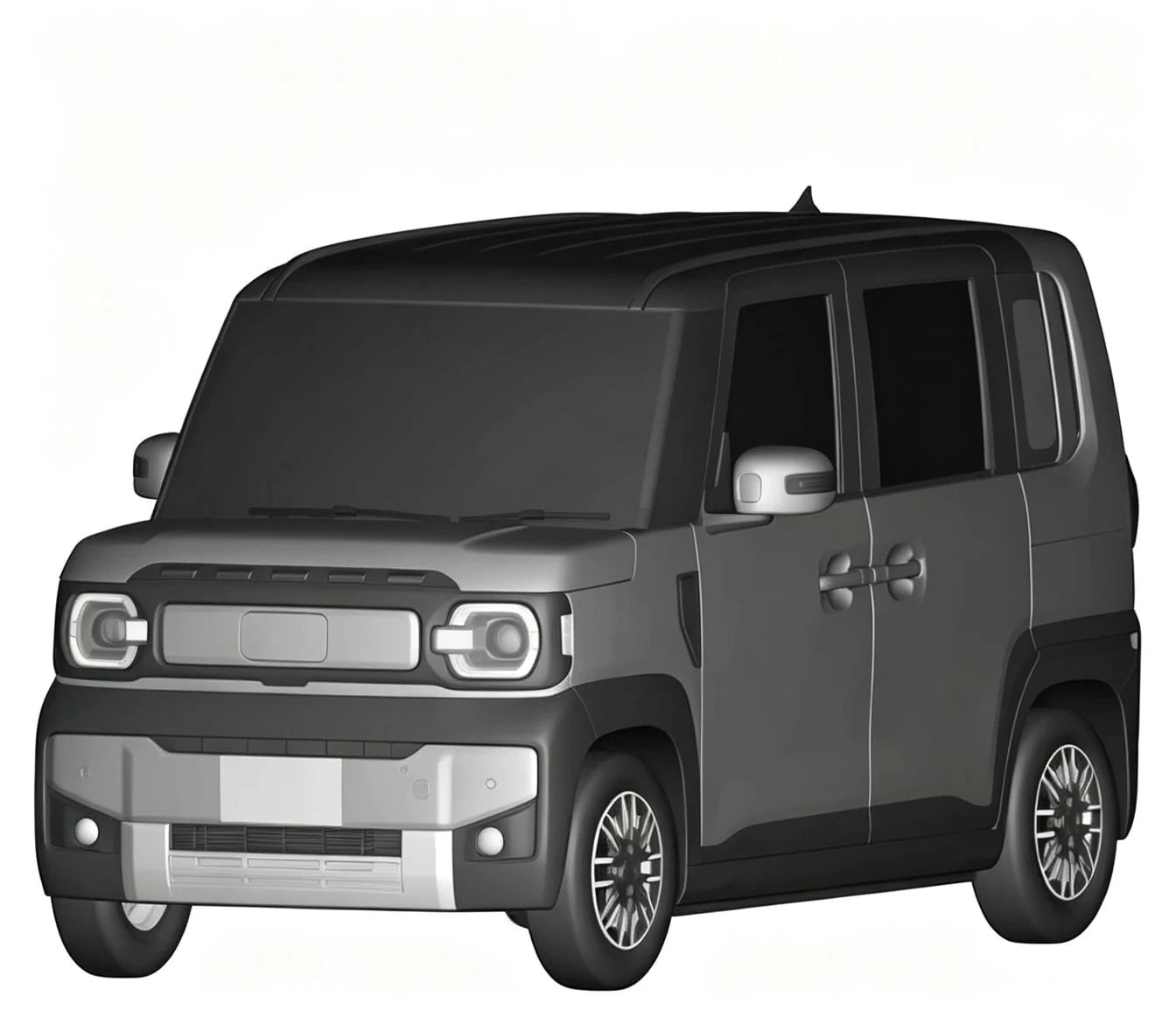
The most interesting discovery in the patent images is a second, more adventurous version of the same vehicle. This “softroader” trim adds extensive black plastic cladding and a redesigned front bumper that appears intended to evoke a tough off-road bull bar.
The off-road version is likely to be more visual than mechanical. Small-diameter all-terrain tyres and a slight increase in ride height are plausible, but EMT has not confirmed any drivetrain specifications. A dual-motor all-wheel-drive system is possible, although it remains speculation rather than official information.
EMT has not yet revealed the Emta’s battery capacity, motor output, driving range, charging speed, interior layout or price. The company has, however, said that the vehicle is intended to embody its “Daily Magic” brand promise, focusing on everyday convenience and usability rather than performance.
The Emta will enter a highly competitive segment. Its principal Chinese rival is BYD’s Racco, an electric kei car expected in Japan in 2027 with a starting price of around 2.5 million yen, or roughly US$15,670.
It will also face established Japanese electric kei cars, including the Nissan Sakura, Mitsubishi eK X EV and Honda’s electric kei models. Conventional petrol, hybrid and turbocharged kei cars such as the Honda N-Box, Suzuki Spacia, Suzuki Hustler, Daihatsu Tanto and Mitsubishi Delica Mini remain the backbone of the market.
For EMT, the challenge is not simply to build a small electric car. Japan’s kei-car buyers are famously demanding, and success will depend on Japanese-quality perceptions, dealer support, aftersales service, safety, charging infrastructure and a price that makes the vehicle genuinely compelling.
Emta’s design team includes Japanese engineers and designers with backgrounds at Honda and Mazda. The company says this local input is central to its aim of building cars that suit Japanese daily life, rather than simply adapting a Chinese product for export.
The first Emta will be followed by three more models by 2029: a hatchback, an SUV and an MPV. EMT has also said that, if the business succeeds, it may consider building vehicles in Japan after 2030.
The Emta #01, as the first model is provisionally identified by the “#01” markings on its rear doors, is therefore more than another patent curiosity. It represents a coordinated Chinese-Japanese effort to enter one of the world’s most distinctive small-car markets, using Chery’s technology, Japanese distribution and a design intended specifically for Japanese urban life.
Whether the Emta can succeed against Japan’s deeply entrenched kei-car brands remains to be seen. But its patent images suggest that EMT understands the category’s core requirements: maximum interior space, sliding rear doors, compact dimensions, everyday usability and, in the rugged version, a little extra visual character for buyers who want their city car to look ready for the outdoors.