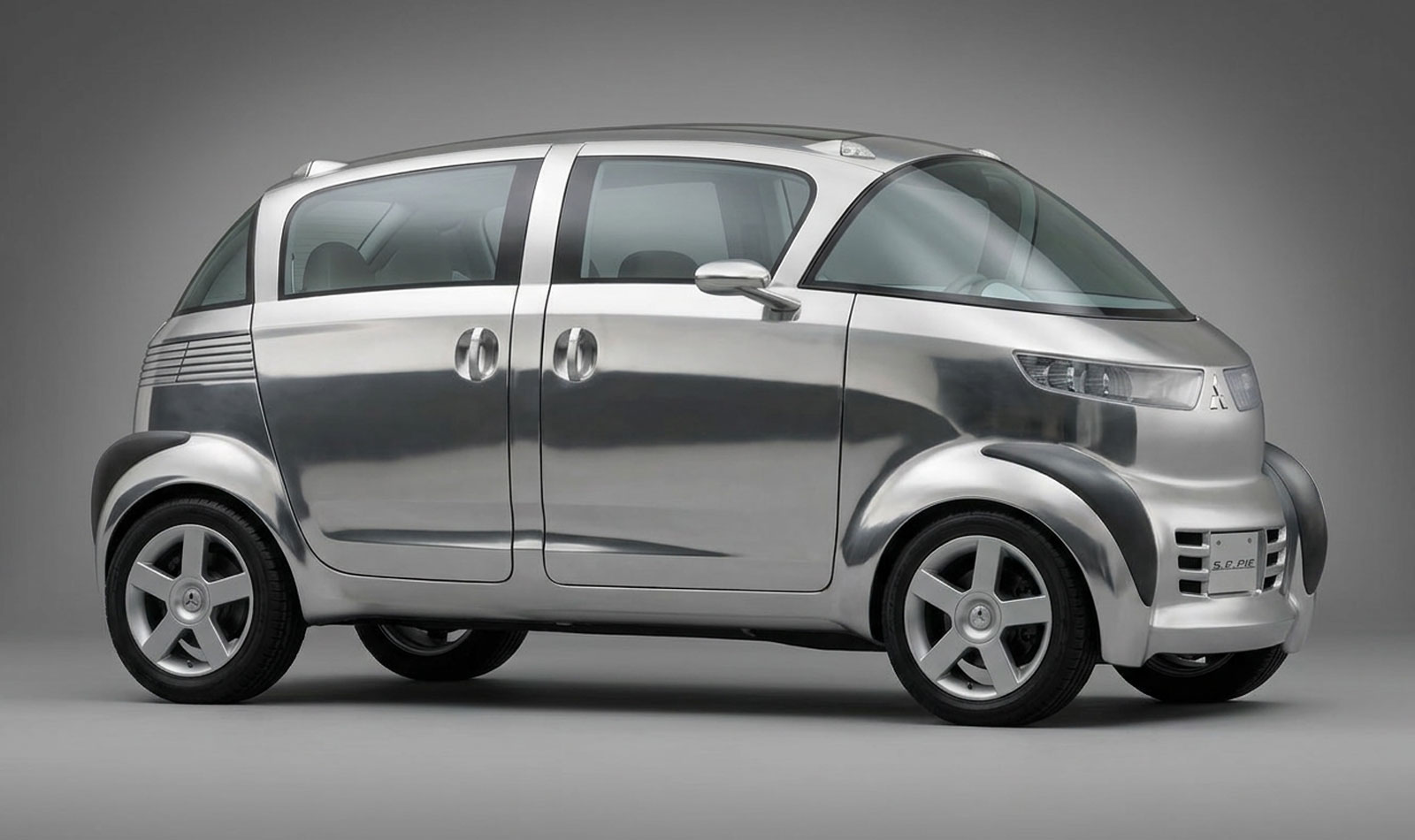
Mitsubishi SE-RO

The Mitsubishi SE-RO was a 2003 concept car created by Mitsubishi Motors in collaboration with Turin coachbuilder Carrozzeria Coggiola.
Presented at the 37th Tokyo Motor Show, it explored how the restricted dimensions of Japan’s kei-car category could be used to create a compact vehicle with an unusually adaptable interior. Its name, SE-RO, abbreviated “Secret Room,” expressed the idea of a private mobile space rather than a conventional city car.
Built on Mitsubishi’s midship, rear-wheel-drive minicar platform—the architecture also developed for the Mitsubishi i—the SE-RO used an underfloor, mid-mounted engine layout. This arrangement preserved cabin space within a body measuring approximately 3.4 metres long.
Power came from a turbocharged 660 cc three-cylinder, 12-valve DOHC engine connected to a CVT.
The vehicle was conceived chiefly for men aged over 35 and for leisure-oriented use. Mitsubishi described it as a versatile small car that could function as a mobile hobby room or a “home away from home,” rather than simply as a means of transport. Its packaging strategy placed the mechanical components low and toward the rear, allowing the passenger compartment to take priority.
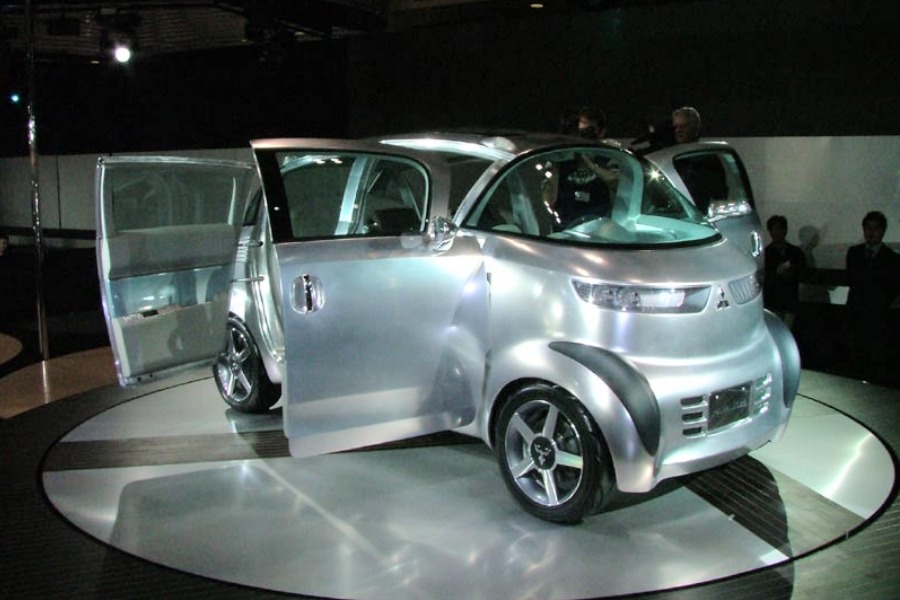
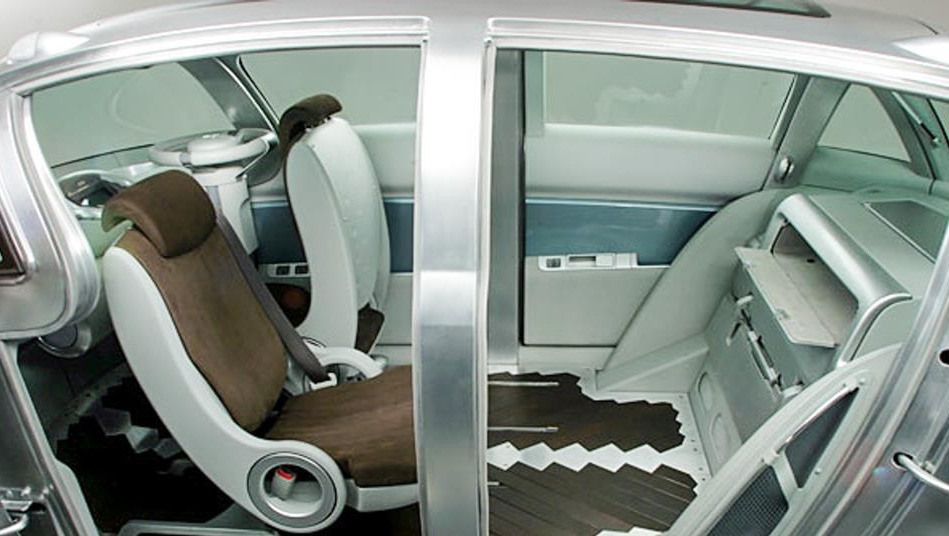
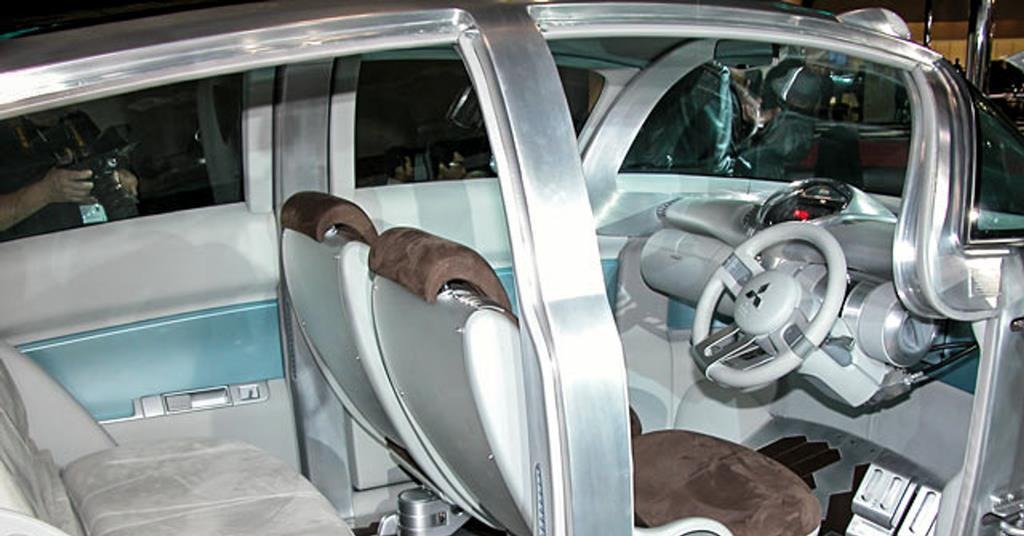
The interior was organised as a compact lounge. The rear seats could be rearranged into a sofa-style bench, while the driver’s seat rotated to face backwards. Combined with a central table and a swing-away steering wheel, this allowed the cabin to change from a driving environment into a small social, resting or hobby space.
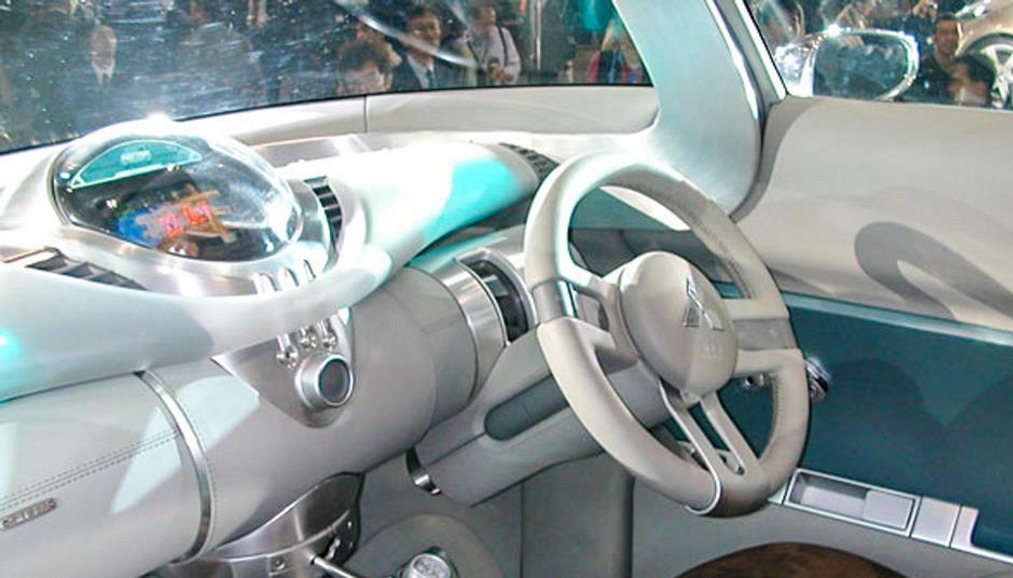
The concept also incorporated Portable Information Technology: Bluetooth-based communication linked to a 6.5-inch monitor for navigation, entertainment and drive-management functions controlled through dashboard touch keys.
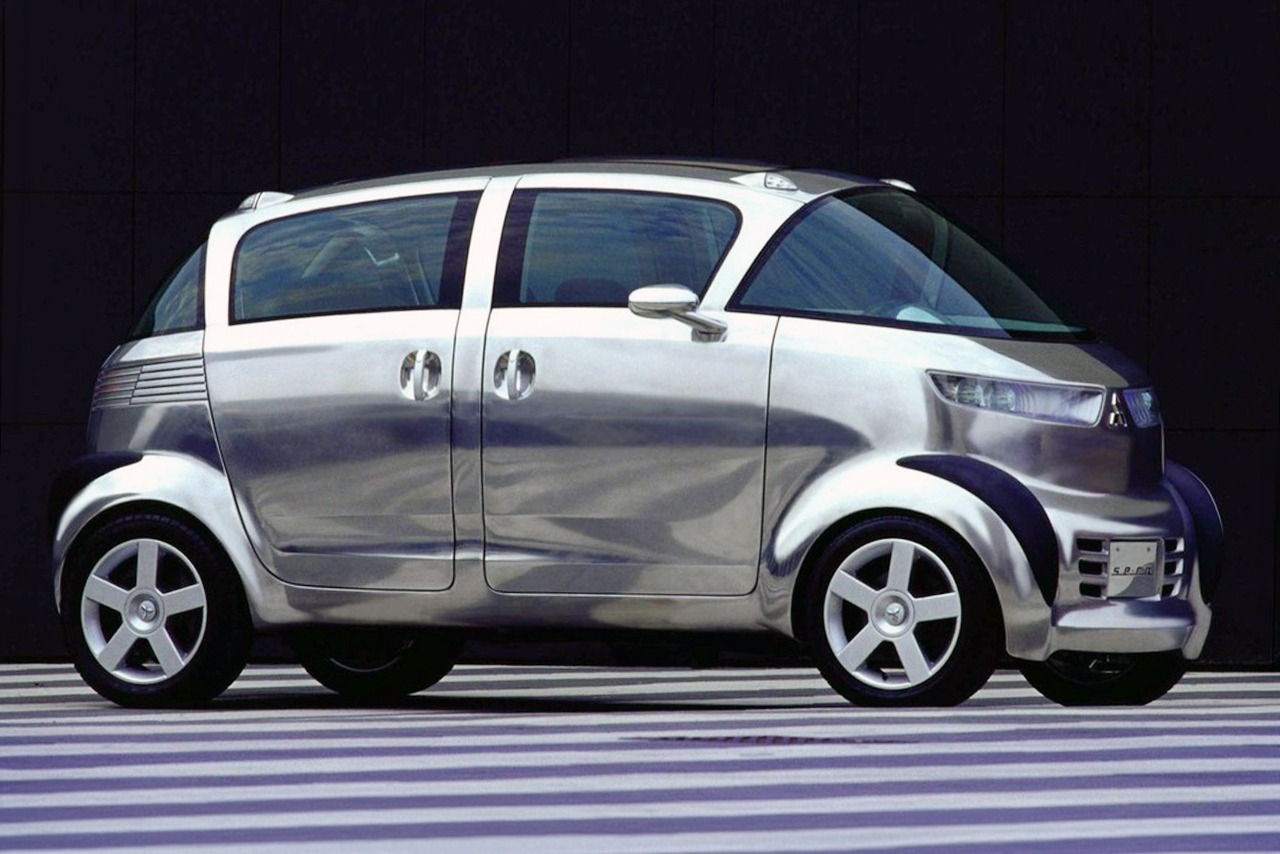
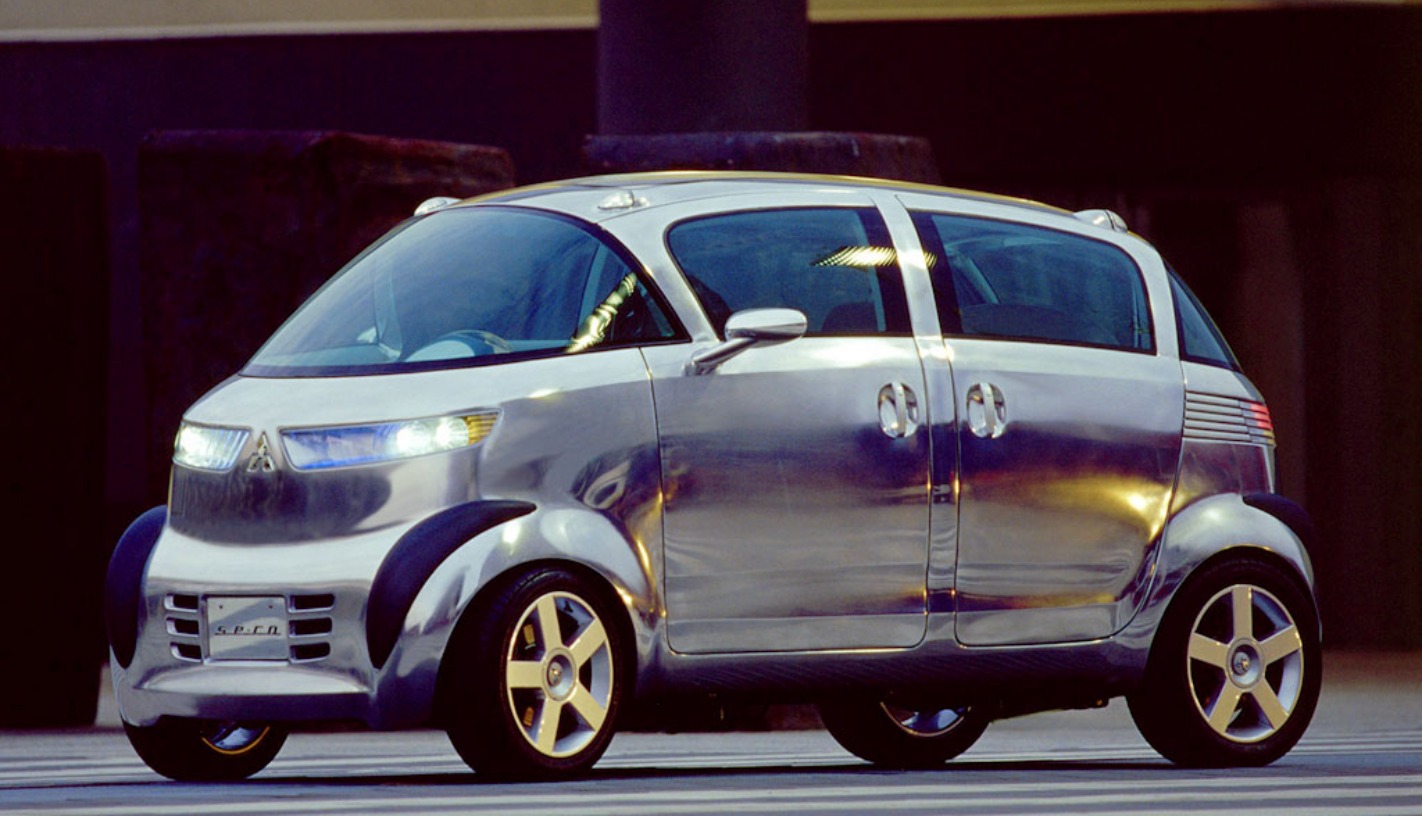
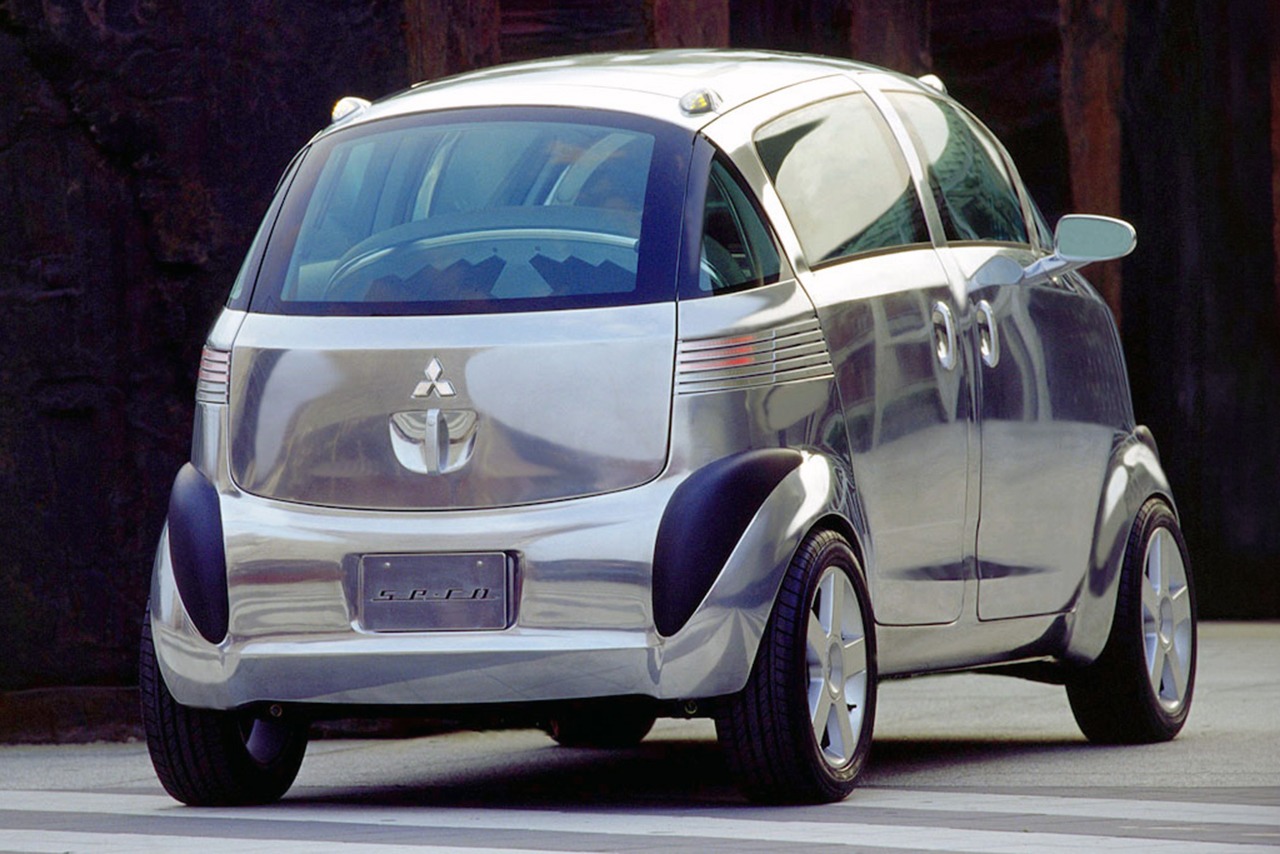
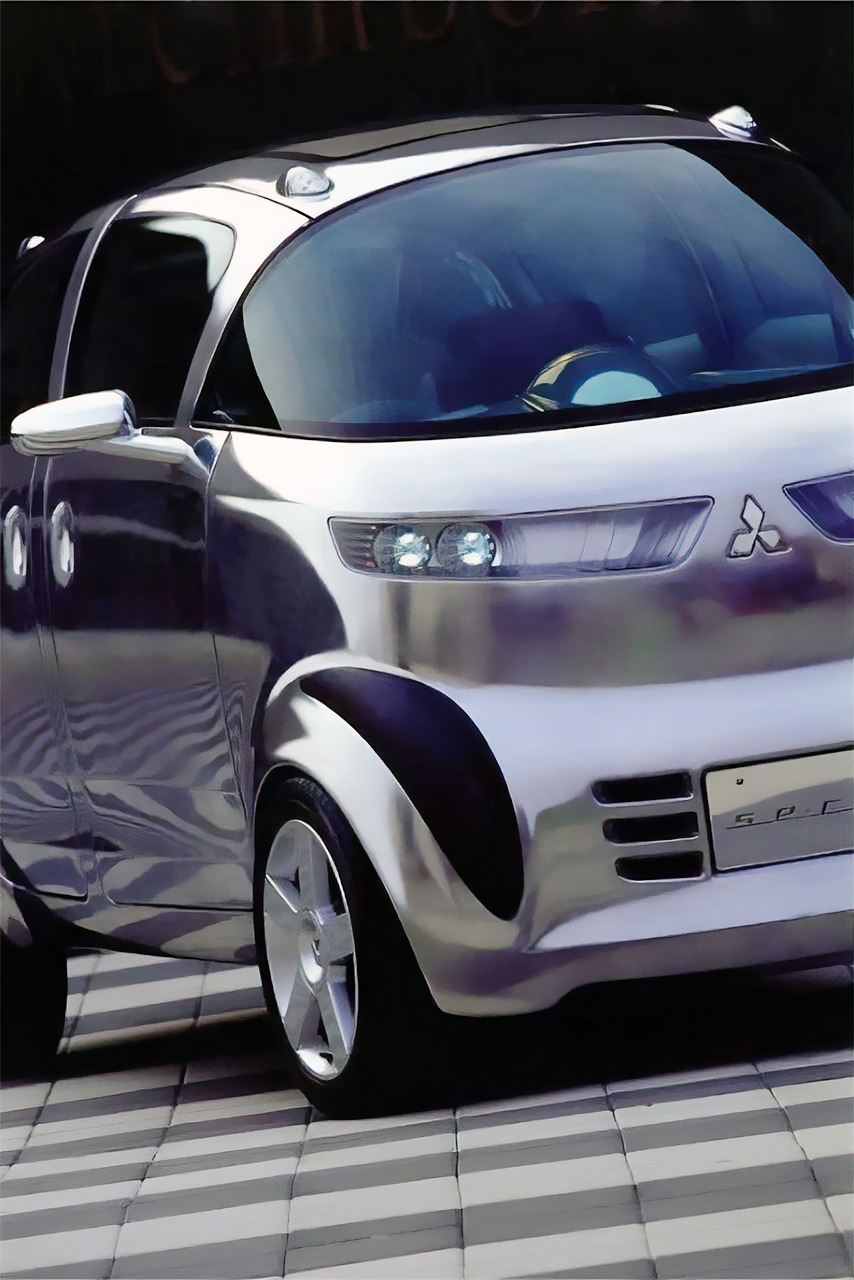
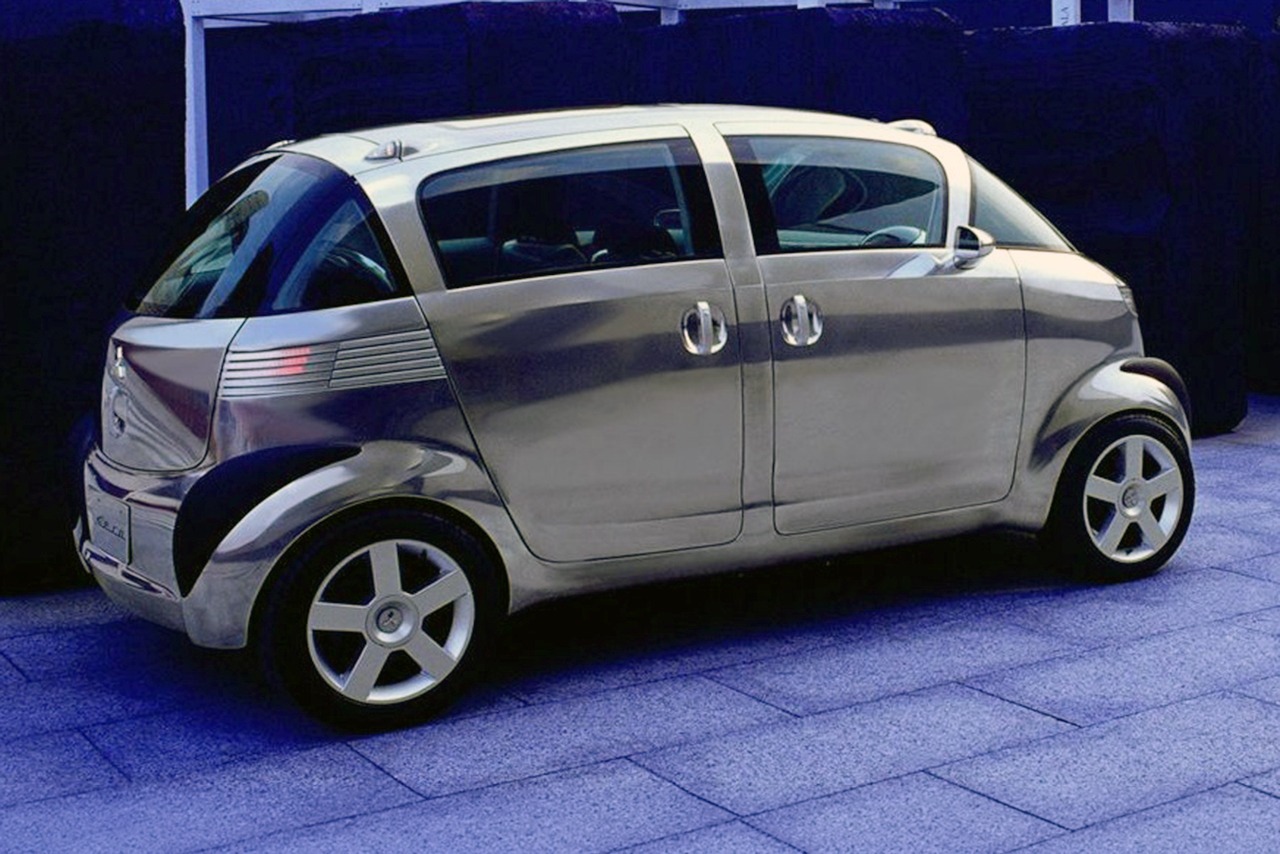
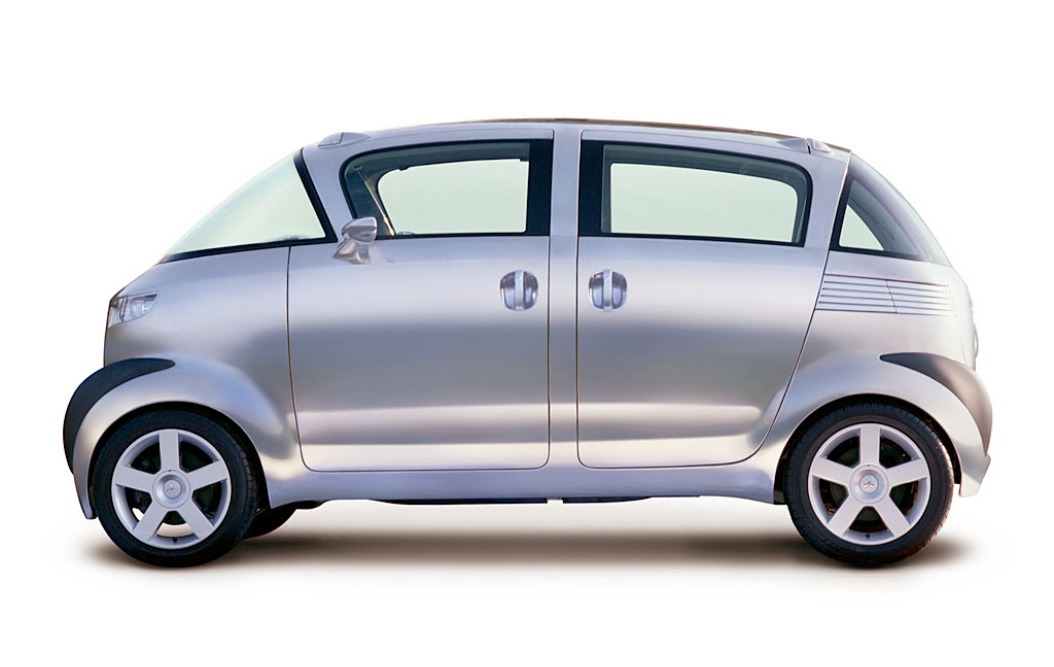
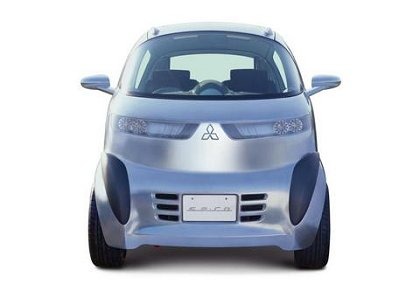
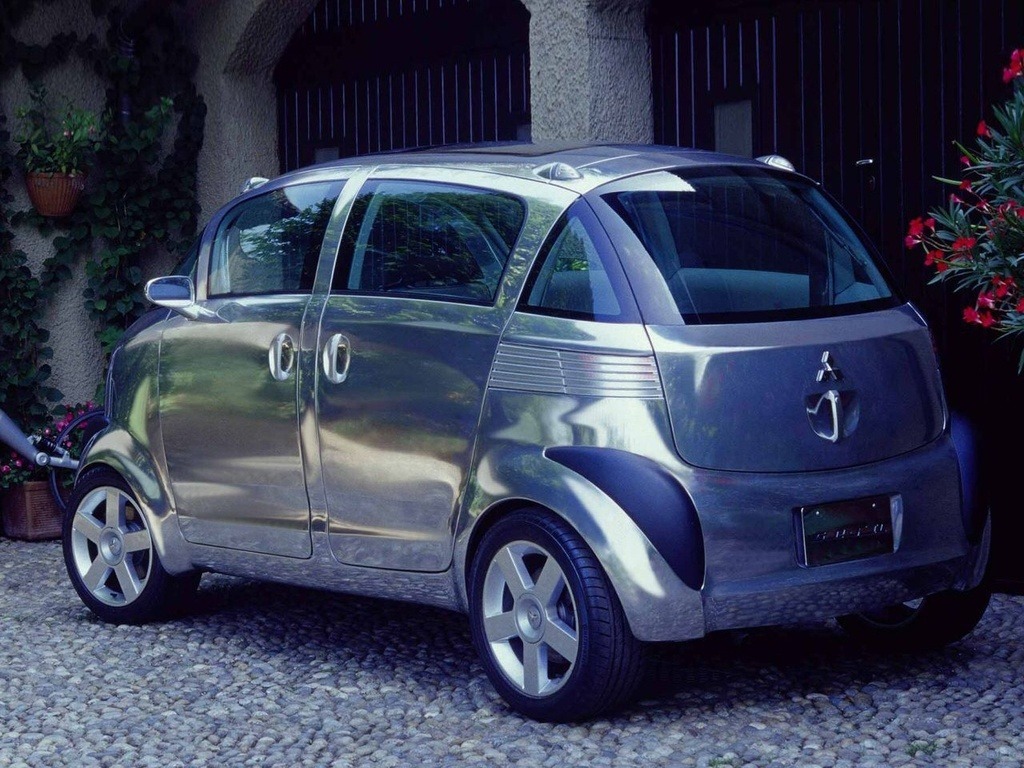
Its exterior was deliberately unlike a typical one-box kei car. The body used polished aluminium, rounded forms, wraparound glazing and flush detailing inspired by mid-century aircraft design.
Mitsubishi connected the aeronautical theme with the ideas of flight and imagination, while the cabin was intended to resemble an aircraft cockpit at the front and a living area at the rear.