Trabant Tramp

The Trabant Tramp came not from the world of leisure and freedom but from the East German army, the Nationale Volksarmee (NVA).
In 1966 the NVA asked VEB Sachsenring, which had launched the Trabant 601 two years earlier, for a light, sturdy, inexpensive and easy-to-service patrol vehicle. Sachsenring built the Trabant 601A (the “A” stands for Armee) on the regular 601 drivetrain.
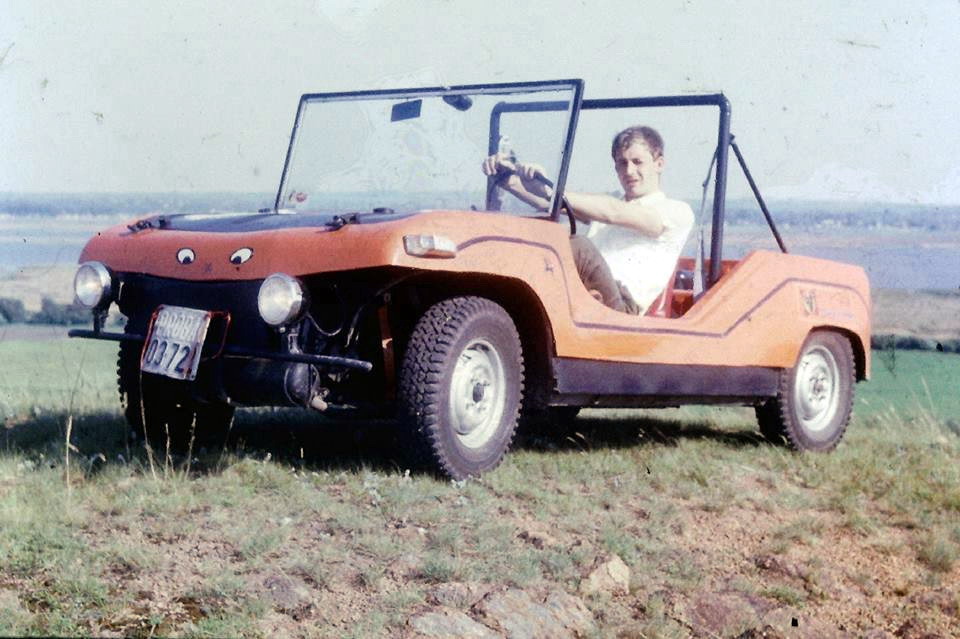
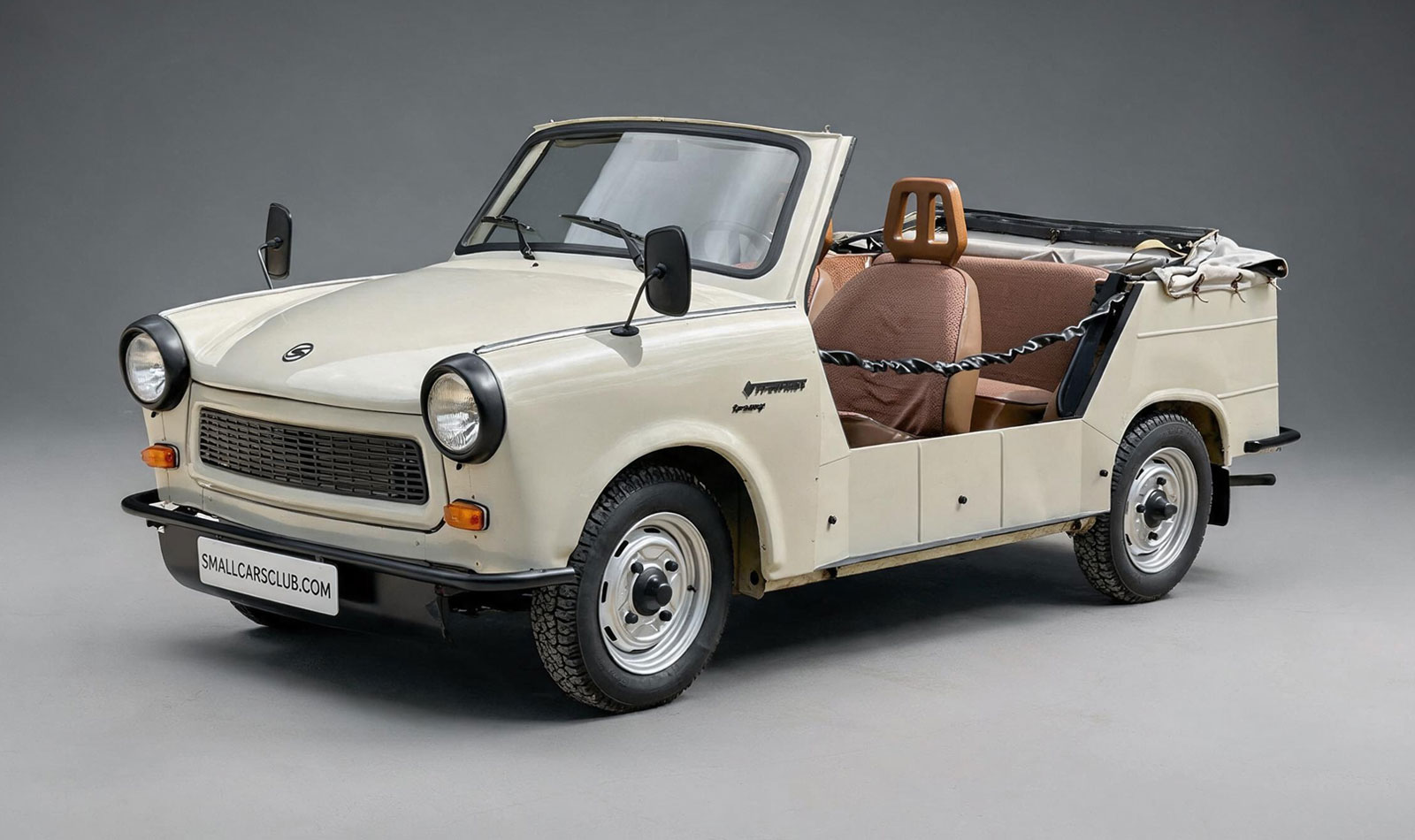
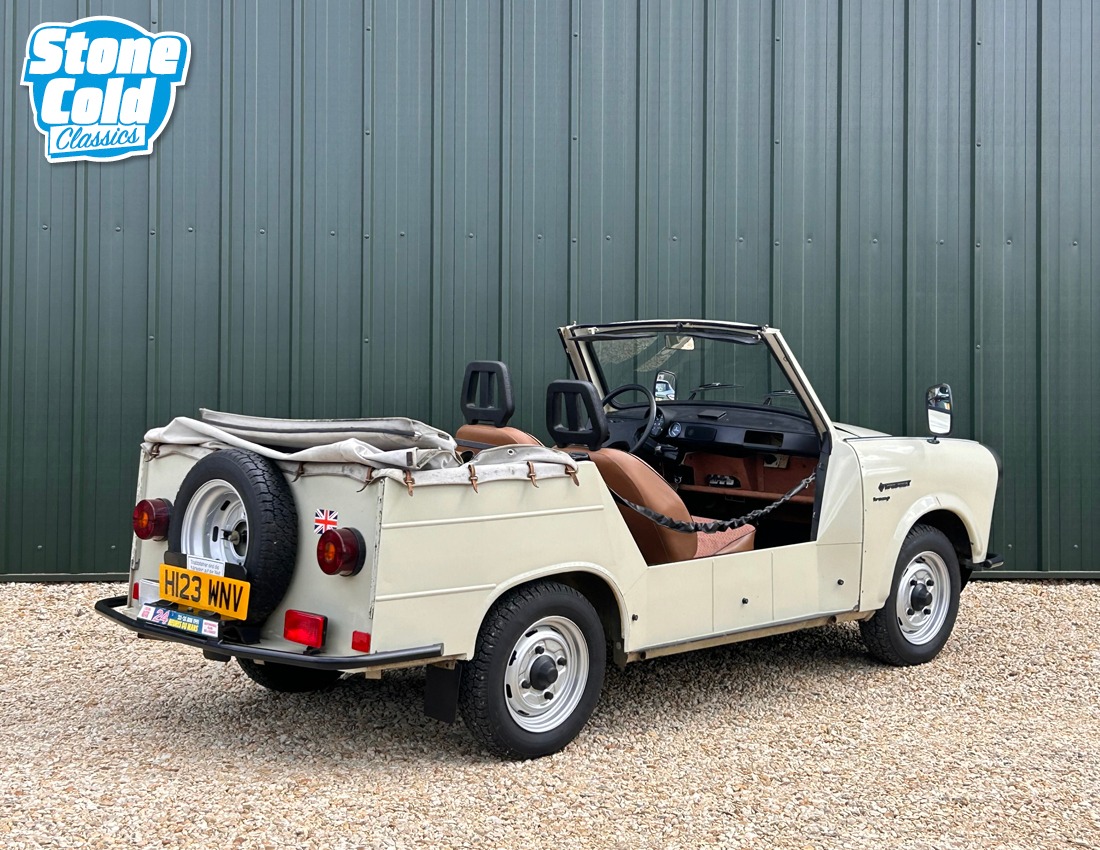
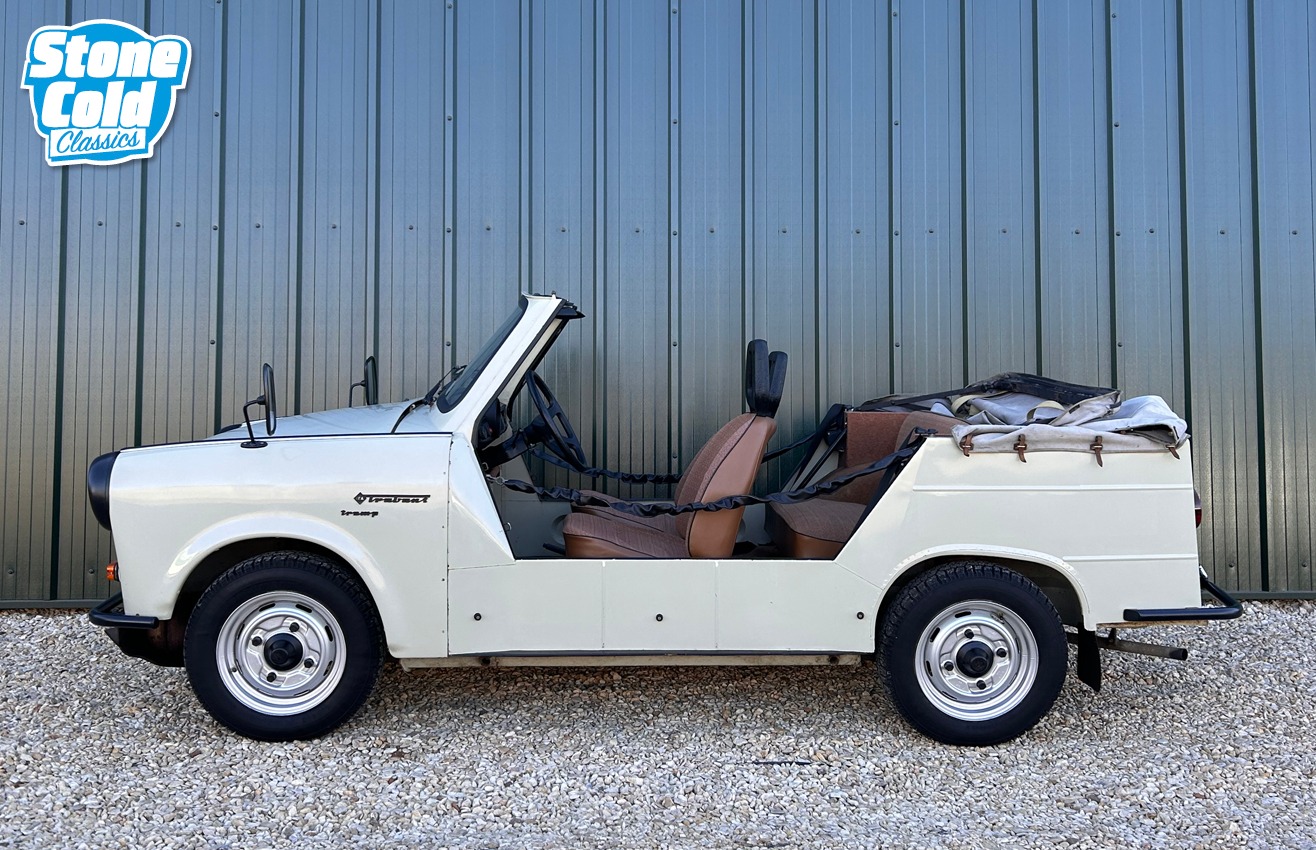
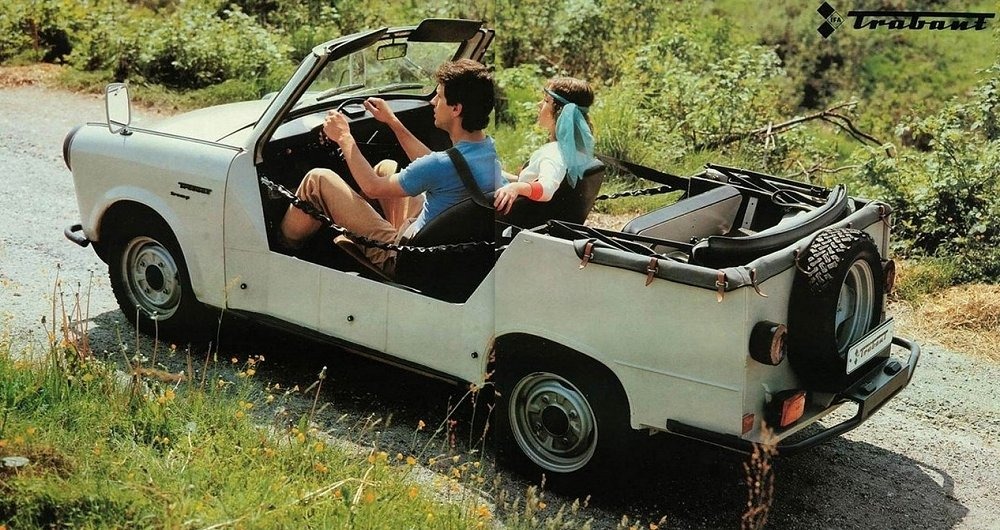
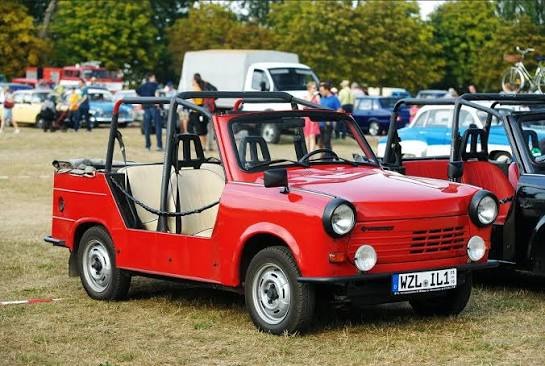
Behind the A-pillar, the duroplast bodywork gave way to a simple open steel structure with flat panels. There were no doors, only a chain covered in black PVC to keep the occupants from falling out. A rudimentary folding canvas top gave some protection from the weather, and a mounting bracket for an AK-47 was provided for when things got serious.
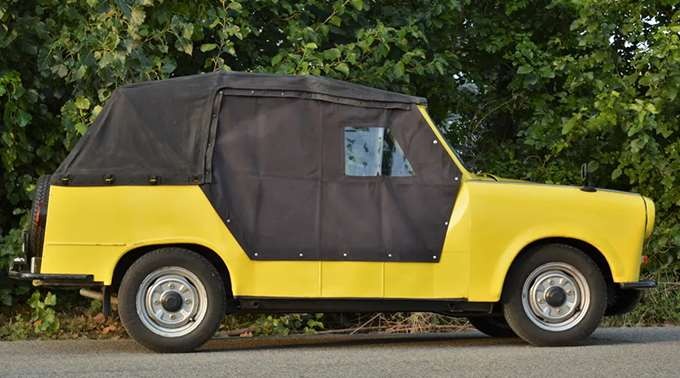
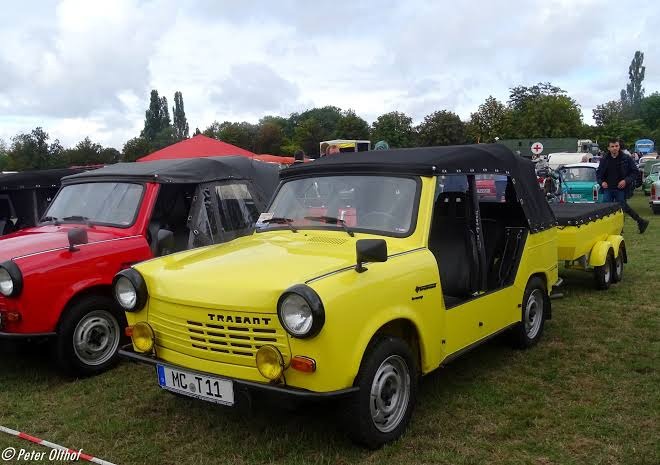
Despite its public denunciations of the West, East Germany was always hunting for hard currency. The state trading enterprise ordered a civilian version of the 601A for export, hoping it would appeal to young people as a cheap way to enjoy open-air motoring. To hide its military origins, the car was renamed Tramp and painted in cheerful colours rare in the Eastern Bloc, such as yellow, apple green and orange.
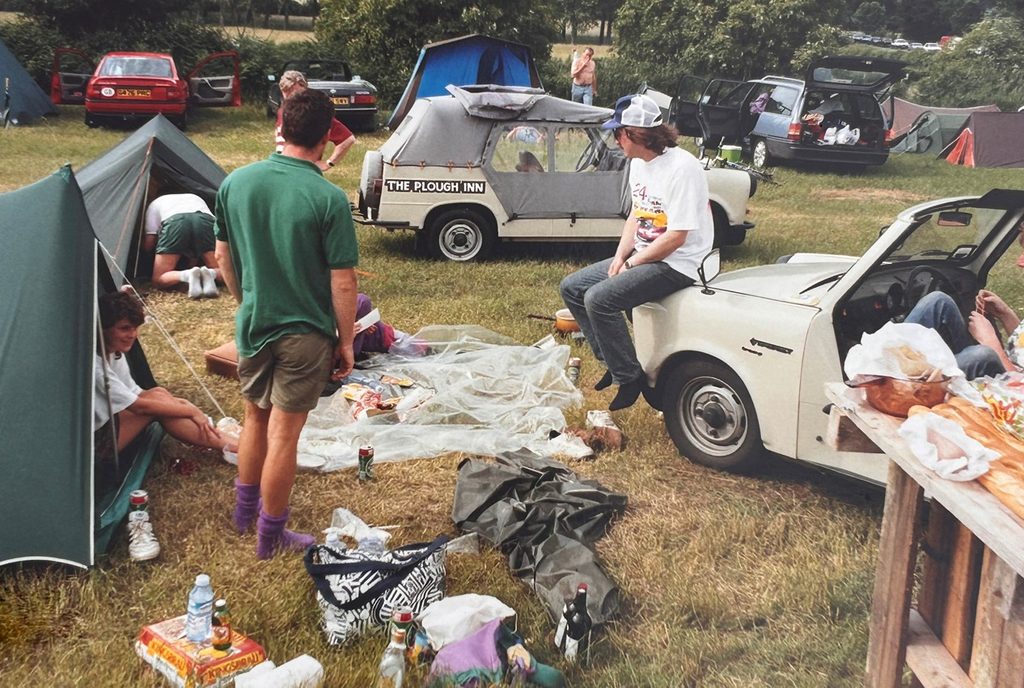
The hard seats of the 601A were swapped for thicker padded ones, and the rifle bracket was presumably deleted. Mechanically, nothing changed. Sold as a “fun car” from 1978, the civilian Tramp went mainly to Greece and was later offered on the home market too.
Output was always limited. The Zwickau plant was permanently bottlenecked by a massive backlog of orders for ordinary Trabants, and the NVA took priority whenever a batch of Tramps was built. Between 1967 and 1990, roughly 11,500 open 601s were made, and only about 2,000 of them were civilian Tramps. The model never earned much foreign currency and disappeared along with the German Democratic Republic.
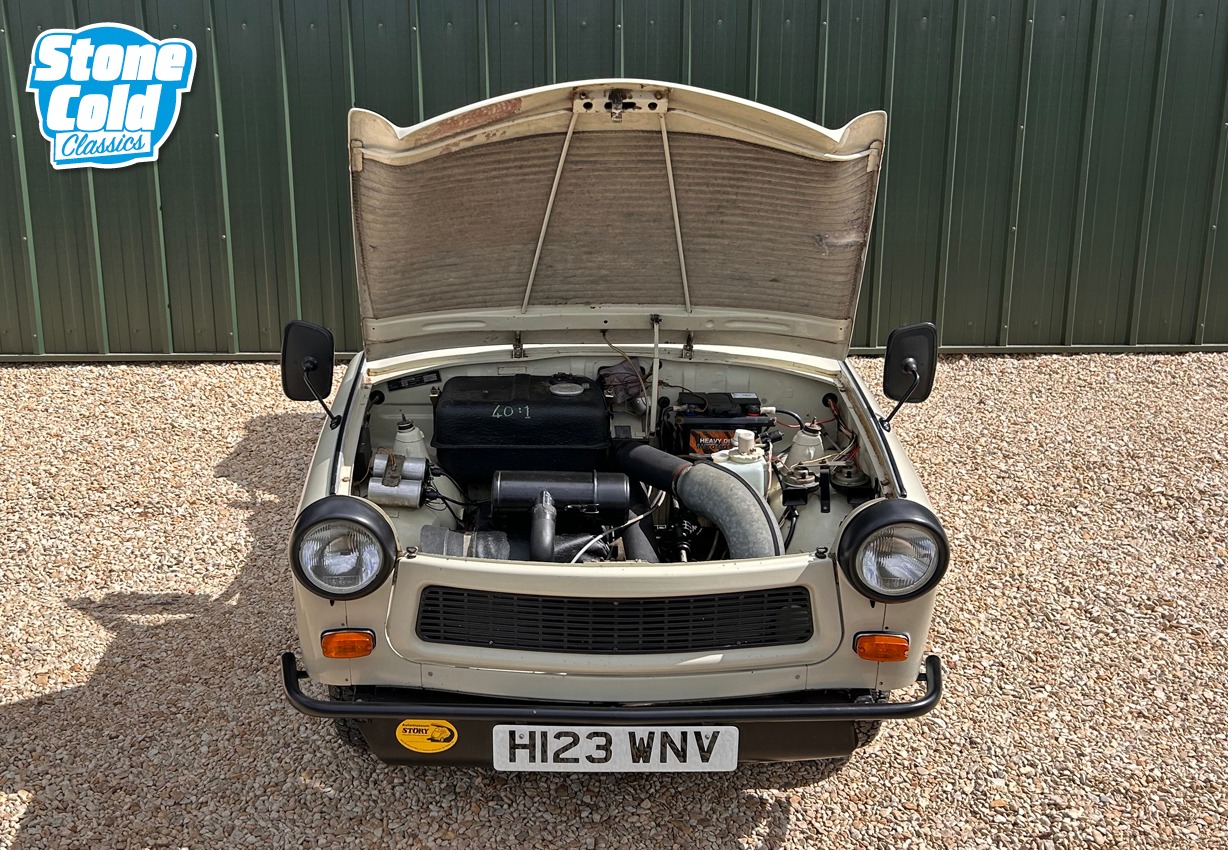
The Tramp inherited the standard Trabant two-stroke engine, a two-cylinder, air-cooled unit (types P63/P64, later P65/P66). It displaced 594.5 cc and produced 19.1 kW (26 hp) at 4,200 rpm, with about 53–54 Nm of torque at around 3,000 rpm.
Power went to the front wheels through a four-speed gearbox with a freewheel in fourth gear that could be locked out. Top speed was about 100 km/h.
Drum brakes were fitted on all four wheels, with duplex brakes at the front from 1967. The front section kept its duroplast panels, and the car was shorter and slightly taller than the saloon: about 3,480 mm long, 1,506 mm wide and 1,465 mm high (depending on the top), on a 2,020 mm wheelbase.
It weighed around 645 kg unladen, with a permissible gross weight of about 1,020 kg. It had no four-wheel drive, but its military roots gave it respectable off-road ability for a small car.
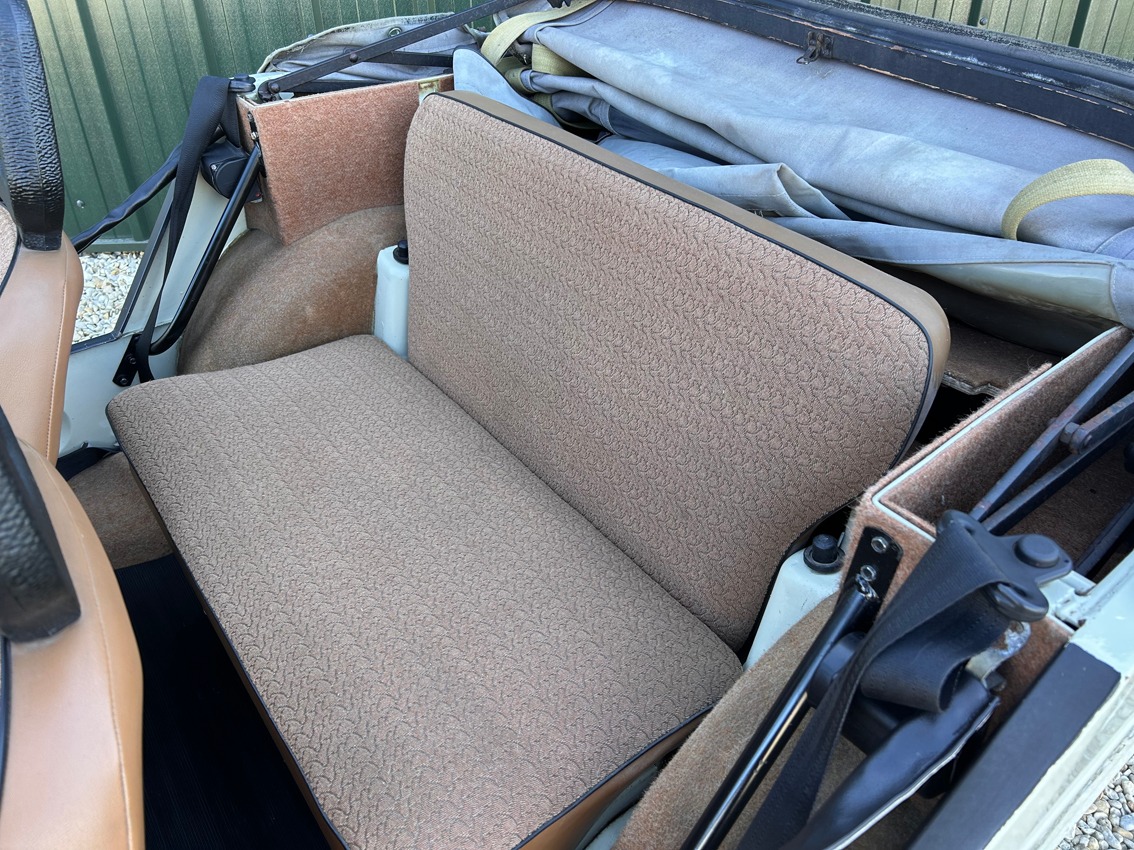
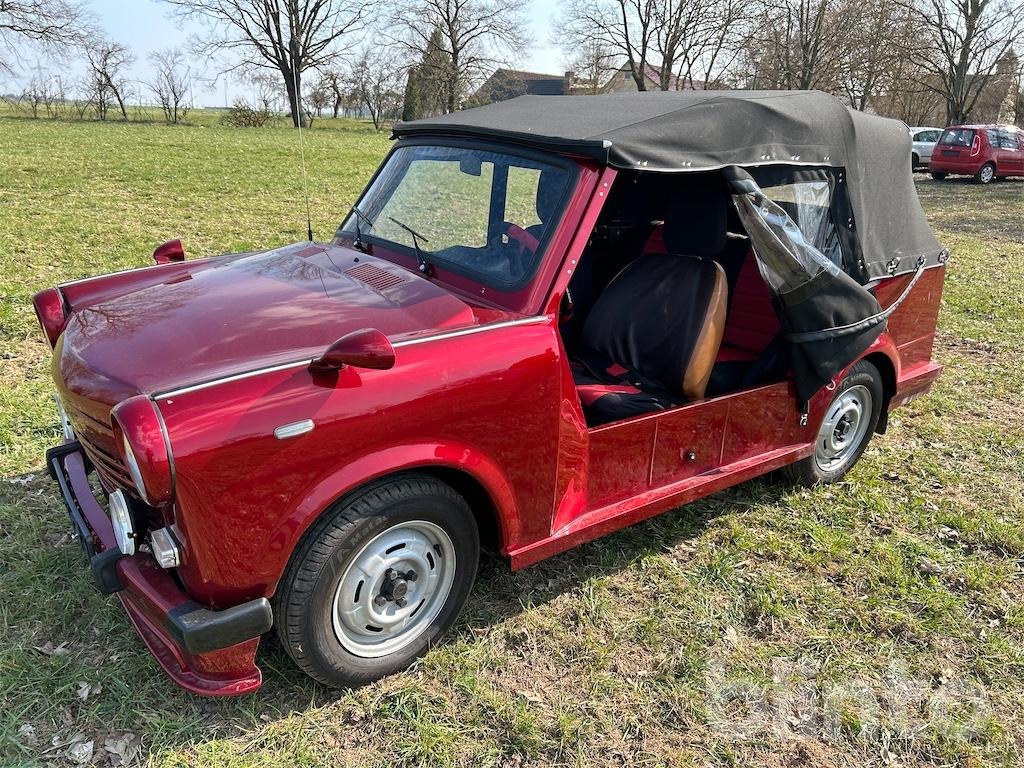
The Tramp’s equipment was spartan. The fabric or imitation-leather folding top often came with removable side pieces. Four simple weatherproof seats were covered in imitation leather, and the dashboard resembled the 601’s but was even more stripped down.
Because an air-cooled engine produces too little waste heat for a conventional heater, a Sirokko petrol heater was usually fitted. Some cars had a windscreen washer with a hand pump, but comfort features were otherwise minimal or absent.
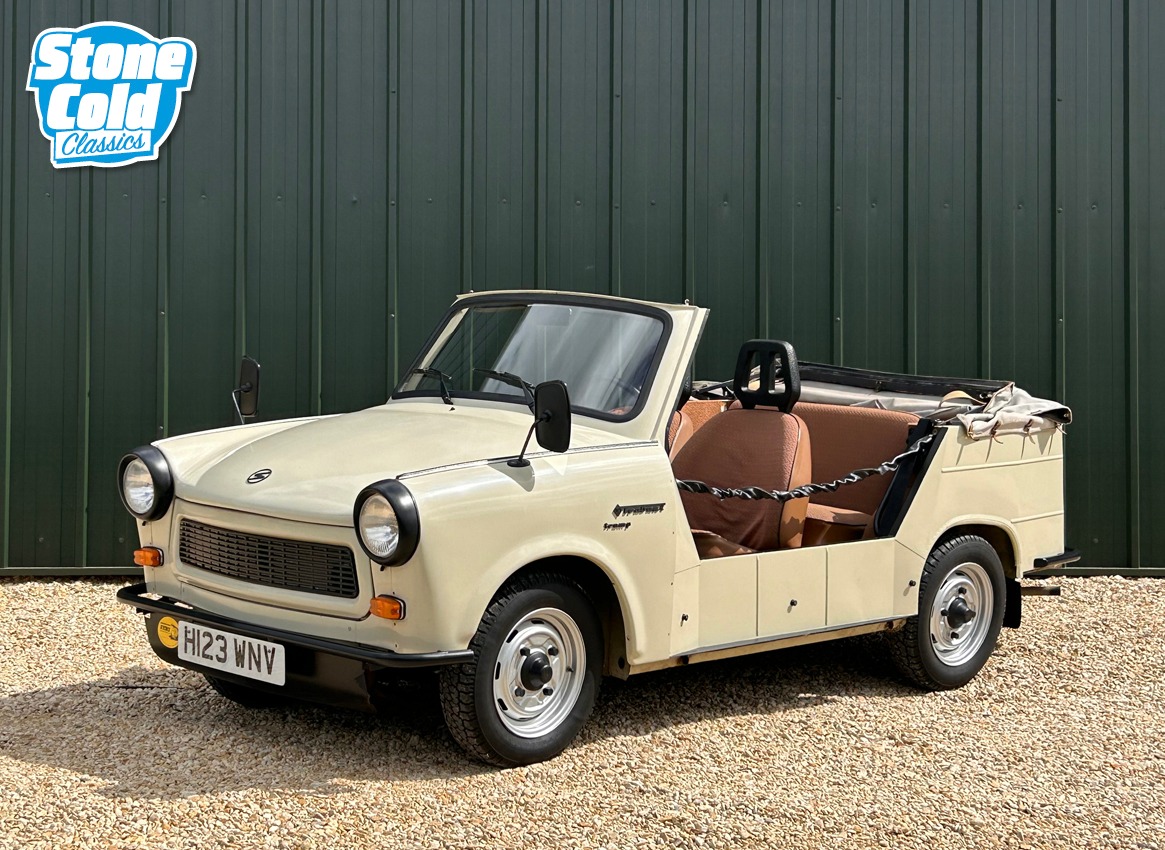
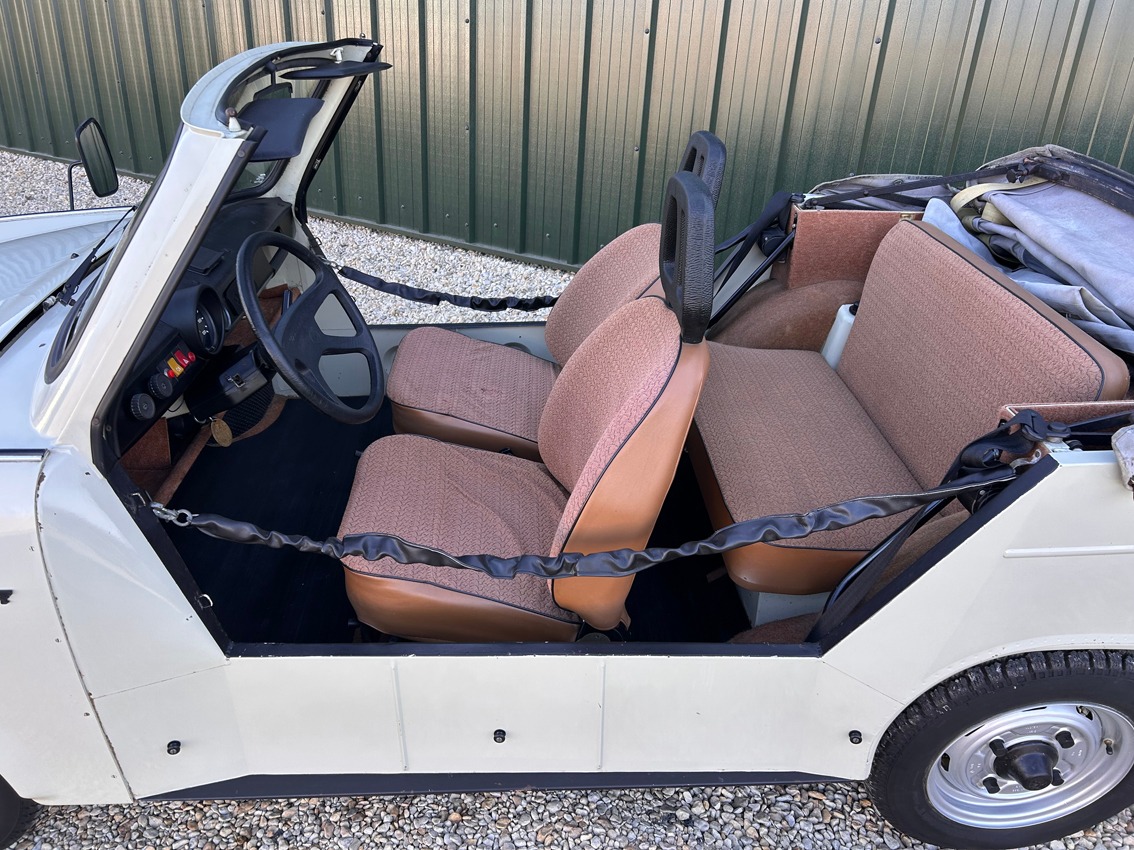
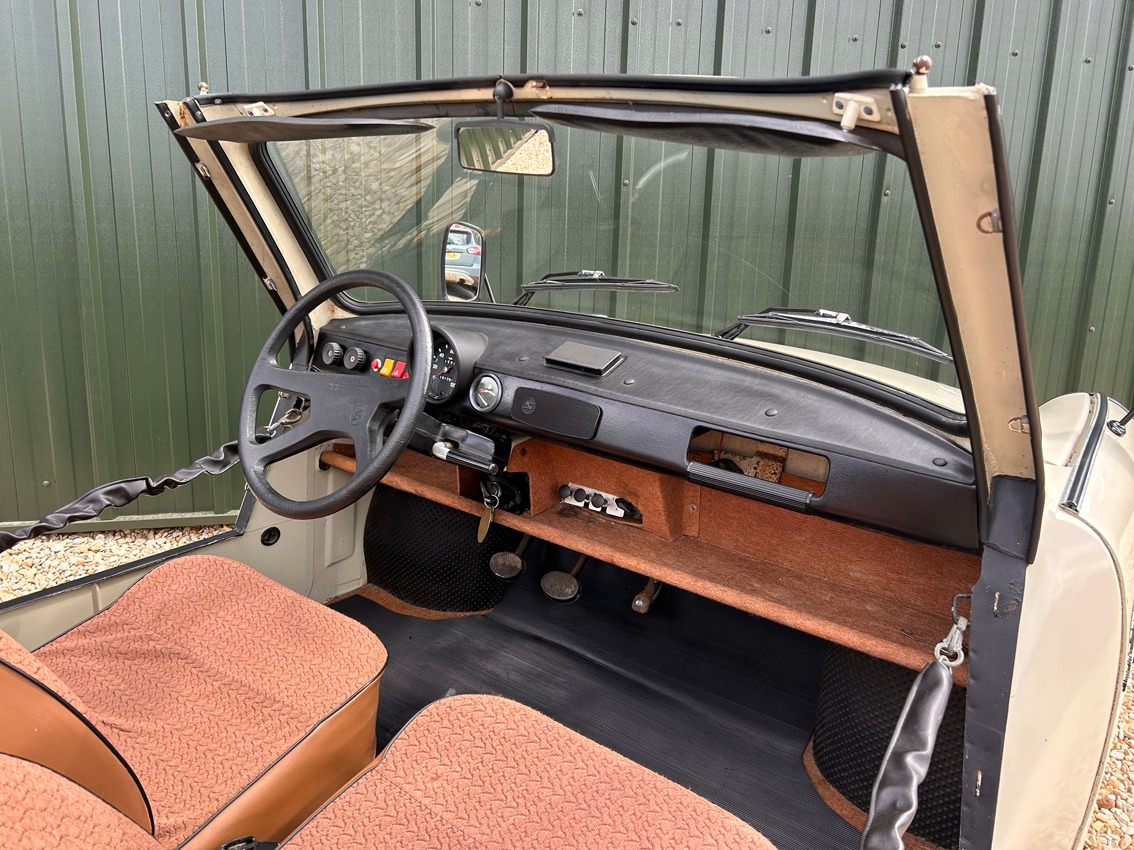
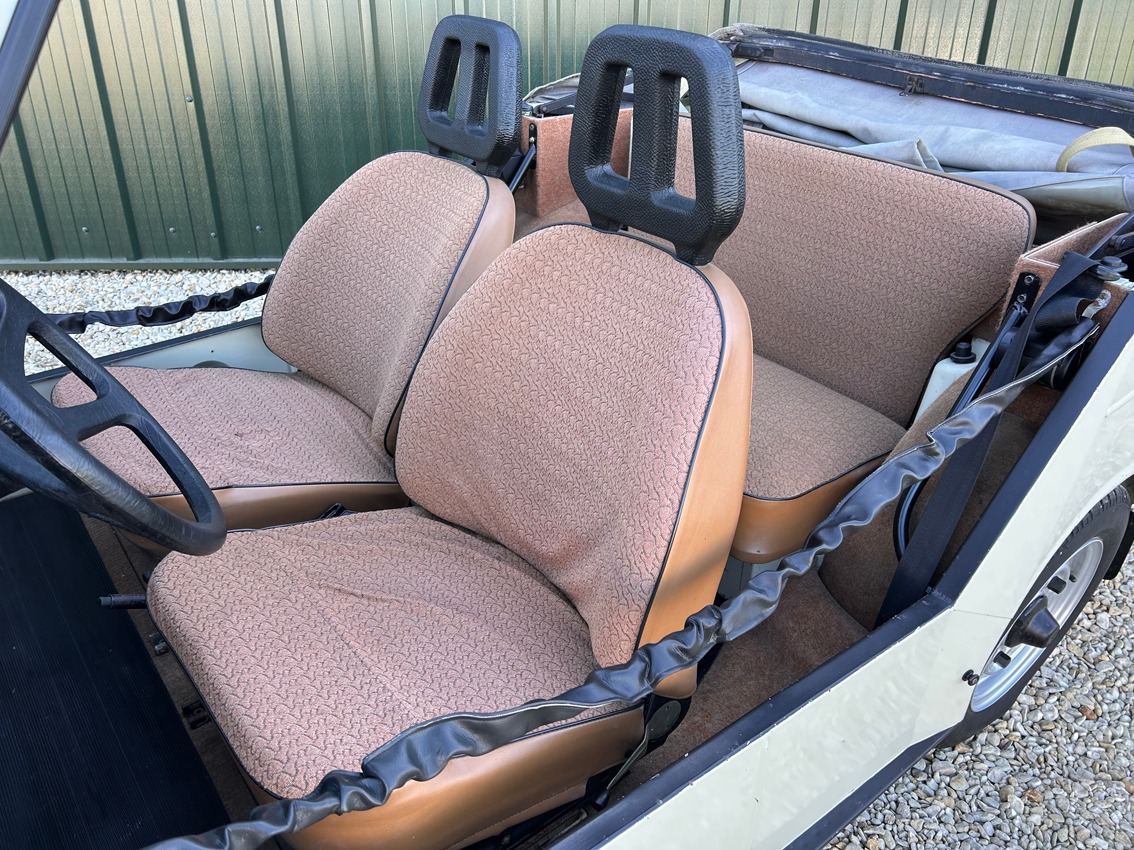
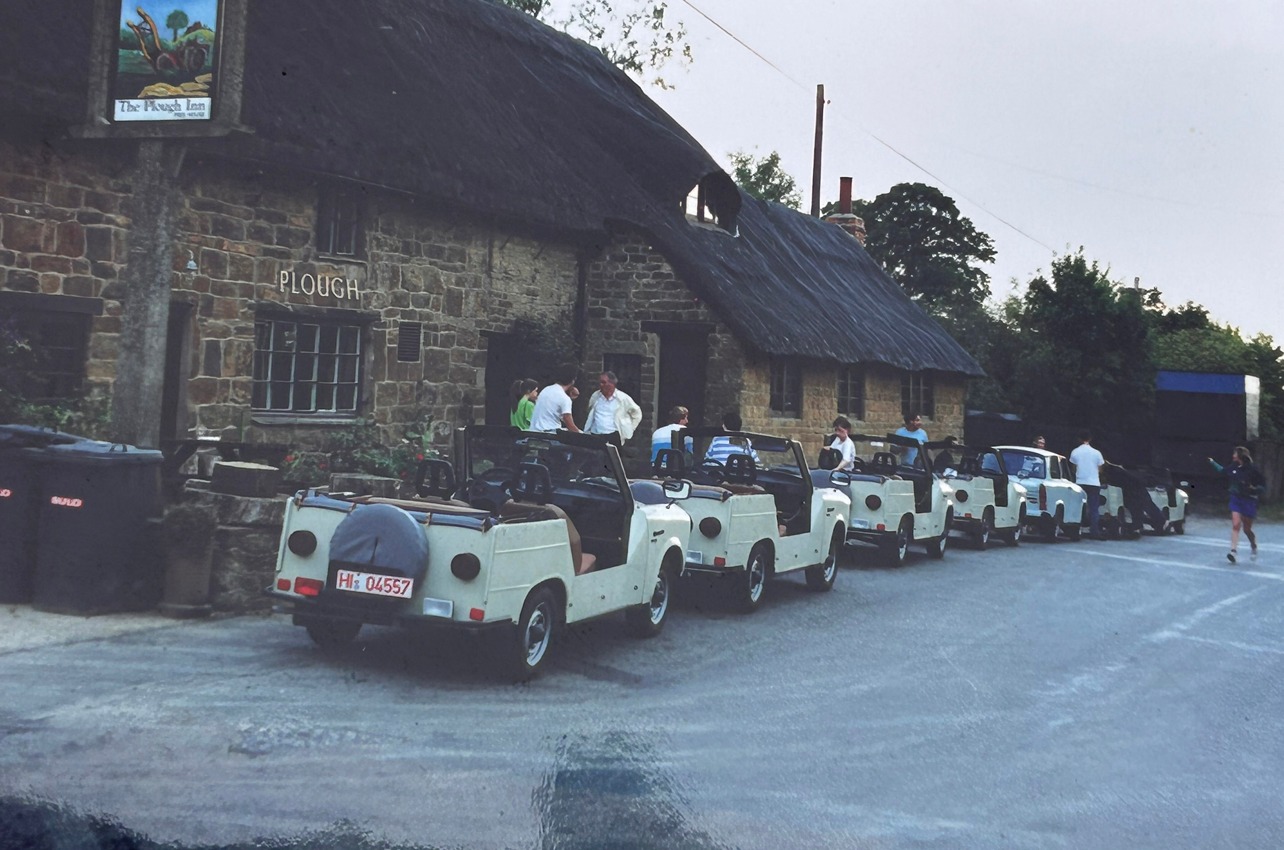
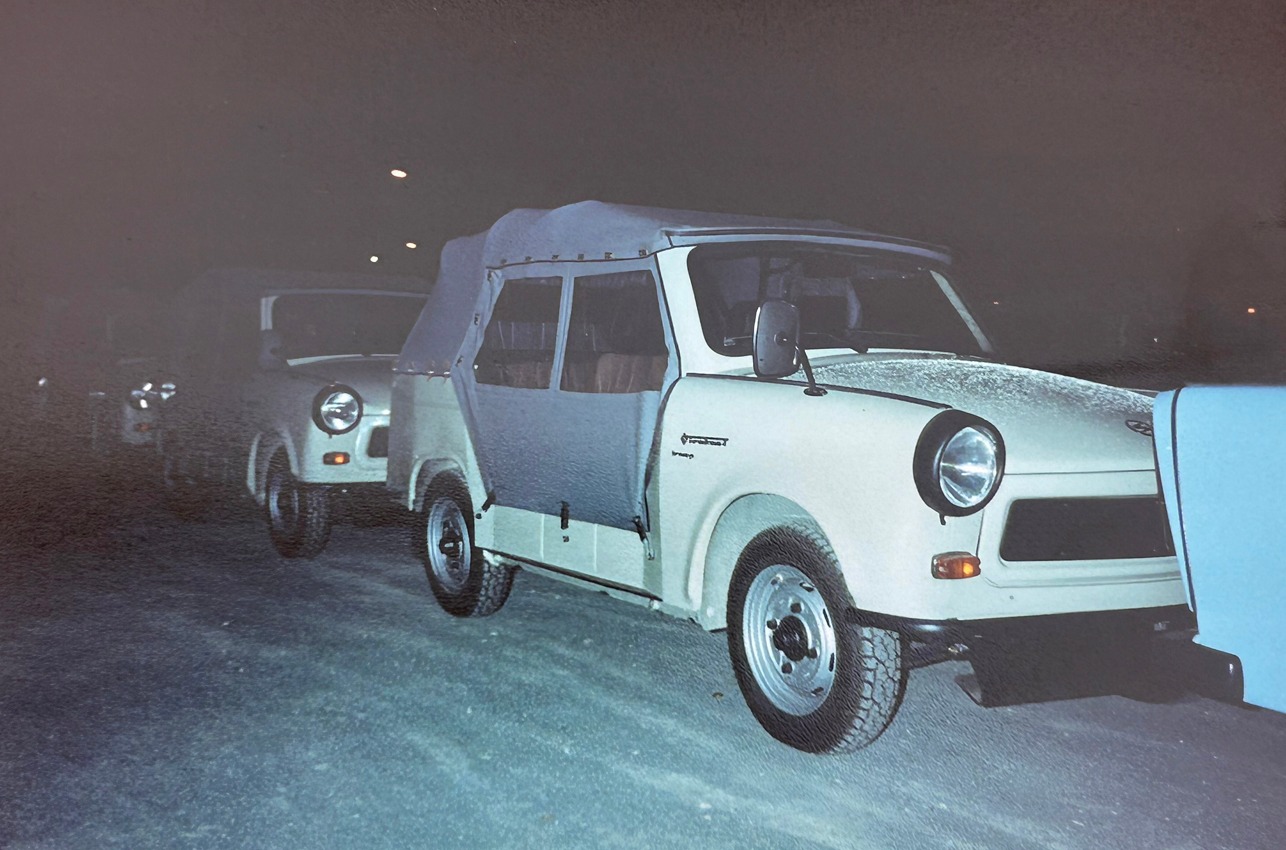
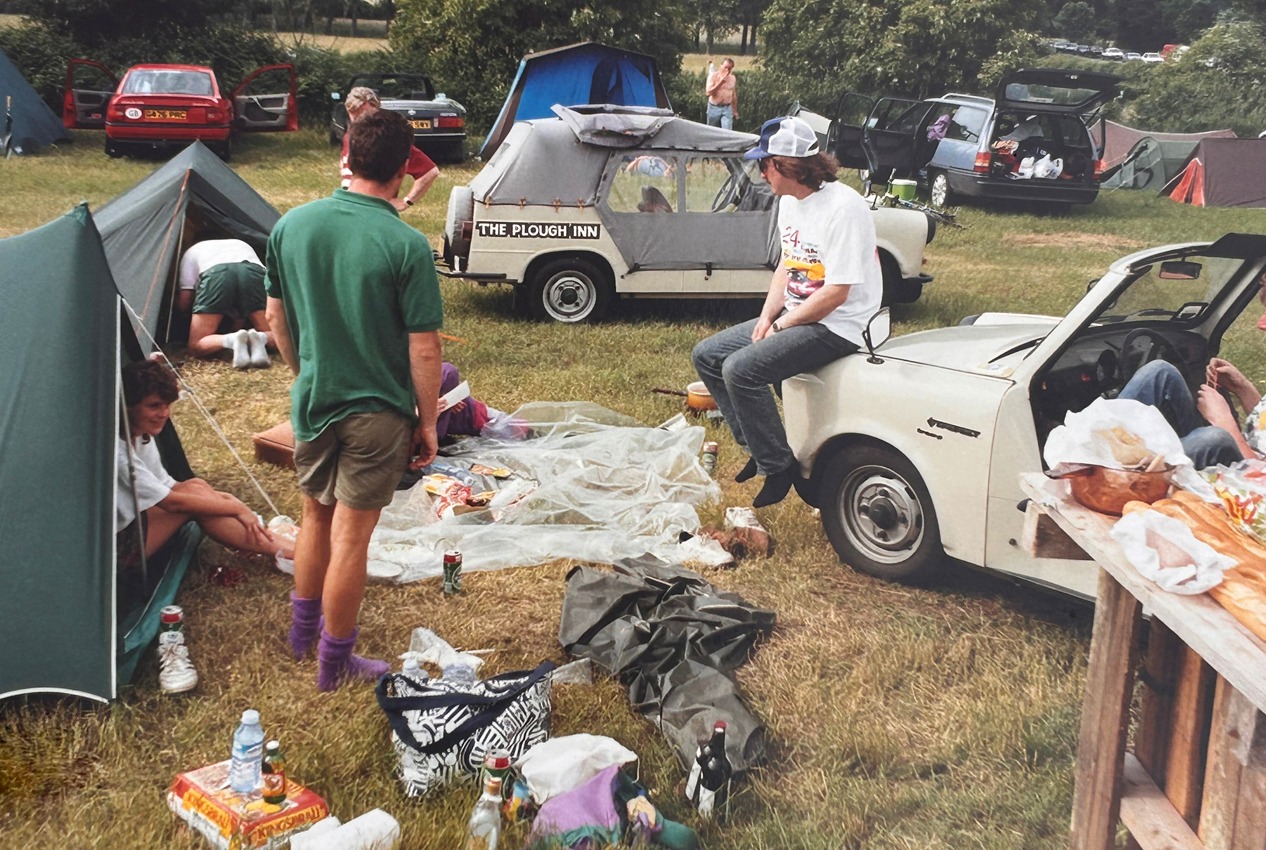
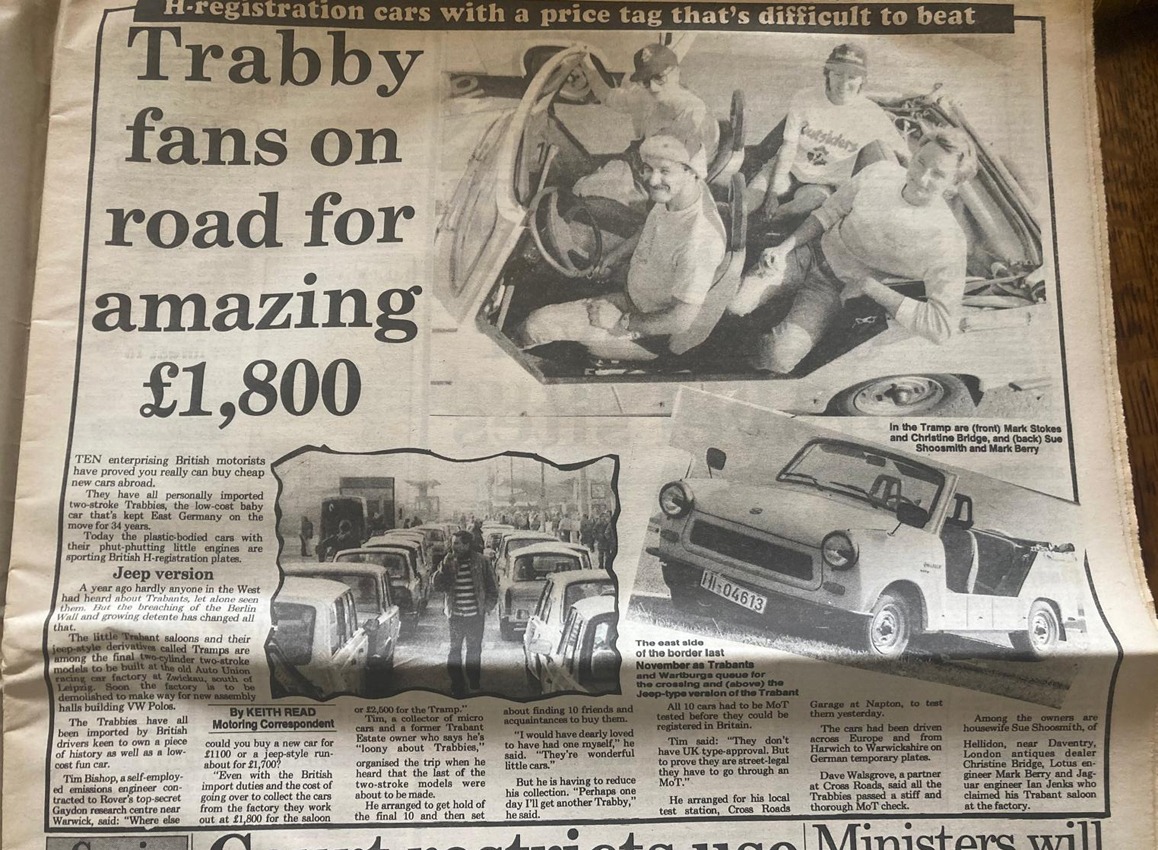
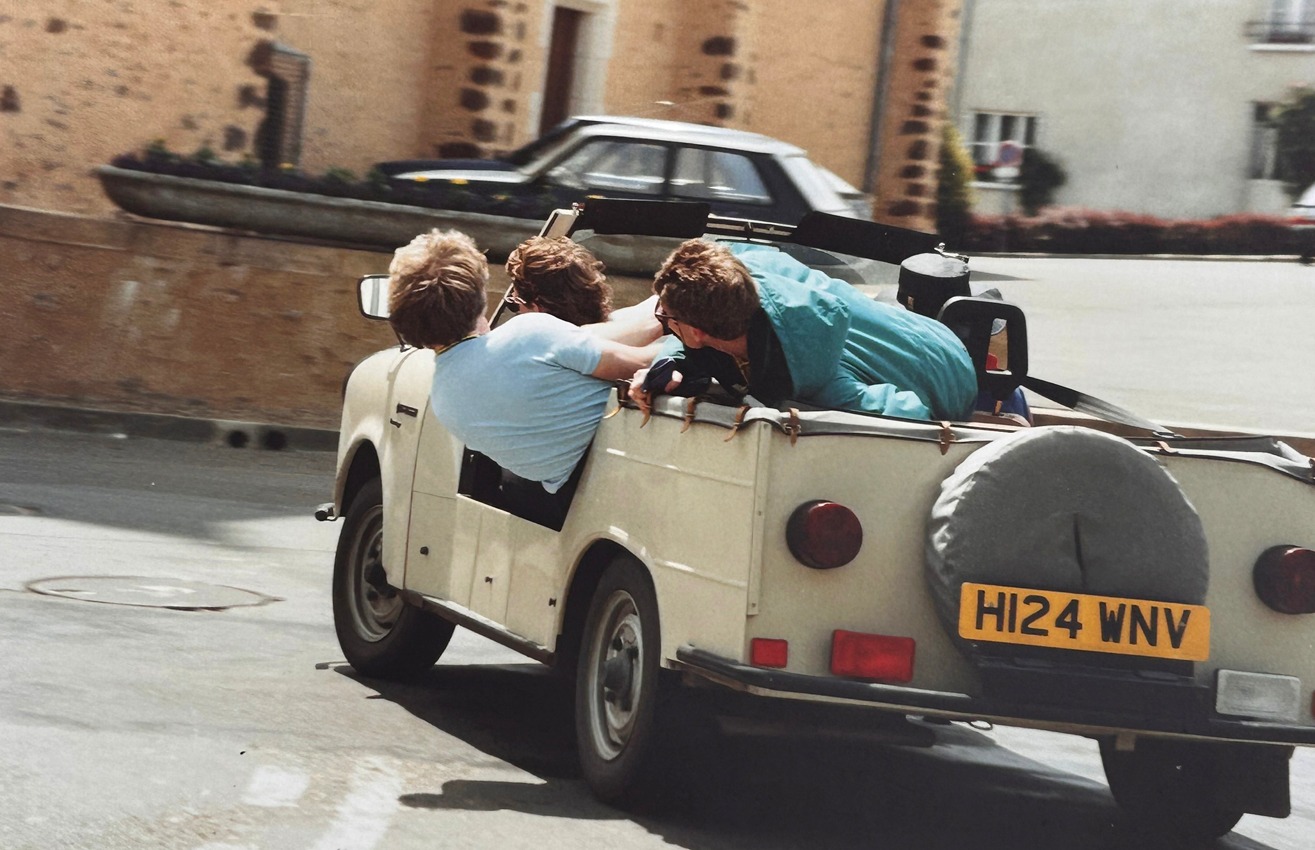
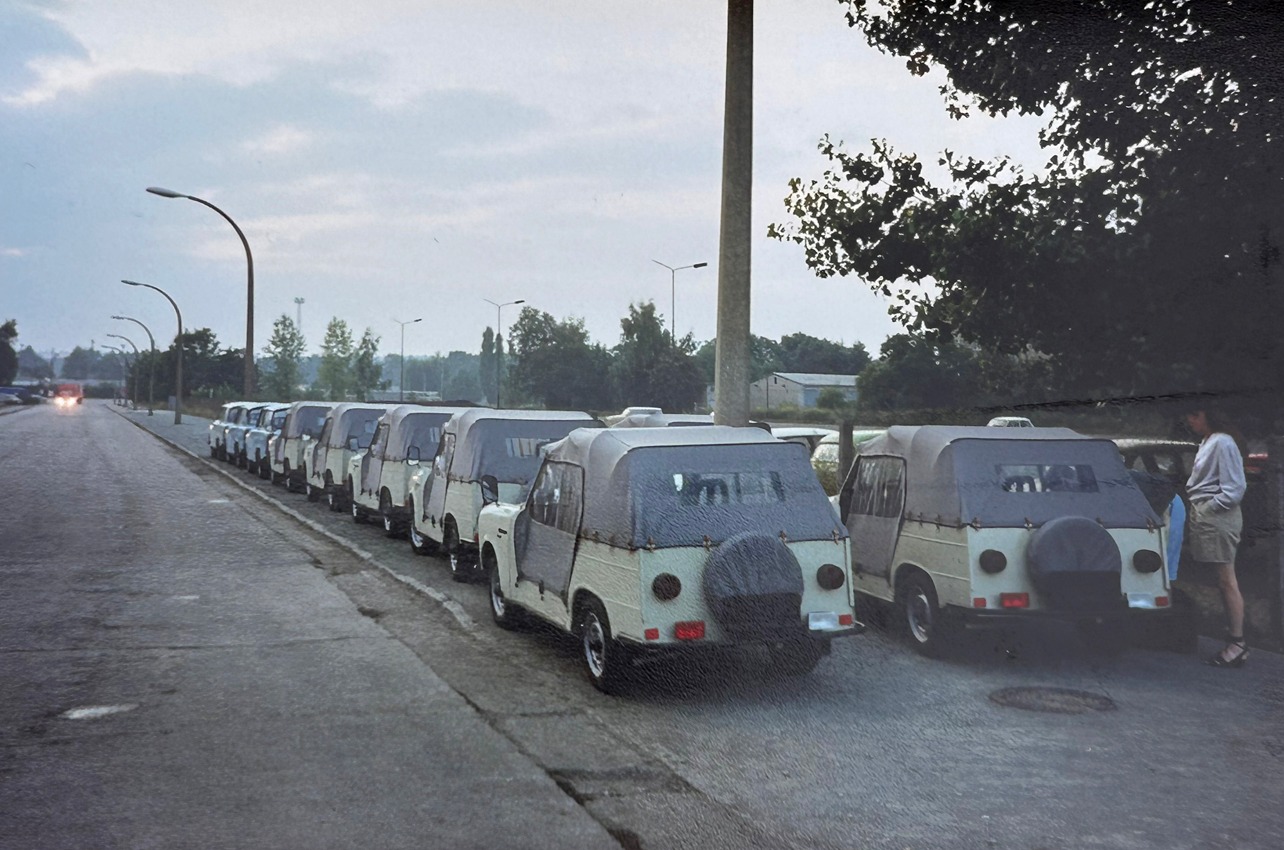
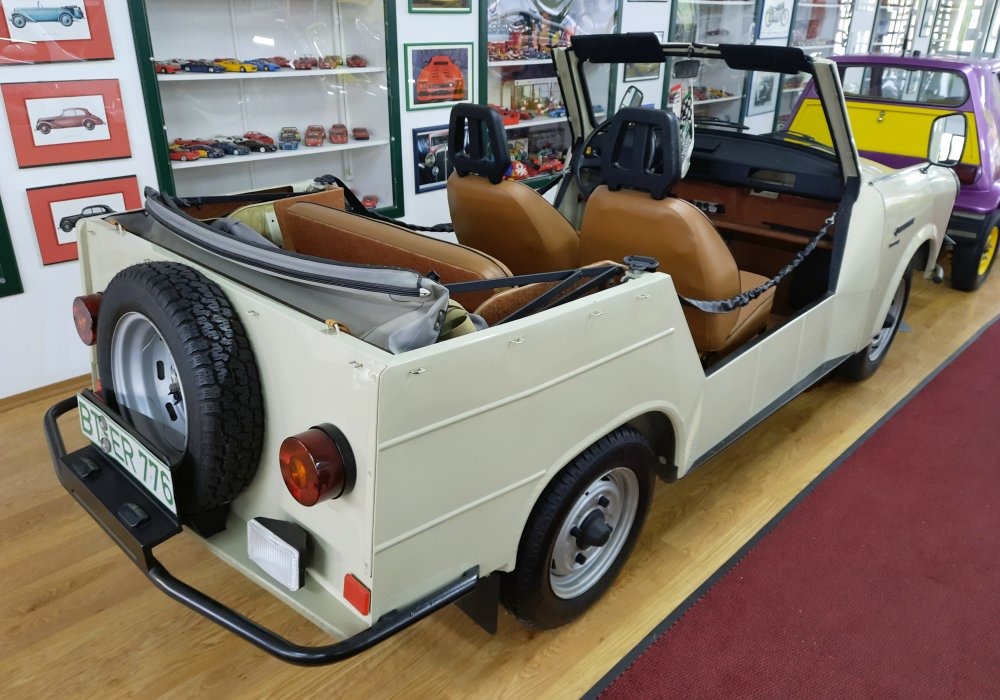
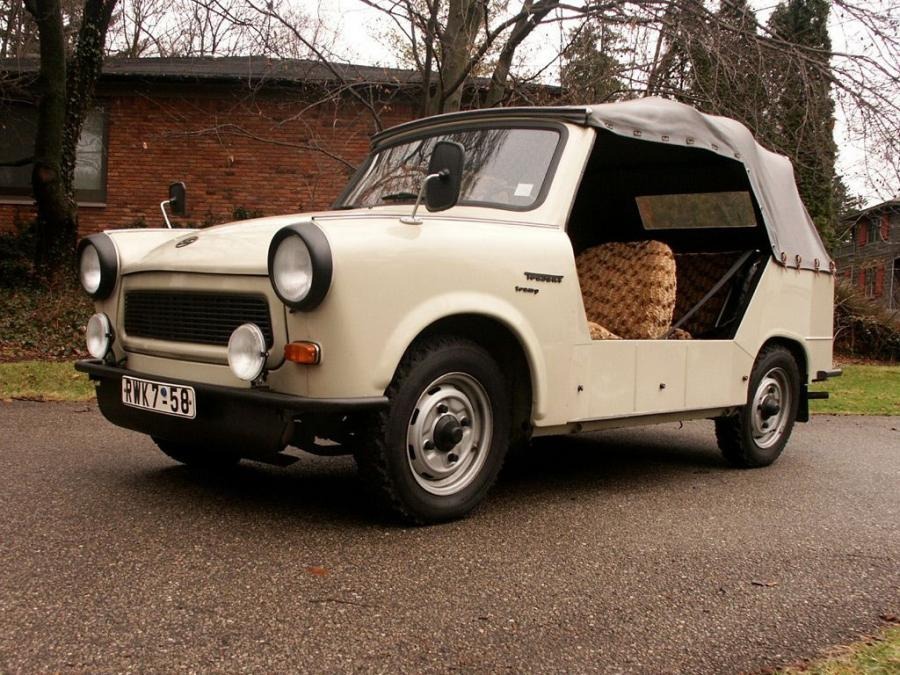
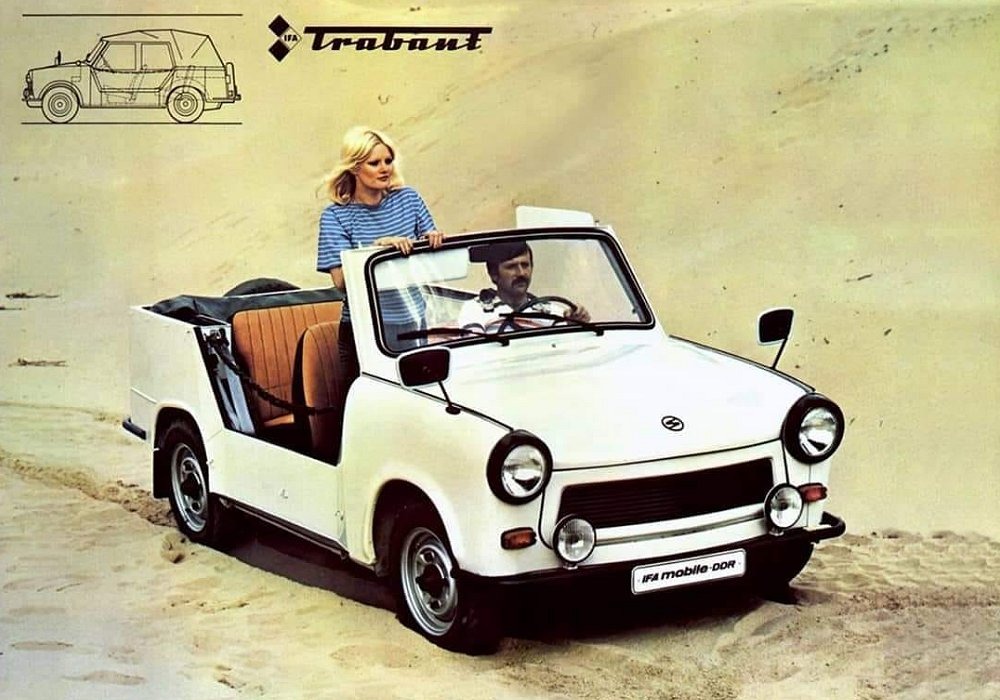
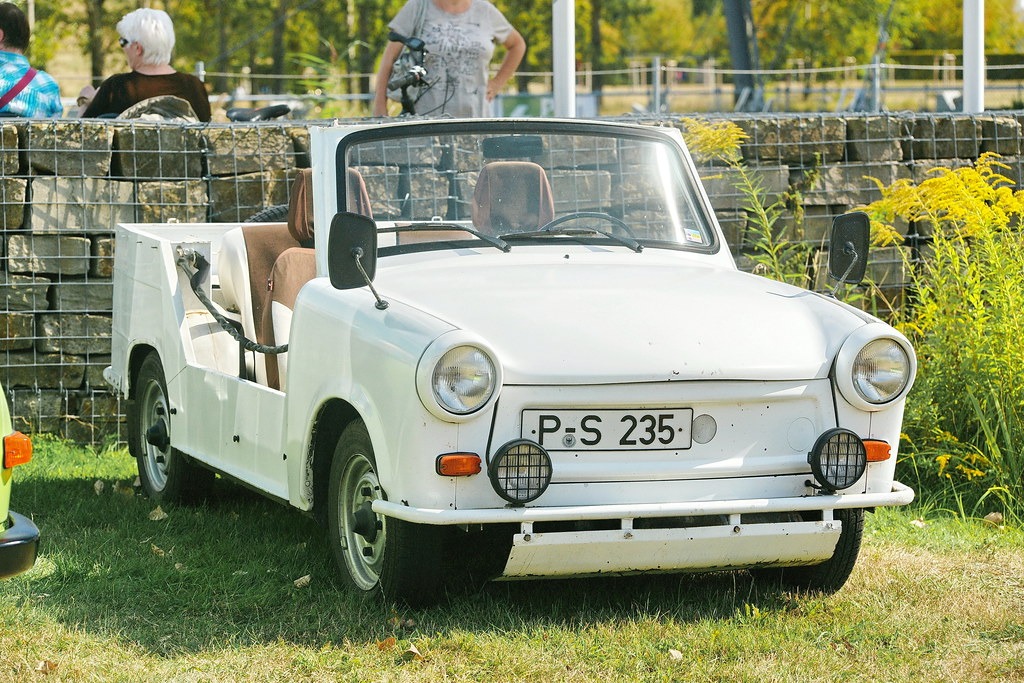
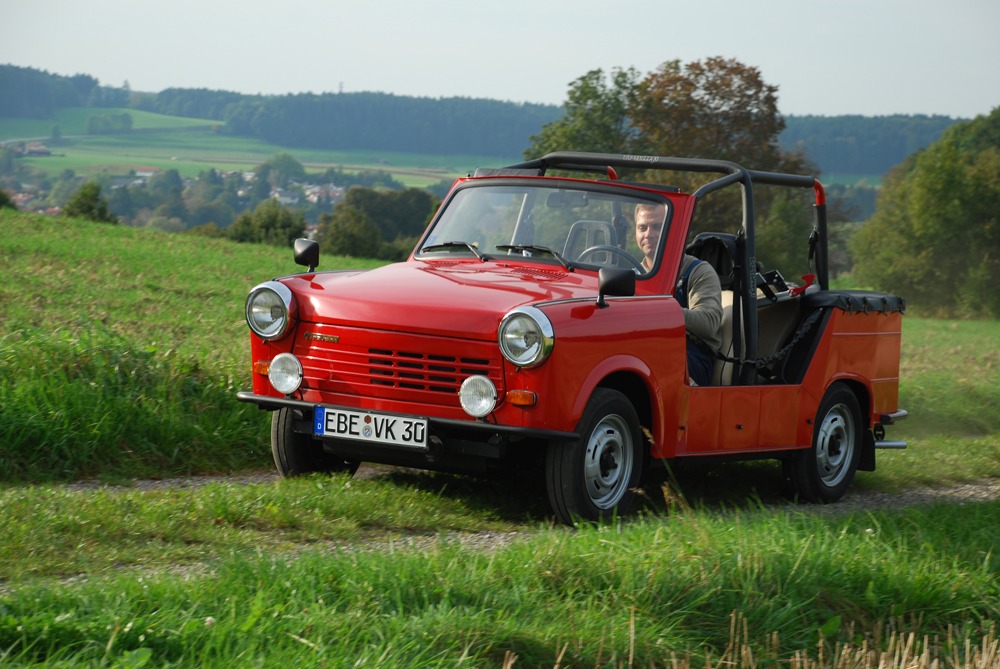
After the political upheaval, the Trabant 1.1 Tramp appeared in 1990 and lasted only until 1991, with about 1,000 built. Its big change was a water-cooled four-cylinder, four-stroke engine, a licence-built Volkswagen EA111 of the kind used in the Polo. It displaced 1,043 cc and produced about 30 kW (40 hp) at around 5,000 rpm, enough for roughly 125 km/h.
The four-speed gearbox was a tunnel-type unit with integrated final drive, and drive stayed at the front. The suspension became independent, with McPherson struts and wishbones. Steering was rack-and-pinion with automatic adjustment.
The body stayed close to the 601 Tramp but gained a different bonnet and a new front grille. Unladen weight rose to about 710 kg, and gross weight to 1,095 kg.
The dashboard was lightly modernised, with fuel and coolant temperature gauges, and a roll bar was often fitted, while the folding top stayed simple. Compared with the two-stroke, the car was quicker, quieter and smoother. Weak demand and economic upheaval brought production to a swift end. Trabant manufacturing as a whole stopped in 1991 after German reunification, and the factory was later sold to Volkswagen. The tiny production run makes the 1.1 Tramp a rarity today.
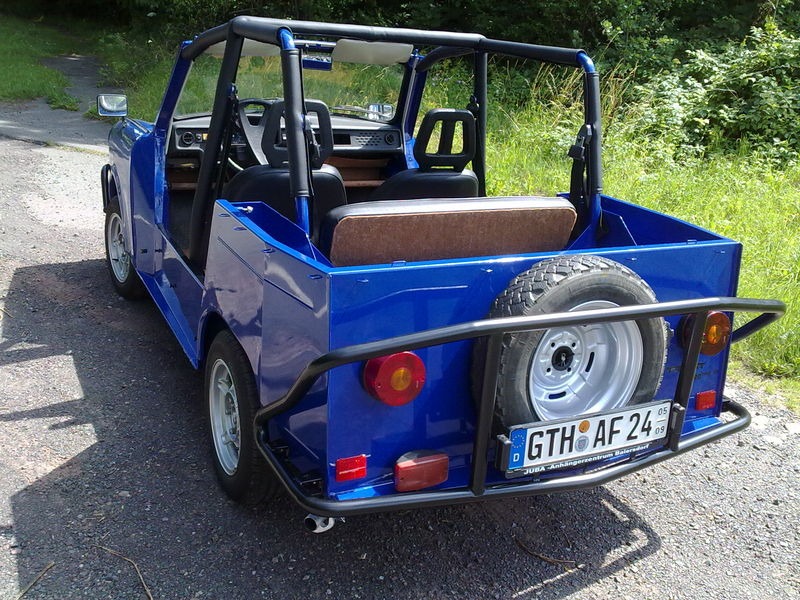
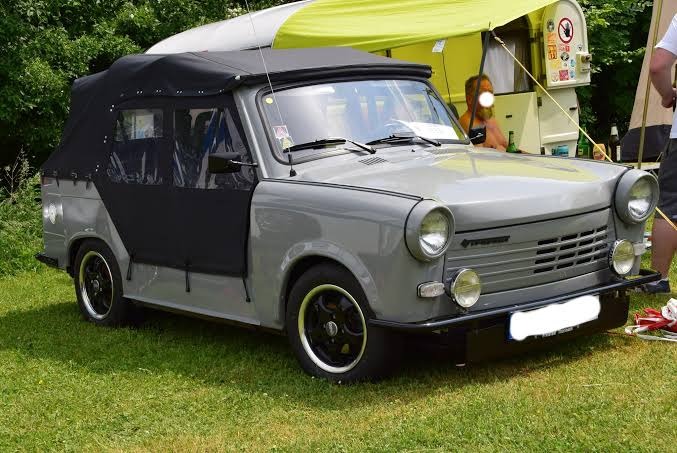
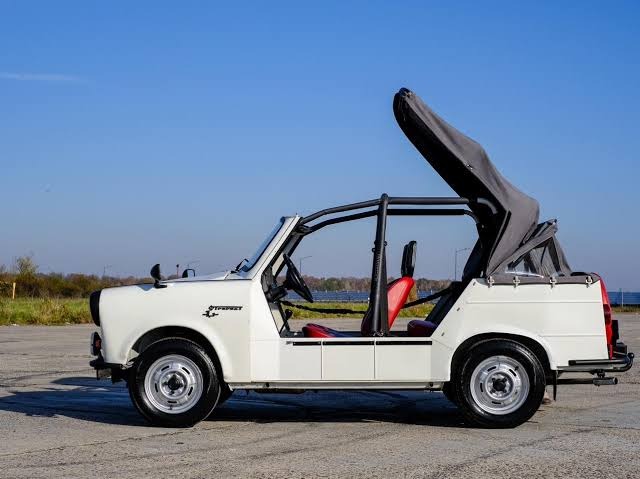
Another odd chapter is the Caro Tramp 110, a special version of the Trabant 1.1 developed by the IVM (Industrieverband Motorenfahrzeuge). It was meant to be sold in bright colours with design changes as an alternative to Western cars, but financial problems prevented series production. Only a few prototypes are known, distinguished from ordinary Trabants by bull bars, alloy wheels and leather seats.
In concept, the Tramp resembles beach cars such as the Renault Rodeo and the Citroën Méhari, with their simple construction, open bodies and leisure appeal. The differences lie in engines and materials. The Méhari sat on a robust Citroën platform with a four-stroke engine, while the Tramp used the Trabant 601 platform with a two-stroke.